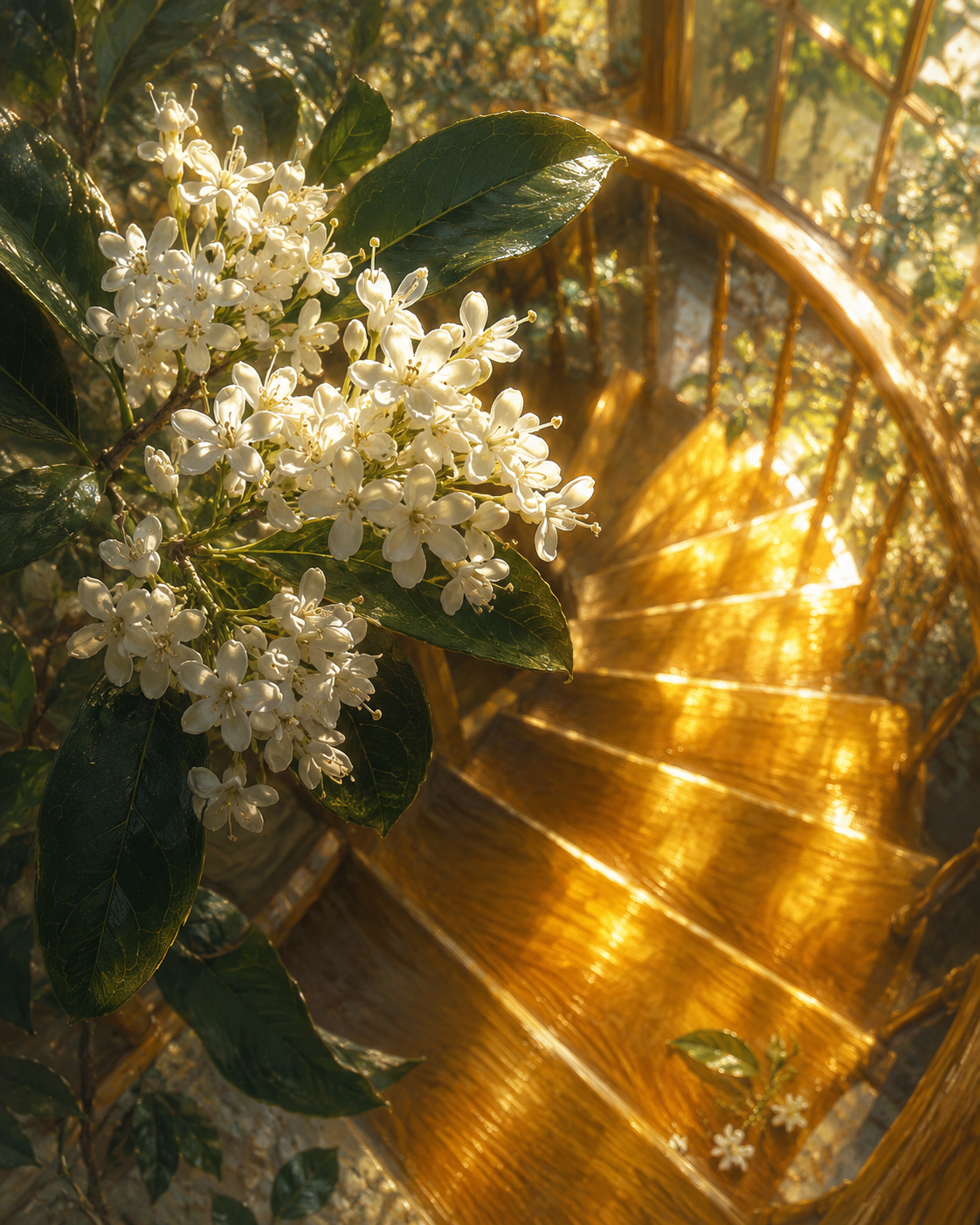
Spiral of Amber and White Petals
Critique
1. Introduction This warm garden scene positions white blossoms beside a curving wooden staircase flooded with late sunlight. The flower-laden branch occupies the left foreground, while polished steps sweep from lower right toward an upper landing. Organic growth and constructed passage are joined by a sustained golden illumination. 2. Description Numerous white flowers, buds, and projecting stamens cluster among broad dark leaves with visible veins and glossy highlights. Behind them, rounded wooden rails enclose a staircase whose wet or polished treads carry long bands of reflected light. Small fallen blossoms rest on a lower step, and dense foliage appears through the vertical balusters. 3. Analysis The staircase’s rising diagonal gives direction to the composition, while the branch crosses against it and slows the eye in the foreground. Curved handrails repeat the leaves’ arcs, but regular balusters and steps provide measured intervals absent from the flower clusters. White petals temper the dominant amber, and dark greens create sufficient tonal contrast to preserve their individual shapes. 4. Interpretation and Evaluation The pairing of flowers with upward stairs suggests growth as both natural expansion and deliberate passage. Fallen blooms on the steps introduce a quieter awareness of change within the otherwise radiant scene. The rendering of wood grain, reflective moisture, leaf surfaces, and delicate stamens is convincing, and the composition uses familiar garden materials in an original, coherent relationship. 5. Conclusion At first the intense sunlight makes the staircase the principal spectacle, but attention returns to the blossoms that articulate its edge and scale. The work gradually becomes a study of movement through a cultivated environment. Its controlled palette, tactile detail, and interlocking curves transform a simple architectural feature into an inviting route shaped by light and seasonal growth.
Same Subcategory
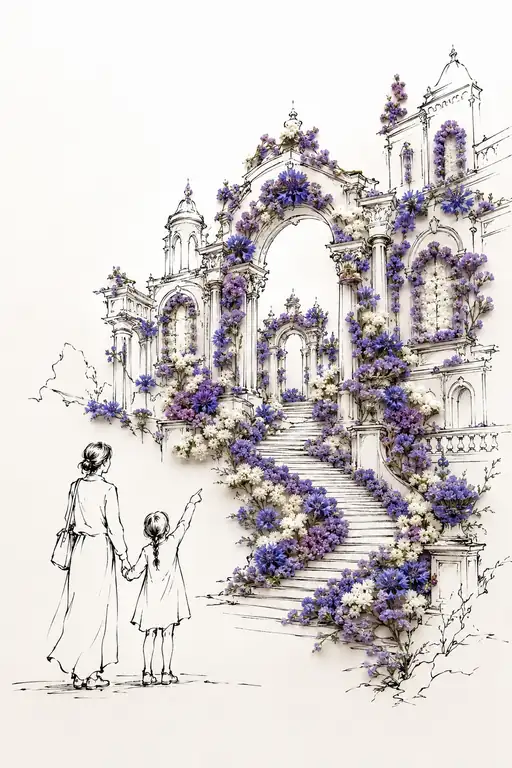 Ascent to the Crowned Arch
Similar Artworks
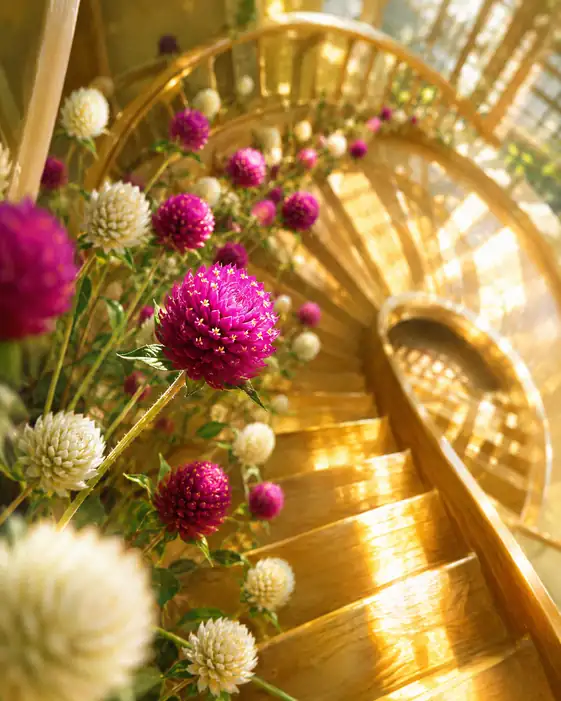 Ascent of the Golden Spiral and Amaranth
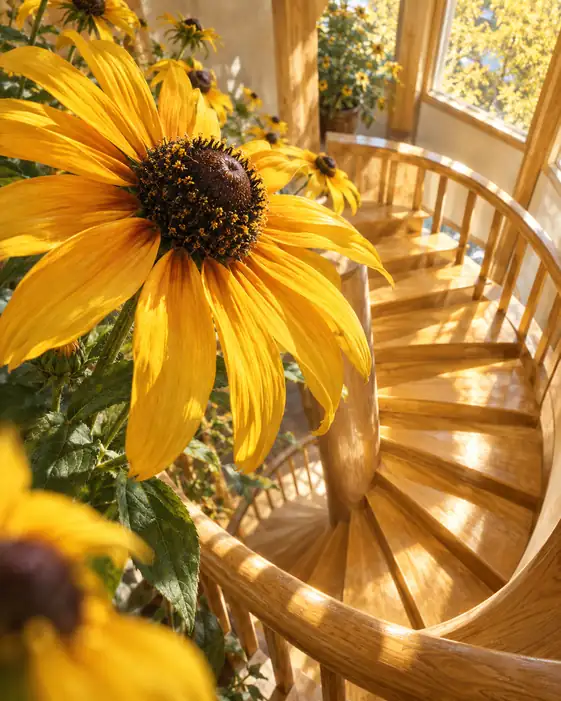 Sunlit Spiral in the Sunroom
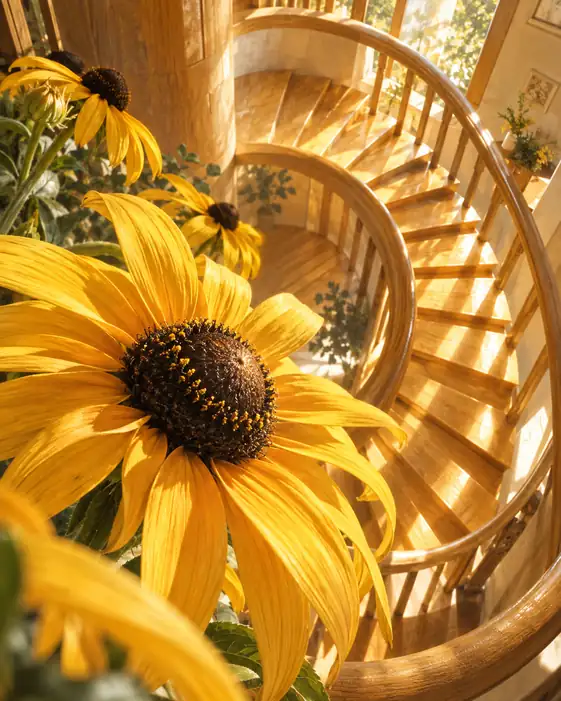 Golden Spiral and the Sunflower
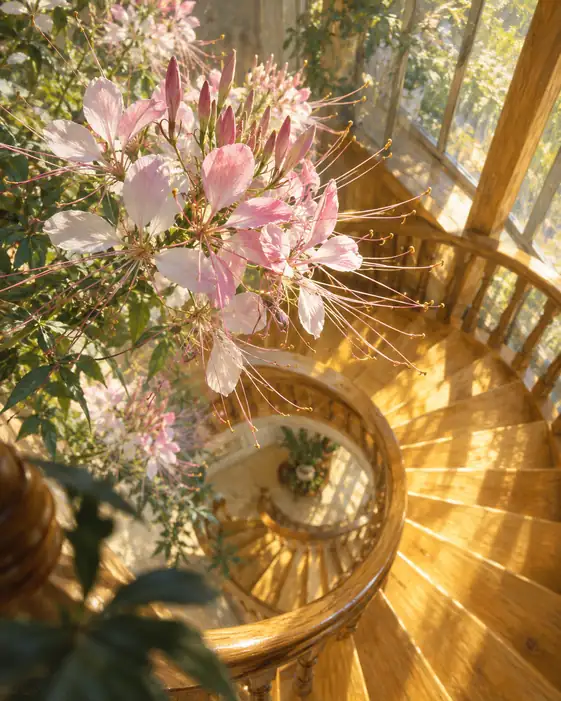 Descent Through the Sunlit Spiral
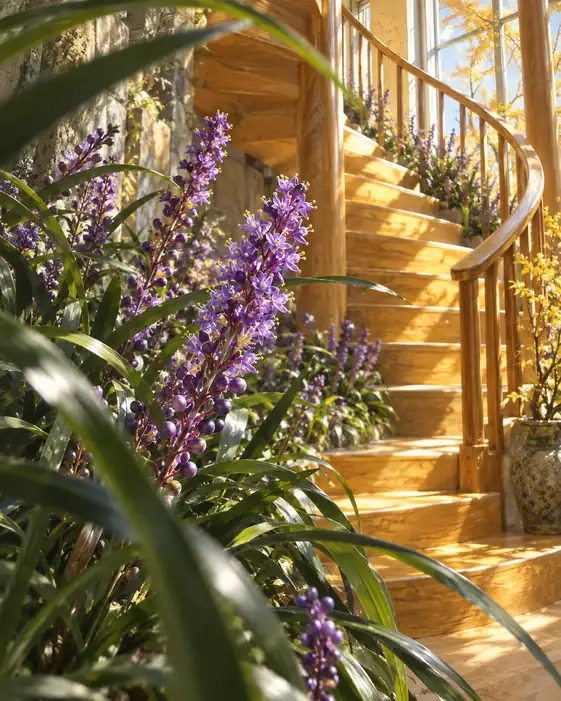 Ascending in Purple and Gold
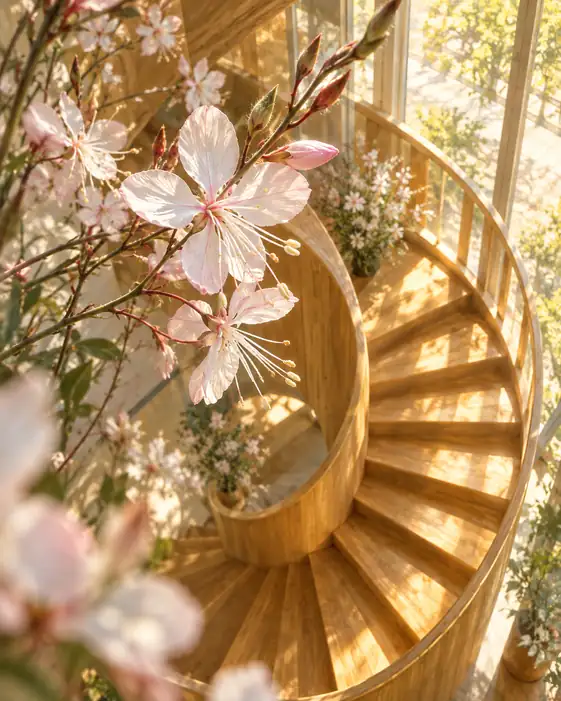 Descent Through Sunlit Spirals
 Overlooking the Sunlit Spiral
 Morning Light in the Marble Arcade
 Within the Iridescent Loggia
 The Stairway That Caught the Evening