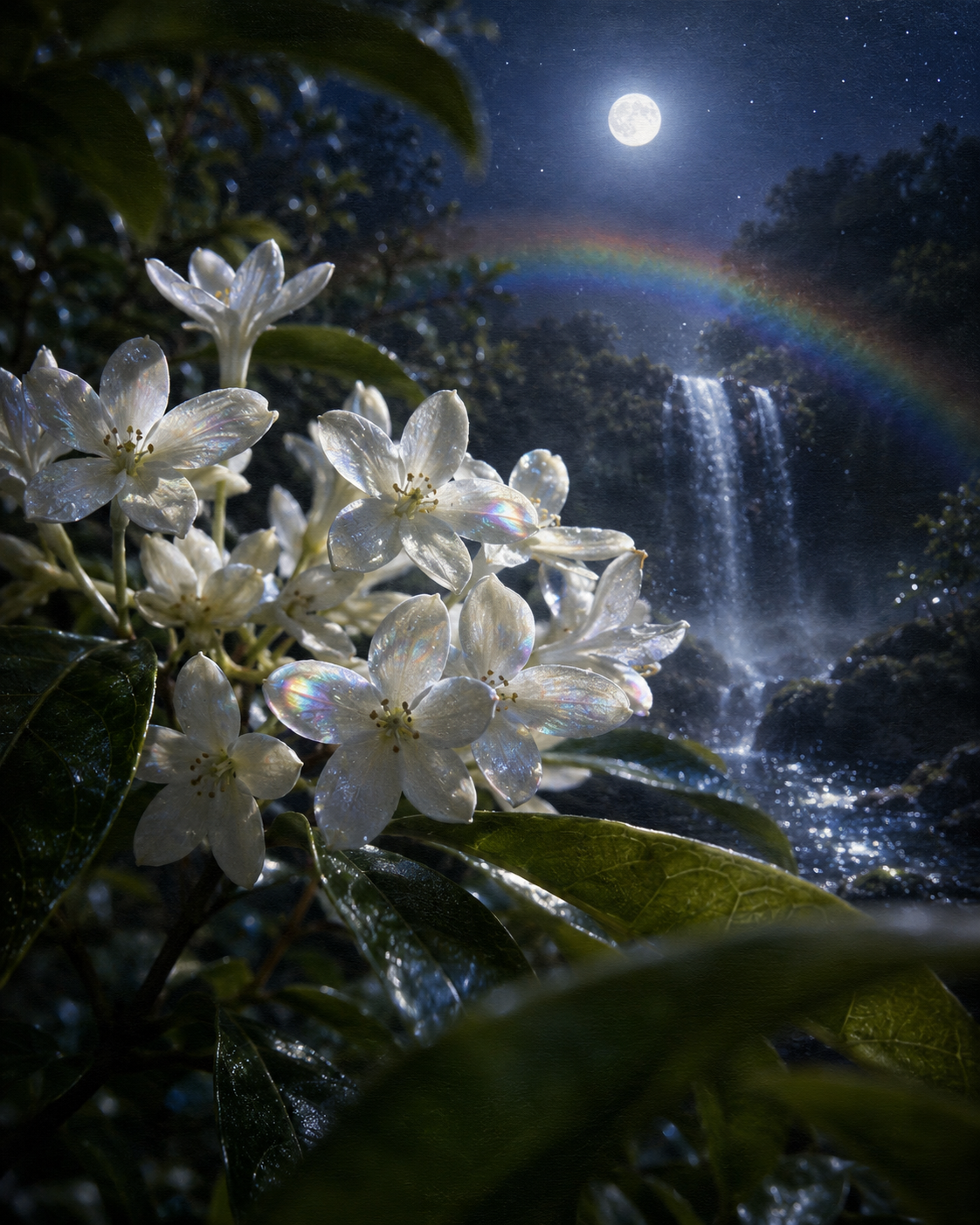
Lunar Rainbow and the Iridescent Petals
Critique
1. Introduction This moonlit landscape brings rain-bright white flowers into close view before a distant waterfall and rainbow. The blossoms occupy the lower-left half, the waterfall descends at right center, and a full moon anchors the upper sky. The work unites several forms of reflected and refracted light within a nocturnal setting. 2. Description Large five-petaled flowers and unopened buds rise among dark, glossy leaves covered with droplets. Their surfaces carry small spectral flashes of pink, blue, and green. Beyond them, twin streams of water fall between wooded cliffs into a sparkling pool, while a low rainbow arcs across the mist below the moon and scattered stars. 3. Analysis The moon, rainbow, and flowers establish a broad triangular movement around the composition. Crisp petals occupy the nearest plane, softened trees hold the middle distance, and the pale waterfall supplies a vertical accent against deep blue-black foliage. Repeated droplets connect leaf surfaces to spray and stars, while the rainbow’s horizontal curve balances the falling water and the flowers’ upward stems. 4. Interpretation and Evaluation Light is presented as a transforming force that can turn water into color across radically different scales. The fragile blossoms seem to contain miniature rainbows, linking their surfaces to the distant arc. Although the scene is imaginative, precise edges, varied wet textures, and disciplined cool tones give it coherence; the focal arrangement and technical handling are particularly effective. 5. Conclusion The first impression of a fantastical moonlit garden develops into a structured examination of how moisture receives light. Close petals, atmospheric mist, and remote moonlight become successive stages of one optical theme. Through clear spatial organization and restrained spectral accents, the work sustains wonder without losing visual order or the specificity of its observed natural details.
Same Subcategory
Similar Artworks
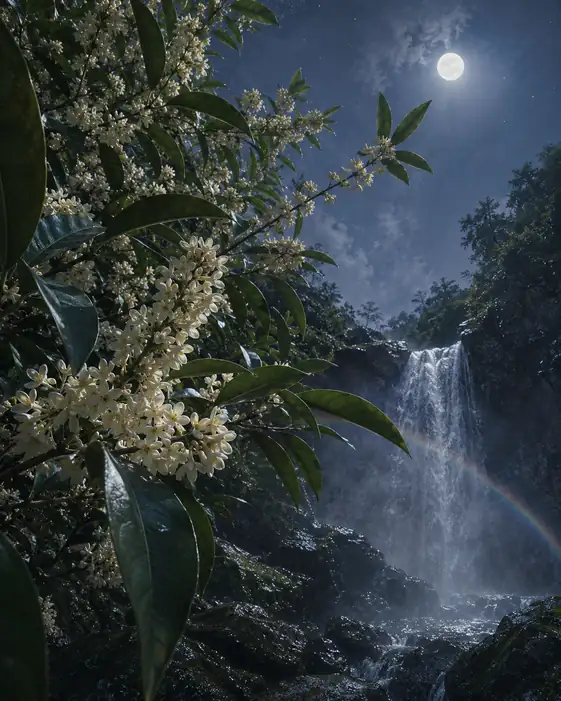 Lunar Arc Across the Midnight Falls
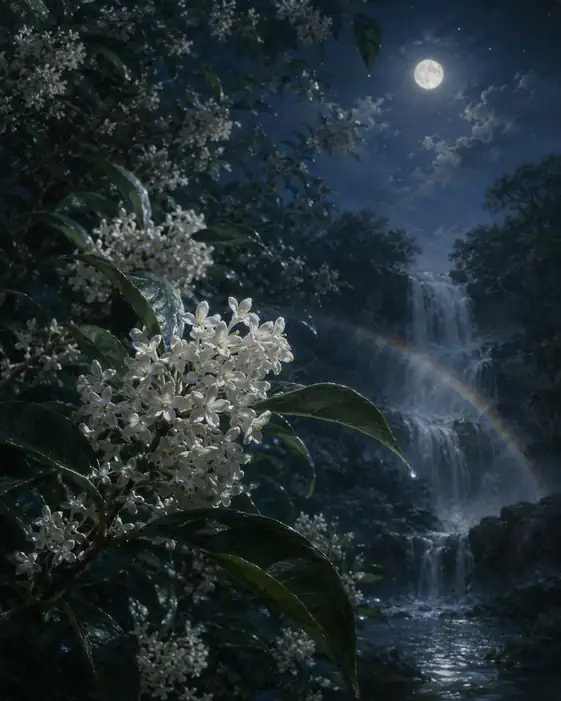 Dewdrop Beneath the Lunar Arc
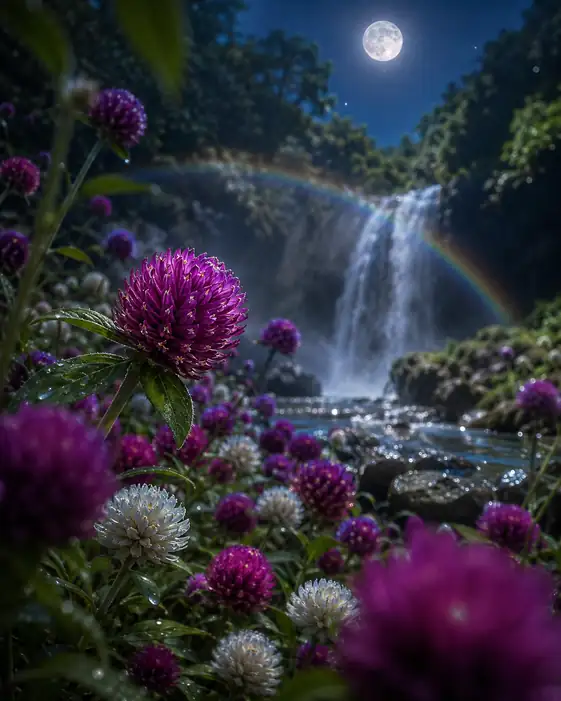 Nocturne in Lunar Prisms
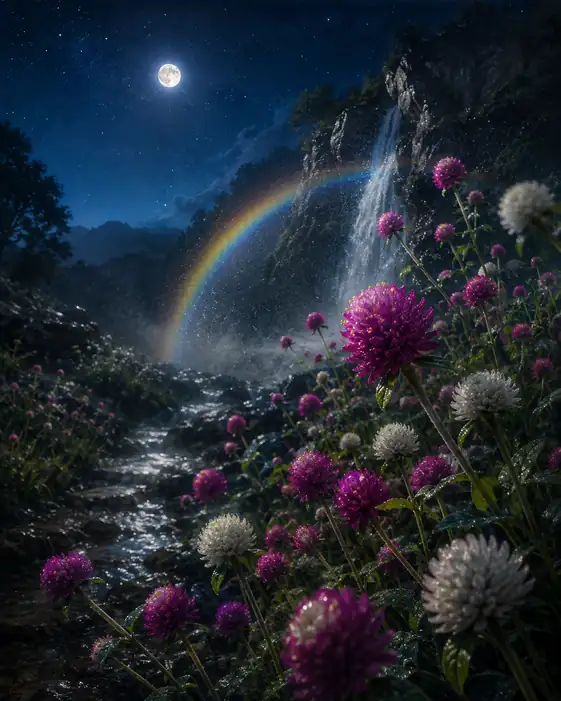 Moonbow Over the Falls and Wild Amaranth
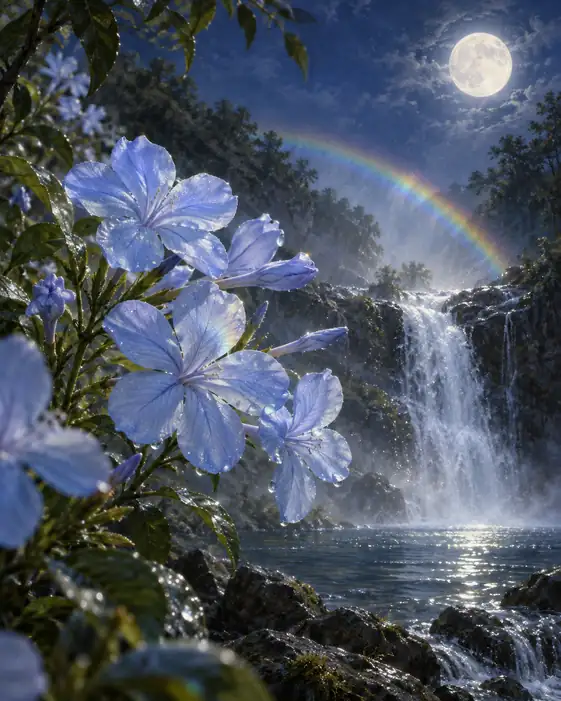 Dewdrops Under the Moonbow
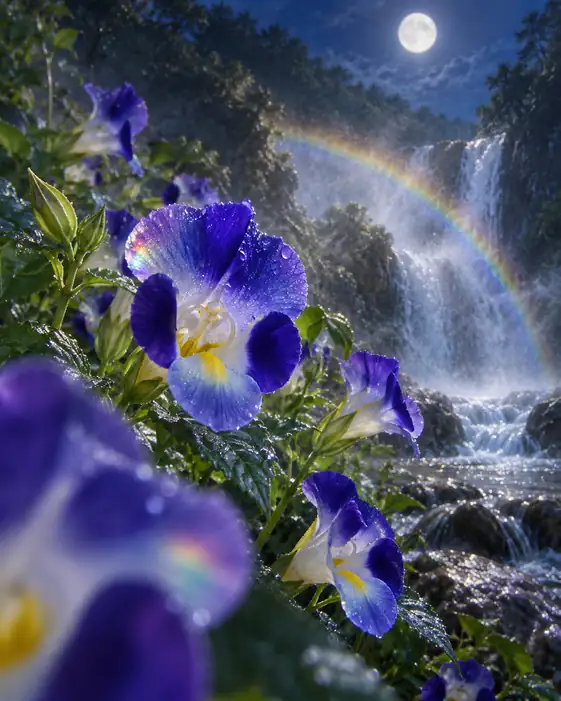 Moonbow Over the Midnight Falls
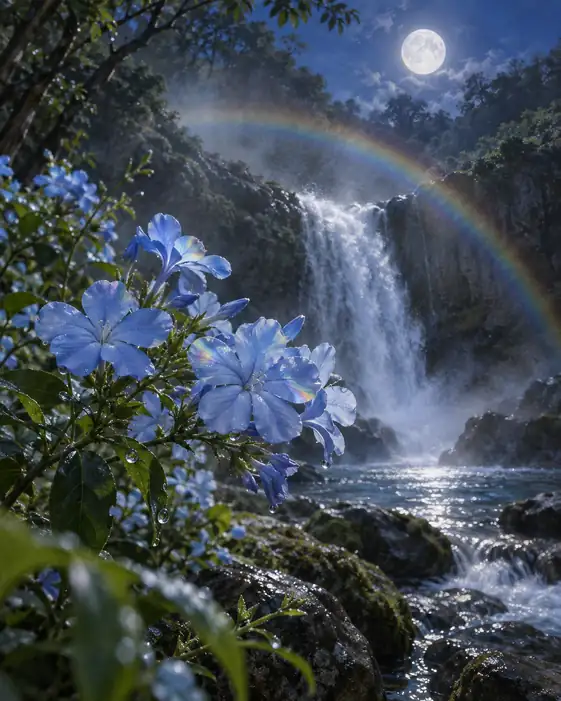 Moonbow Over the Falling Mist
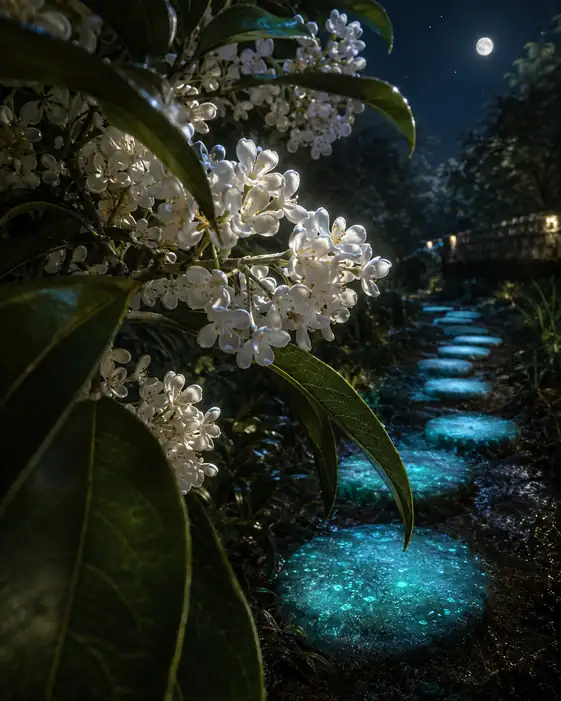 Stepping Stones of Cyan Fire
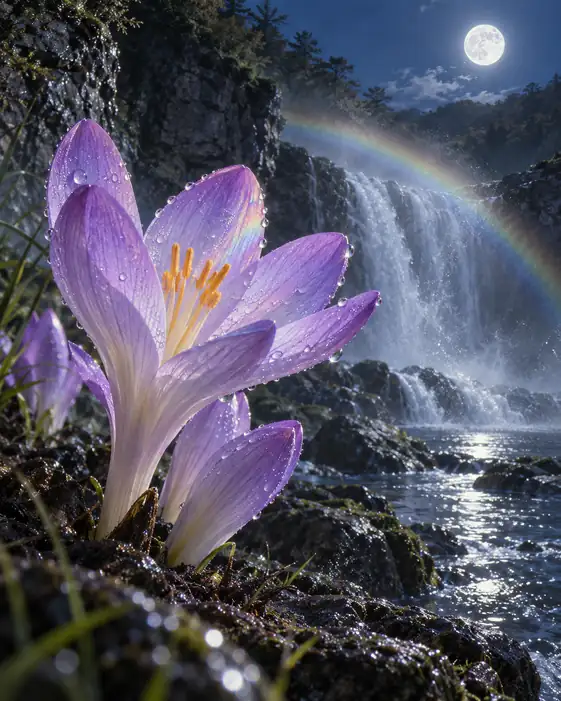 Moonbow over the Waterfall and Crocus
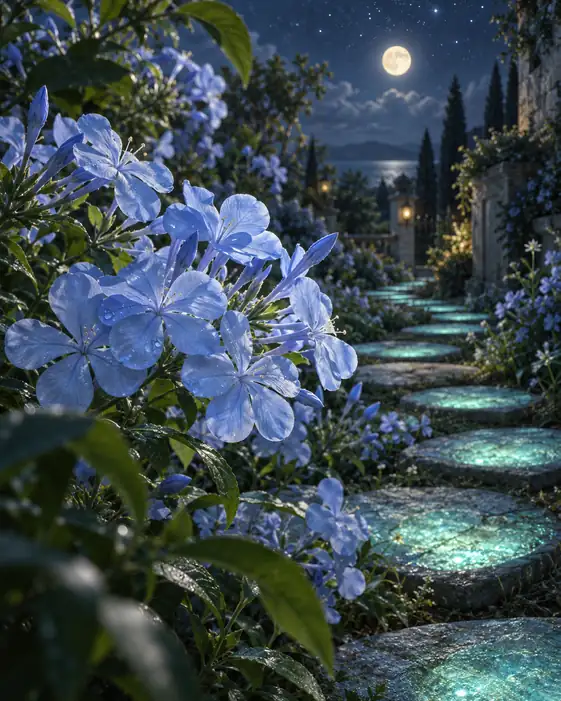 Moonlit Promenade of Azure Blooms