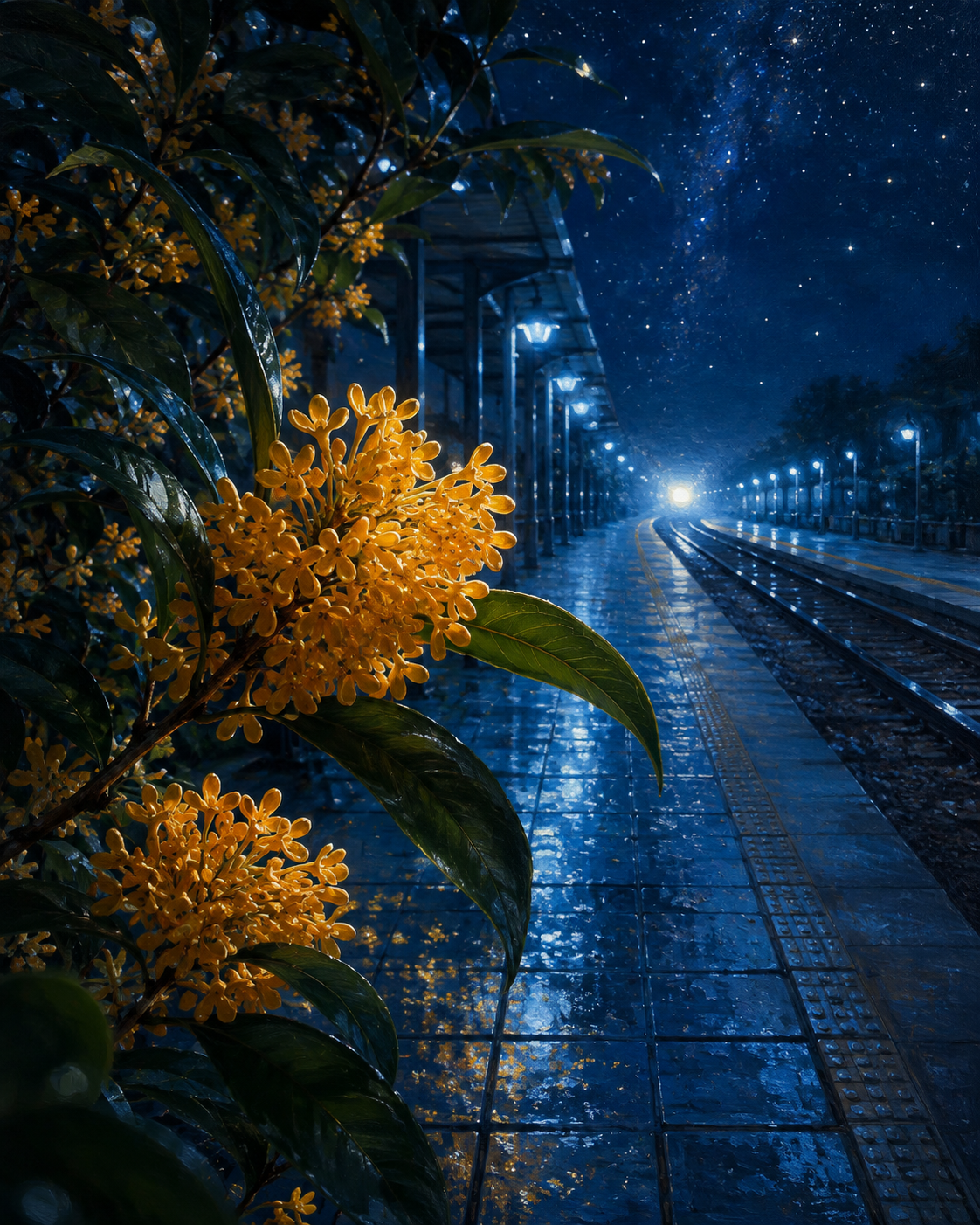
Nocturne on the Wet Platform
Critique
1. Introduction This nocturnal scene sets orange blossoms beside a rain-darkened railway platform under a densely starred sky. The flowers fill the left foreground, while parallel tracks curve toward a brilliant approaching light at center right. Botanical intimacy and the expectation of travel are held together within an unusually deep blue atmosphere. 2. Description Wet leaves arch around several compact flower clusters, their orange petals illuminated against near-black foliage. A roofed platform begins behind the branch, supported by repeating posts and cool lamps. Glossy paving, tactile strips, rails, and overhead lights converge toward the distant glow, while the Milky Way spreads diagonally above the tree line. 3. Analysis Strong linear perspective pulls the eye from the enlarged flowers into the station’s depth. Repeated lamps echo the stars, and small reflections break the pavement into blue-white patches; fallen orange petals provide a quieter echo of the main cluster. The warm foreground acts as a chromatic anchor against the dominant ultramarine, while the curved tracks prevent the recession from becoming rigid. 4. Interpretation and Evaluation The work associates the brief flowering of the branch with a moment of waiting before arrival. Rain has emptied the platform and sharpened every reflection, so stillness carries latent movement. Its composition and color contrast are highly controlled, and the distinction among waxy leaves, slick tiles, metal rails, and open sky demonstrates persuasive technique without weakening the imagined mood. 5. Conclusion At first the orange flowers appear to be the sole focus, but the remote light gradually reorganizes the image around anticipation. Close observation and immense celestial distance become parts of one continuous route. The work’s original conjunction of garden growth, railway geometry, and starlight creates a measured reflection on passage while retaining clear visual hierarchy.
Same Subcategory
Similar Artworks
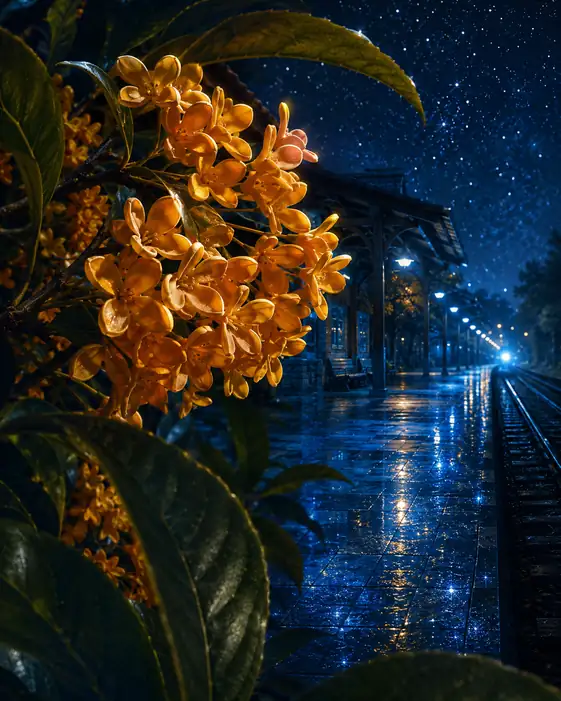 Awaiting the Midnight Train
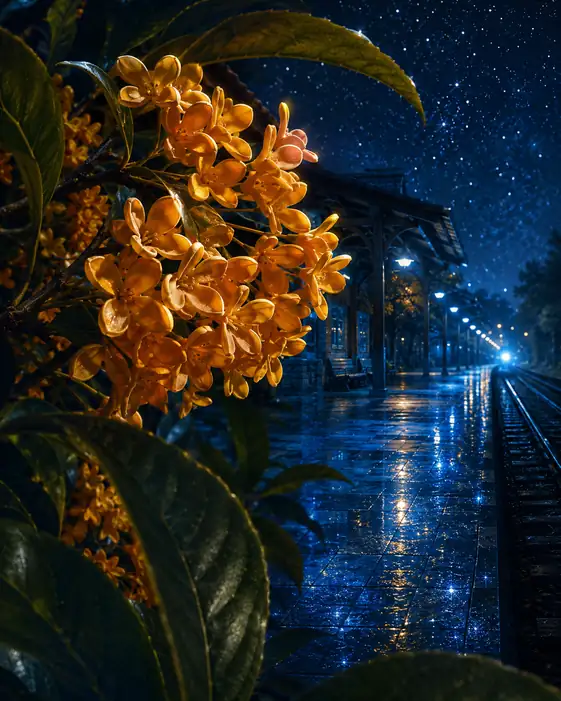 Platform of Stars and Amber Light
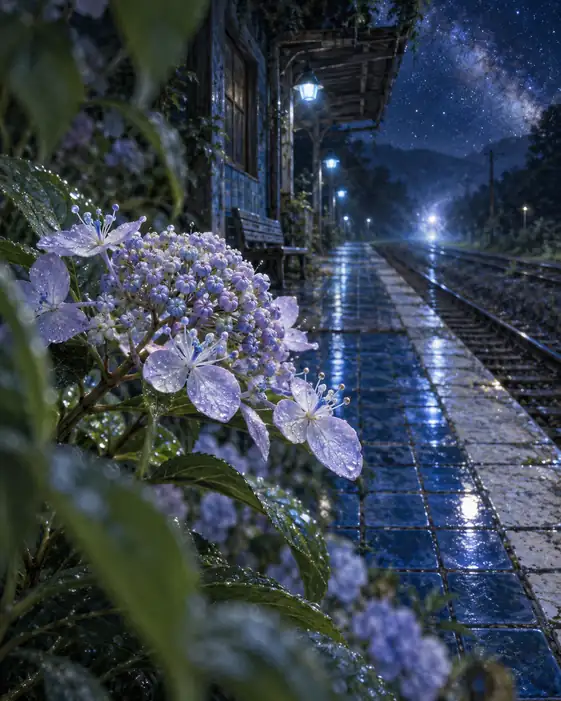 Starlit Station, Night Rain and Hydrangeas
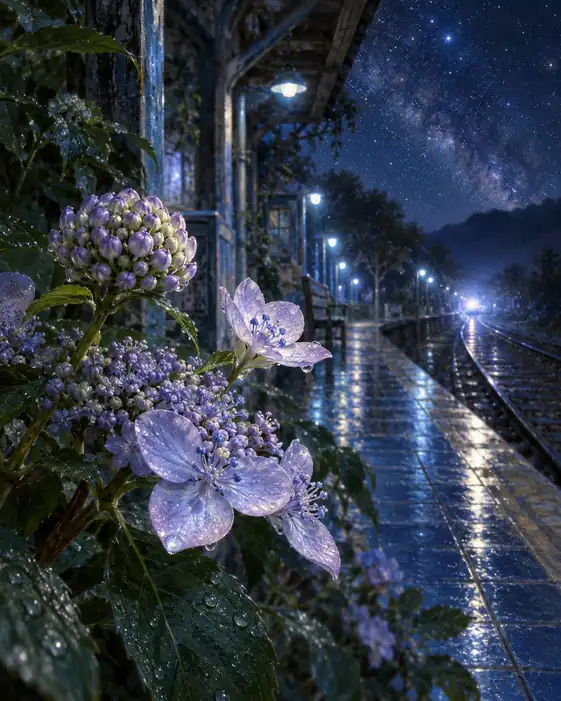 Station Beneath the Milky Way, Hydrangeas in the Rain
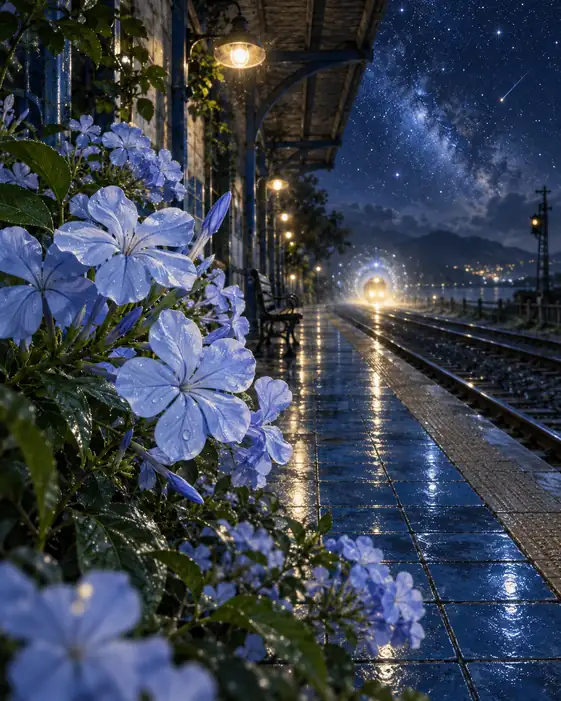 Station of Stars and Rain
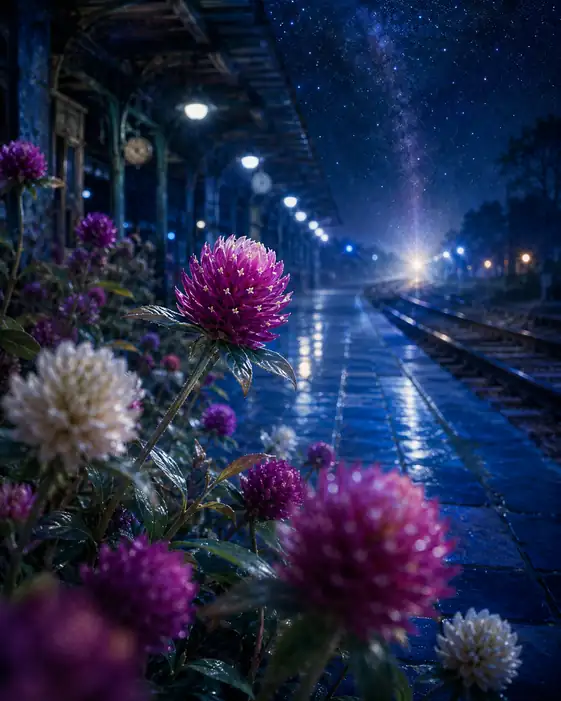 Midnight Station on the Galactic Line
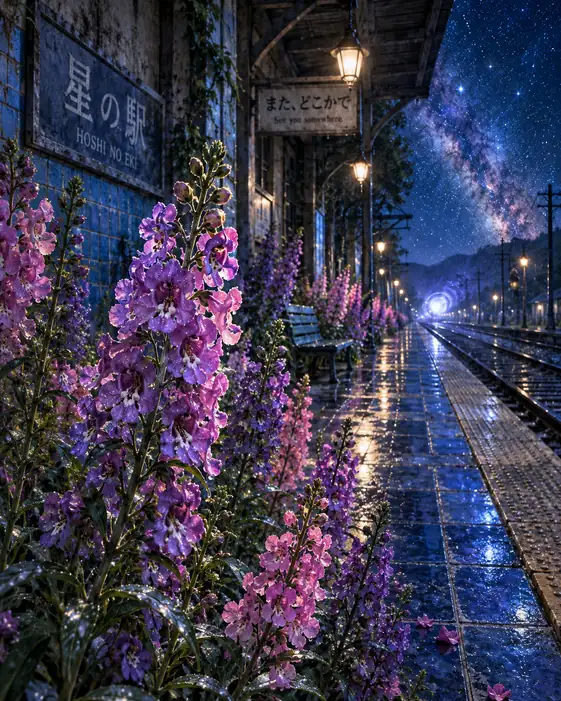 See You Somewhere Under the Stars
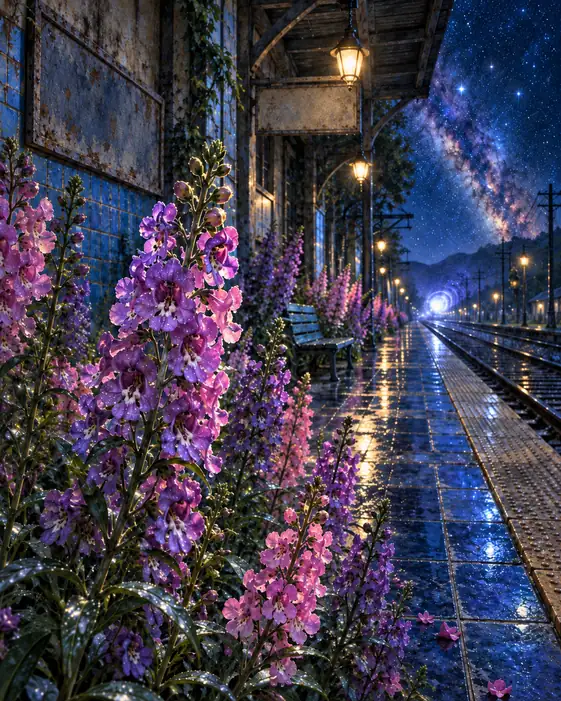 Midnight Express Under Starlight
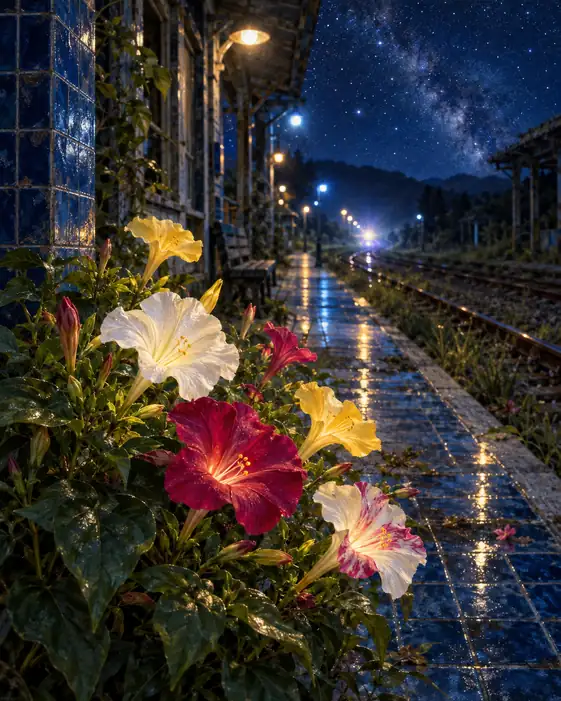 Platform Beneath the River of Stars
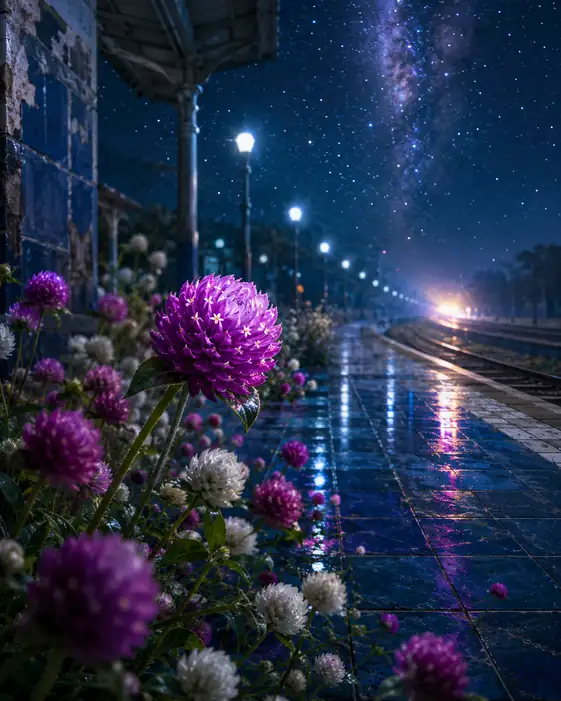 Night Train Under the Milky Way and Amaranth