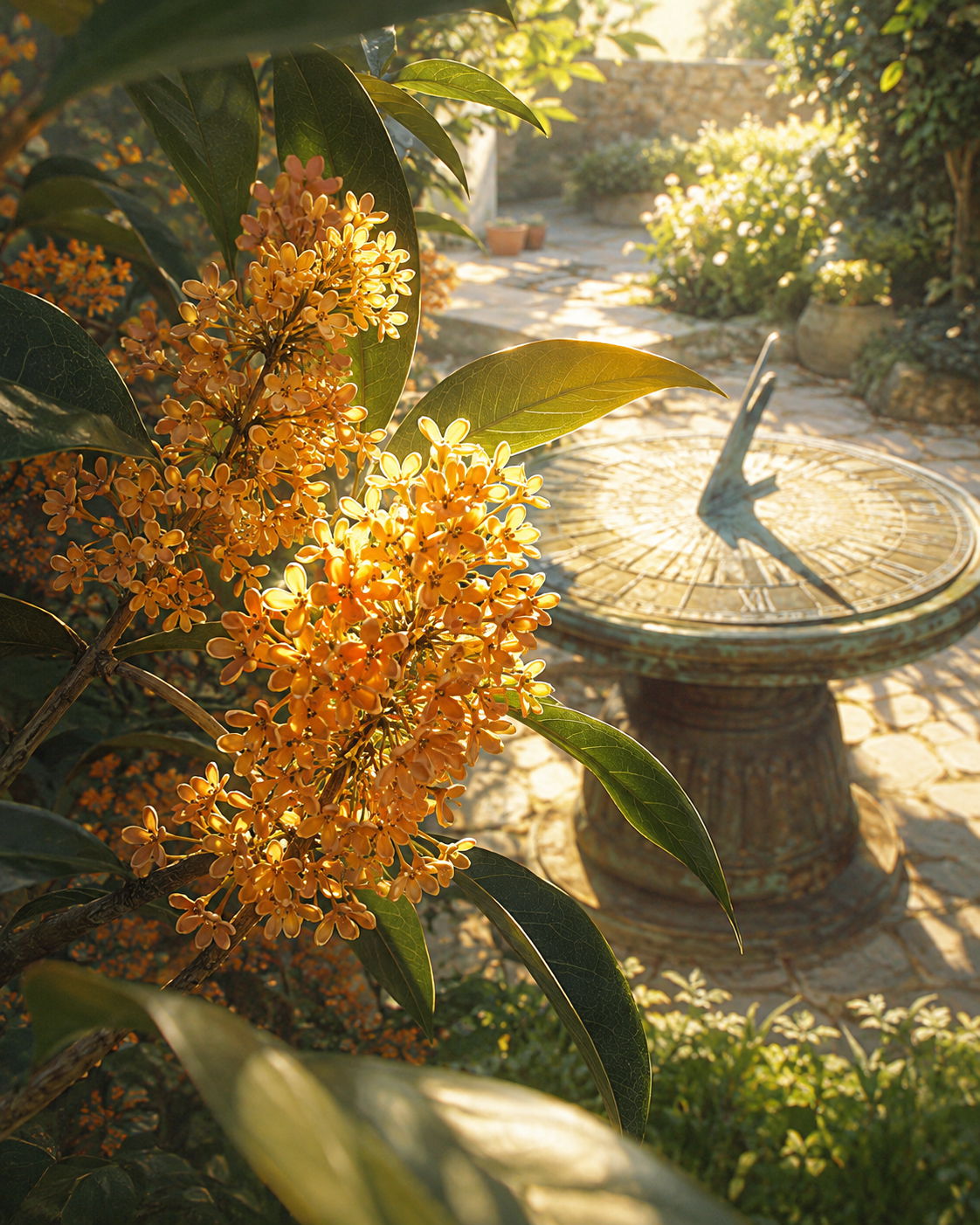
The Sundial and the Autumn Bloom
Critique
1. Introduction This sunlit garden scene pairs a flowering branch with a substantial metal sundial. Orange blossoms fill the left foreground, whereas the circular instrument occupies the right middle ground along a stone path. The work turns a quiet courtyard into a study of growth, measured time, and changing daylight. 2. Description Several dense flower clusters rise among long, dark green leaves whose veins are clearly visible. Behind them, the sundial’s weathered green rim surrounds engraved radial lines, and its triangular gnomon casts a narrow shadow. Paving stones, potted plants, hedges, and a tiled wall recede through a softly illuminated garden. 3. Analysis The branch’s diagonal ascent intersects visually with the sundial’s circle, creating tension between organic irregularity and geometric order. Strong sunlight outlines petals and leaves, while softer focus reduces the distant shrubs to mottled masses. Warm orange and pale stone are held together by cool green foliage and verdigris, giving the crowded foreground a stable chromatic structure. 4. Interpretation and Evaluation The juxtaposition of blossoms and sundial invites reflection on seasonal flourishing within measured time. Small petals appear transient beside the heavy, worn instrument, yet the brilliant light grants them greater visual authority. Precise botanical description, convincing material contrasts, and a carefully offset composition demonstrate strong technique; the concept is clear without becoming overly symbolic. 5. Conclusion The first impression of garden abundance gradually becomes an encounter between natural cycles and human systems of order. The eye moves from delicate petals to engraved metal and then along the path, making time perceptible through spatial progression. The work succeeds through disciplined color, layered depth, and an original but understated dialogue between its two principal forms.
Same Subcategory
 Velvet Crest in the Birch Garden
Similar Artworks
 Hours Carved in Amber Light
 The Measure of a Golden Hour
 Azure Mirror of the Golden Bough
 Twin Blooms Above the Crystal Brook
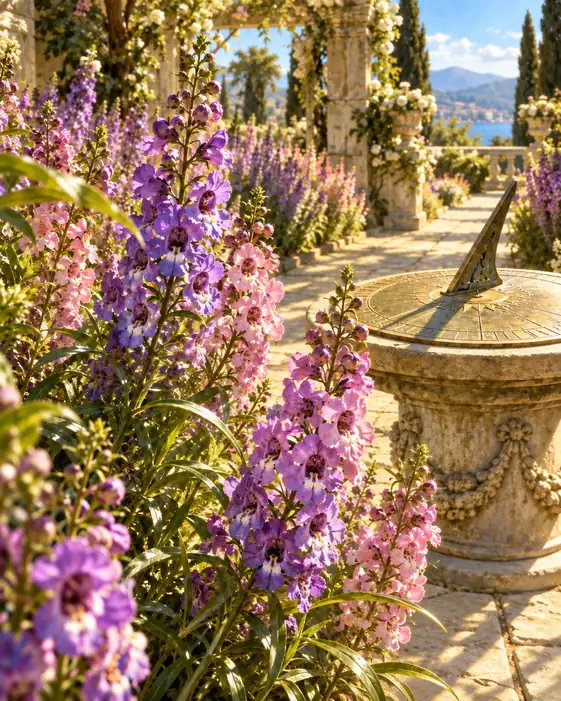 Hours Measured in Garden Shadows
 Where Sunlight Becomes Crystal
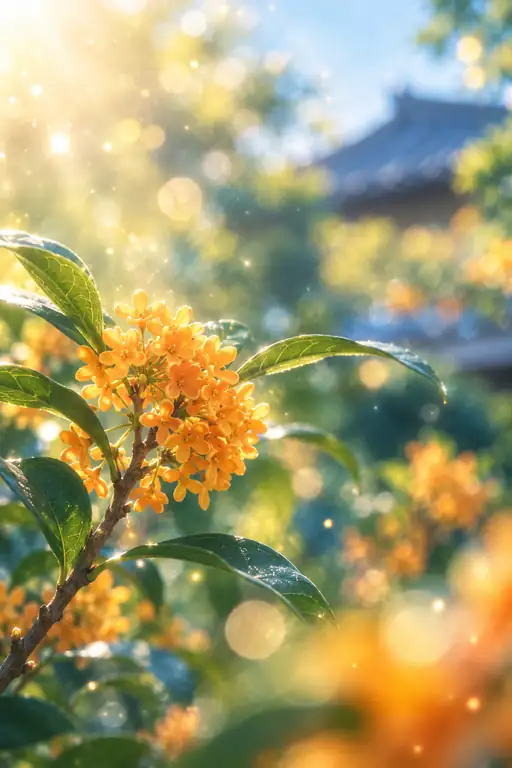 Gilded Clusters Beneath Tiled Roofs
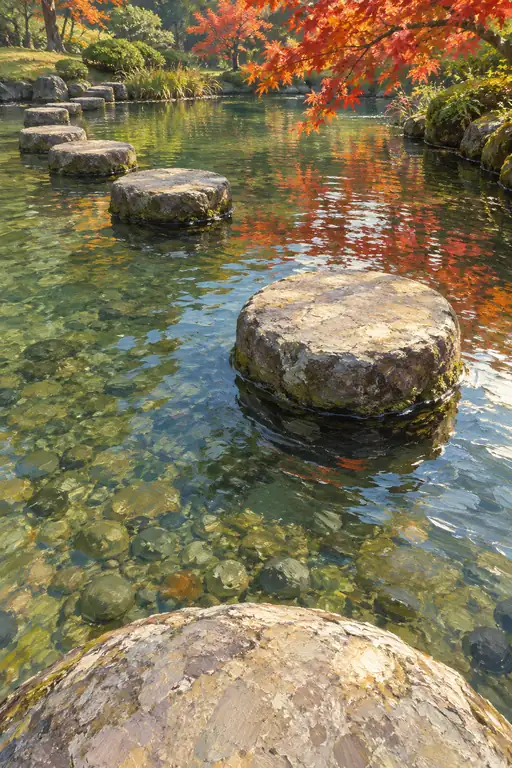 Steps Across the Amber Current
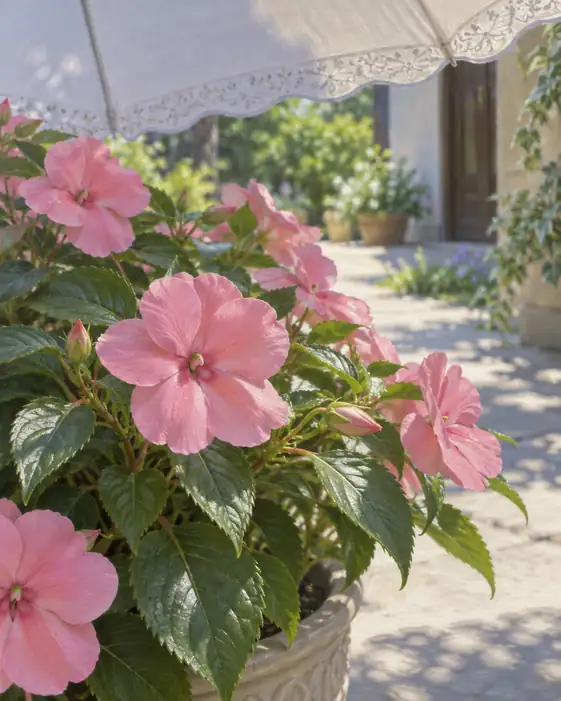 Lace Parasol Shade and Pink Impatiens
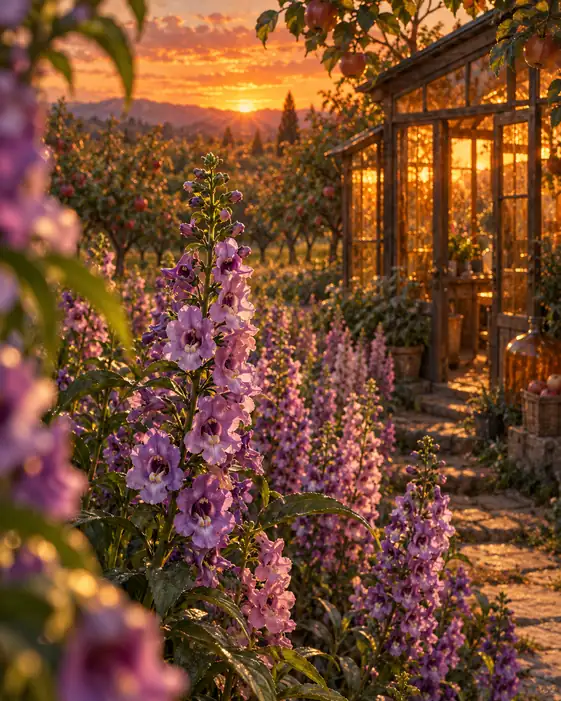 Sunset Across the Orchard Glass