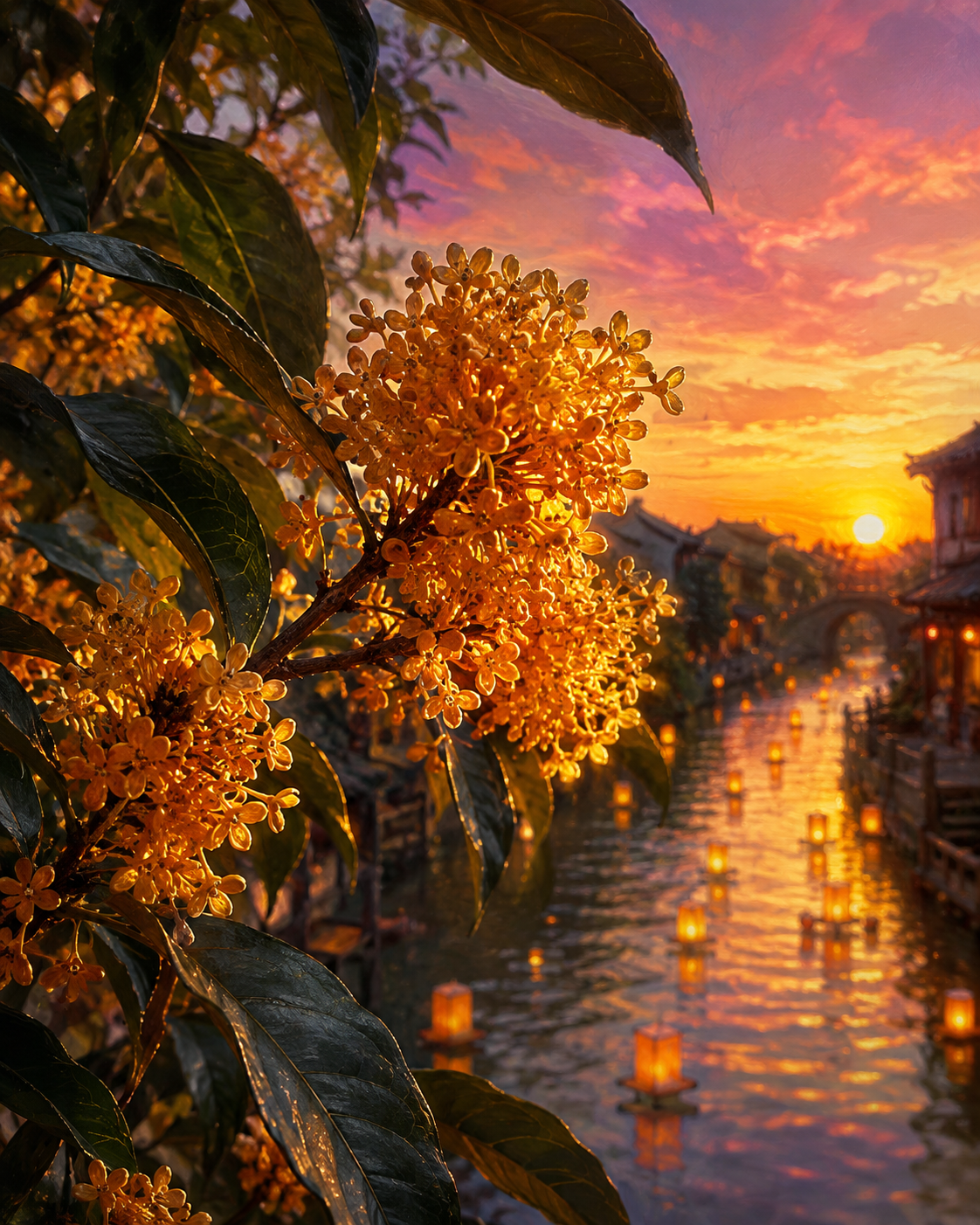
Floating Lanterns and the Amber Bower
Critique
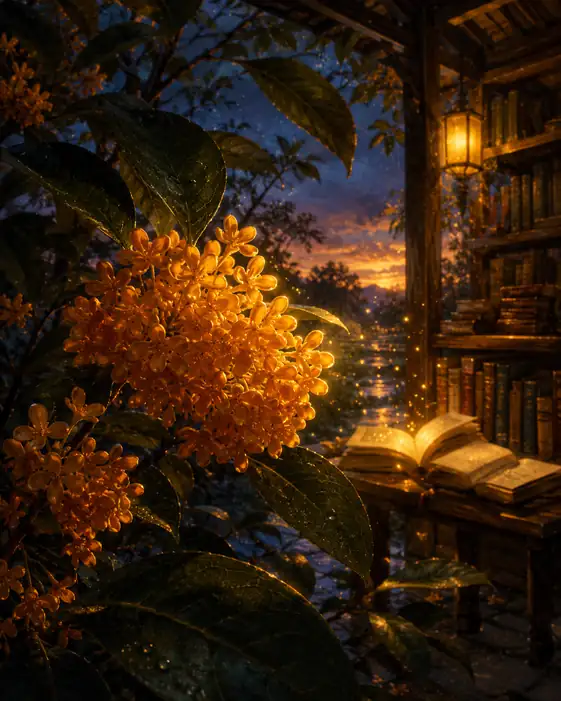
1. Introduction This vertically composed floral scene presents orange blossoms at sunset beside a lantern-filled canal. The sharply observed flowering branch dominates the left and center foreground, while the low sun and old waterside buildings establish a distant setting. Its principal effect comes from joining intimate botanical detail with an expansive evening atmosphere. 2. Description Dense clusters of small four-petaled flowers project diagonally from lower left toward the center. Broad, dark leaves frame them above and below, their wet-looking surfaces catching narrow gold edges. Beyond, a canal recedes toward an arched bridge, and many square lights float across water colored pink, violet, and amber. 3. Analysis The close branch acts as a strong counterweight to the bright sun near the right edge. Selective focus separates crisp petals and leaf veins from softened architecture, producing convincing depth without losing the background’s recognizable rhythm. Repeated blossoms answer the repeated lanterns, while reflected strokes lead the eye down the canal toward the horizon. 4. Interpretation and Evaluation The image treats flowers and festival lights as parallel forms of illumination. Backlighting turns petals translucent, whereas dark leaves preserve tonal weight and keep the warm palette varied. The composition, color control, and rendering are accomplished; especially effective is the transition from tactile foreground surfaces to a hazy communal space. 5. Conclusion What first appears to be a luxuriant close study gradually opens into a meditation on nature within an inhabited town. The careful hierarchy of focus allows a private encounter with blossoms to coexist with the distant movement of evening life. Through its balanced depth, radiant color, and precise handling of light, the work sustains both visual richness and quiet reflection.
Same Subcategory
Similar Artworks
 Twilight Glow and Floating Lanterns
 River of Lanterns and the Crimson Crest
 Floating Lanterns on the Twilight Canal
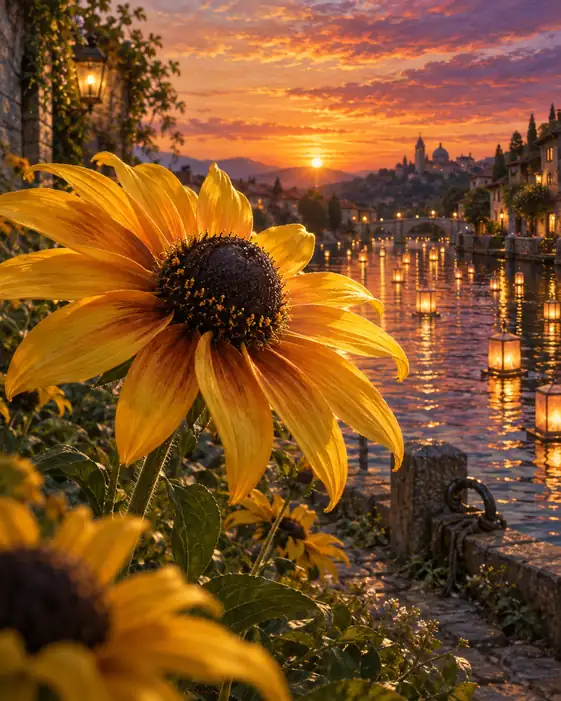 Lantern Canal in Twilight Bloom
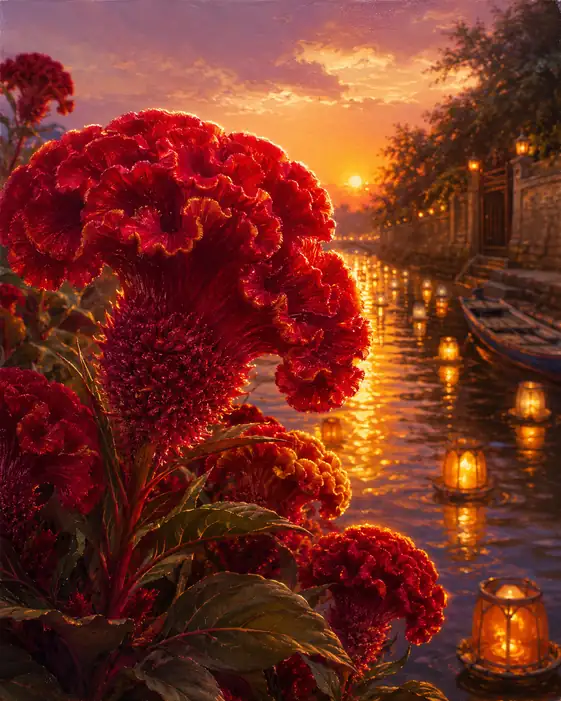 Canal of Drifting Lanterns and Cockscomb
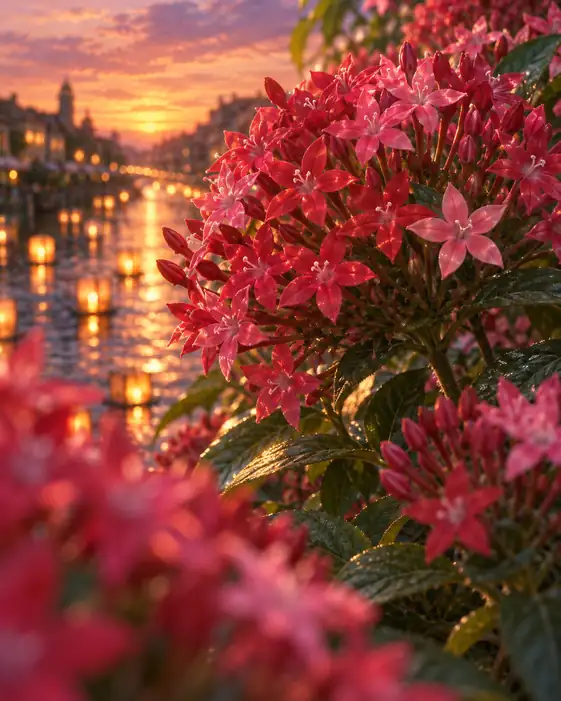 Floating Lanterns on the Sunset Canal
 Beacon in the Fragrant Sunset
 Where the Beacon Greets the Sunset
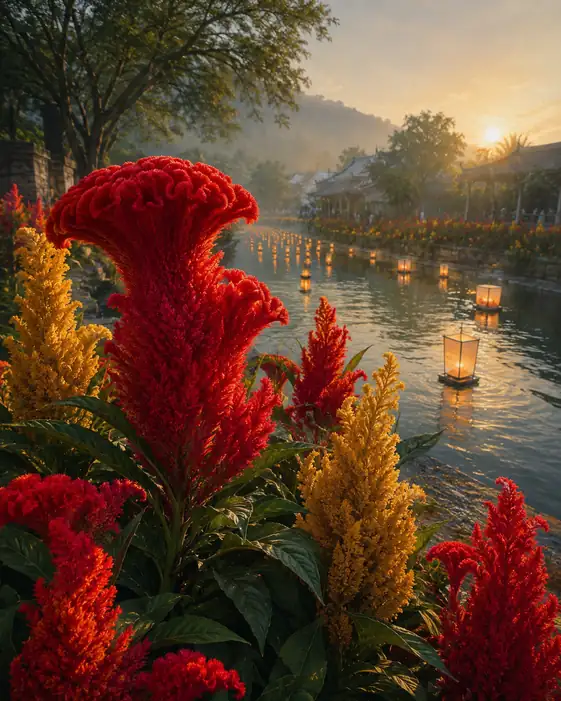 Prayers upon the Evening Stream
 Tomes in the Osmanthus Twilight