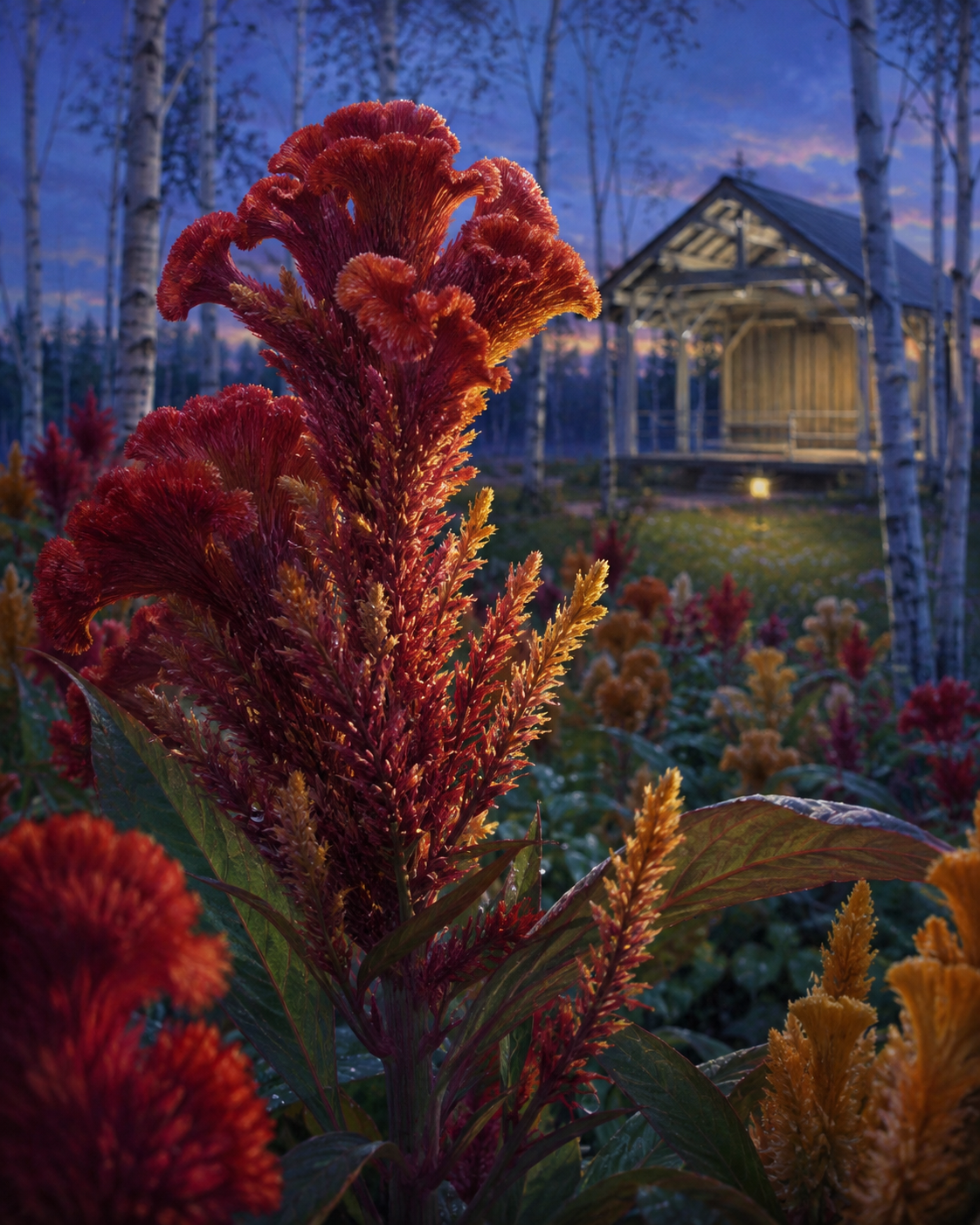
Crest of Fire in the Birch Grove
Critique
Introduction A tall red cockscomb rises before a small wooden pavilion among pale tree trunks at dusk. Its folded crest dominates the left center, while the lit structure occupies a quieter position on the right. The painting contrasts a richly textured plant with a simple architectural space set within cool evening woodland. Description The main flower divides into curled, fanlike ridges above a dense tapering body. Narrow golden shoots stand beside it, and broad leaves display reddish veins. Smaller red and ocher flowers continue across the ground. Behind them, slender white trunks frame a gabled pavilion with exposed beams, an empty platform, and a small light near its base. Analysis The flower's irregular vertical form echoes the tree trunks while resisting their straighter repetition. Its curling crest is set against open blue sky, making the silhouette easy to read. Warm highlights pick out fine strands on the right edges. The pavilion's triangular roof and horizontal platform provide a measured counterpoint to the branching foreground growth. Interpretation and Evaluation The empty pavilion suggests a place prepared for human gathering, but the plant supplies the scene's most elaborate display. This reversal gives botanical form a sense of prominence without requiring personification. The detailed handling of ridges and veins is effective, and the cool background allows restrained gold accents to articulate the red mass rather than simply brighten it. Conclusion The initial impression of an unusual red flower develops into awareness of several kinds of upright structure. Plant, trunks, and pavilion share the same space while organizing it differently. Through selective illumination and a clear scale contrast, the painting gives the foreground bloom sculptural presence and preserves the quieter depth behind it.
Same Subcategory
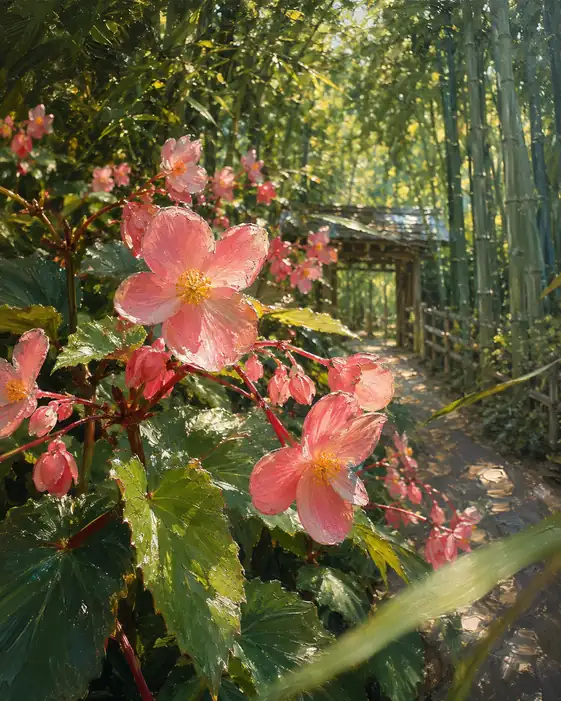 Threshold of the Sunlit Bamboo Gate
Similar Artworks
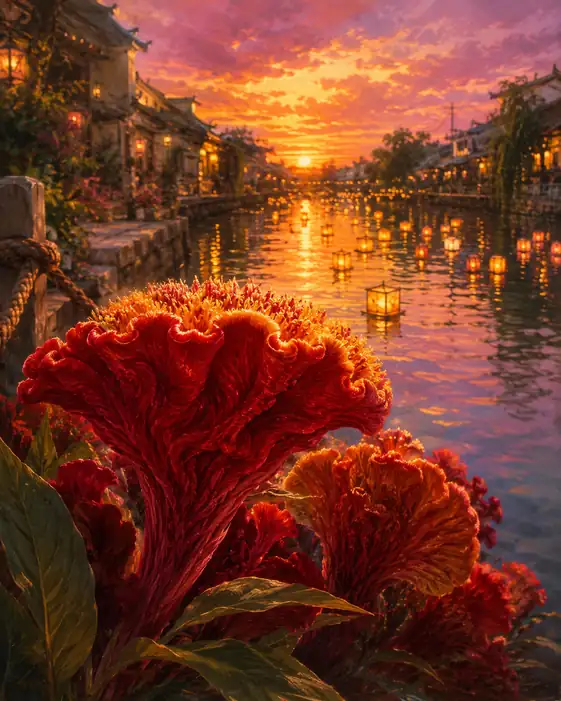 River of Lanterns and the Crimson Crest
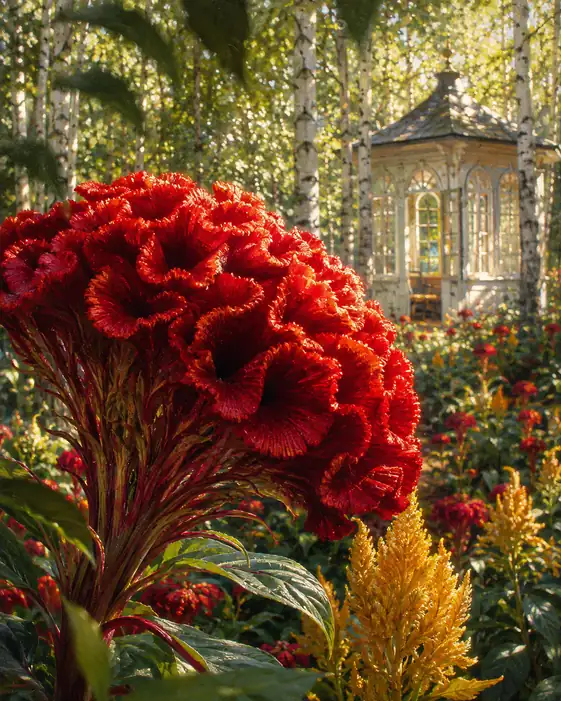 Velvet Crest in the Birch Garden
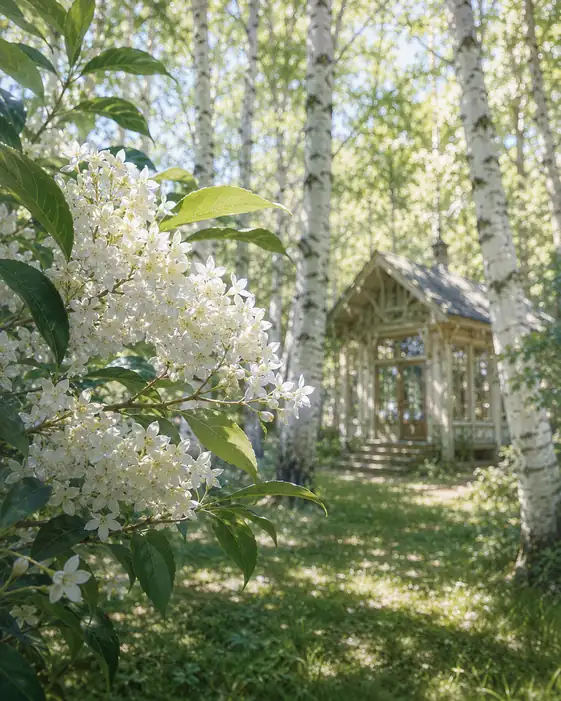 The Birch Gazebo and the White Canopy
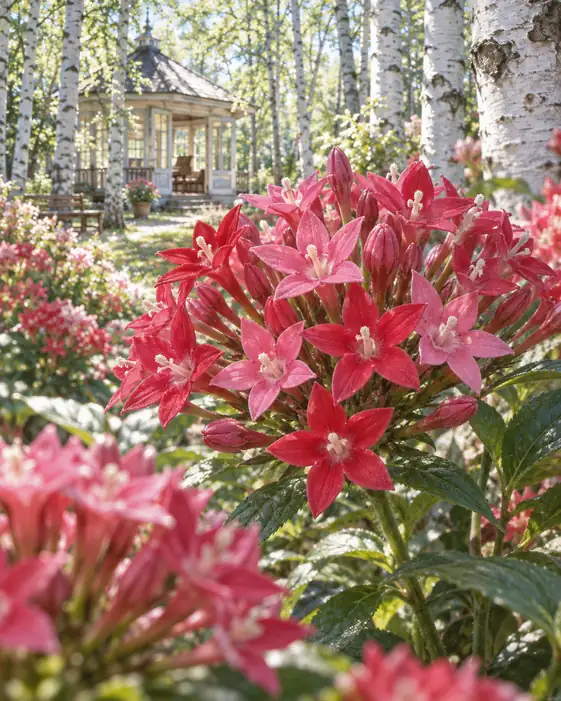 Pavilions Among the Birches
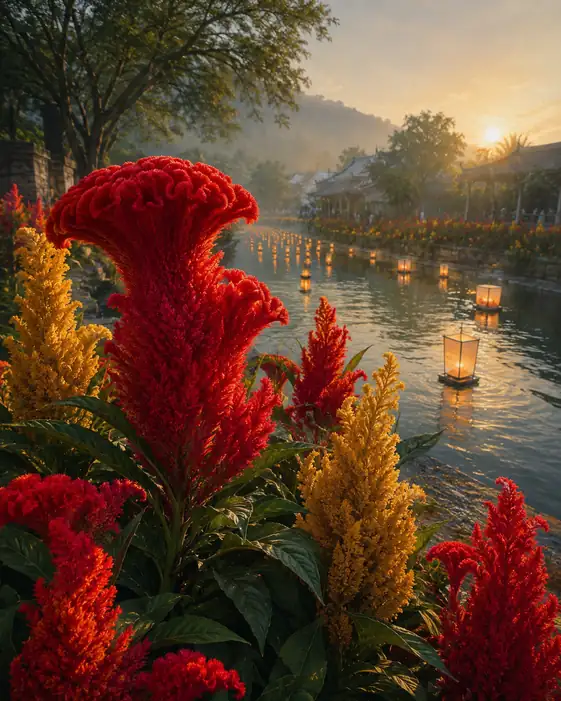 Prayers upon the Evening Stream
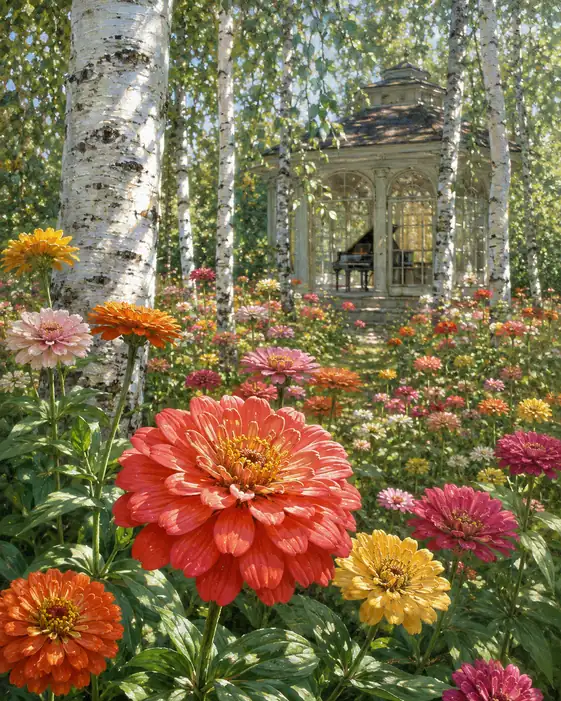 Melody in the Birch Grove
 Rudbeckia Path by the Birch Pavilion
 Canal of Drifting Lanterns and Cockscomb
 Beacon in the Fragrant Sunset
 Floating Lanterns and the Amber Bower