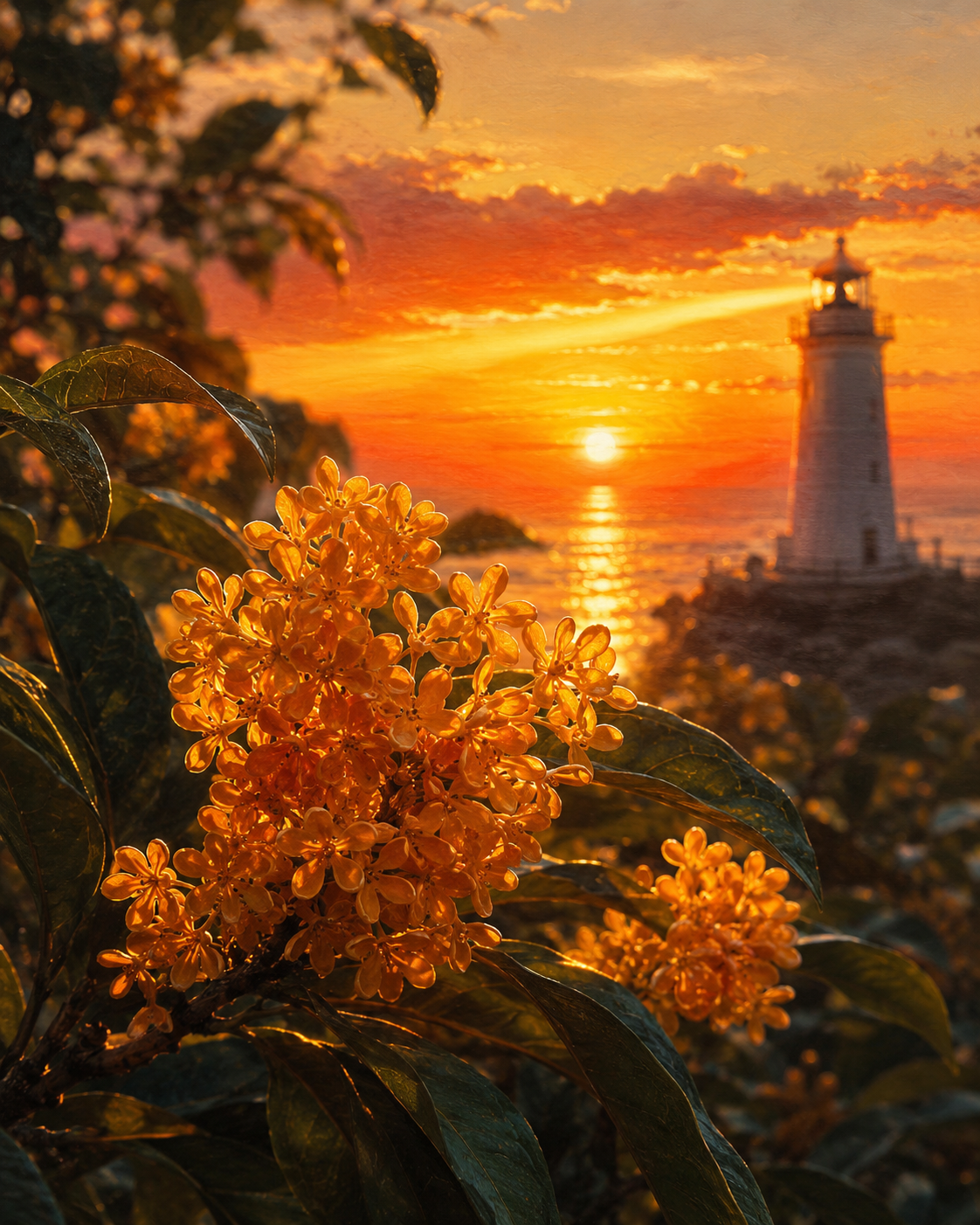
Where the Beacon Greets the Sunset
Critique
Introduction Orange blossoms fill the foreground of a coastal sunset, with a lighthouse standing on rocks at the right. The sun sits above the horizon near the center, and a separate beam extends leftward from the lantern room. The painting gathers natural and constructed light into a closely related range of gold and orange. Description The main flower cluster rises from a diagonal woody branch at the lower left. Rounded petals glow around darker centers, while long leaves carry thin illuminated edges and visible veins. A smaller cluster appears farther right. Behind them, the lighthouse has a shaded pale shaft, and the sun's reflection forms a broken vertical path across the sea. Analysis The large flowers balance the tall tower through their greater foreground scale. The lighthouse beam crosses the horizontal cloud bands, while the sun's reflection introduces a downward route through the center. Dark leaves separate blossoms from the similarly colored sky. Softened coastal details recede behind the sharper branch, preserving depth despite the narrow overall palette. Interpretation and Evaluation The two lights suggest different functions: the sun illuminates the whole setting, while the lighthouse projects a directed signal. The flowers receive the shared warmth without participating in that directional system. This distinction gives the composition more interest than a simple sunset view. Its most effective descriptive feature is the clear separation of petal translucency from leaf opacity. Conclusion The scene initially appears unified by orange light, but continued viewing reveals several distinct ways that light travels. The beam, sea reflection, and glowing petal edges form related yet different paths. By retaining dark foliage and a shaded tower, the painting gives its intense warmth enough structure to remain readable and spatially convincing.
Same Subcategory
 Vigil Beside the Distant Beacon
Similar Artworks
 Beacon in the Fragrant Sunset
 The Beacon and the Amaranth Meadow
 Beacon of Light, Petals of Blue
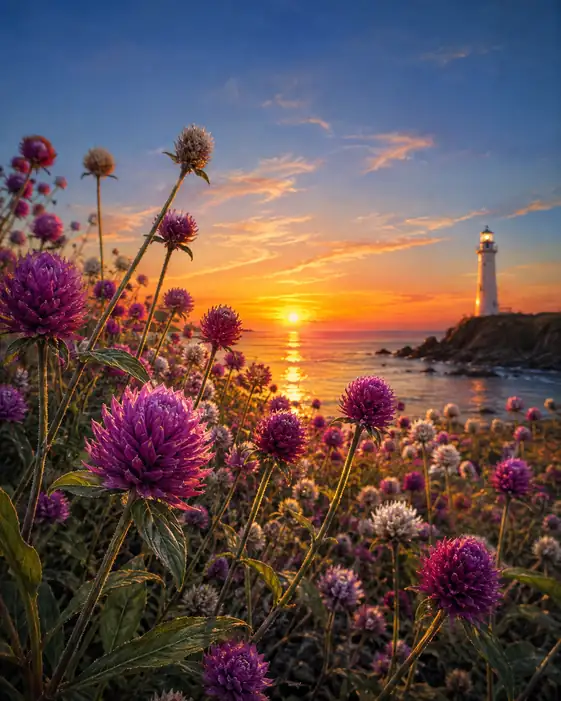 Sunset Beacon and the Amaranth Slope
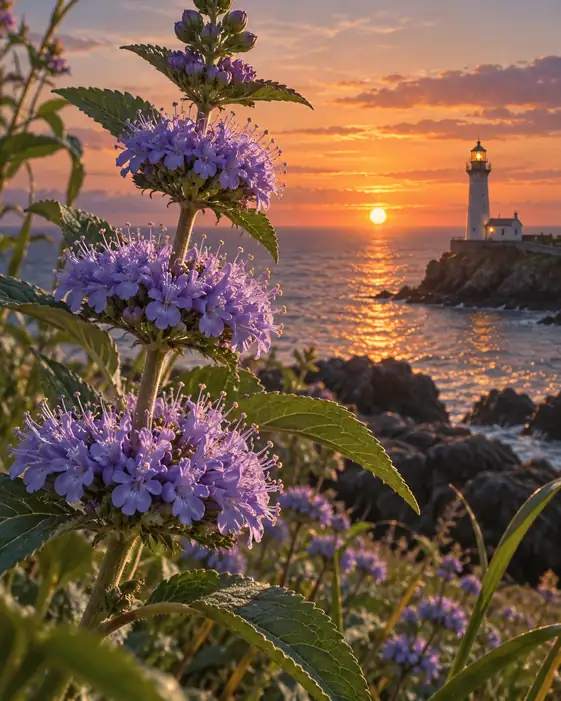 Cape Lighthouse and Sunset Caryopteris
 Twilight Cape, Lighthouse and Hydrangeas
 Lighthouse Beam and Sunset Caryopteris
 Cape Lighthouse in the Sunset Glow
 Promontory Trail at Golden Hour
 Beacon Beyond the Coastal Blooms