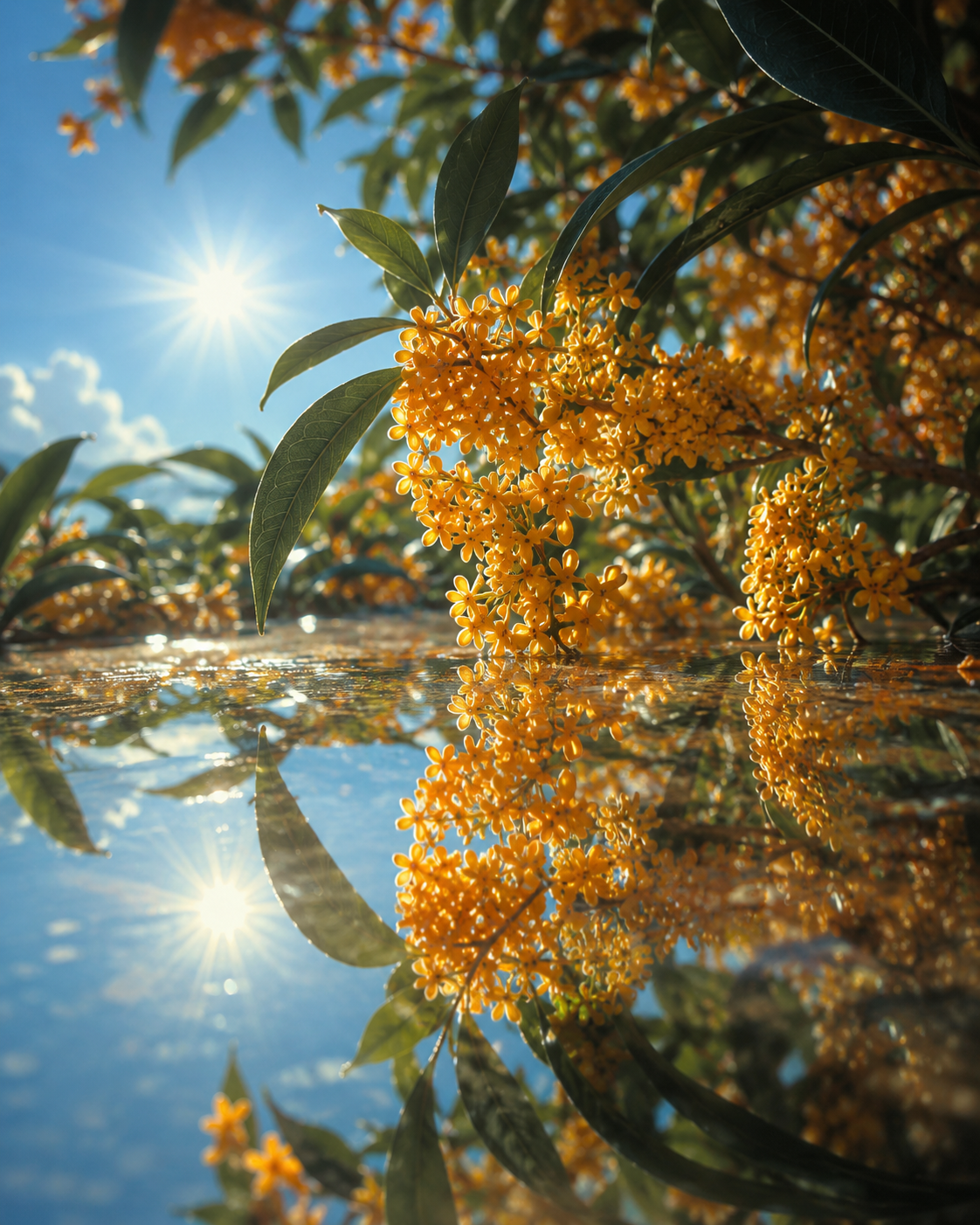
Two Suns in the Autumn Mirror
Critique
Introduction An orange flowering branch bends toward a reflective water surface beneath a clear blue sky. The painting places the meeting line of air and water near the middle, allowing the flowers and sun to appear twice. This near symmetry makes reflection itself as important as the detailed botanical subject above it. Description Small orange blossoms descend from branches on the right, accompanied by long pointed leaves. One leaf curves prominently downward to the left of the main cluster. The sun forms a bright starburst in the open sky and a second burst below. Tiny floating fragments and scattered highlights mark the otherwise smooth water between the original forms and their reflections. Analysis The upper flowers and their inverted counterparts create a vertical chain across the waterline. Dense foliage on the right balances the open blue area on the left. The reflected leaf bends in the opposite direction, reinforcing the central division. Slight softness and surface interruptions prevent the lower half from functioning as a completely identical repetition. Interpretation and Evaluation The scene encourages viewers to compare direct sight with an image carried by water. Its stillness depends less on empty space than on the stability of recognizable reflected forms. The handling of small surface particles is valuable because it keeps the water materially present, while the orange and blue contrast maintains clarity throughout the doubled composition. Conclusion What first reads as an abundant flowering branch becomes a study of visual correspondence and subtle difference. The reflected sun broadens the distribution of light, and the curved leaves help explain the inversion. Through restrained surface disturbance and clear spatial division, the painting turns a familiar reflection into its main organizing principle.
Same Subcategory
Similar Artworks
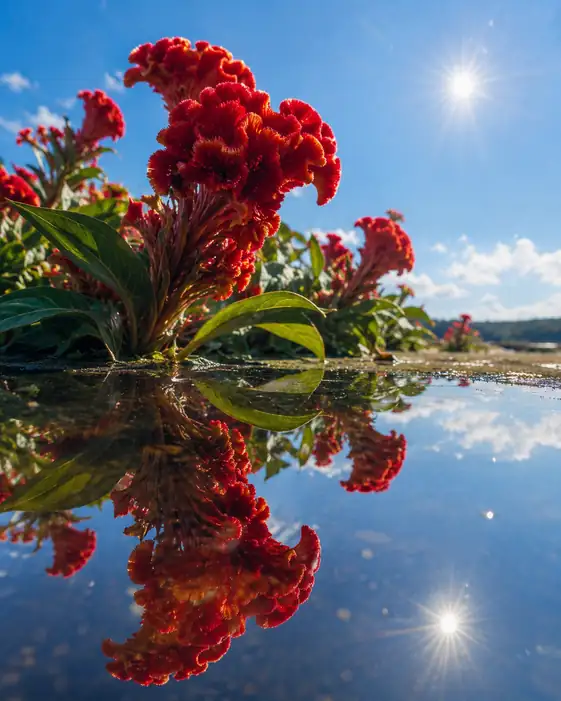 Symmetry in the Crimson Pool
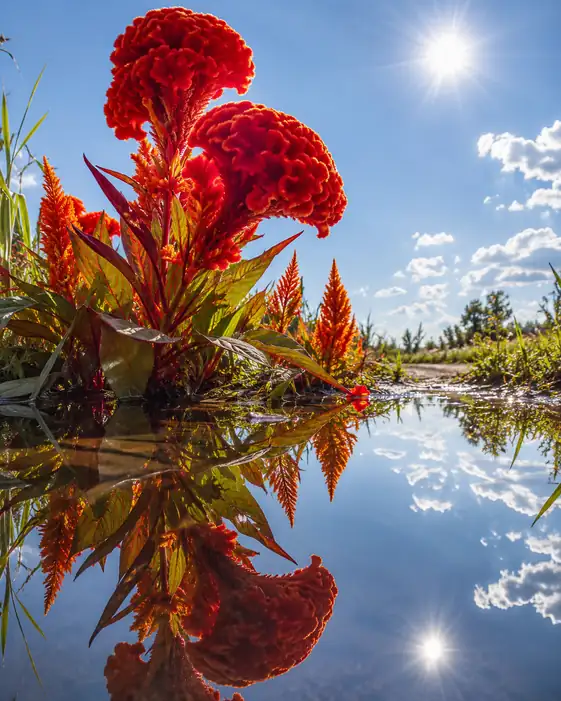 Two Suns in the Crimson Puddle
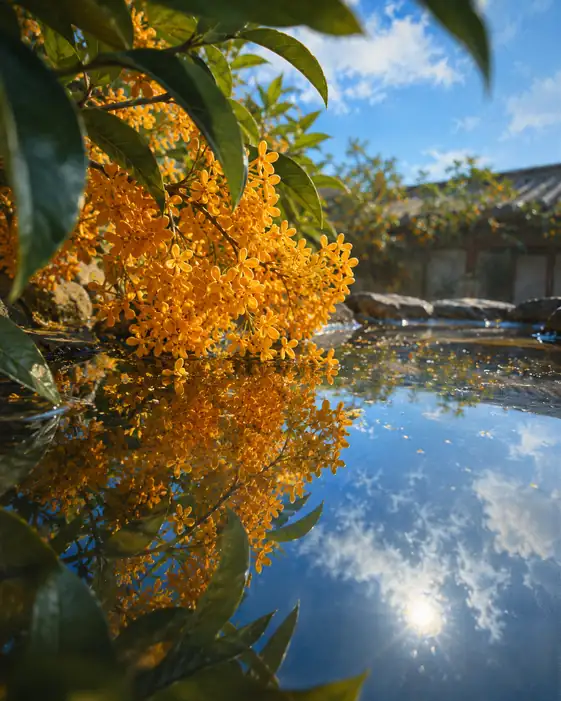 Azure Mirror of the Golden Bough
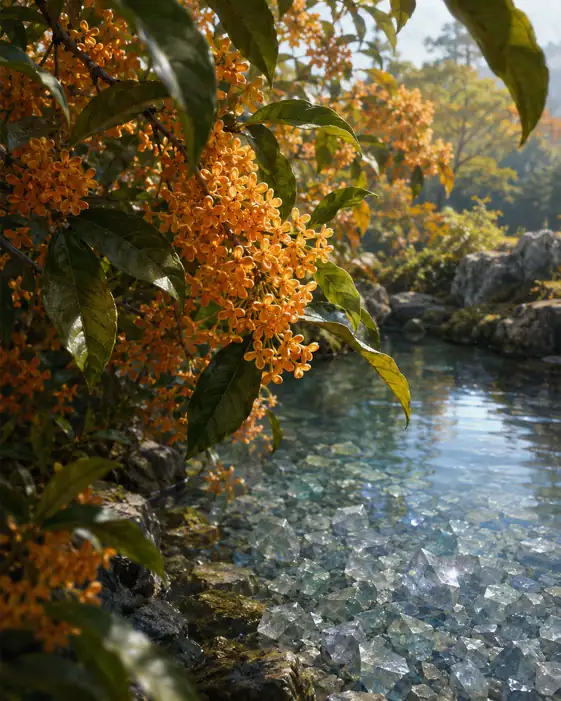 Where Fragrance Meets the Crystal Stream
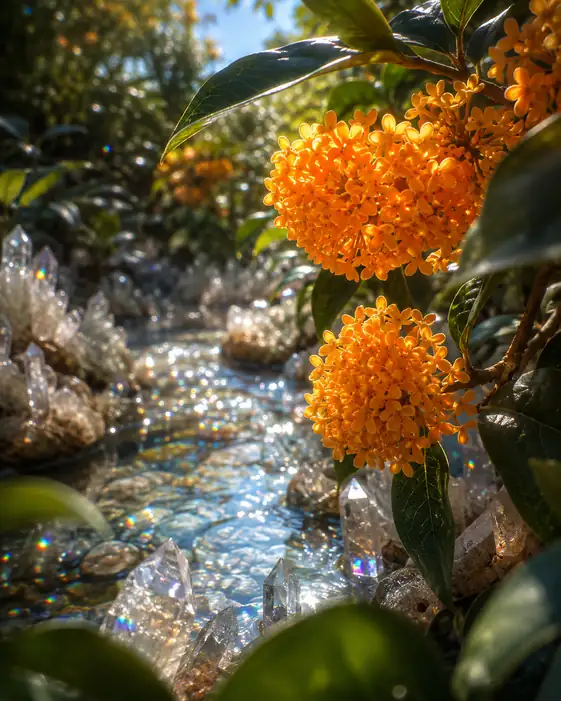 Twin Blooms Above the Crystal Brook
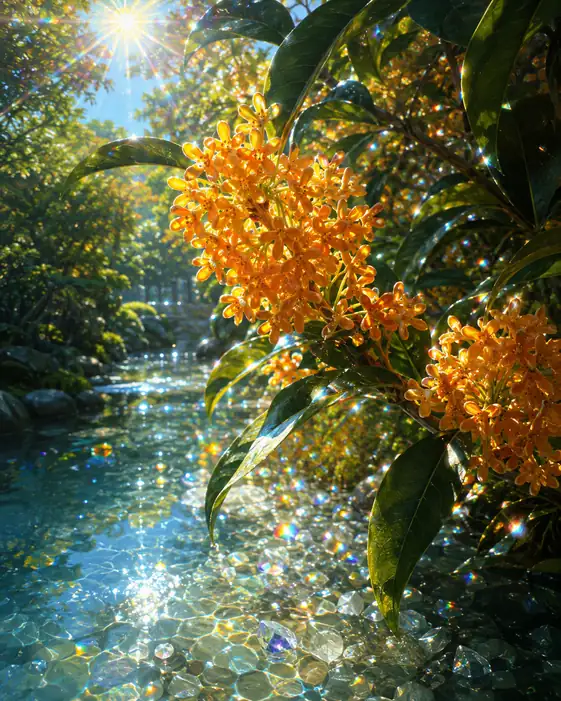 Where Sunlight Becomes Crystal
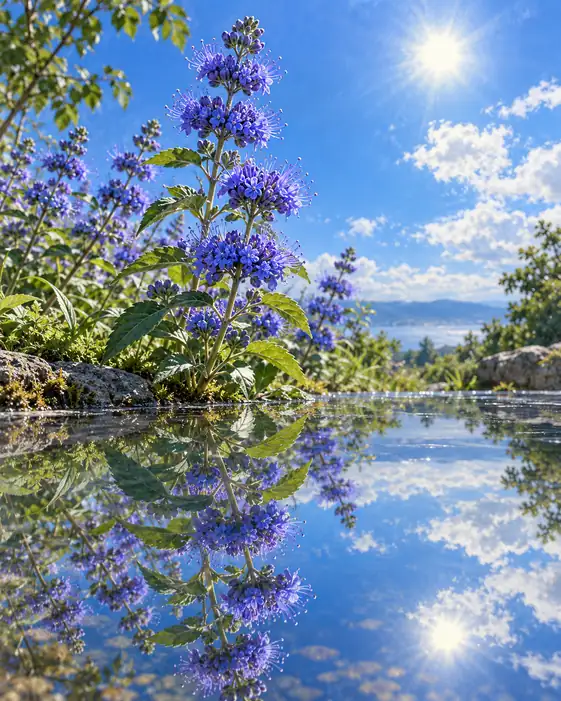 Caryopteris Reflected in the Sky Mirror
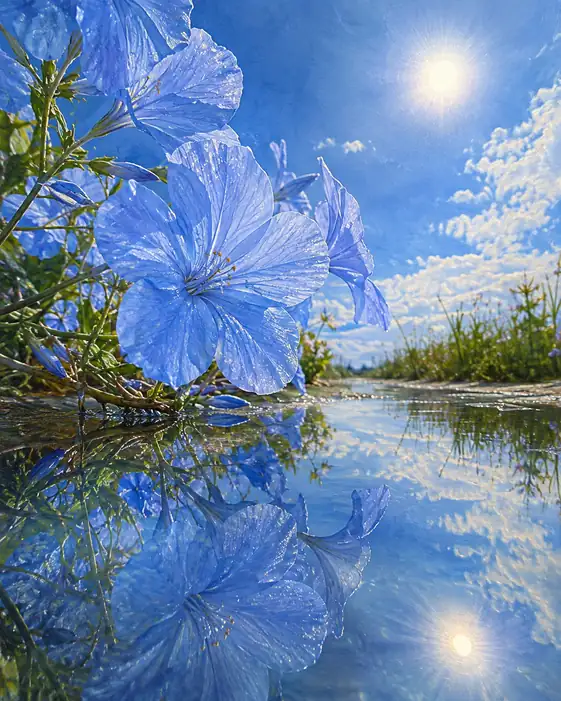 Azure Reflections in the Water Mirror
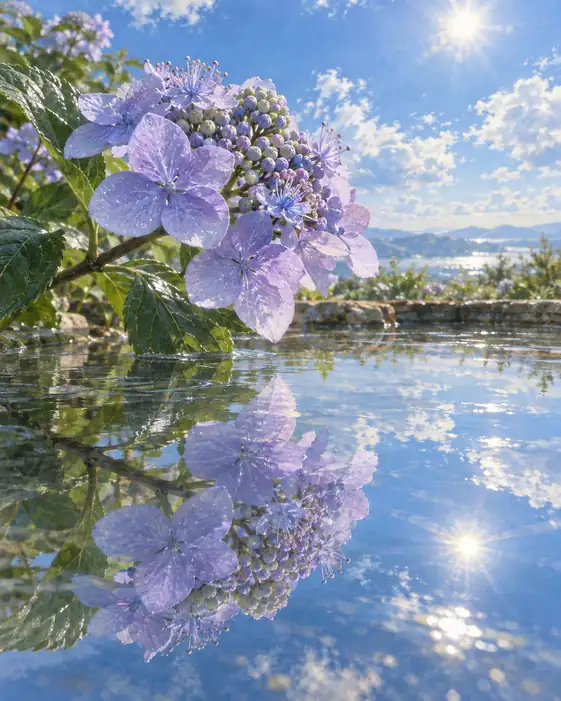 Ripples of Light, Hydrangeas Mirrored in Summer
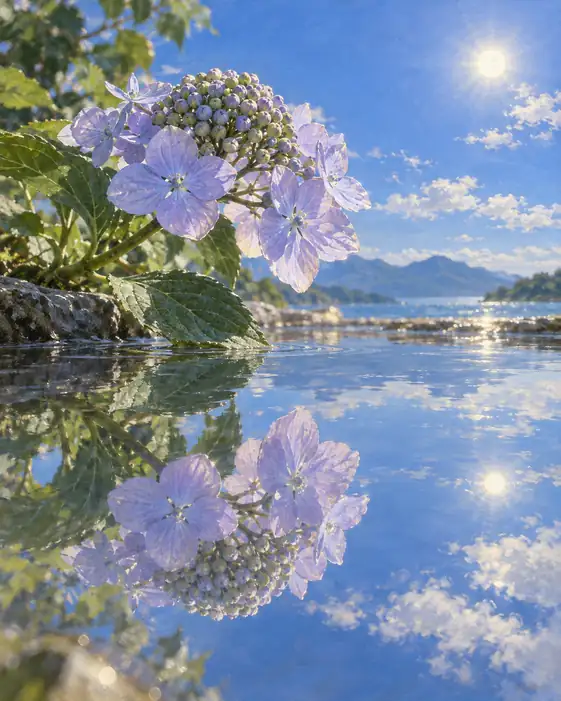 Flower Reflected in Azure Waters