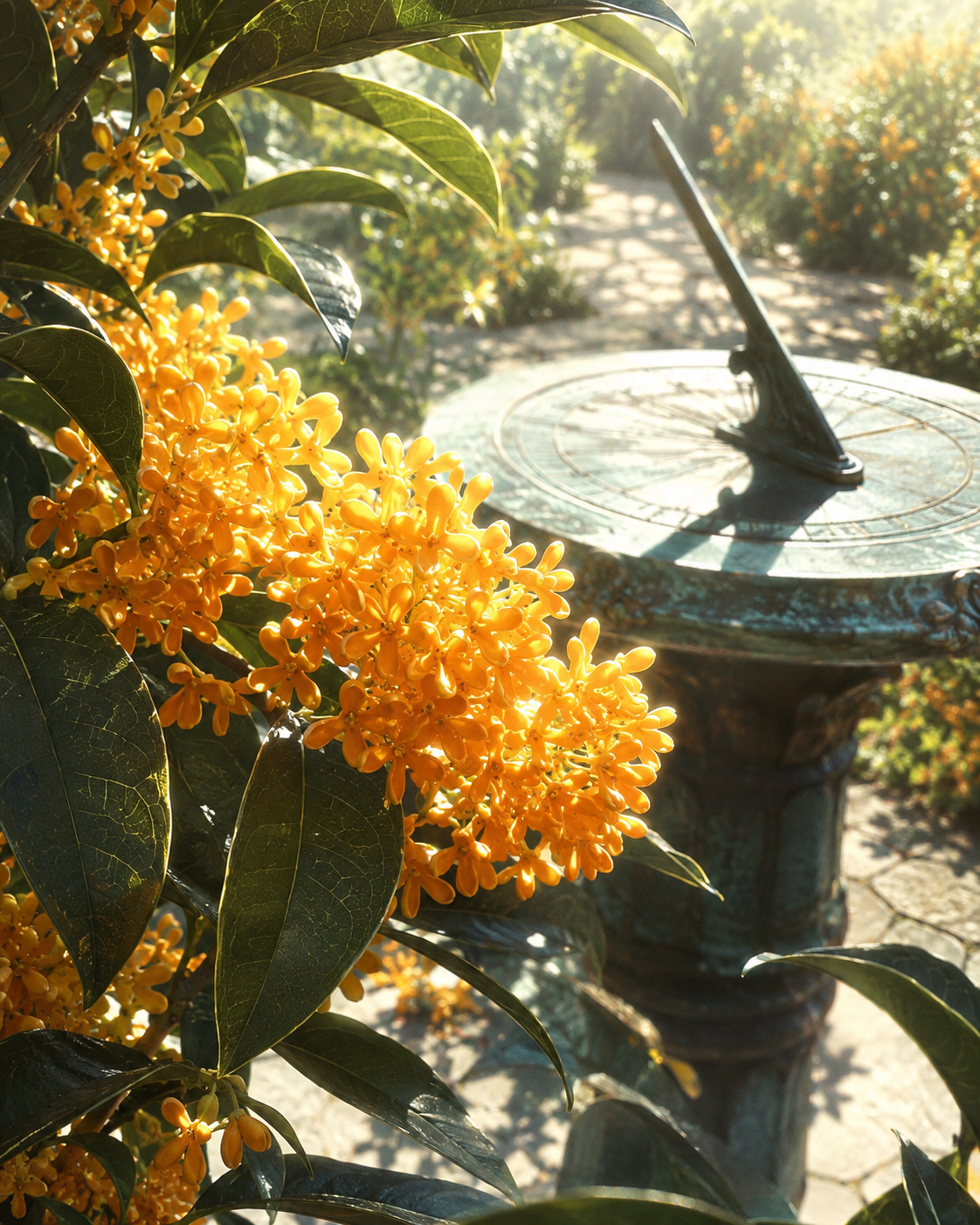
Hours Carved in Amber Light
Critique
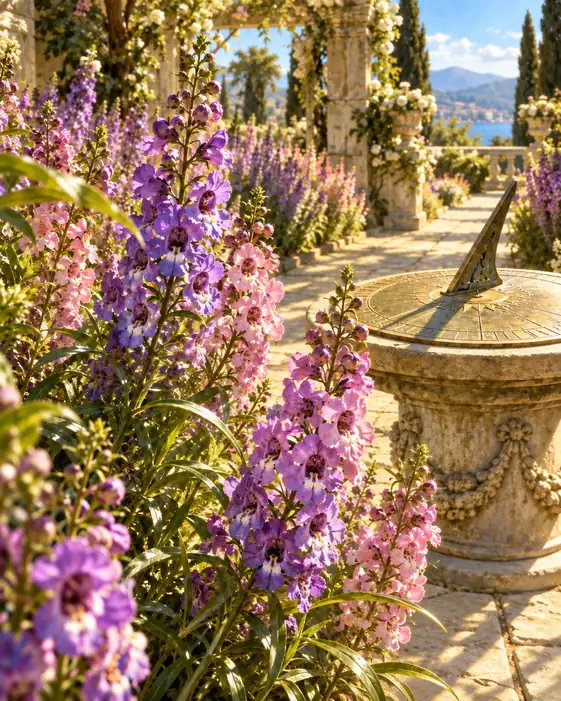
Introduction Bright orange flowers stand close to a garden sundial in this sunlit painting. The branch fills the left foreground, while the circular dial and its pointed upright occupy the right. Their proximity encourages attention to the way sunlight reveals living surfaces and simultaneously produces a measurable shadow on a constructed plane. Description Dense flower clusters extend across broad, dark leaves with clearly visible vein networks. Behind them, the sundial rests on a substantial pedestal with mottled blue green surfaces. Concentric rings and radial divisions mark its face. A long triangular shadow crosses the disc, and a paved path continues through softly rendered flowering shrubs in the background. Analysis The diagonal flower mass overlaps the circular dial, preventing the composition from separating into two isolated halves. Leaf veins and dial markings offer contrasting kinds of linear detail. Strong light makes the petals yellow at their edges, while the pedestal remains subdued. The upright pointer directs attention toward the receding path and the brighter upper background. Interpretation and Evaluation The sundial makes the passage of time explicit through its shadow, whereas the blossoms imply time through growth and flowering. This comparison arises from visible objects rather than added narrative. The painting handles the contrast between organic networks and geometric divisions effectively, and its surface detail gives both subjects enough specificity to sustain close viewing. Conclusion An attractive garden close view becomes a reflection on how light both describes and measures. The warm flowers remain dominant, but the sundial changes the significance of their illumination. Through overlapping shapes, contrasting textures, and a legible cast shadow, the composition gives a familiar garden setting a clear conceptual focus.
Same Subcategory
Similar Artworks
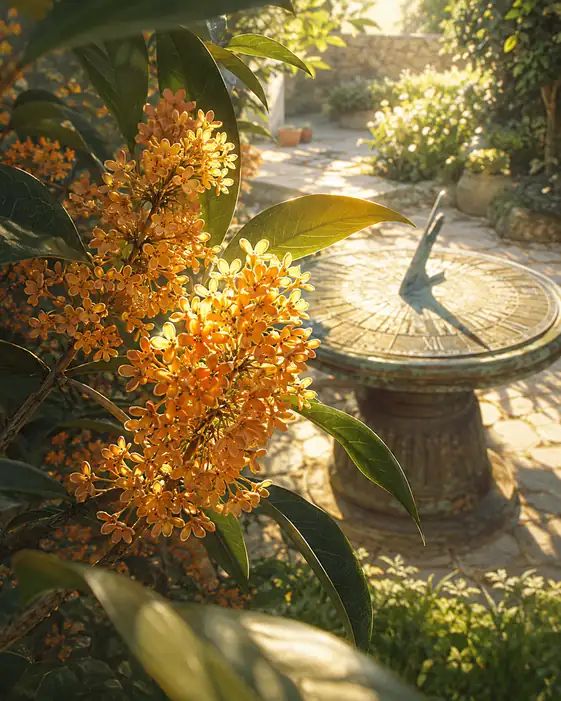 The Sundial and the Autumn Bloom
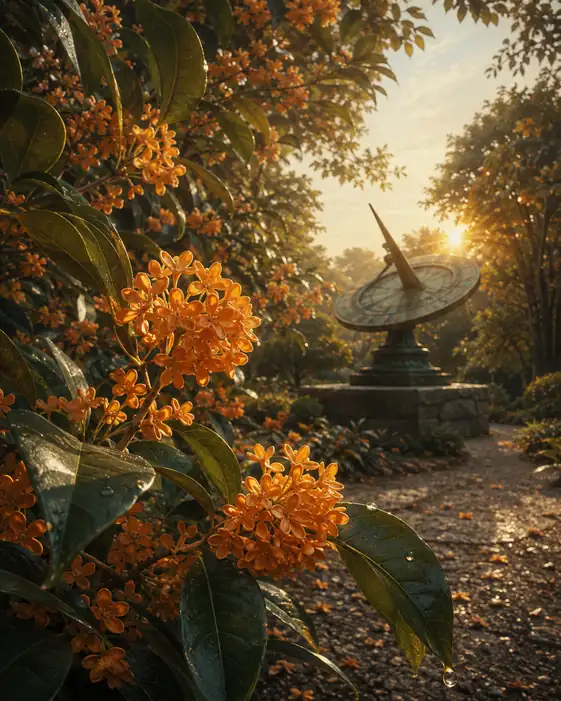 The Measure of a Golden Hour
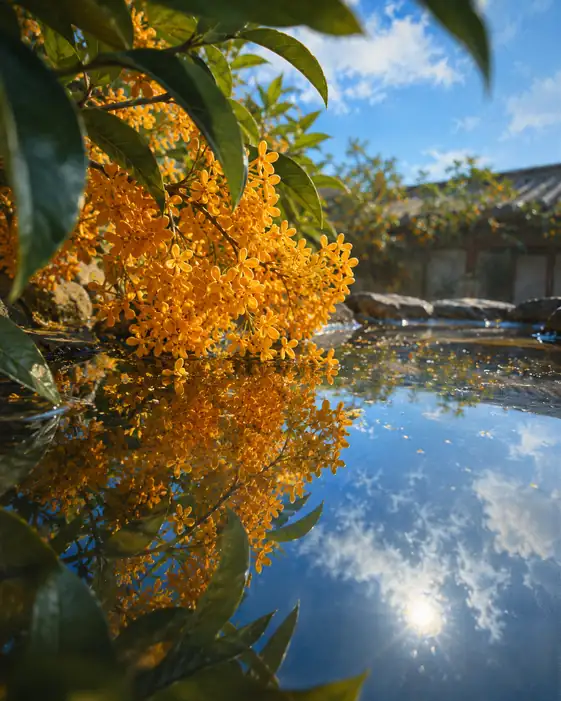 Azure Mirror of the Golden Bough
 Twin Blooms Above the Crystal Brook
 Gilded Clusters Beneath Tiled Roofs
 Steps Across the Amber Current
 Hours Measured in Garden Shadows
 Where Sunlight Becomes Crystal
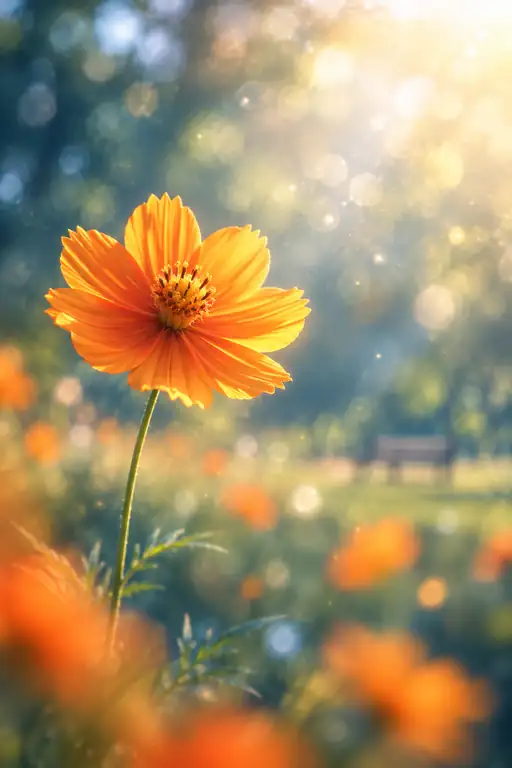 Quiet Rest in the Autumn Park
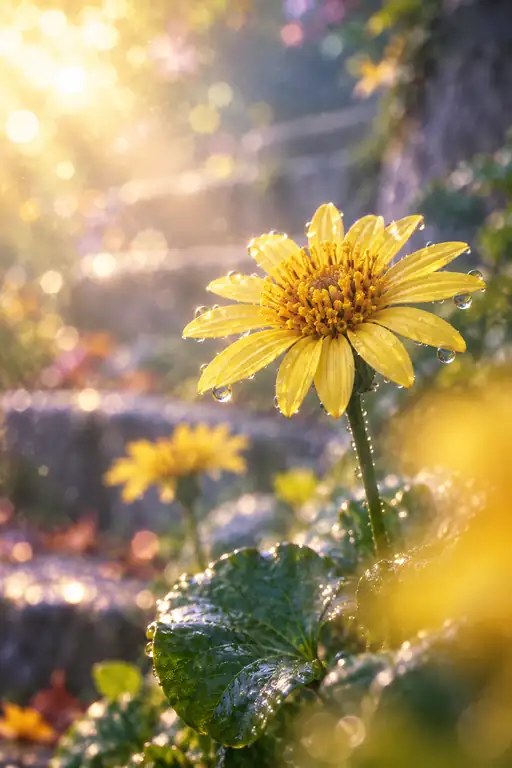 Drops of Sunlight on the Temple Steps