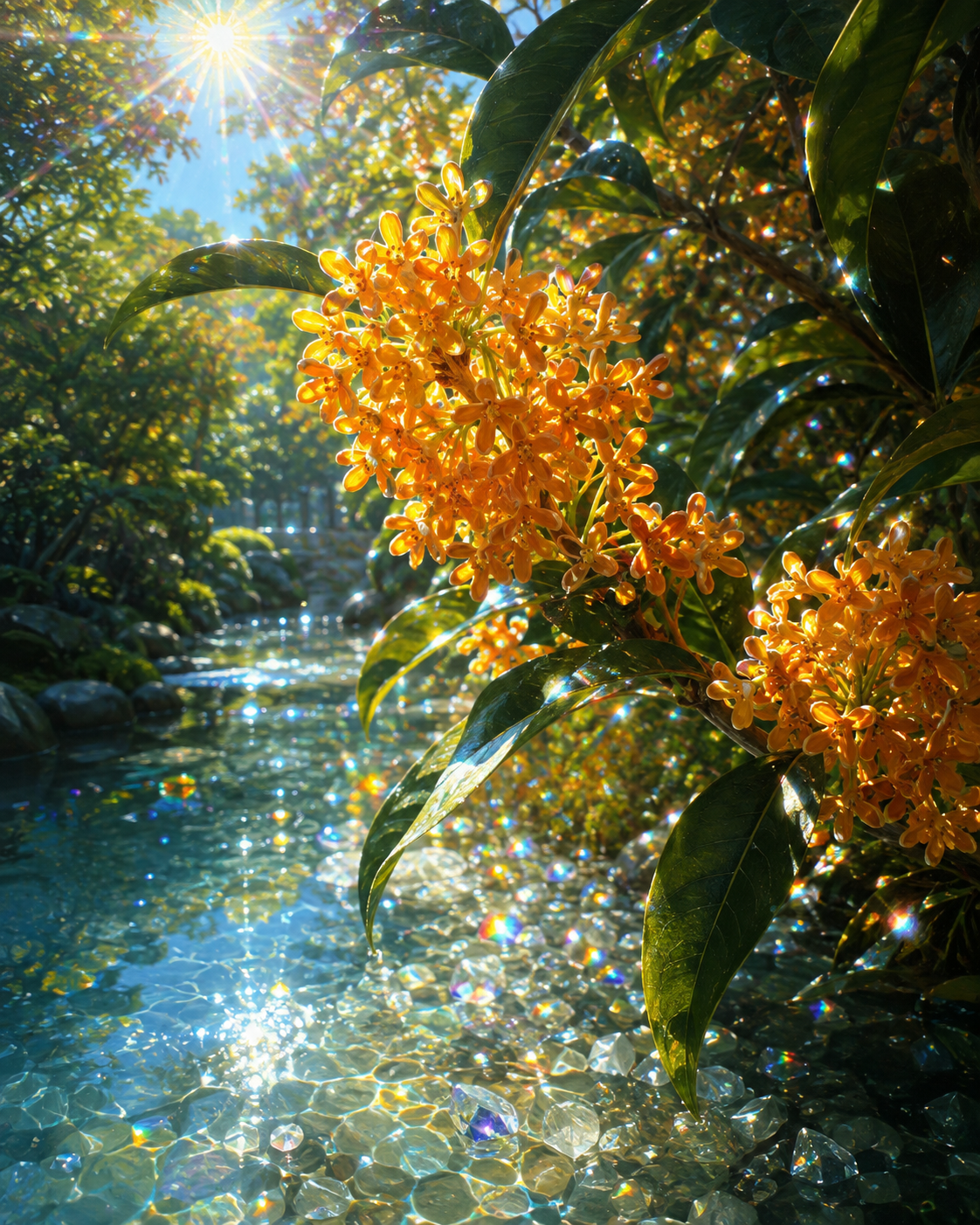
Where Sunlight Becomes Crystal
Critique
Introduction Orange blossoms hang over a clear blue stream in a woodland scene filled with bright reflections. The largest cluster occupies the upper center, supported by glossy leaves entering from the right. Sunlight breaks through the upper left canopy, establishing an energetic relationship between translucent petals, water, and faceted forms along the streambed. Description The flowers consist of many small lobed petals, with illuminated edges surrounding darker centers. Long leaves curve downward over the water. Rounded stones and clear angular pieces are visible beneath the ripples, especially near the bottom. Farther back, the stream narrows between shaded banks, while scattered points of color sparkle through the surrounding foliage. Analysis The right side carries the heavier mass of leaves and flowers, balanced by the open channel on the left. A descending leaf points toward the bright foreground water, linking the floral subject to the streambed. Orange and turquoise create a strong color opposition. Repeated highlights unify the scene, though their density reduces the quiet intervals between focal areas. Interpretation and Evaluation The image emphasizes light as something transformed by each surface rather than simply cast upon a landscape. Petals transmit warmth, leaves reflect sharp streaks, and angular transparent forms break brightness into colors. This varied treatment gives the scene its imaginative character. Botanical detail remains useful because it supplies recognizable structure within the more spectacular optical effects. Conclusion The initial brilliance gradually resolves into a comparison of different kinds of transparency and reflection. The composition successfully connects overhead growth with the visible streambed through curved leaves and recurring orange accents. Its expressive intensity depends on abundant sparkle, while the shaded banks provide enough depth to keep that display spatially organized.
Same Subcategory
Similar Artworks
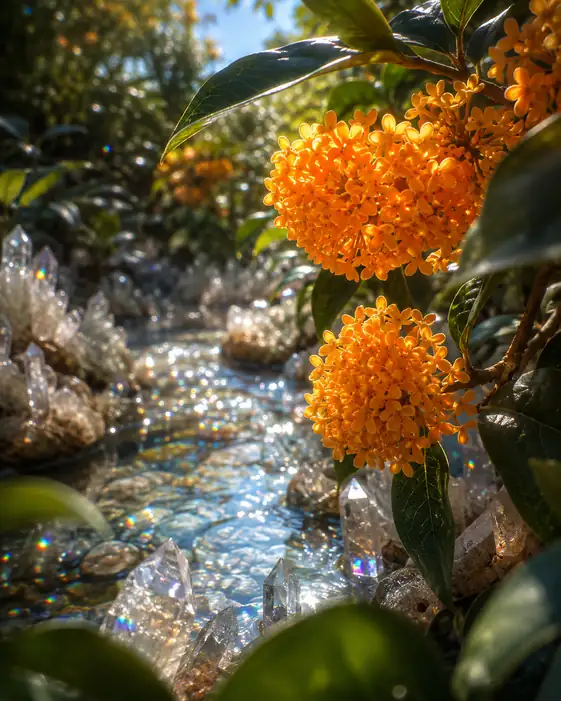 Twin Blooms Above the Crystal Brook
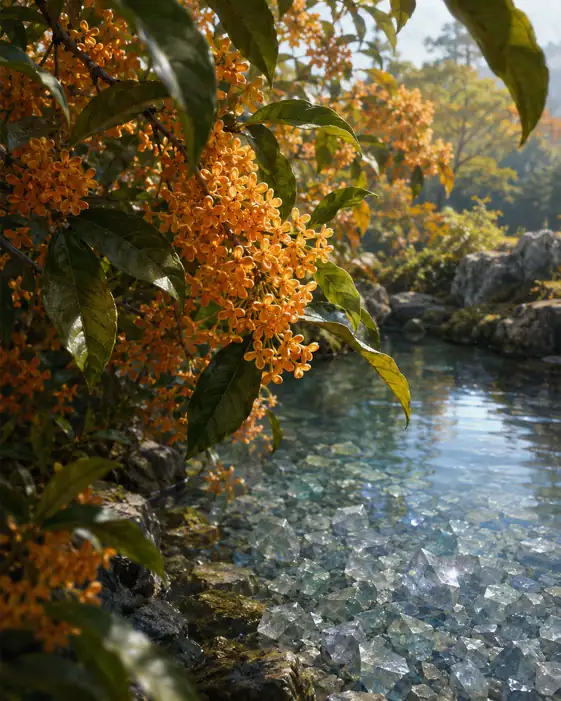 Where Fragrance Meets the Crystal Stream
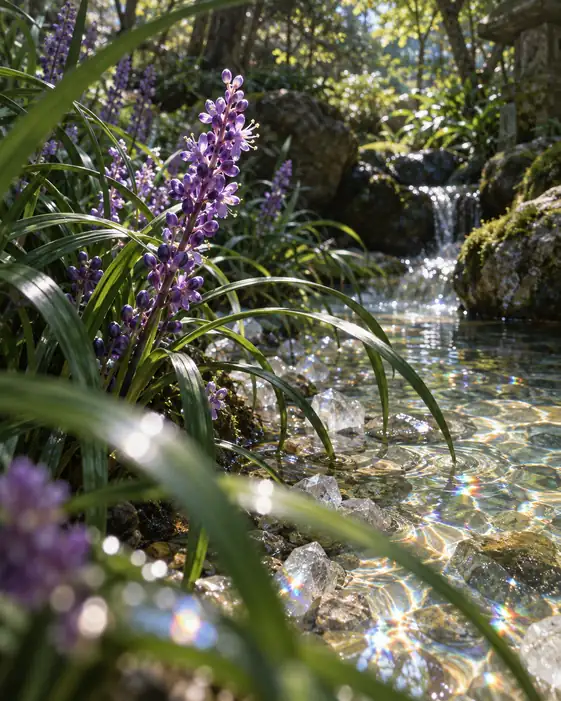 Crystals in the Woodland Stream
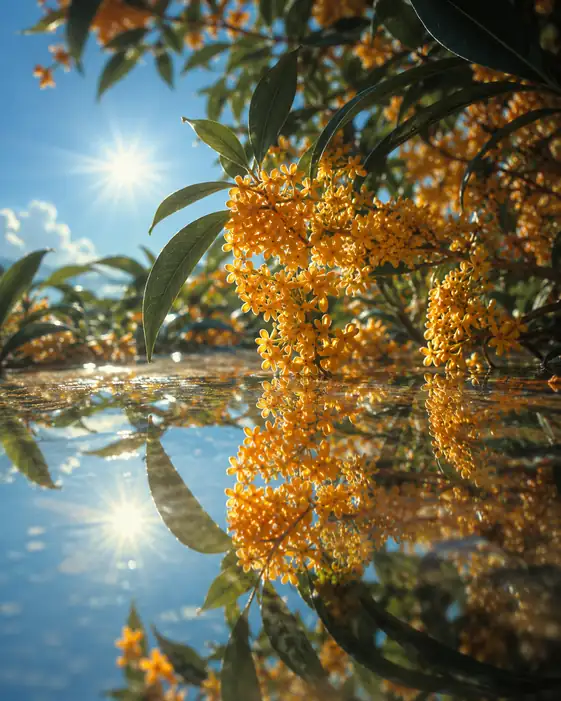 Two Suns in the Autumn Mirror
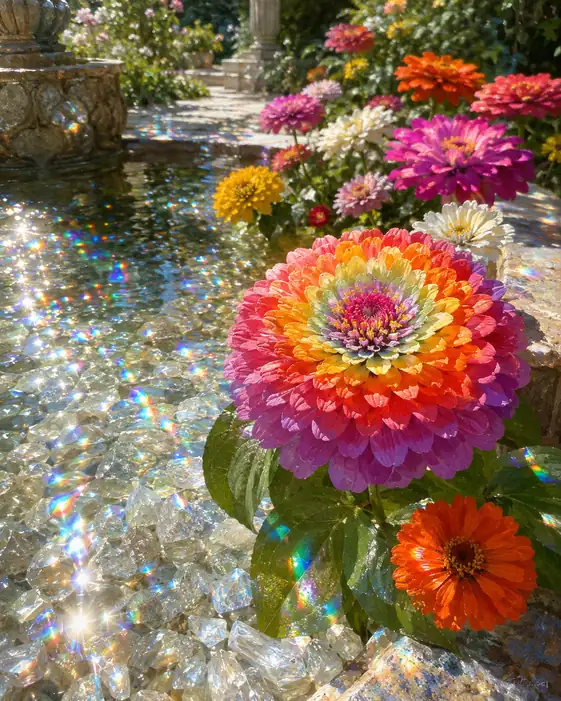 Prisms Across the Crystal Fountain
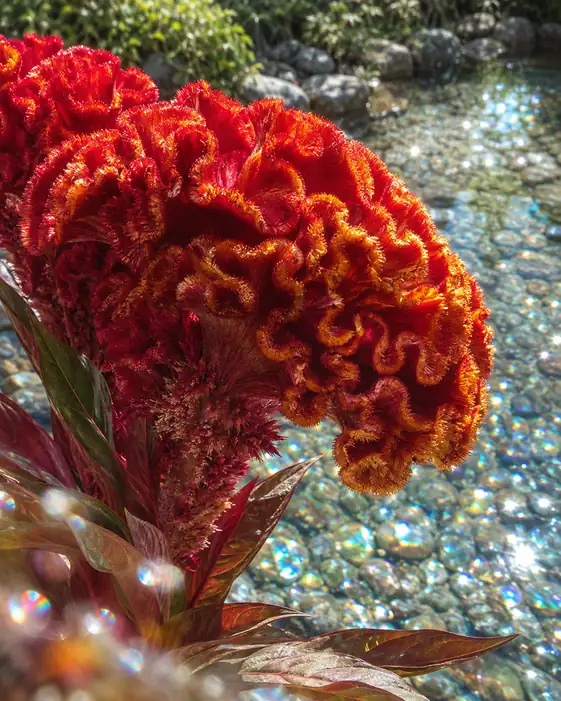 Crimson Ruffles Over the Shallows
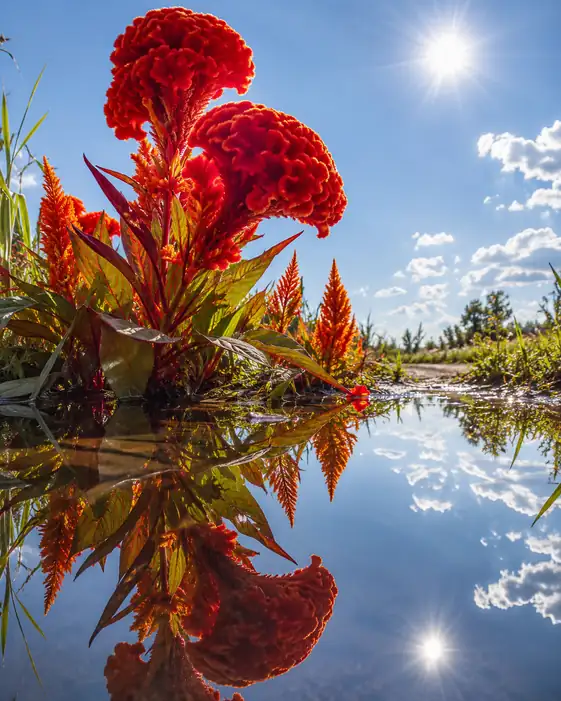 Two Suns in the Crimson Puddle
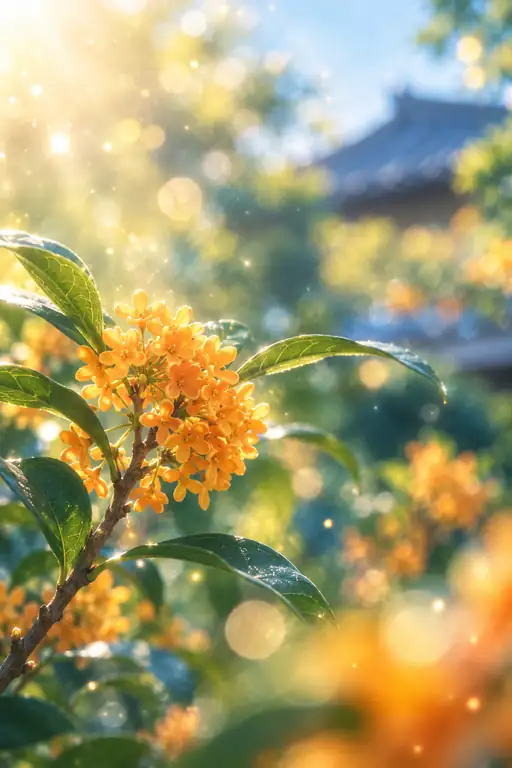 Gilded Clusters Beneath Tiled Roofs
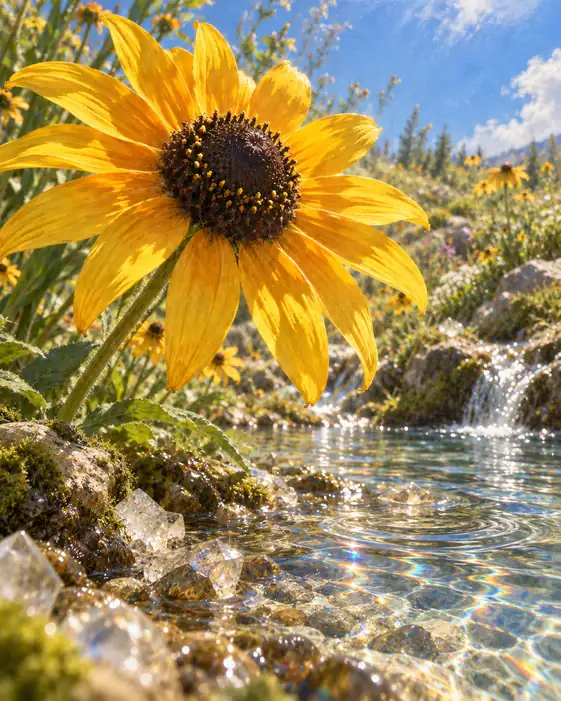 Crystals by the Brookside Bloom
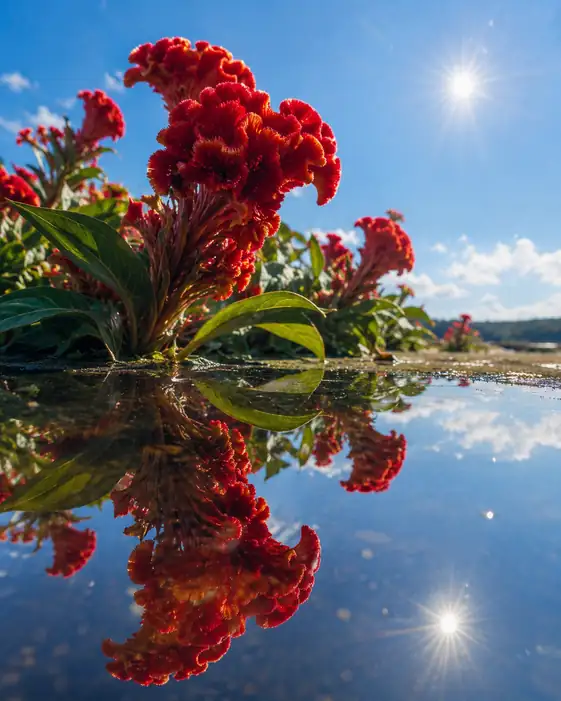 Symmetry in the Crimson Pool