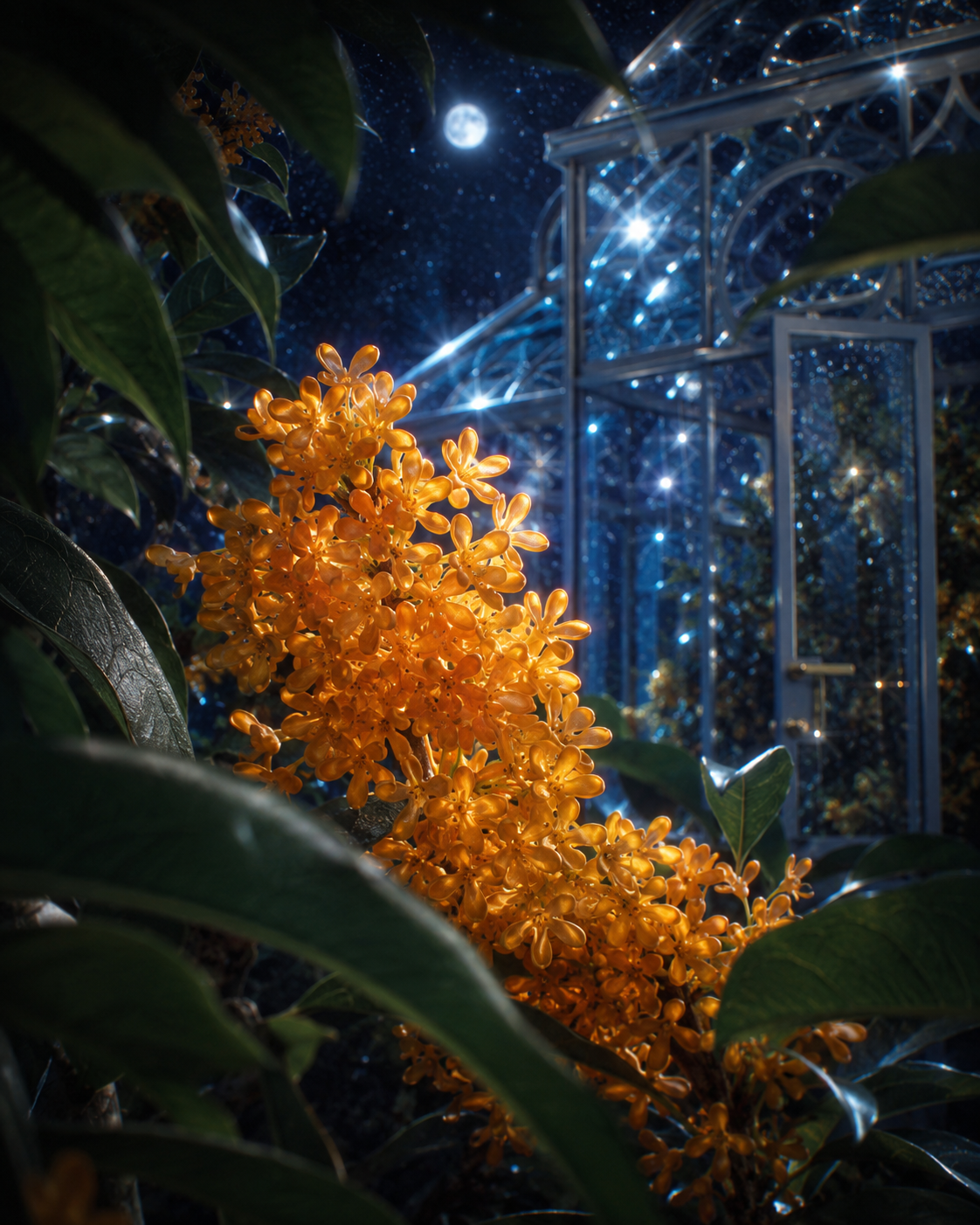
Amber Bloom Beneath the Midnight Glass
Critique
Introduction Orange flower clusters glow before a glasshouse in a deep blue night setting. Broad dark leaves frame the foreground, and a small moon appears above the flowers. The painting makes warm botanical color its principal attraction while using the glass structure to distribute cool points of brilliance across the background. Description Numerous small, rounded petals gather along a diagonal branch running toward the lower right. Their illuminated edges remain visible even within the dense cluster. The glasshouse rises behind them with pale metal divisions, decorative curves, and an open door. Sharp starbursts mark its framework, while tiny blue lights scatter across the sky and glazing. Analysis The orange diagonal cuts across the mostly upright architecture, giving the composition a clear movement through depth. Large leaves overlap its lower section and darken the margins. Blue and orange reinforce each other through temperature contrast, while the strongest glass reflections compete with the petals. Differences between soft peripheral foliage and sharp highlights intensify the staged lighting. Interpretation and Evaluation The open door offers a possible passage into the illuminated structure, but the flowers remain the more immediate destination for the eye. Their concentrated warmth gives the scene an inviting quality within surrounding darkness. The material contrast is persuasive at the level of petals, leathery leaves, and reflective panes, although the abundant sparkles create a deliberately heightened atmosphere. Conclusion The image develops from a striking color contrast into a study of how separate surfaces carry light. Its diagonal floral mass and architectural frame provide a stable organization for the many bright accents. The result is a nocturnal garden scene whose expressive strength rests on carefully arranged illumination and overlapping forms.
Same Subcategory
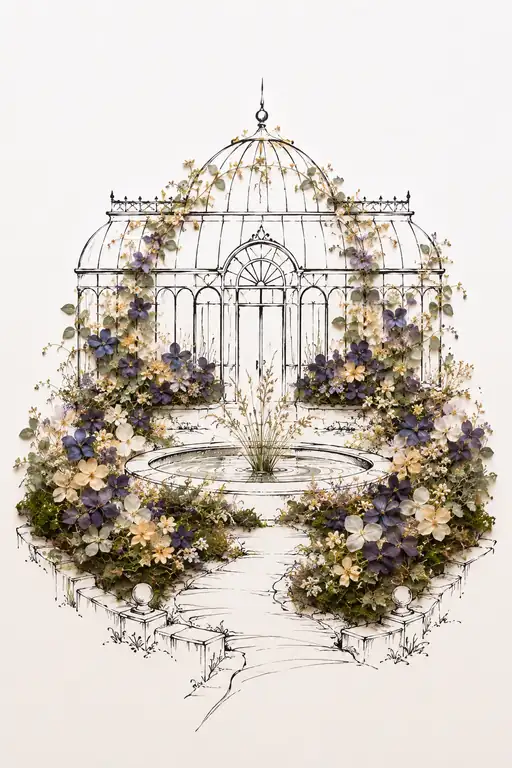 Glass Conservatory Gilded in Violet Blossoms
Similar Artworks
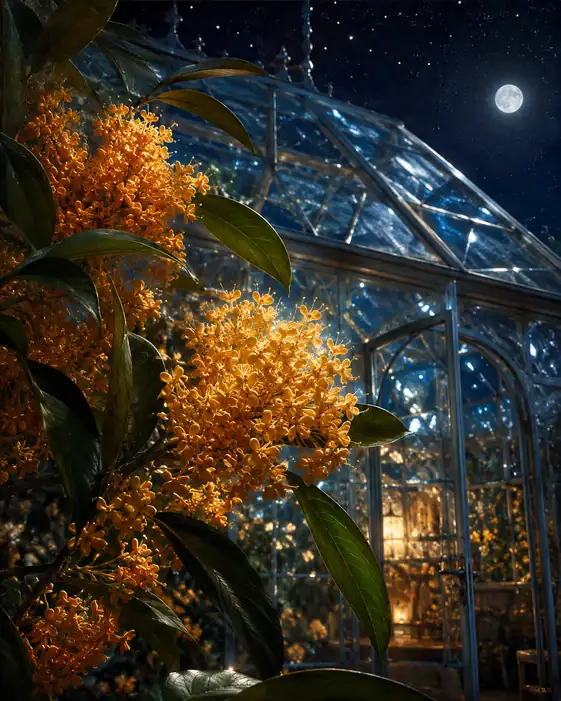 Threshold of the Moonlit Glass
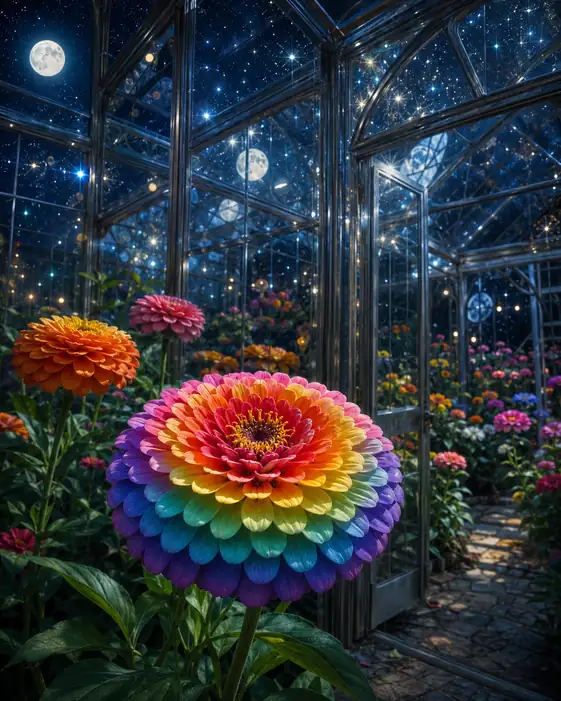 Prism Under a Mirrored Moon
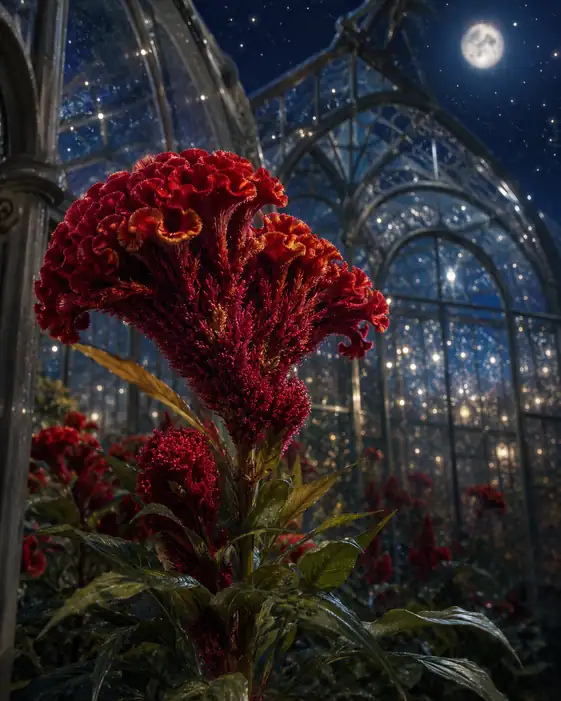 Gothic Conservatory Under the Harvest Moon
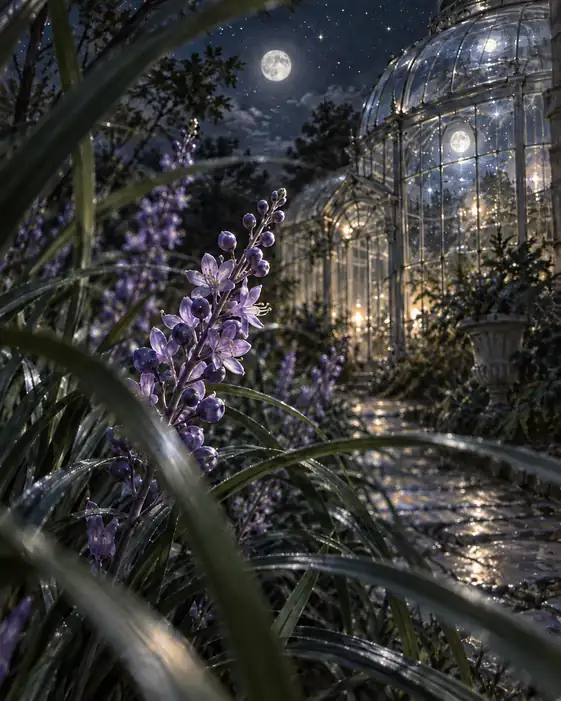 Palace of Starlight and Glass
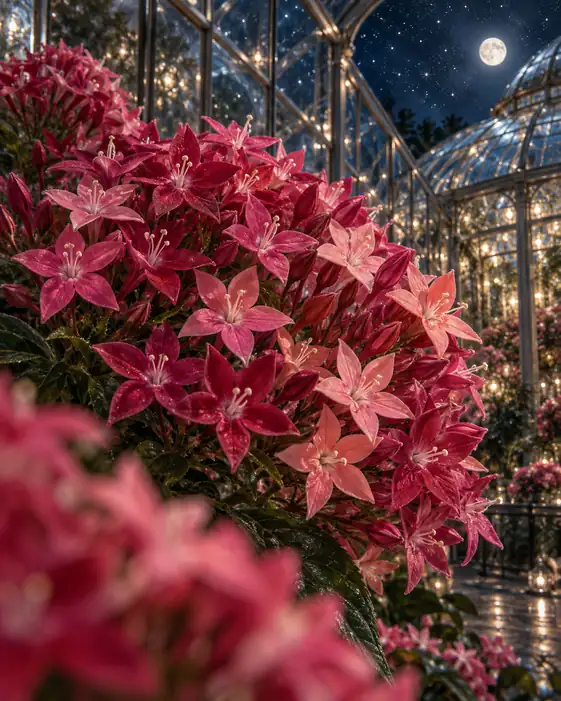 Constellation in the Glass Pavilion
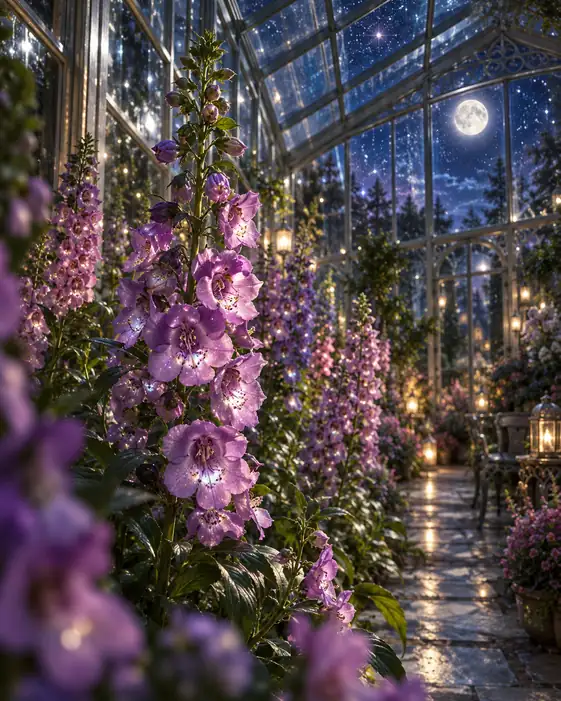 Constellations Within the Glasshouse
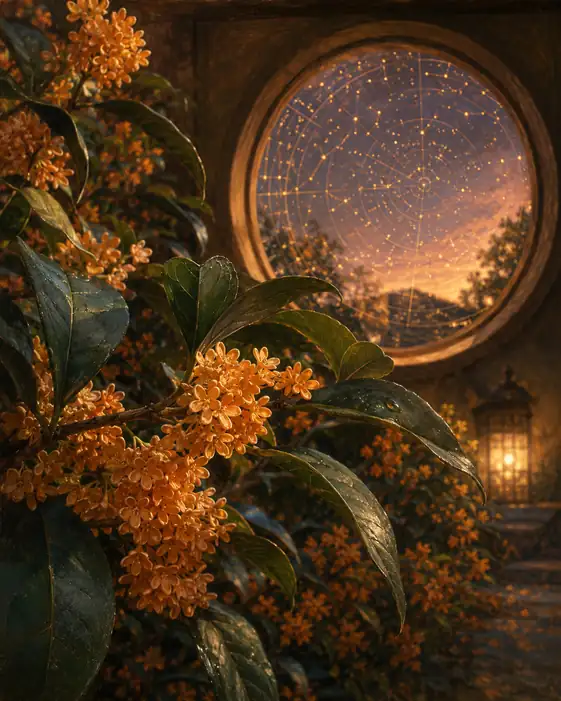 Celestial Chart Beyond the Scented Window
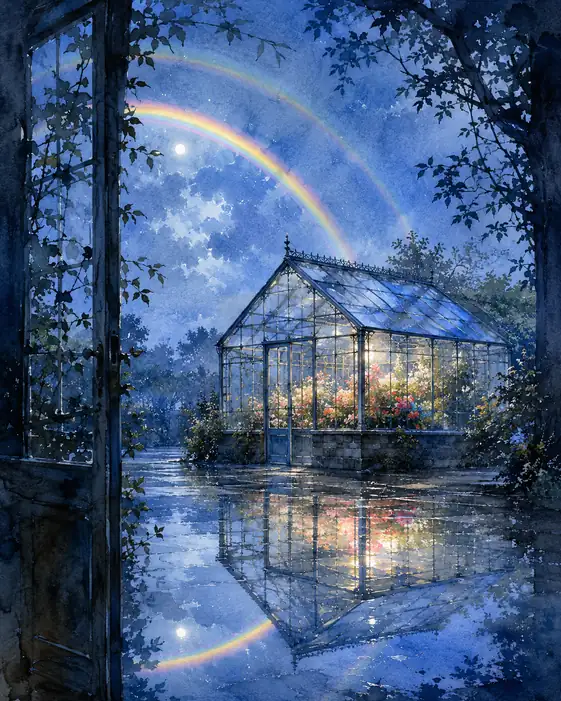 The Moonbow Greenhouse at Midnight
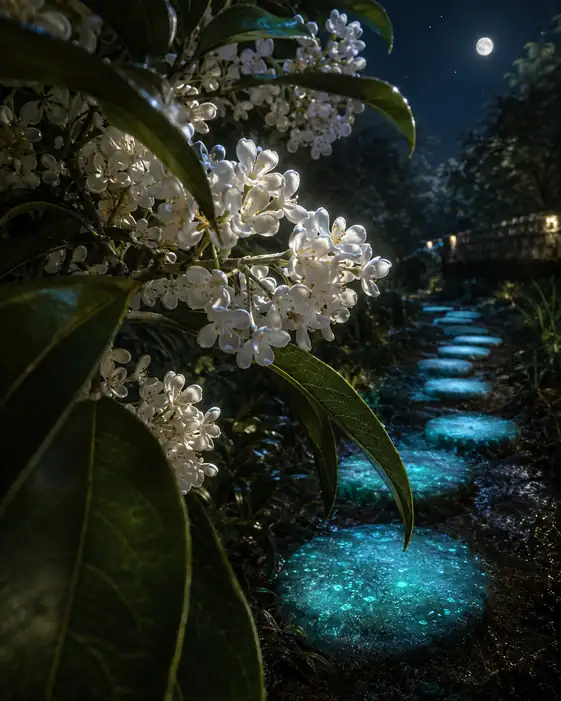 Stepping Stones of Cyan Fire
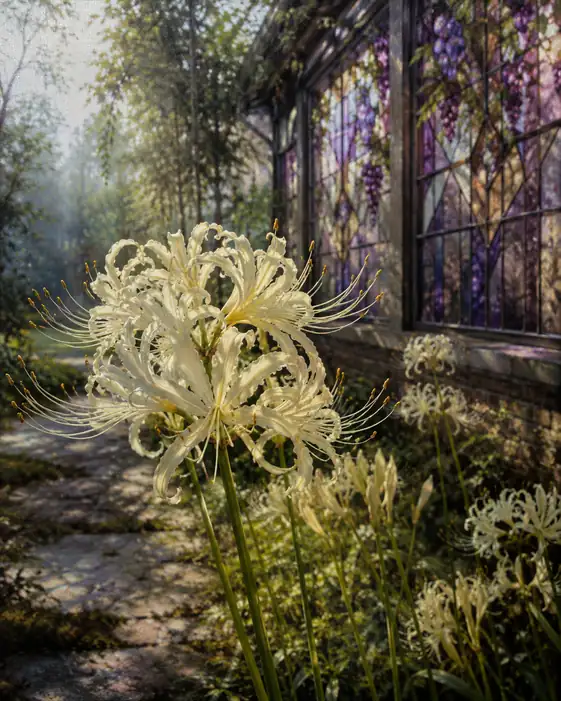 Sunlit Conservatory and Elegant Petals