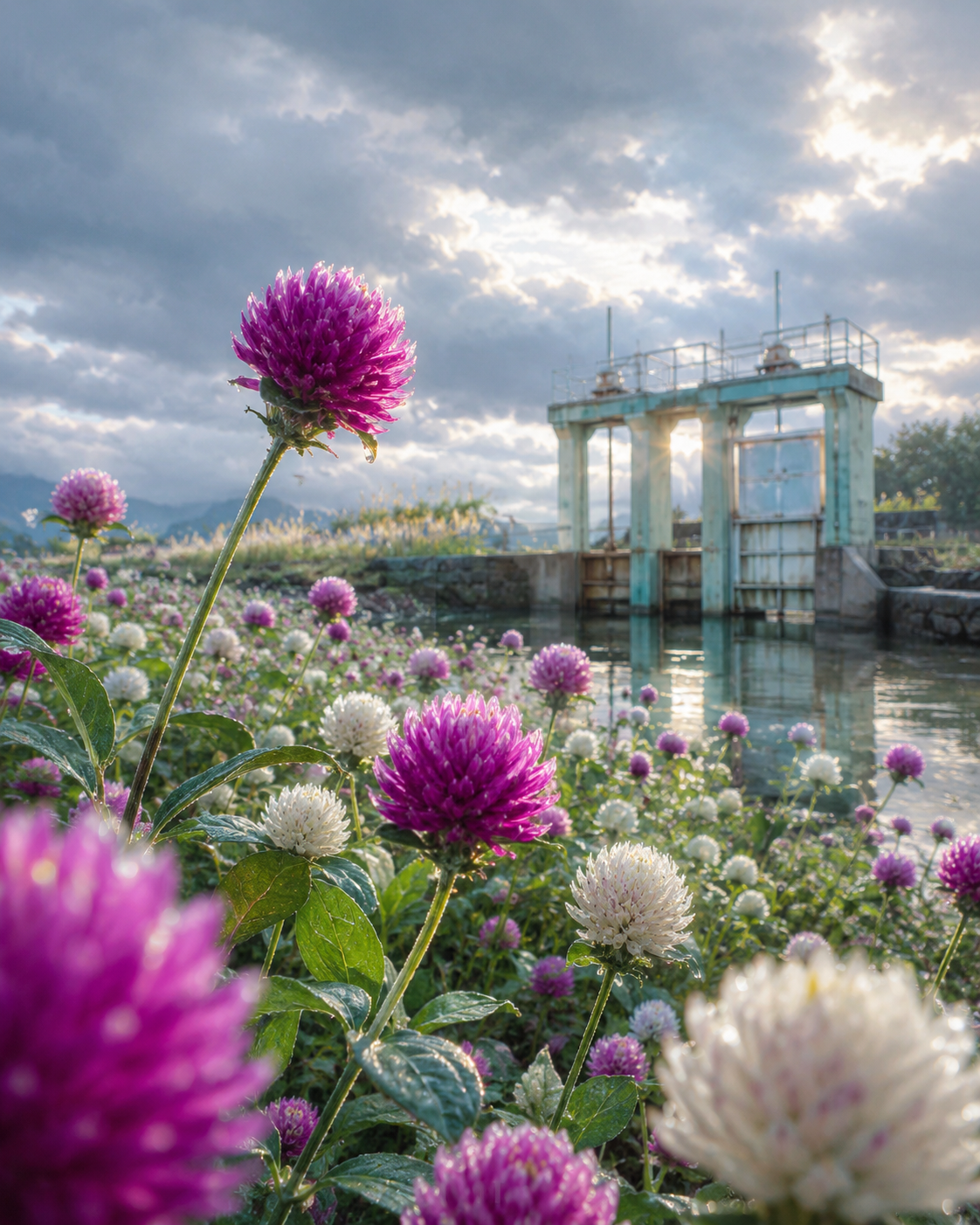
Light Across the Sluice Gate
Critique
Introduction Purple and white flowers spread beside a water control structure under a broken, luminous cloud cover. The tallest bloom rises left of center, while a pale turquoise gate occupies the opposite bank. The painting combines an intimate view of vegetation with the clear geometry of infrastructure across a narrow stretch of water. Description A long sloping stem supports the upper purple flower, whose tips catch light against gray clouds. Other blooms overlap across the foreground, including blurred examples at the bottom corners. The gate has rectangular supports, railings, and a vertically divided metal panel. Its faded blue surfaces reflect in water bordered by low stone walls. Analysis The high flower and the gate form two unequal landmarks across the middle distance. Diagonal stems contrast with the structure's upright supports, while round blossoms interrupt its rectangular rhythm. Bright cloud openings illuminate petal edges and create a narrow reflection beneath the gate. Selective blur makes the closest flowers function as a surrounding frame. Interpretation and Evaluation The scene places spontaneous growth alongside a device for directing water, suggesting two different ways of occupying the same environment. This relationship is conveyed through form rather than incident. The restrained turquoise prevents the structure from overpowering the flowers, and the detailed wet leaves give the foreground a convincing sense of surface and exposure. Conclusion What begins as a colorful floral view becomes an encounter between organic repetition and engineered order. The composition gives both subjects sufficient presence while preserving the flowers as the immediate focus. Its strongest achievement is the use of shared daylight and reflected color to make their contrasting shapes belong to one coherent space.
Same Subcategory
 Crossing Two Vast Skies with Mount Fuji in View
Similar Artworks
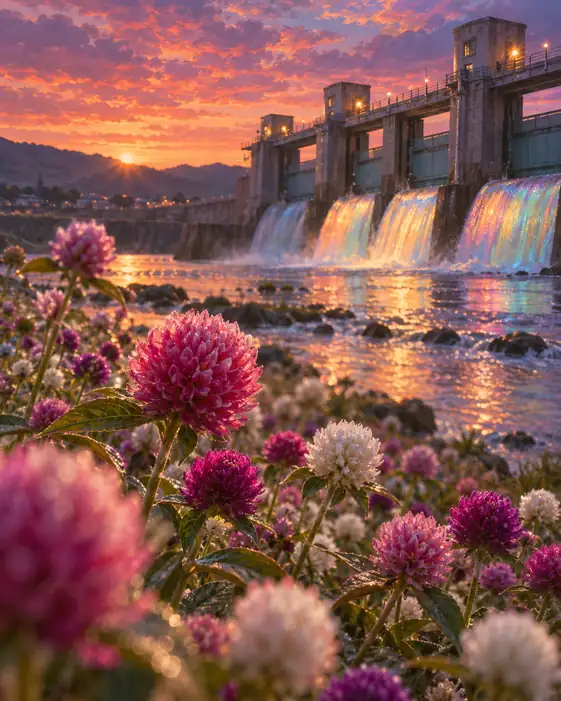 Rainbow Spillway and the Riverside Blooms
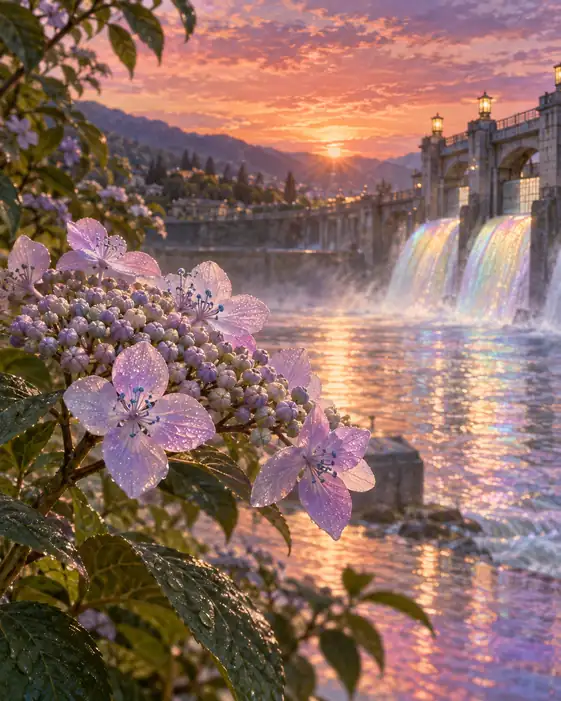 Sluice Gate in the Evening Glow, Prismatic Waters and Hydrangeas
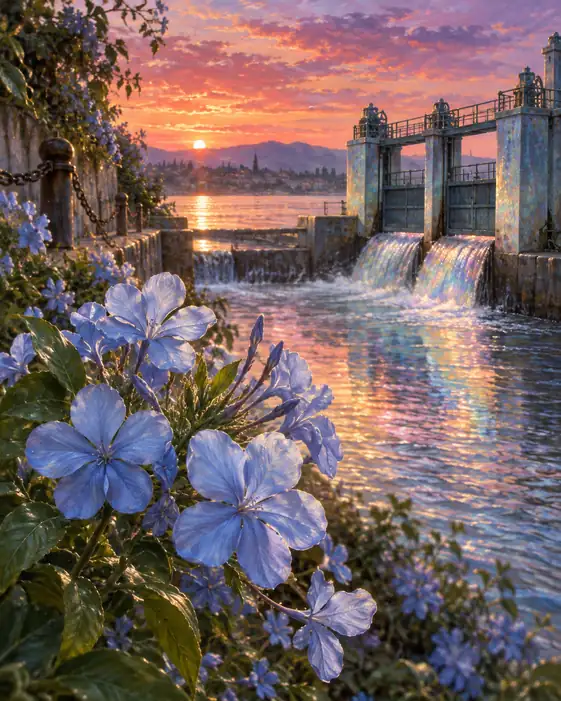 Prelude at the Water Gate
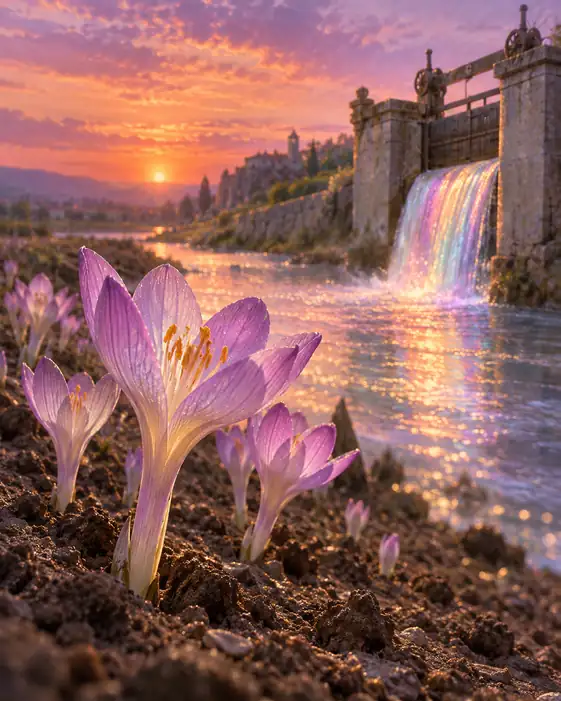 Canal Sluice in Sunset Glow
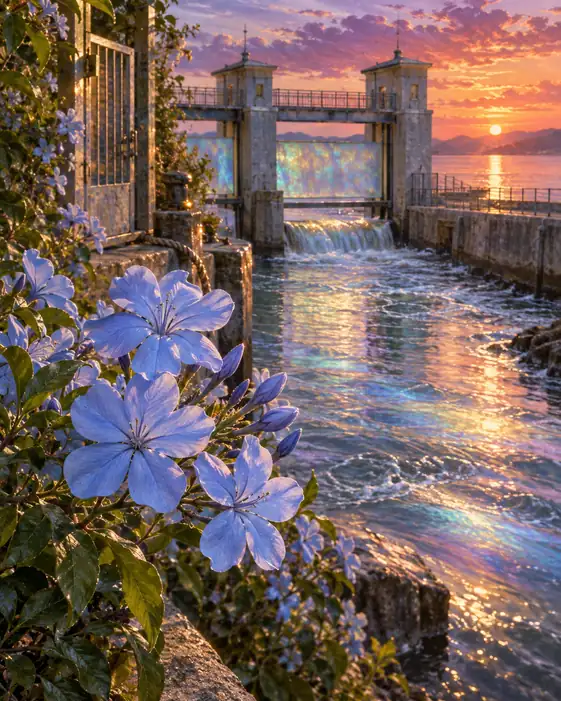 Sluice Gate in the Evening Glow
 Vigil Beside the Distant Beacon
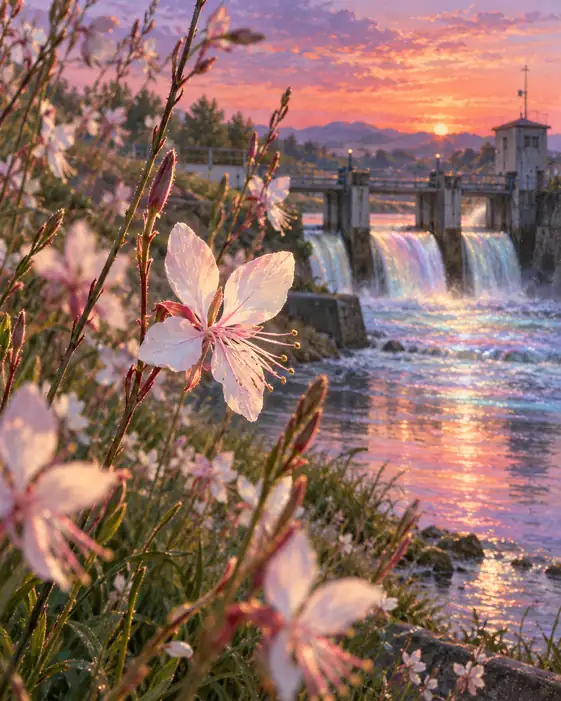 Rainbow Mist at the Sunset Weir
 Moonlit Canal in the Cosmos Field
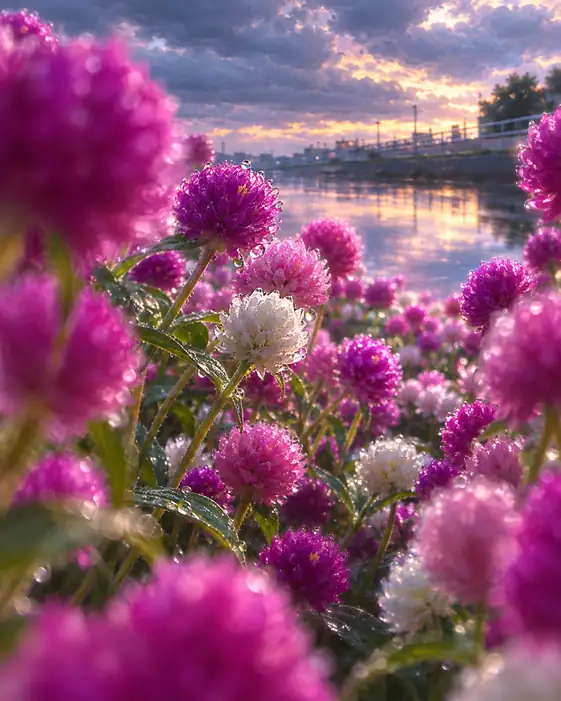 The Morning Crimson Wishes Met White Prayers
 Sunset Beacon and the Amaranth Slope