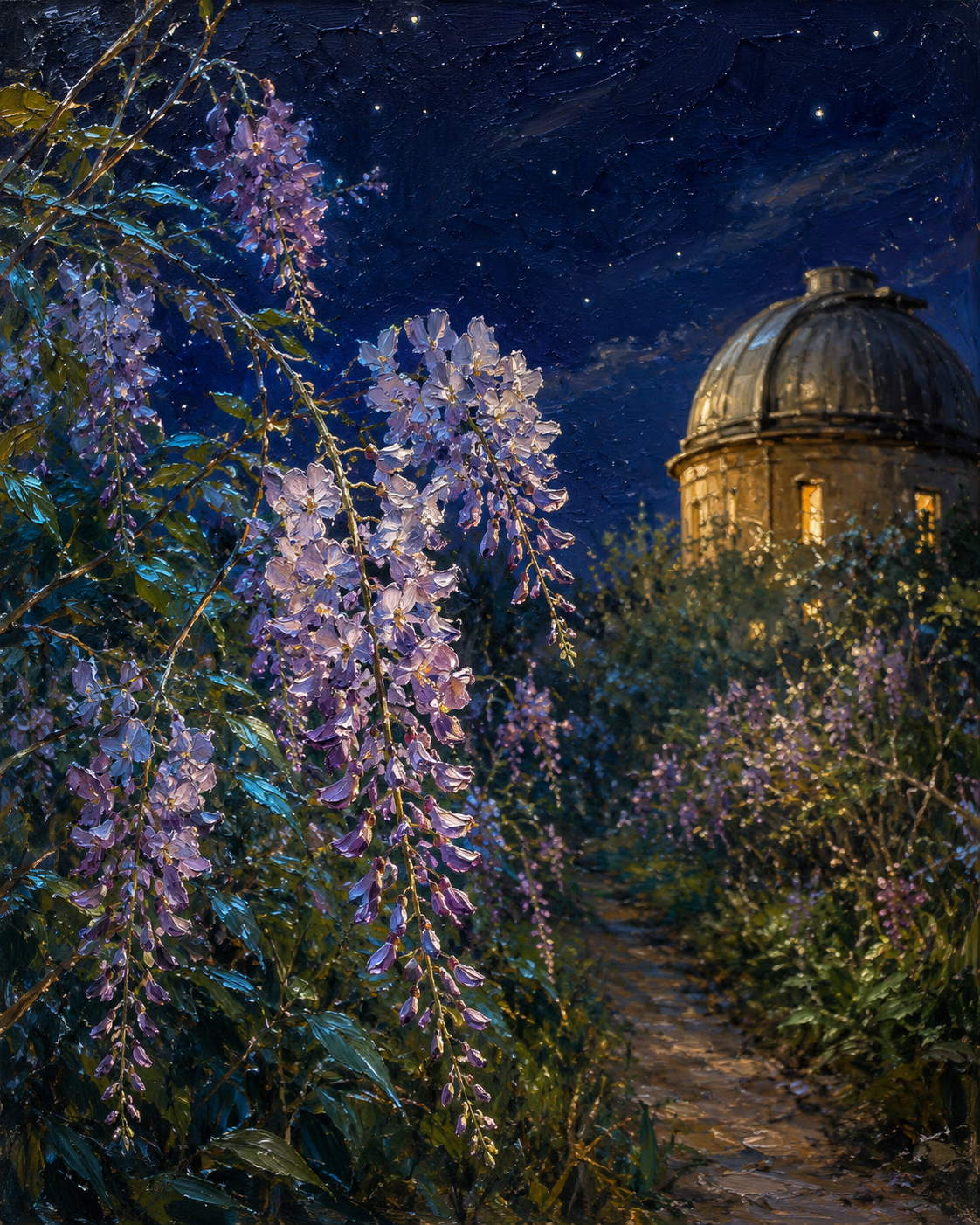
Nocturne at the Starlit Observatory
Critique
Introduction This vertical night landscape places hanging purple blossoms beside a narrow garden path leading to a domed observatory. A deep star-filled sky occupies the upper half, while warm window light and cool highlights on the flowers establish two distinct sources of illumination. Description Long flower clusters descend from branches across the left and center, accompanied by glossy green leaves and unopened buds. Their pale violet petals catch white-blue edges against the darkness. The stone path starts at the lower right and bends between shadowed beds toward the building. At upper right, a ribbed dome rises above foliage; two narrow windows glow amber. Small stars scatter unevenly across the ultramarine sky. Analysis The dangling flowers create repeated vertical lines that answer the ribs and windows of the dome. Their diagonal supporting branches frame the path’s entrance and direct attention inward. Cool purple and blue dominate, so the limited gold windows become a powerful focal accent. Foreground edges and highlights are crisp, whereas the path and building soften with distance. Thick strokes give the night sky movement while small light points preserve its breadth. Interpretation and Evaluation The observatory links the close study of plants with the distant observation of stars. Both flowers and lights appear suspended in darkness, joining earthly and celestial scales. The curving perspective, measured asymmetry, blue-violet harmony, and tactile treatment are convincing. The quiet correspondence between hanging blossoms and scattered stars gives the familiar garden path conceptual originality. Conclusion What first seems a moonless flower garden becomes an image of attention moving from near detail to remote space. The painting succeeds by making the path connect two kinds of looking.
Same Subcategory
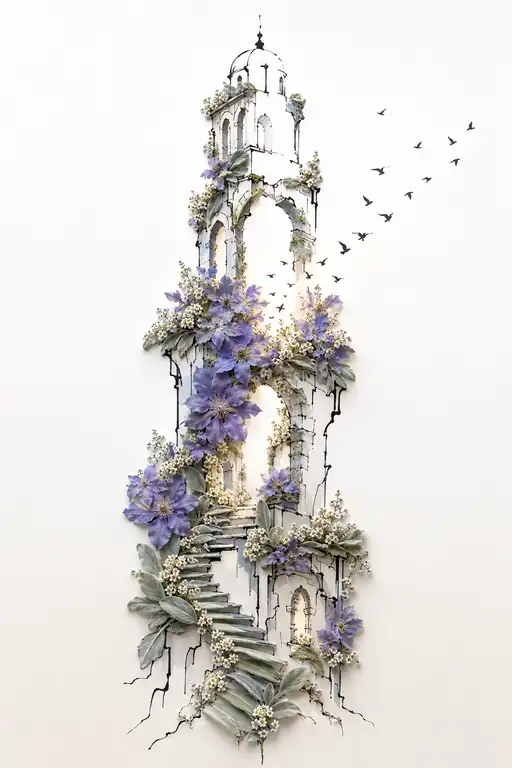 Spiral of Petals on the Ancient Bell Tower
Similar Artworks
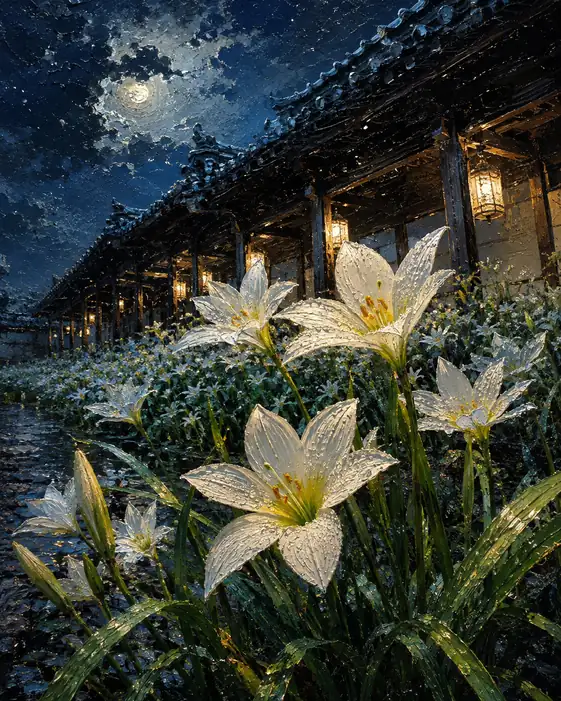 Night Corridor in Lantern Light
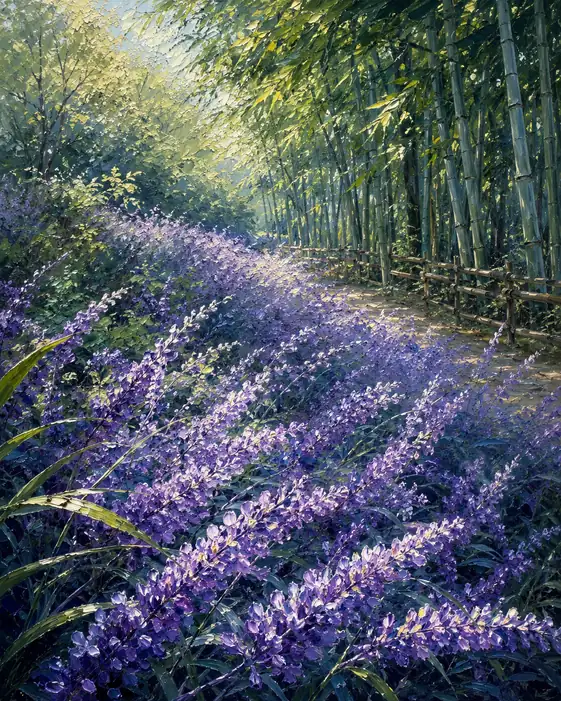 Sunlit Path Through the Bamboo Grove
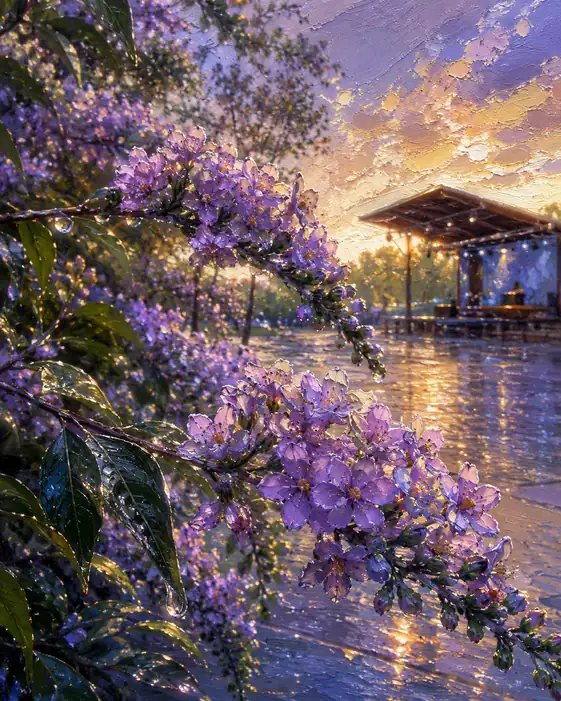 After the Shower, Into Amber Light
 Sea of Bellflowers Beneath the Starry Dome
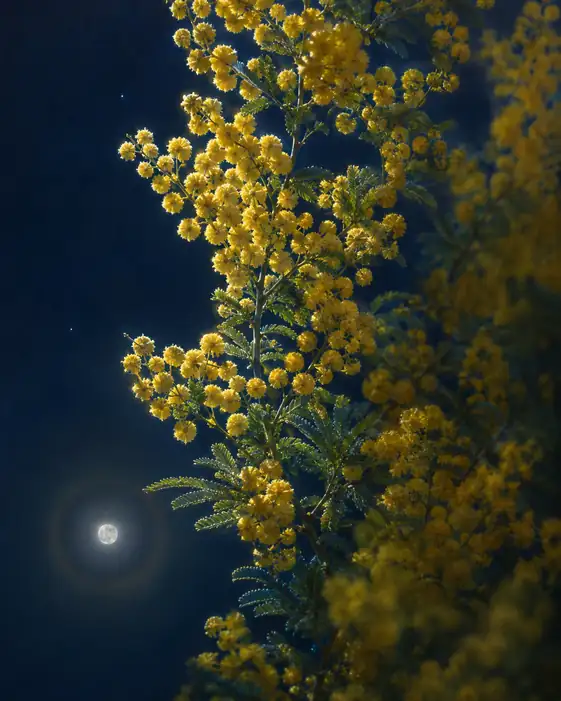 Moonlit Mimosa on a Silent Night
 Crimson Blossoms Beneath the Milky Way
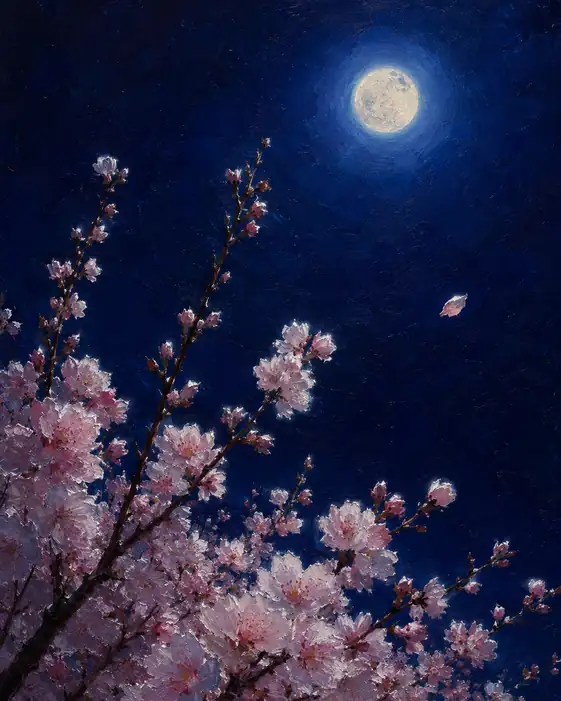 Full Moon in the High Azure Night
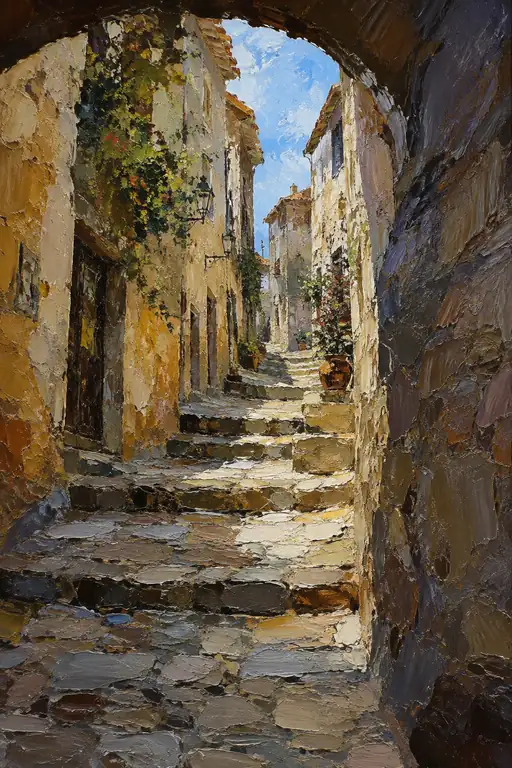 Sunlit Archway Draped in Blooms
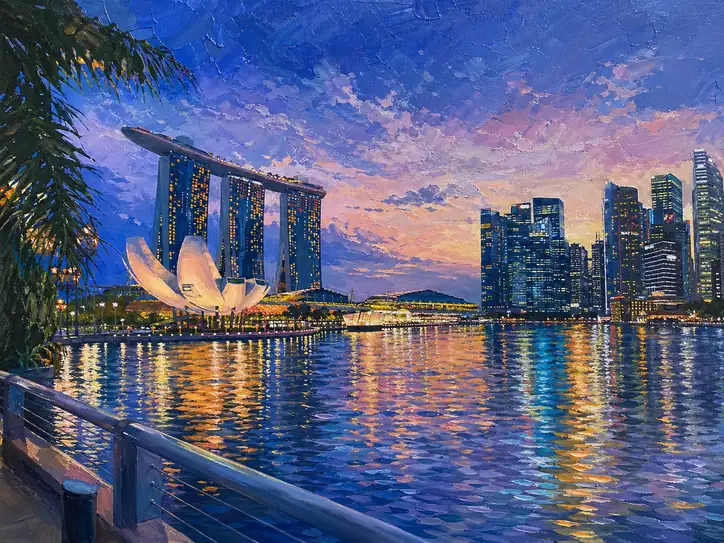 Mirrored Dreams of the Metropolis
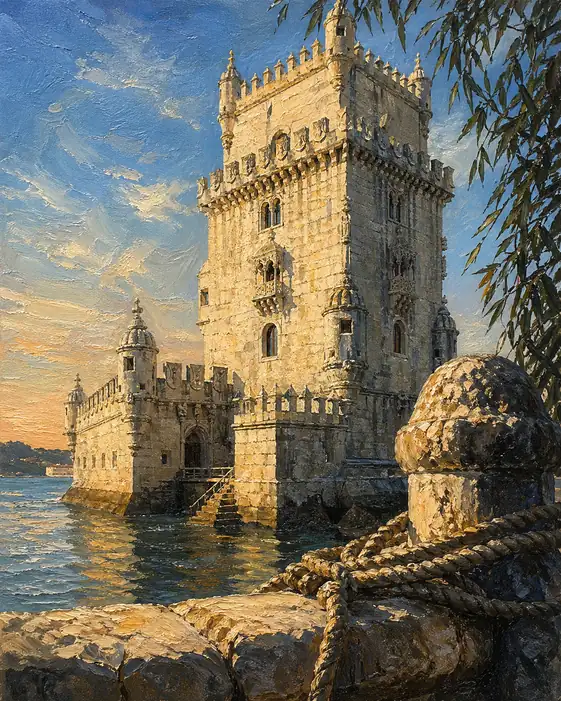 The Sentinel of the Golden Tide