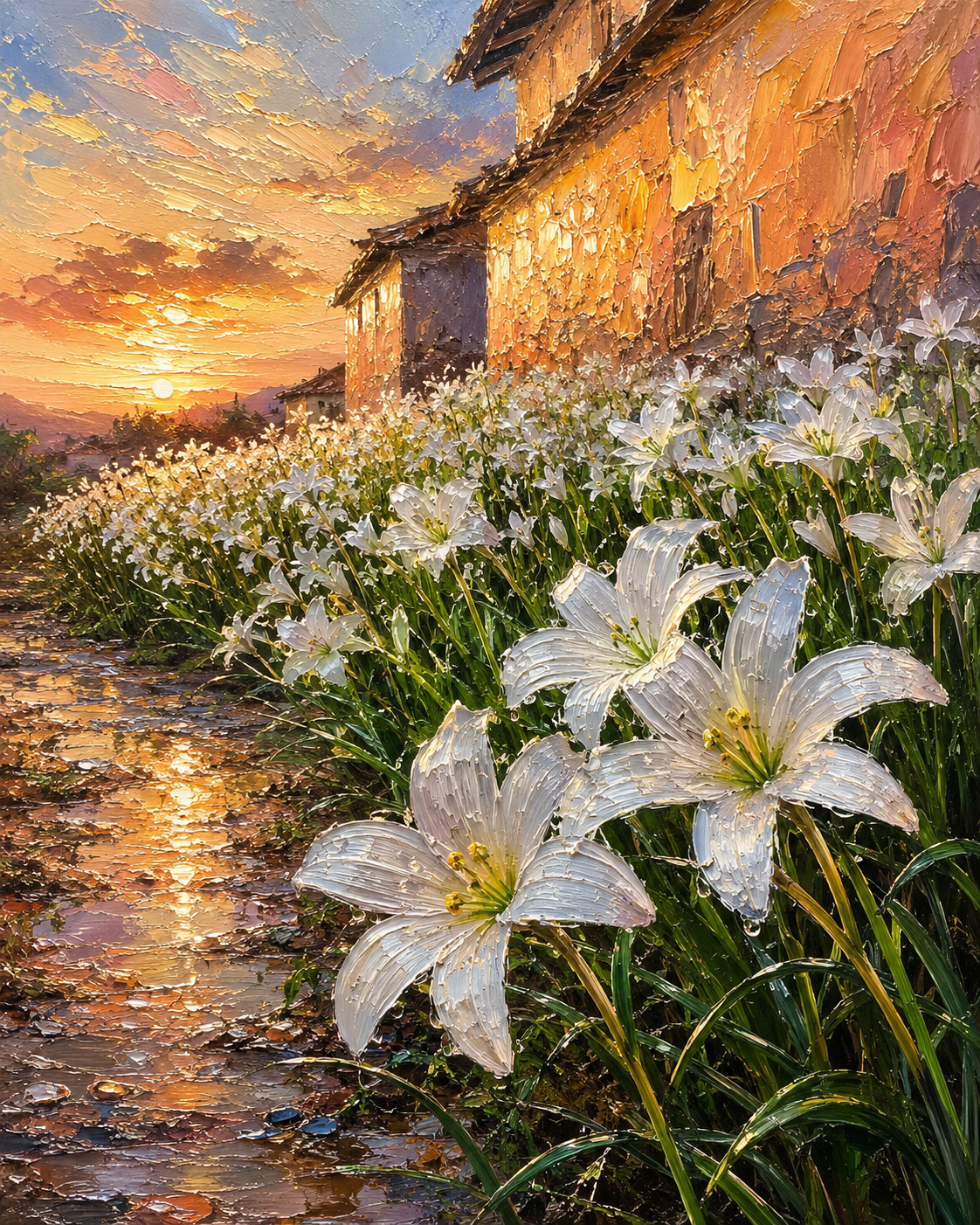
Golden Hour on the Muddy Lane
Critique
Introduction This vertical sunset scene places a dense border of white lilies beside a wet path and a row of warm earthen houses. Two low suns appear near the left horizon, intensifying the radiant atmosphere and casting copper light across walls, clouds, and puddles. Description Two large lilies dominate the lower right, their curled petals carrying bright rims and droplets. Hundreds of smaller blooms recede along the building wall. The muddy path occupies the left foreground and leads toward a distant valley, reflecting orange light in irregular pools. Tall ocher facades rise on the right, broken by dark windows, rooflines, and one projecting blue-gray section. Layered clouds sweep diagonally above the glowing horizon. Analysis The path and flower border form parallel diagonals that converge at the lower sun. A second sun above it repeats the circular highlight and lends the sky an unusual visual rhythm. Cool white petals stand against saturated orange walls, while deep green leaves moderate both colors. Thick, ridged strokes describe masonry, clouds, wet soil, and flower veins with different directions. Large foreground blooms and fine distant specks create emphatic depth. Interpretation and Evaluation The flowers soften the imposing buildings and suggest persistent growth along a worked route. Doubling the sun shifts the scene from observation toward imaginative experience without breaking its spatial logic. Strong recession, bold complementary color, assured tactile description, and the inventive celestial repetition give the image force. Reflections unify the intense light rather than merely embellishing it. Conclusion What first seems a radiant village garden gradually becomes a study of perception altered by light. The painting succeeds by balancing architectural weight, fragile petals, and an uncanny horizon within one coherent passage.
Same Subcategory
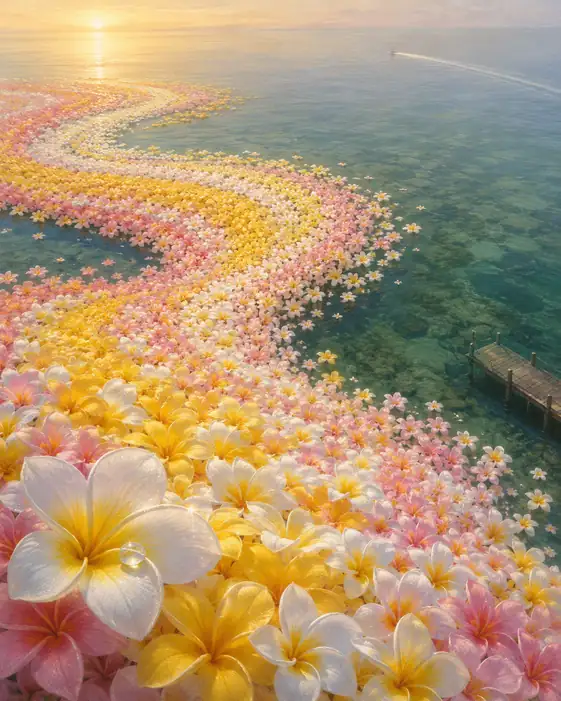 Stream of Floating Plumeria over the Sunlit Emerald Sea
 Where Fragrance Meets the Crystal Stream
Similar Artworks
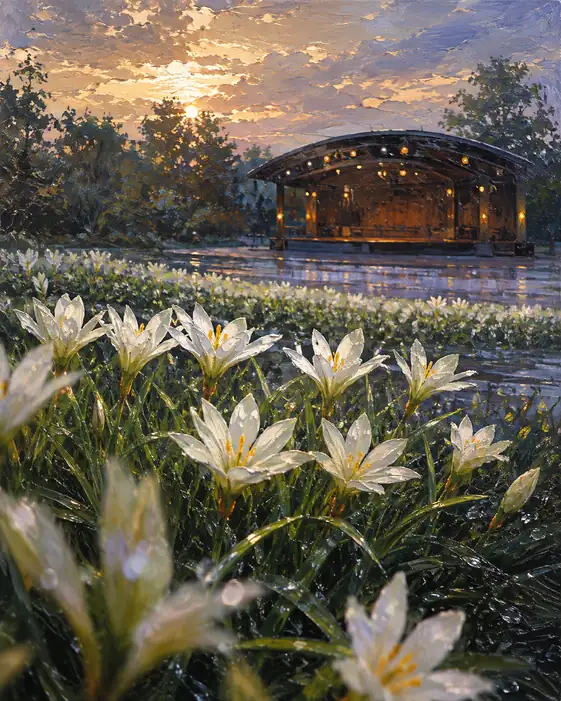 Twilight Overture of an Empty Stage
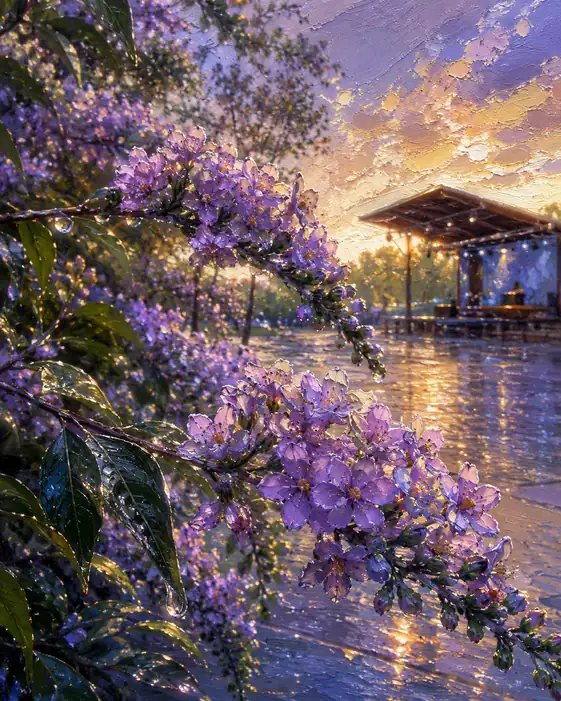 After the Shower, Into Amber Light
 Rainlit Alley of Amber and Bloom
 Raindrops and Sunset by the Pavilion
 Twilight Lake and Silent Lilies
 Sunset Fortress and Crimson Spider Lilies
 Golden Dusk Aboard the Flower Boat
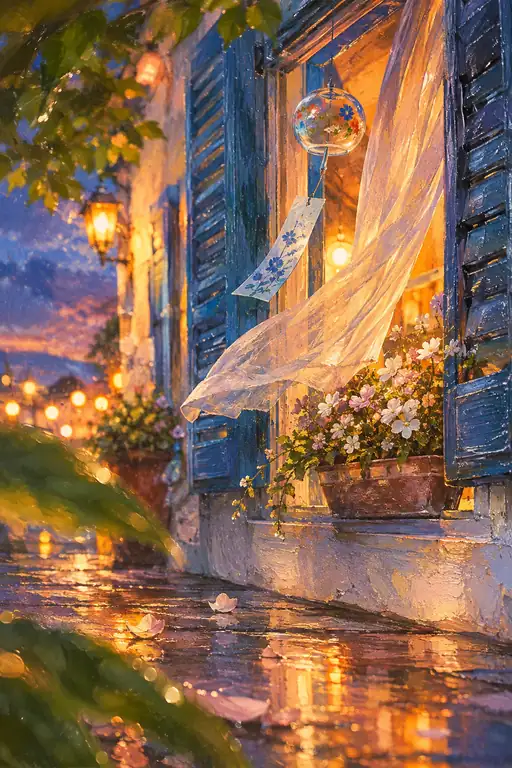 Evening Air Carried on Chimes
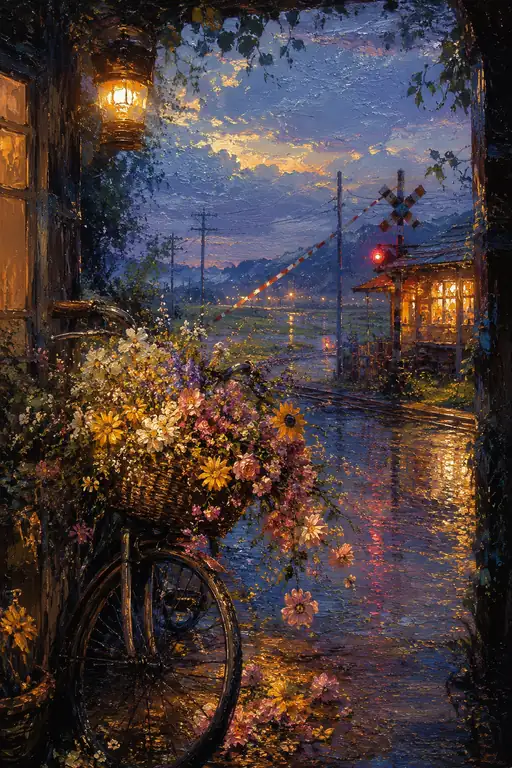 Evening Bell and Blossoming Bicycle by the Station
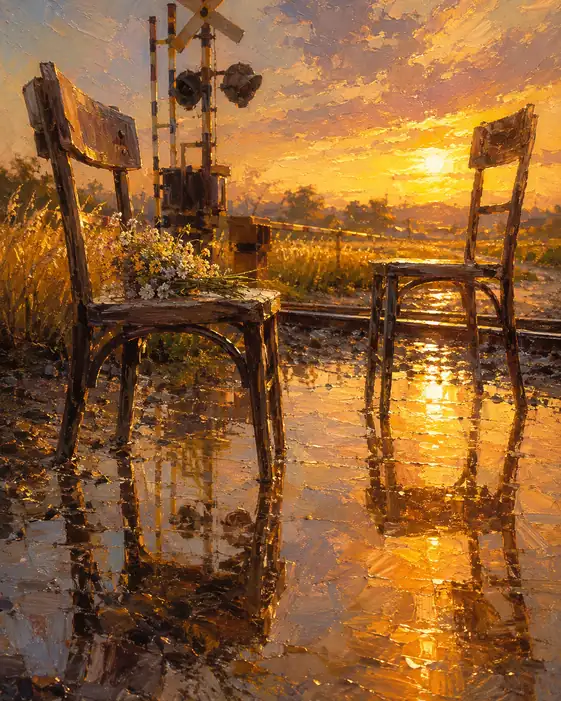 Sunset Soliloquy at the Rural Crossing