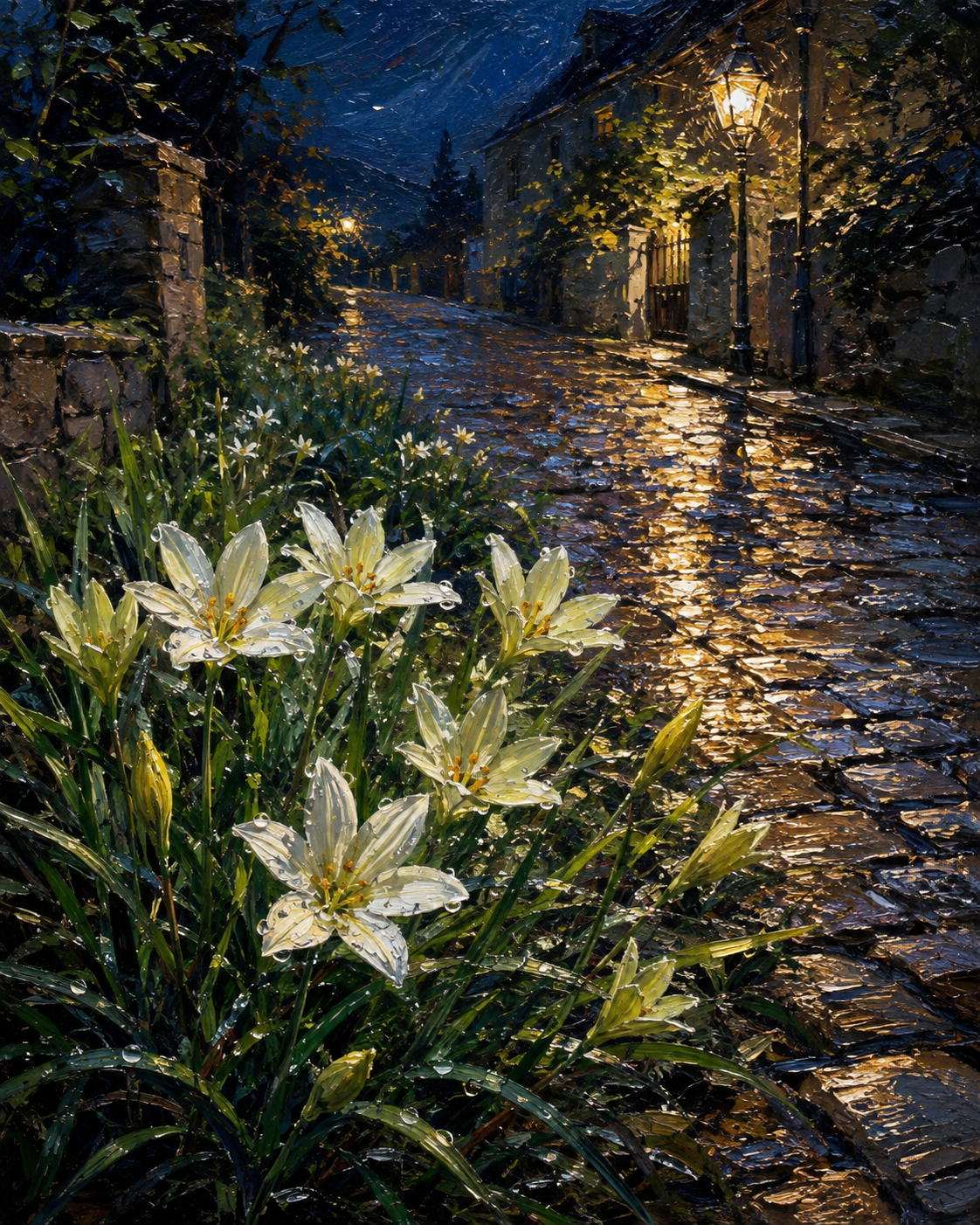
Rainlit Alley of Amber and Bloom
Critique
Introduction This nocturnal street scene combines rain-wet cobbles, old stone buildings, and a foreground bed of white lilies. Warm lamps recede along the curving road, while deep blue sky and vegetation surround their reflections with dense darkness. Description Large rain-beaded lilies and glossy blade-like leaves fill the lower left. Behind them, smaller white flowers continue beside a low stone wall. The street begins at the lower right, bends uphill, and narrows between shadowed buildings. A tall lamp near the right edge illuminates a gate, eaves, and nearby foliage; another lamp glows farther along the lane. Broken gold reflections scatter over uneven blue-black paving stones. Analysis The road’s curve provides depth and also divides the cool floral bank from the warm illuminated architecture. Sharp white petals create the nearest highlights, followed by yellow reflections and the smaller distant lamp. This sequence controls the eye’s movement into space. Broad dark masses frame the center, while short impasto strokes make wet stones, droplets, and leaves sparkle differently. The complementary blue and amber palette intensifies the sensation of rain-cooled air. Interpretation and Evaluation No figure appears, yet the lit gate and maintained flowers imply habitation and welcome. Rain turns an ordinary lane into a surface where natural and artificial light meet. The work demonstrates strong perspective, selective illumination, tactile handling, and disciplined color contrast. Its distinctive placement of lilies at street level converts the viewer from observer into a possible passerby. Conclusion An initial impression of romantic night lighting becomes a study of how rain reorganizes attention. The painting succeeds by linking petals, paving, lamps, and distance through a coherent chain of reflected light.
Same Subcategory
 Sunset Over the River of Glass
Similar Artworks
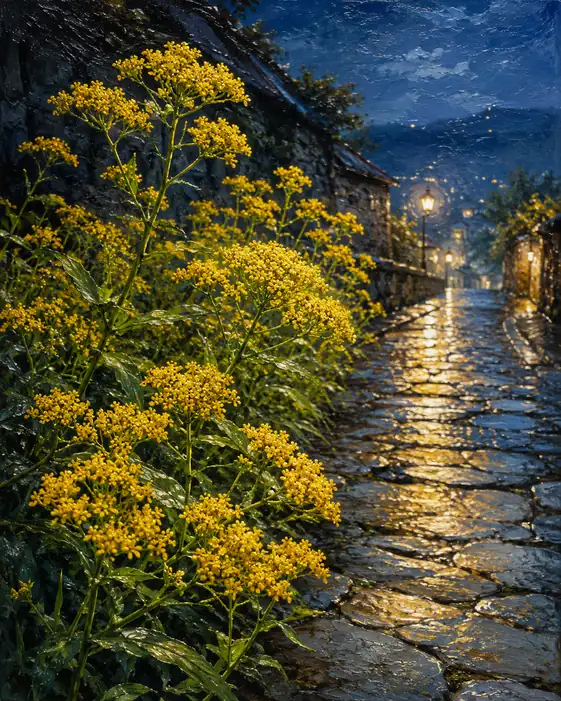 Golden Blooms Along the Wet Cobblestones
 Golden Hour on the Muddy Lane
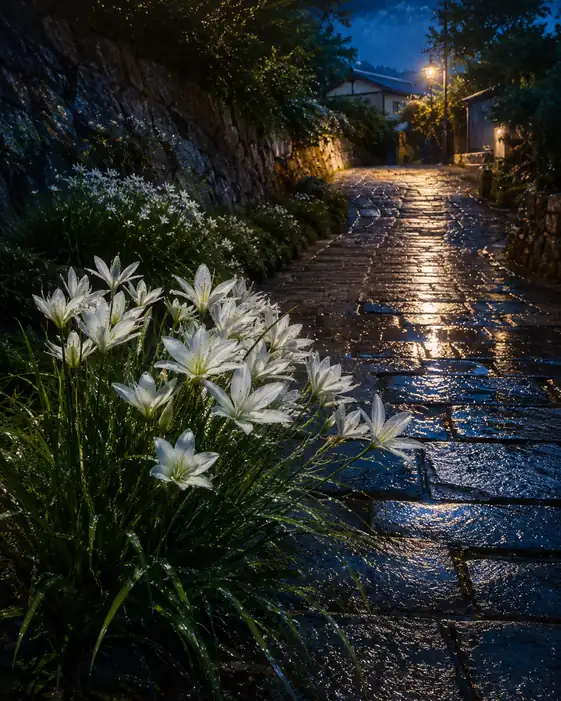 Gleaming Stones and Nighttime Blossoms
 Where the Rain Whispers Warmth
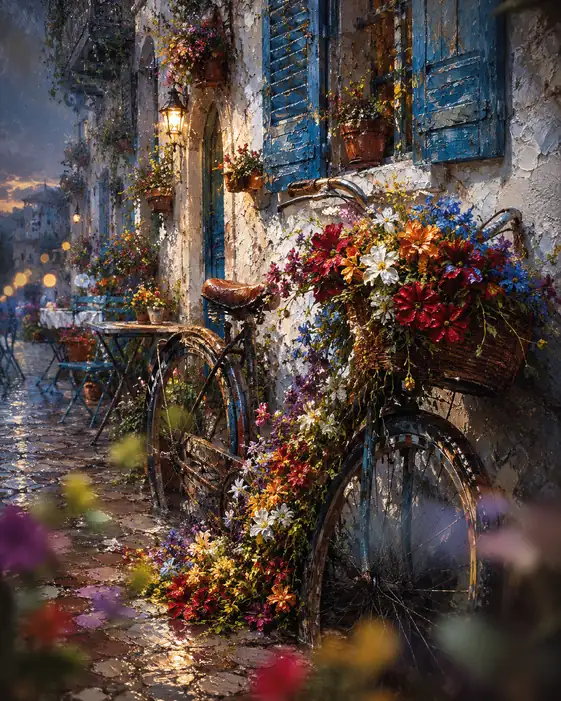 Flower-Laden Bicycle by the Twilight Shutter
 A Quiet Shelter in the Rain
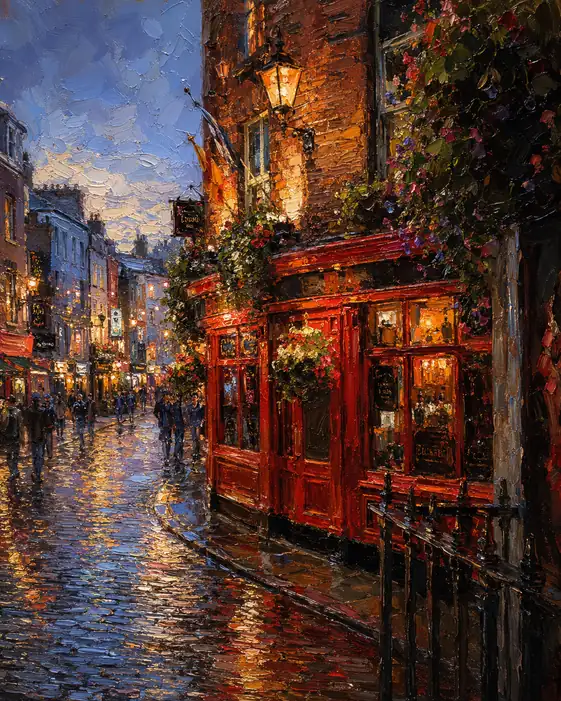 The Glow of Twilight: Warmth on a Rainy Street
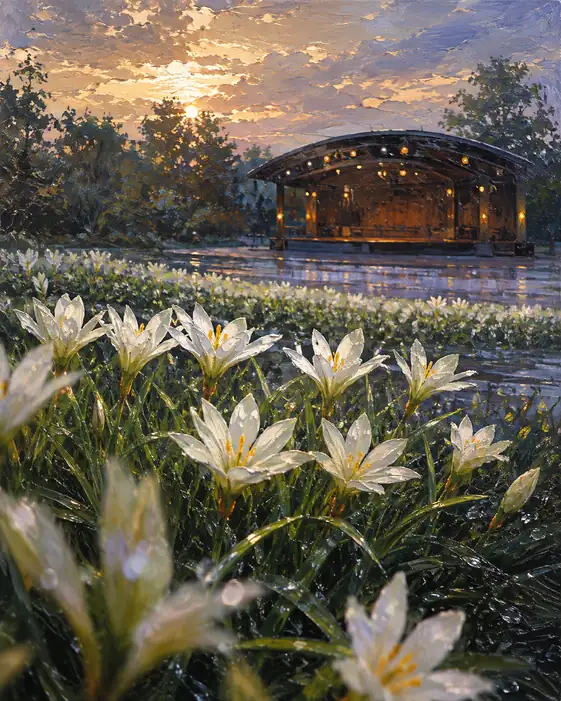 Twilight Overture of an Empty Stage
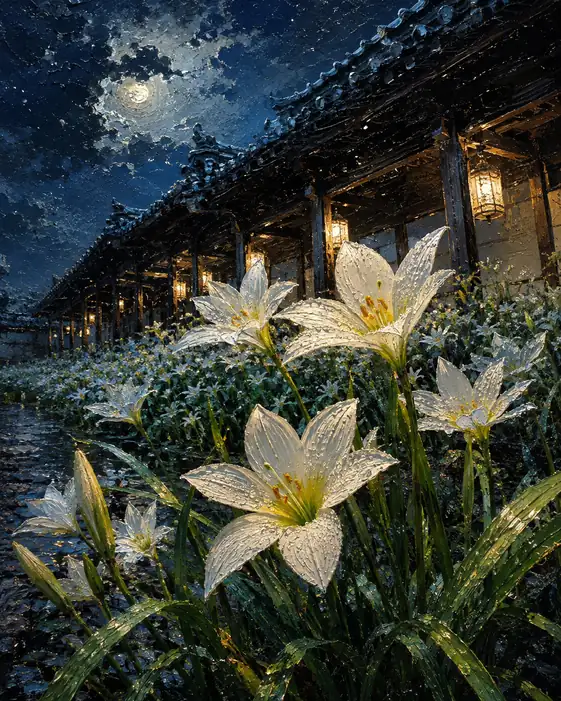 Night Corridor in Lantern Light
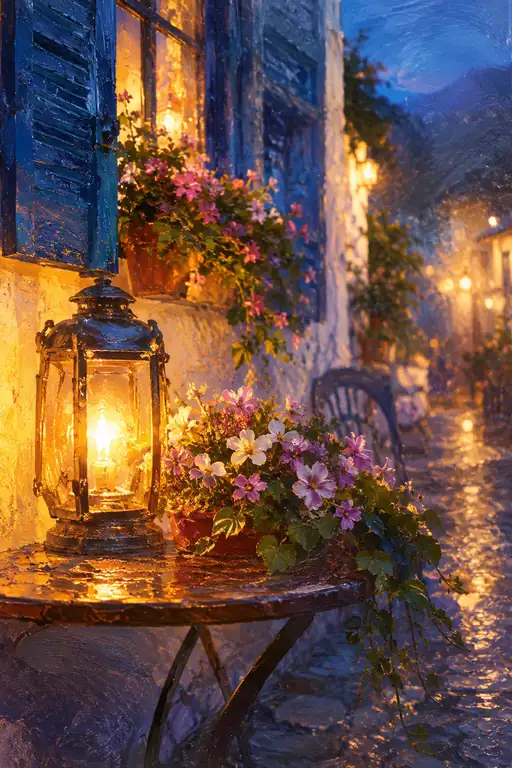 Evening Terrace Glow in the Old Quarter