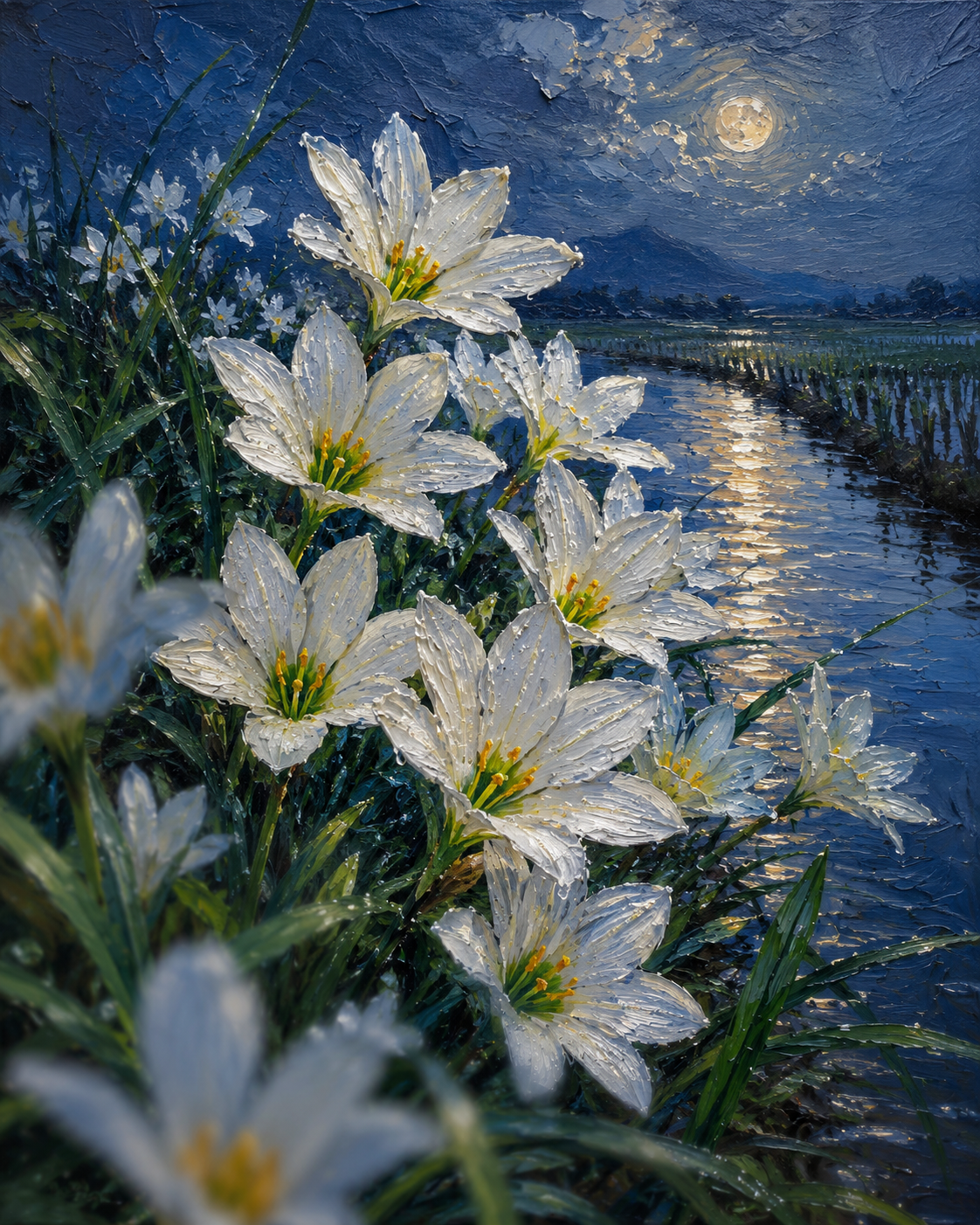
Nocturne by the Moonlit Waterway
Critique
Introduction This nocturnal landscape places a bank of large white lilies beside a narrow water channel under a full moon. The flowers fill the left foreground and descend diagonally toward the right, while the reflective water opens a route into the dark blue distance. Description Several six-petaled lilies face outward at different angles, their white surfaces marked by ridged strokes and yellow-orange stamens. Long green leaves cross beneath them, and two blurred blossoms at the lower left create an especially close viewing position. The channel curves from the bottom center toward the horizon, bordered on the right by rows of dark upright plants. A round moon hangs above and sends a broken cream reflection across the water. Analysis The painting depends on a sequence of focus: softened flowers nearest the viewer, sharply articulated lilies in the middle foreground, and simplified vegetation beyond. This optical transition builds space while concentrating attention on the central blossoms. White petals and moonlight form linked highlights against deep ultramarine, and green leaves introduce cooler dark accents. Thick directional strokes model petals, clouds, and ripples differently, preserving the character of each surface. Interpretation and Evaluation The cultivated rows and waterway suggest a worked landscape temporarily transformed by moonlight. Repetition connects the lilies to the moon’s reflection, so earthly growth and distant light appear mutually responsive. The bold framing, controlled limited palette, selective focus, and tactile paint handling are persuasive. Enlarging the flowers gives the familiar scene an original, immersive scale. Conclusion What first appears to be a moonlit flower study develops into a meditation on cultivation and nocturnal perception. Its success comes from making light travel coherently through petals, water, and sky.
Same Subcategory
 White Lily Reaching Toward the Light with Bud
Similar Artworks
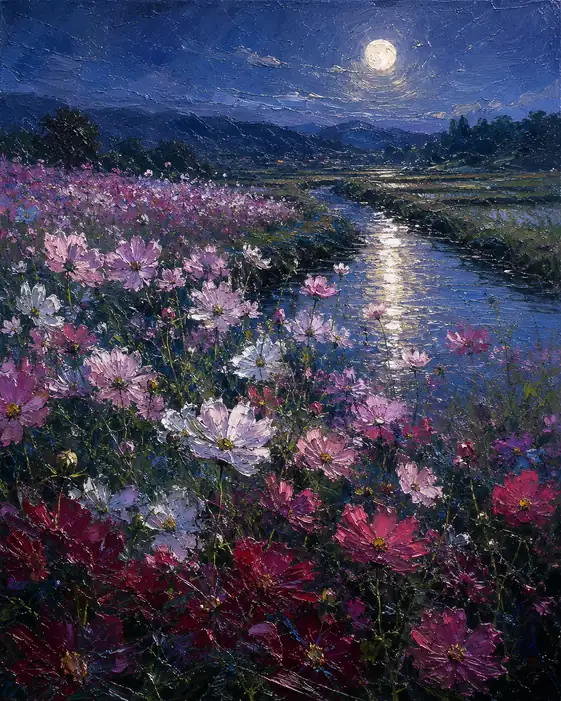 Cosmos Swaying Along the Moonlit Stream
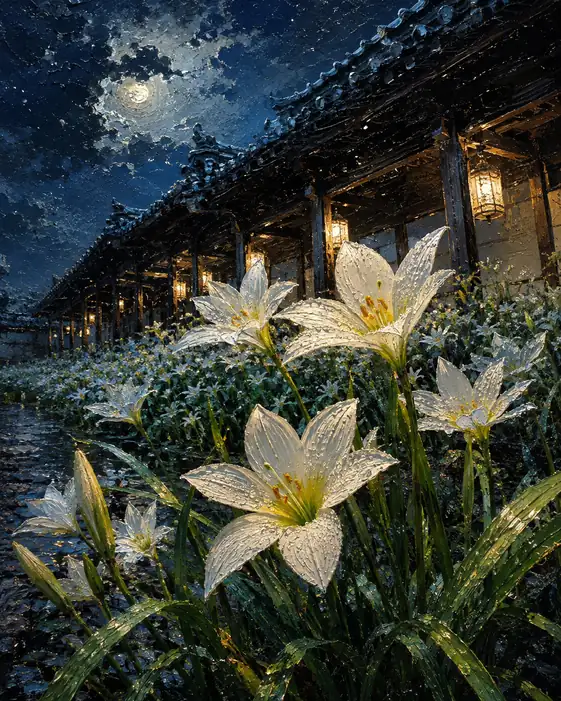 Night Corridor in Lantern Light
 Moonlit Brook and Purple Sage
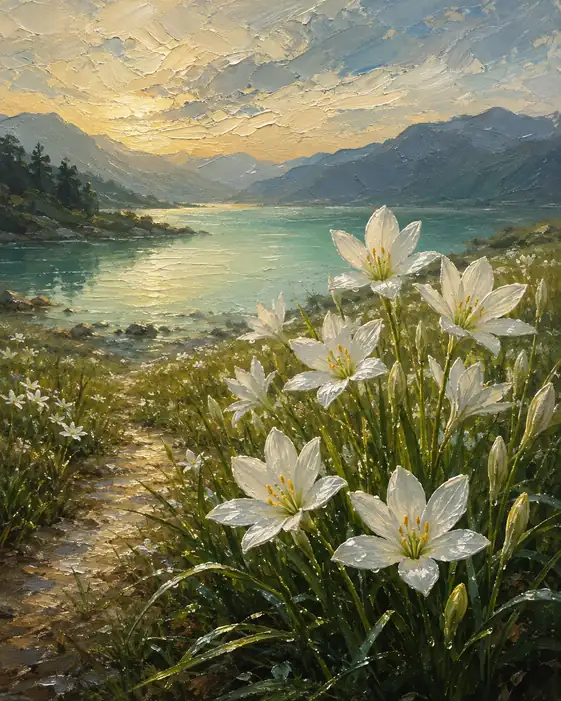 Twilight Lake and Silent Lilies
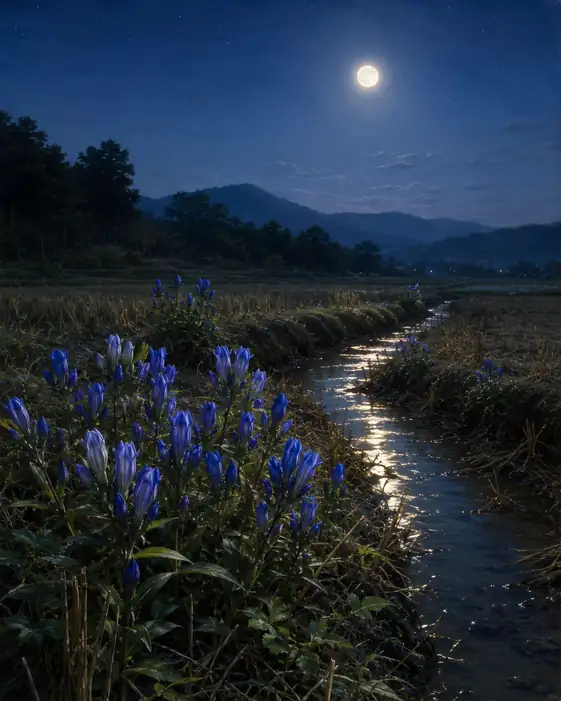 Lapis Blossoms by the Moonlit Brook
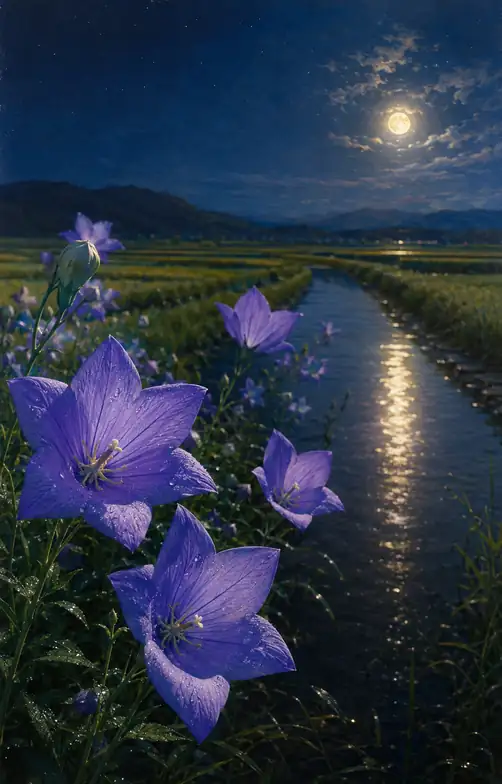 Moonlit Rural Waterway and Dew-Wet Bellflowers
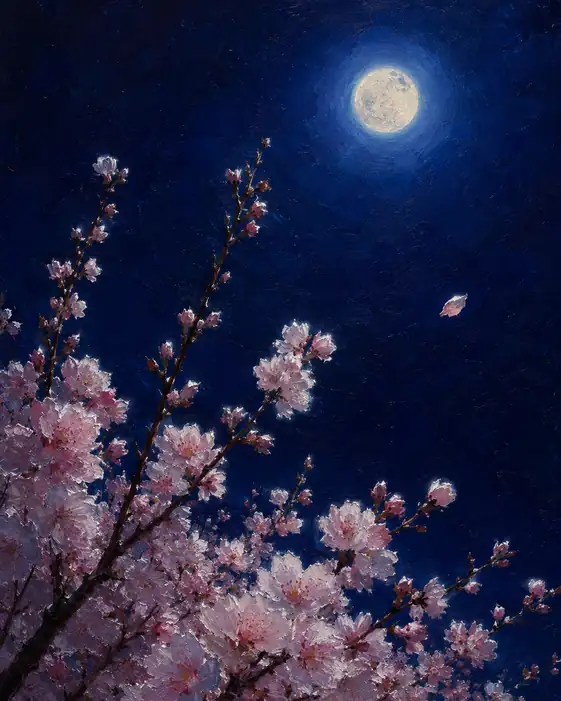 Full Moon in the High Azure Night
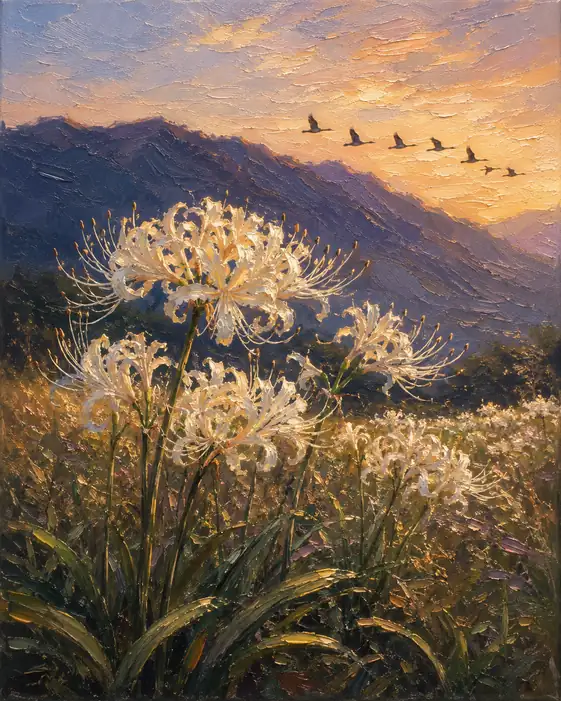 Flight at Dusk Over White Lycoris
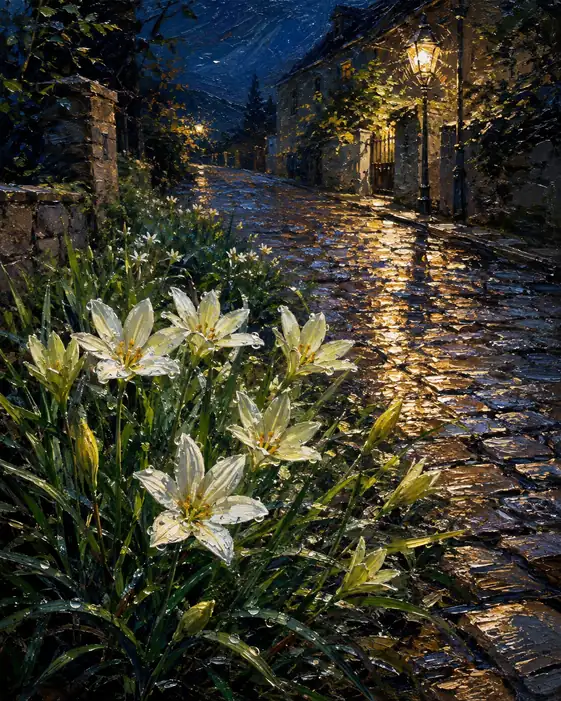 Rainlit Alley of Amber and Bloom
 Crimson Ribbon Flowing Under the Crescent Moon