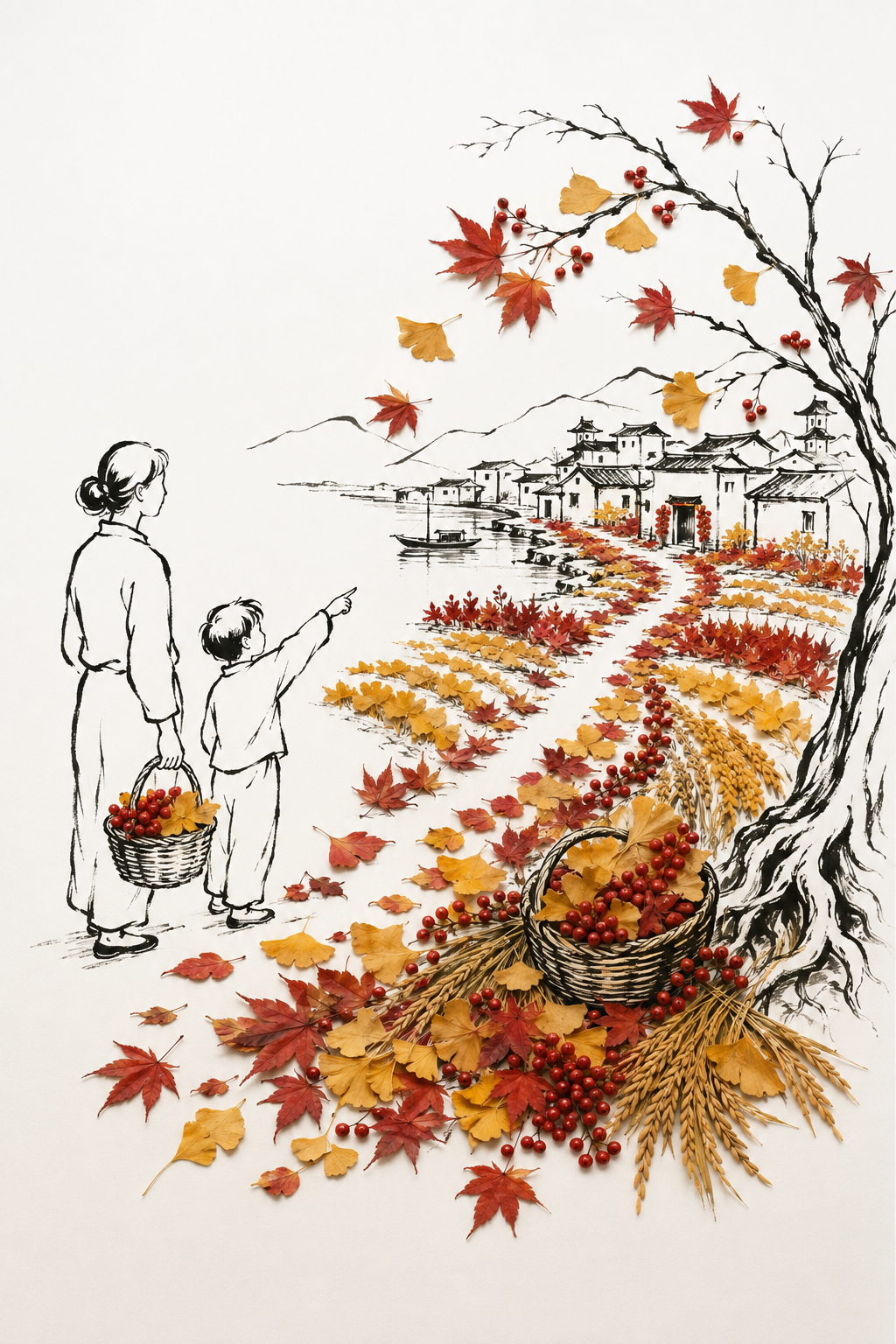
Autumn Harvest Along the Village Path
Critique
Introduction This autumn village scene shows a woman and child approaching white waterside houses beneath a nearly bare tree. Red maple leaves, yellow ginkgo forms, berries, and grain fill the path and foreground baskets, turning harvest into the landscape’s organizing language. Description The figures stand at lower left; the woman carries a woven basket while the child points toward the village. A massive trunk anchors the right edge, its black branches holding sparse red and gold leaves and berry clusters. Another overflowing basket sits by exposed roots among sheaves of grain. Alternating bands of red and yellow foliage mark fields and a curving path toward tiled roofs and a small boat. Analysis The trunk frames the scene vertically and counters the upright figures. The child’s arm continues the path’s diagonal into the settlement. Large foreground leaves and grain diminish into patterned field bands, producing clear recession. Red berries provide round accents against pointed maple and fan-shaped ginkgo leaves. Warm color occupies the lower and right zones, while pale buildings and sky preserve openness around the destination. Interpretation and Evaluation Harvest is presented as communal continuity: gathered produce in the baskets corresponds to cultivated fields and inhabited houses ahead. The child’s gesture turns the village into both destination and object of learning. Figure drawing is restrained, and the perspective organizes abundant materials effectively. Contrasting leaf species, berries, and grain creates observed variety rather than a generalized symbol of autumn. Conclusion At first the full basket appears to summarize seasonal plenty, but closer viewing distributes that meaning across path, fields, tree, and village. Direction, scale, and tactile detail transform a family walk into a coherent image of inheritance.
Same Subcategory
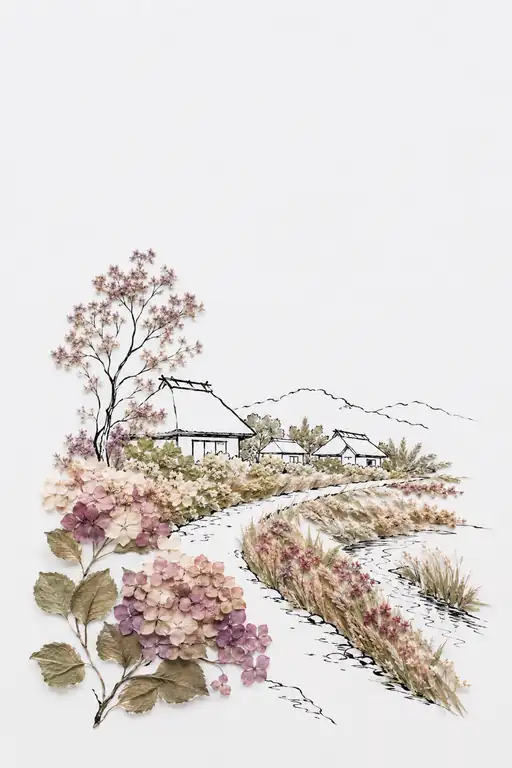 Hydrangeas in Bloom Beside the Thatched Farmstead
Similar Artworks
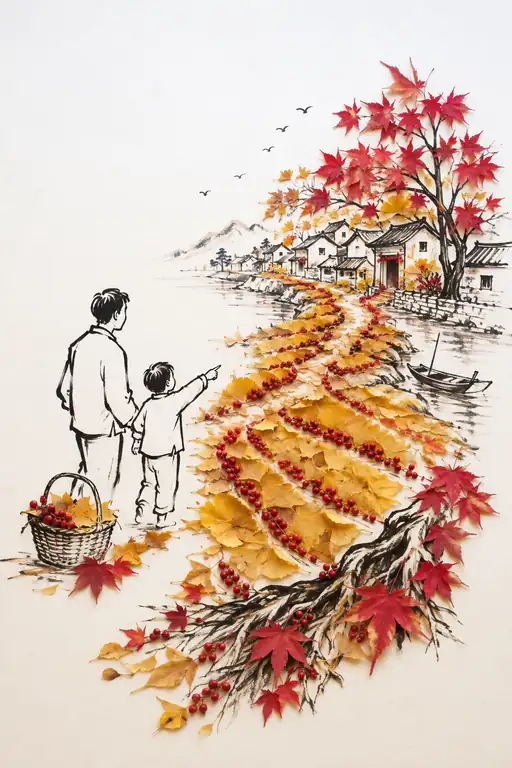 Returning to the Hearth in Golden Autumn
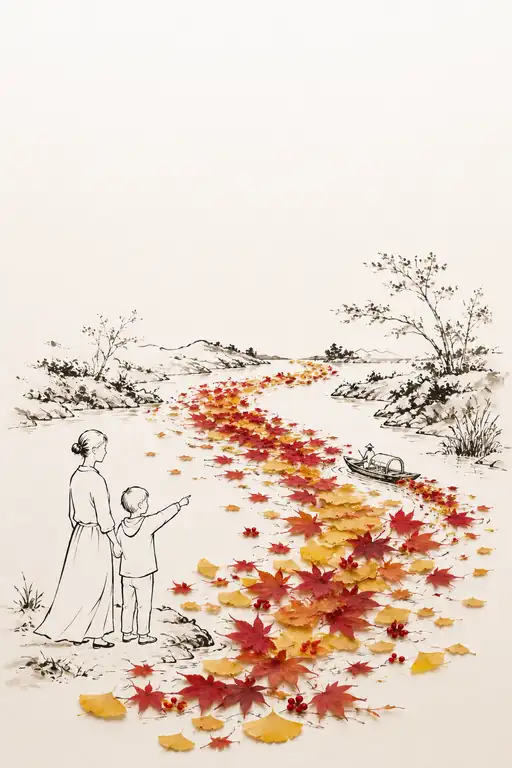 The Golden Drift of Autumn Leaves
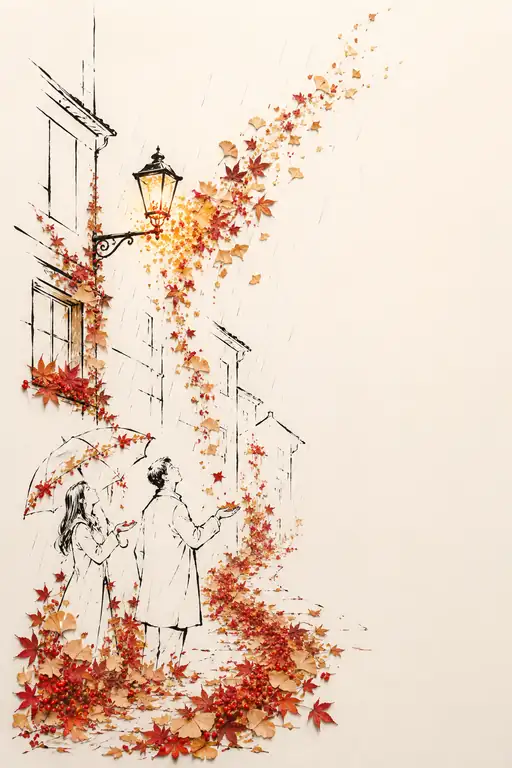 Autumn Leaves Swirling Under the Lamplight
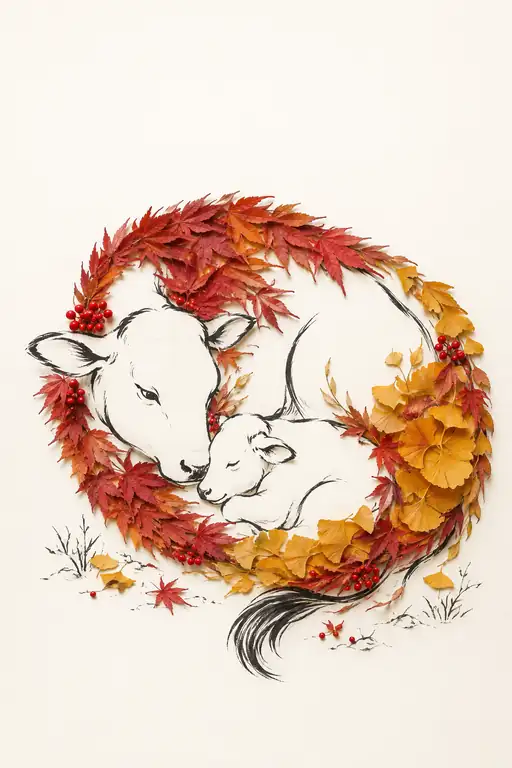 Slumber in the Autumn Wreath
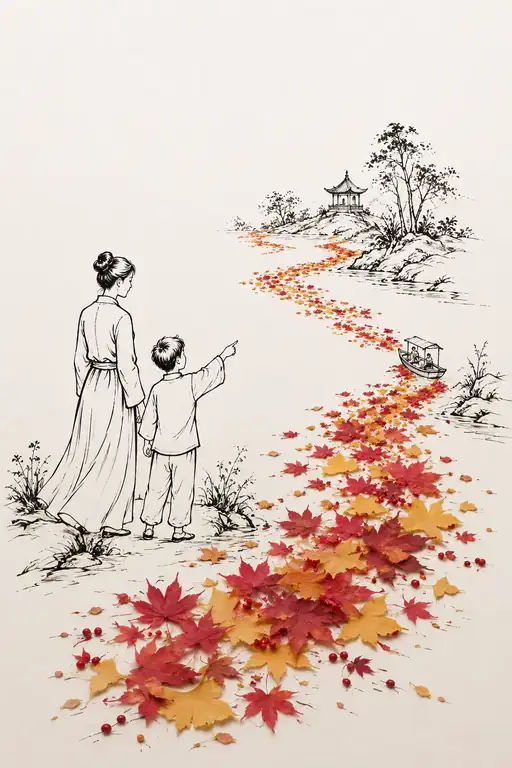 Autumn Stream and the Distant Pavilion
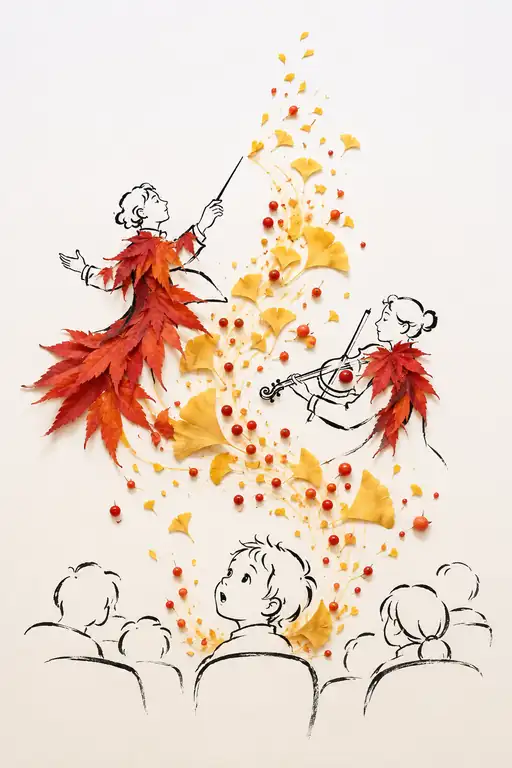 The Golden Rhapsody from the Baton
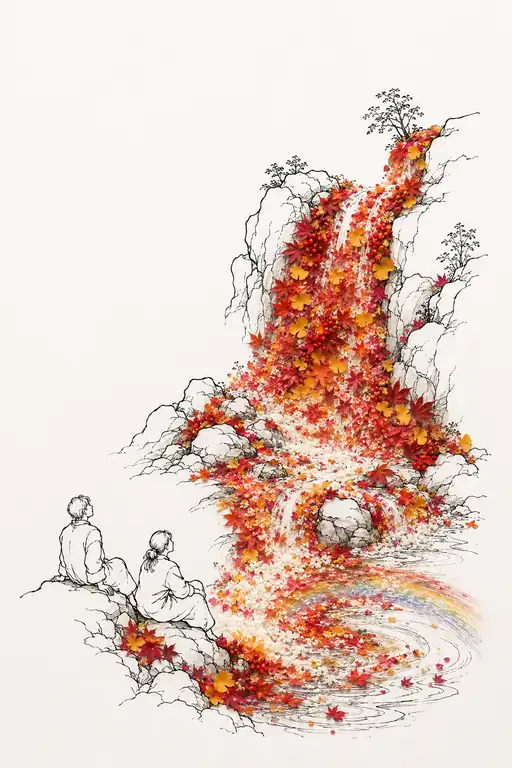 Contemplating the Fiery Cascade
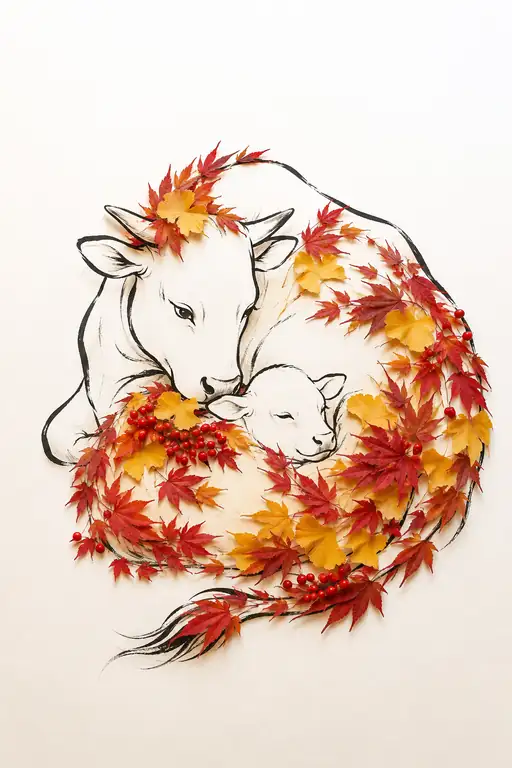 Slumber in Autumn's Embrace
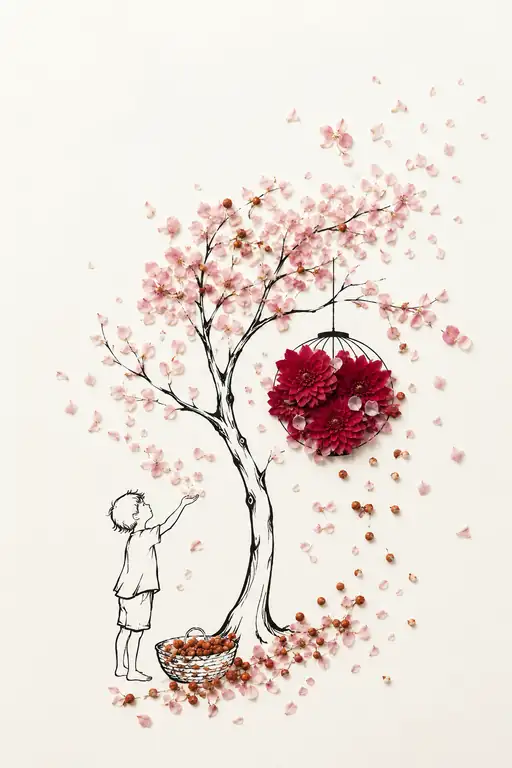 Reaching for the Drifting Bloom
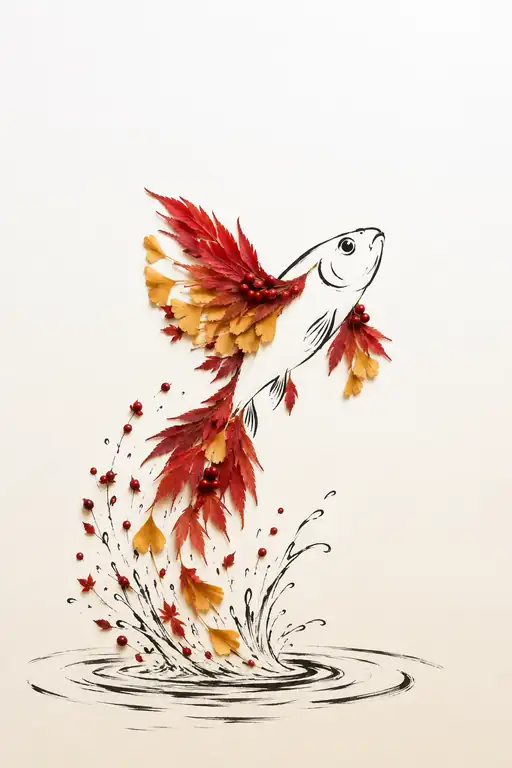 The Autumn Leap Across the Rippling Stream