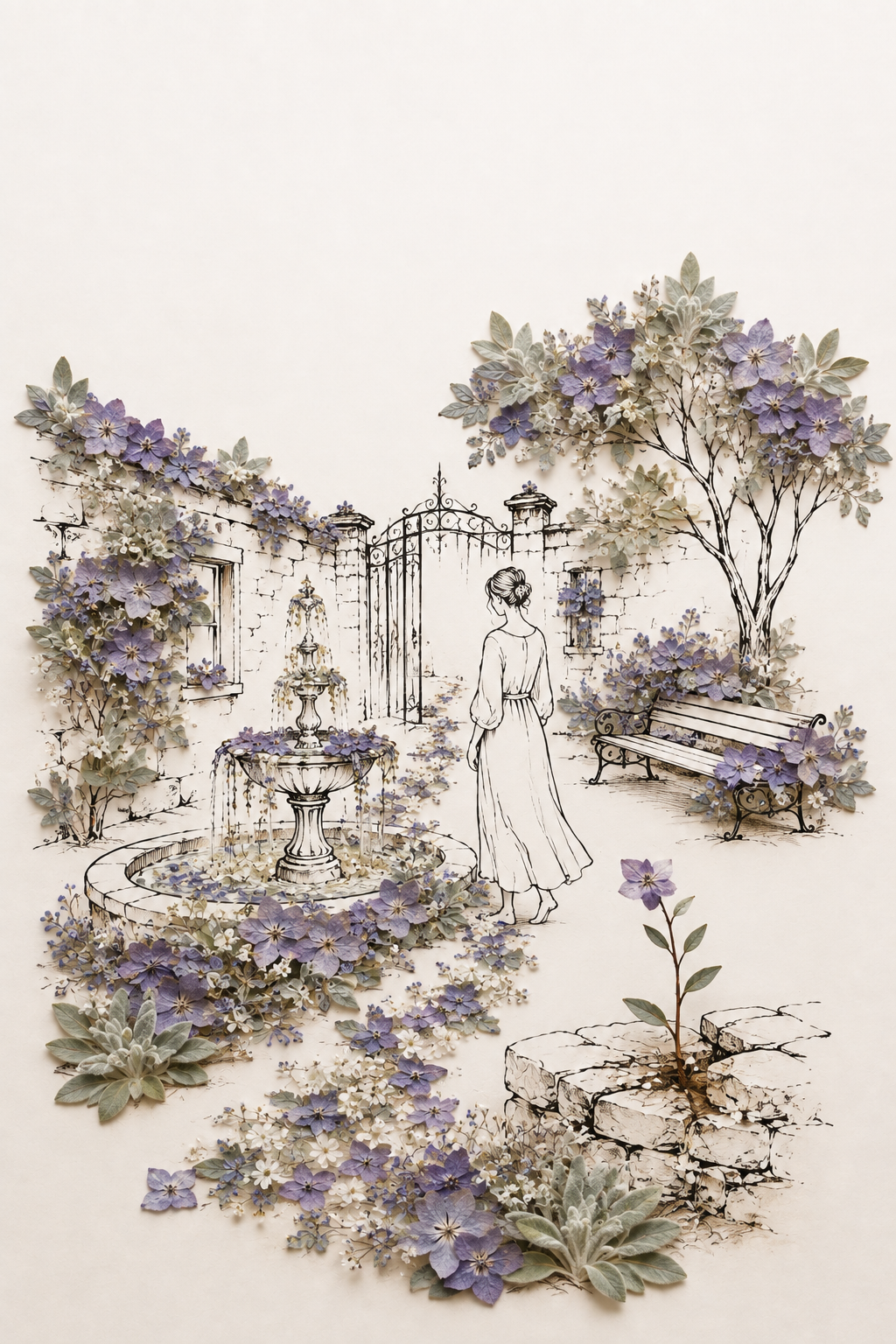
Life Breaking Through the Stone
Critique
Introduction This garden centers on a woman approaching an open gate beside a fountain. Blue-violet flowers, white clusters, and silvery leaves spread through the architecture, while a single young plant grows from broken masonry in the foreground. Description The woman stands just right of center with her back turned and skirt trailing toward the fountain. A curved basin occupies the left middle ground; water falls from a narrow finial into flower-covered rims. A bench sits under a flowering tree at right. Vines climb the left wall and windows, and a stream of blossoms follows the path from the lower edge. At lower right, one purple flower rises between cracked stones. Analysis Two spatial routes compete: the flower trail leads toward the fountain and gate, while the isolated stem pulls attention toward the broken wall. The woman mediates between these directions. Repeated violet blooms establish continuity across ground, architecture, and canopy. Rounded fountain basins counter the gate’s vertical bars and rectangular masonry. Soft leaf surfaces project from fine black drawing, making cultivated abundance appear to overtake rigid structures. Interpretation and Evaluation The open gate suggests departure or passage, yet the solitary flower growing through ruins introduces renewal at the viewer’s feet. The woman’s pause leaves her choice unresolved and gives the garden narrative tension. Perspective and figure placement are controlled, while the cool palette sustains quiet concentration. The contrast between carefully tended beds and spontaneous growth is the work’s most distinctive idea. Conclusion At first this appears to be a refined garden promenade, but closer attention shifts meaning toward the modest plant in fractured stone. Layered paths, coherent color, and tactile vegetation turn decorative beauty into a meditation on persistence.
Same Subcategory
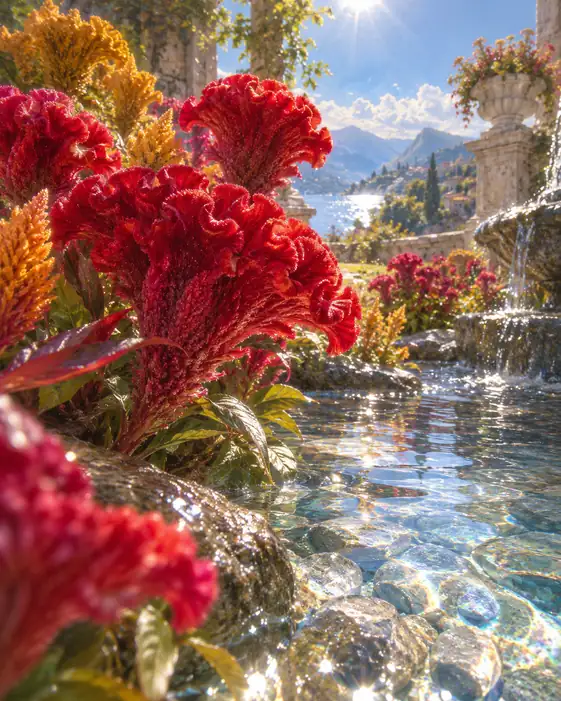 Fountain Basin and the Crimson Crest
Similar Artworks
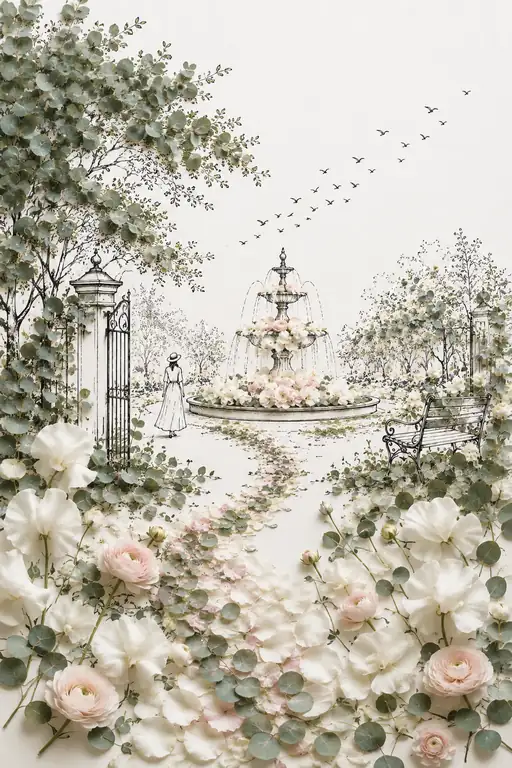 The Quiet Awakening of the Fountain Garden
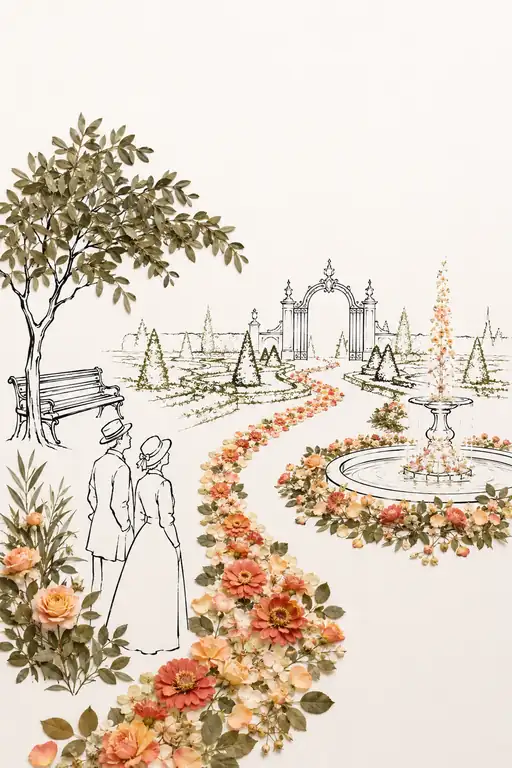 Pathway to the Sunlit Gate
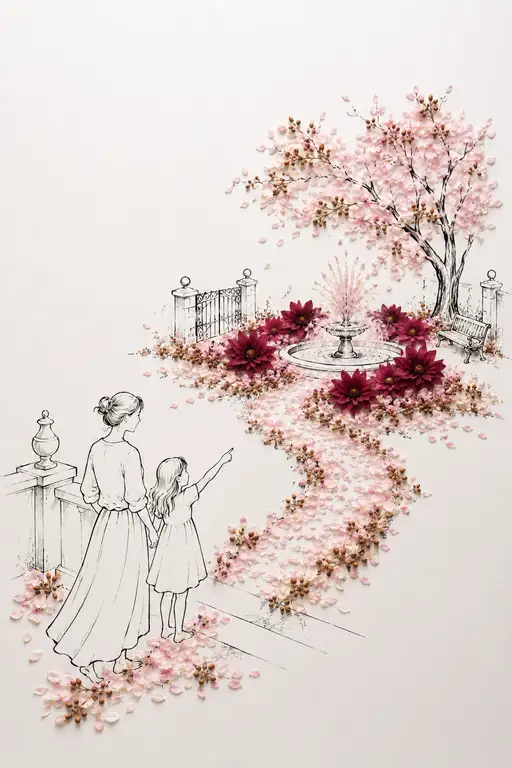 Guiding Steps in the Cherry Blossom Breeze
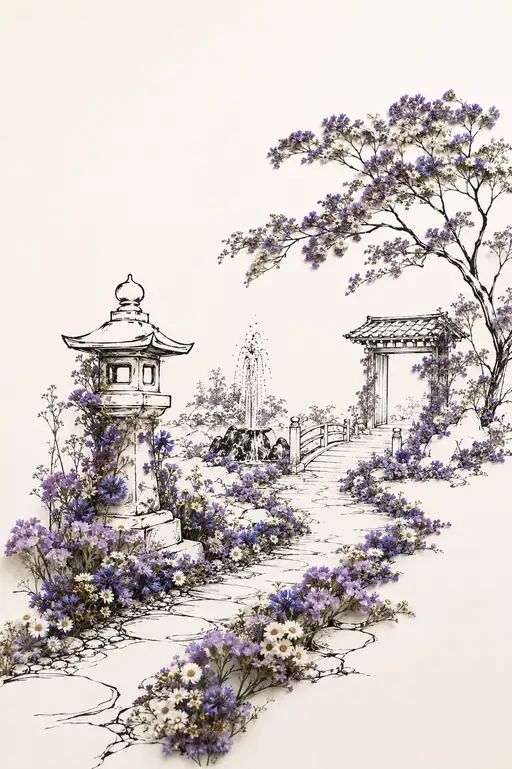 Stepping Stones Through the Violet Zen
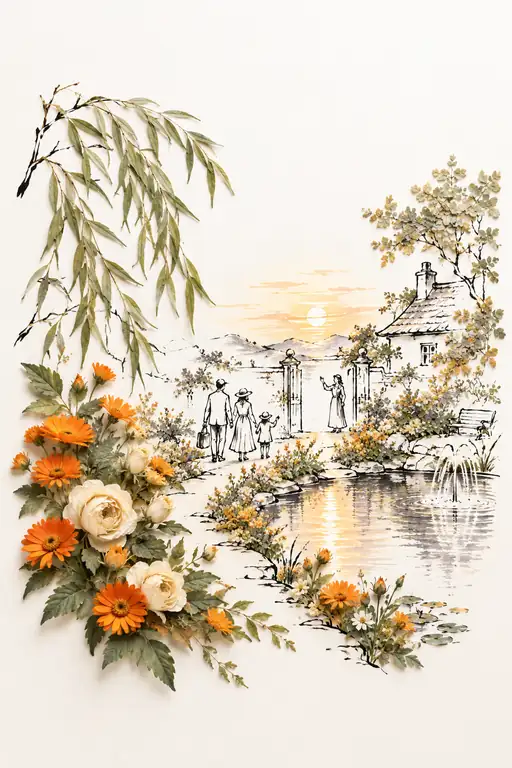 Homecoming in the Golden Twilight
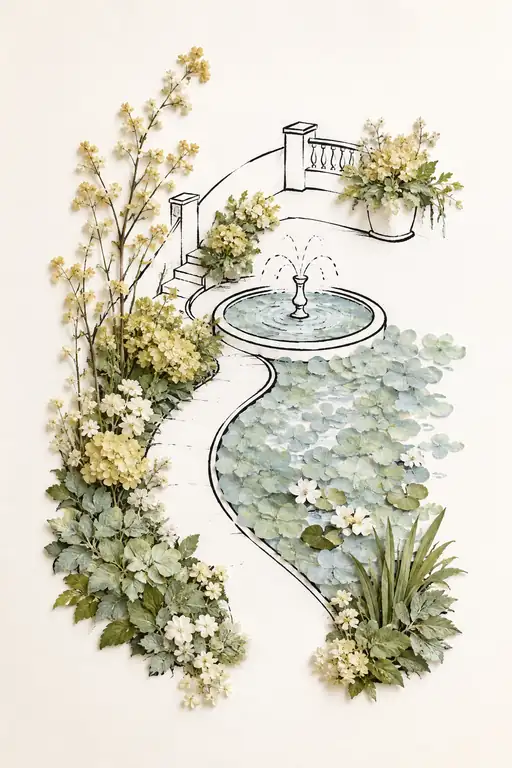 Serenade of the Garden Fountain
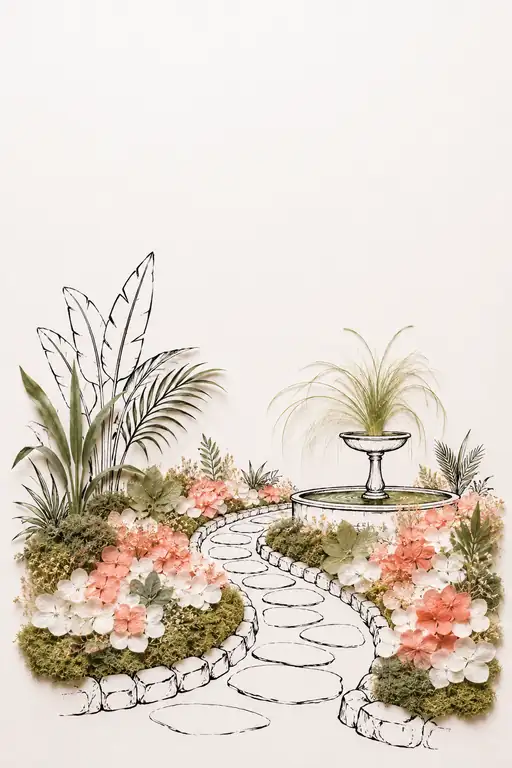 Fountain of the Coral Grove
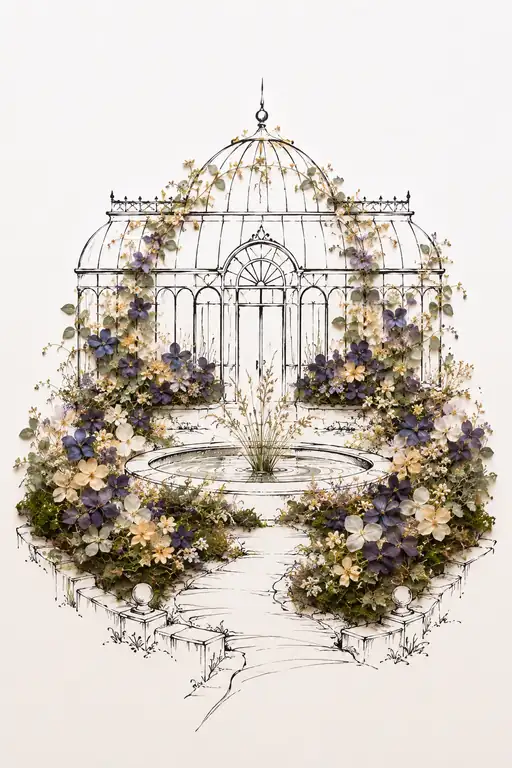 Glass Conservatory Gilded in Violet Blossoms
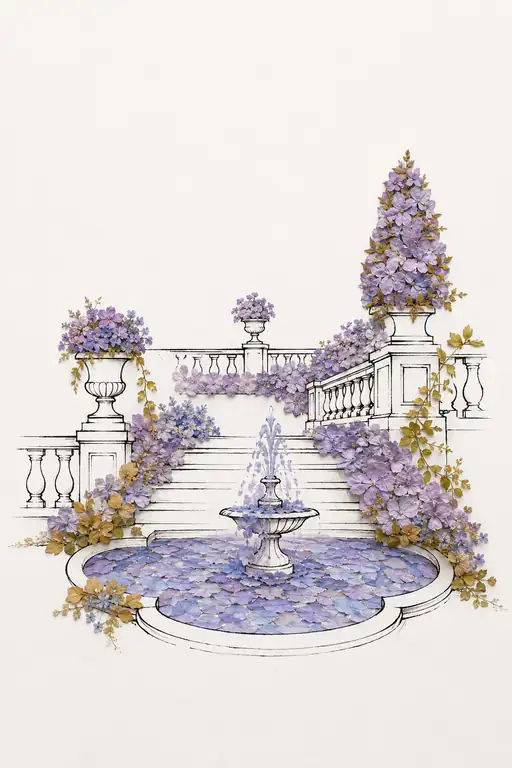 Tiered Fountain Garden of Violet Blooms
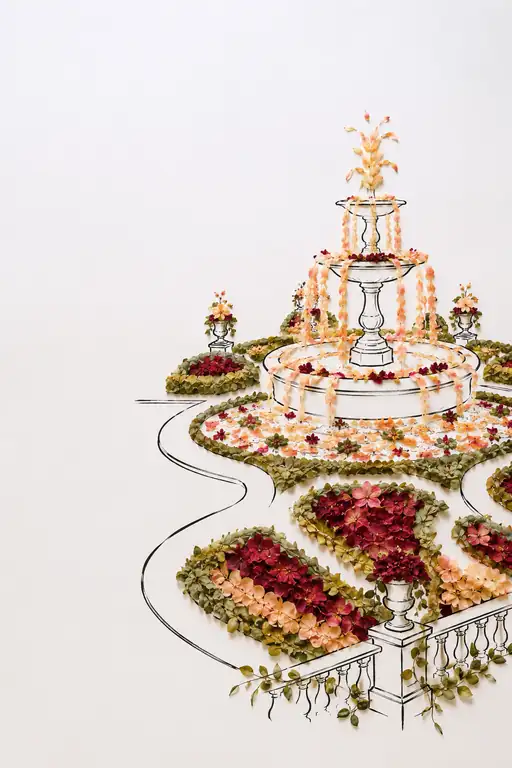 Flow of Sunlight in the Palace Garden