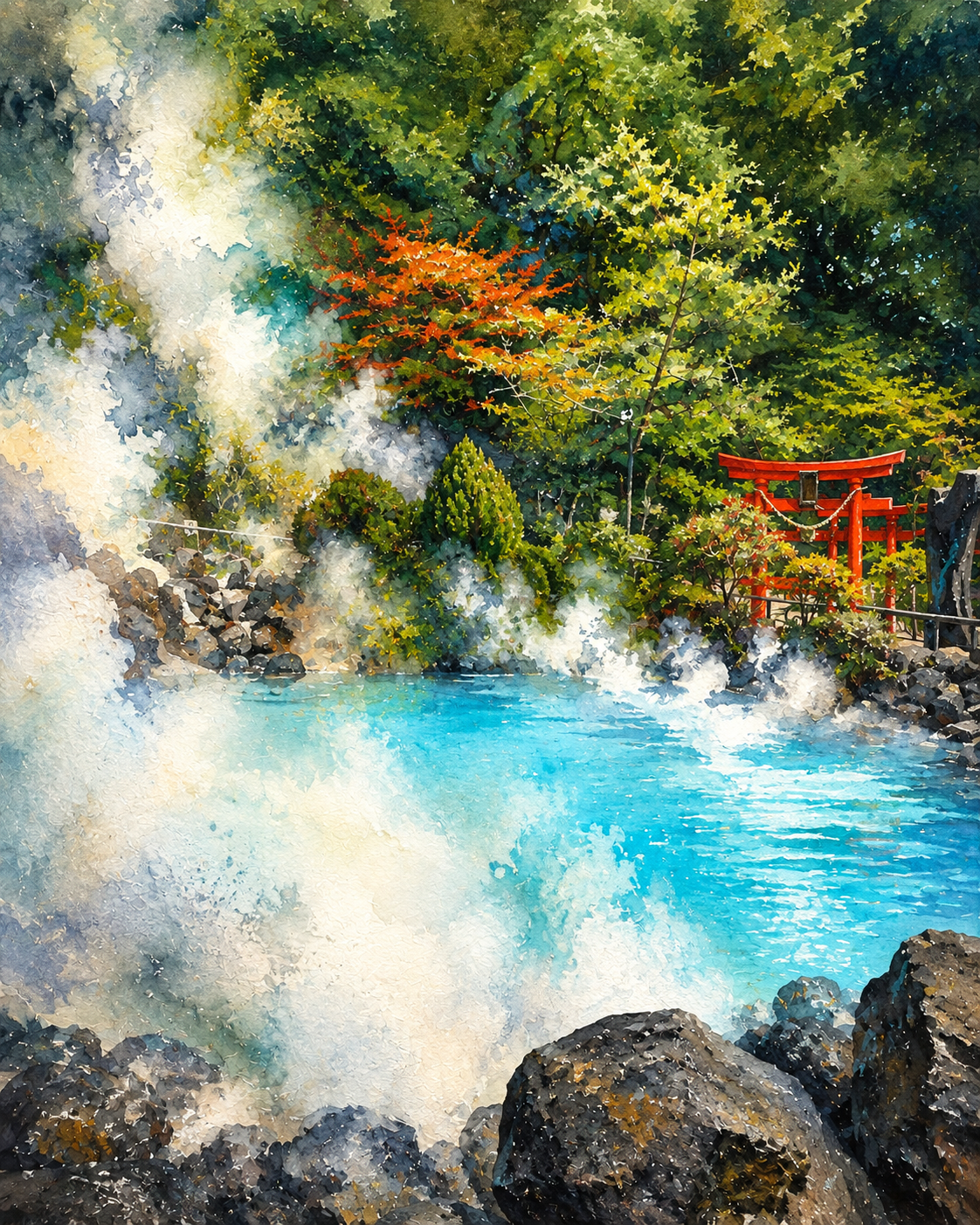
Azure Steam, Vermilion Prayer
Critique
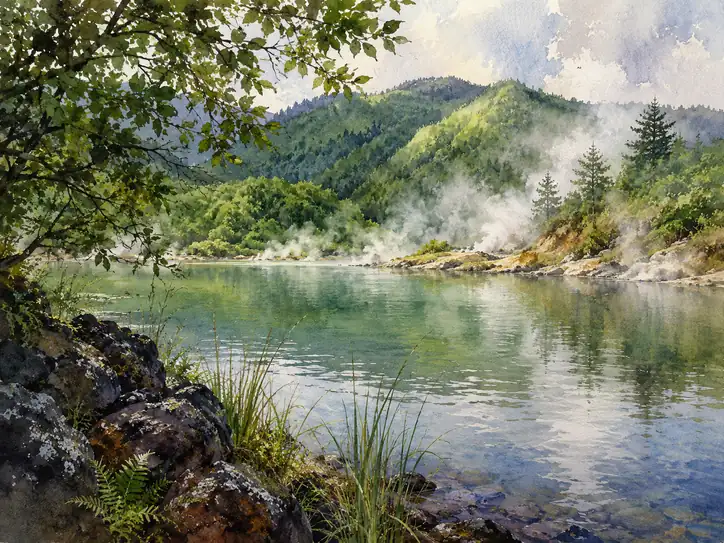
Composition and Visual Structure A broad steam mass fills the left foreground, opposed by open cyan water at right. Dark rocks anchor the bottom and foliage seals the upper field. Between them, a red torii becomes a compact destination. The curved shoreline carries the eye through vapor and shrubs toward the gate, making concealment directional. Color and Light Turquoise, leafy green, and vermilion establish a vivid triad. An orange-red maple extends the shrine's warmth into nature, while yellow-green highlights bridge them. Cream, pale blue, and gray make the steam luminous yet substantial. Dark blue-green shadows intensify both water and architecture. Technique and Surface Loose watercolor-like handling is energetic and cohesive. Angular fragments build rocks, dancing dabs produce foliage, and horizontal strokes articulate ripples. Wet-edged clouds and dry speckling make vapor expand and dissolve. Sharper edges secure the torii as focal point. Texture becomes most abstract where heat disrupts visibility. Theme and Interpretation Revelation depends on obstruction. Steam hides much of the pool, heightening awareness of radiant water and the distant gate. The torii suggests spiritual passage; geothermal vapor answers by transforming water into air. Autumn red amid summerlike green adds temporal ambiguity, as though several seasons meet outside ordinary duration. Suggestions for Development The foreground plume's brightest center approaches a featureless patch; faint directional curls could strengthen its rise. The central tree competes with the gate because their verticals align, so shifting emphasis toward its foliage would separate them. Preserve the cropped steam and rocks, whose closeness positions the viewer inside the heat.
Same Subcategory
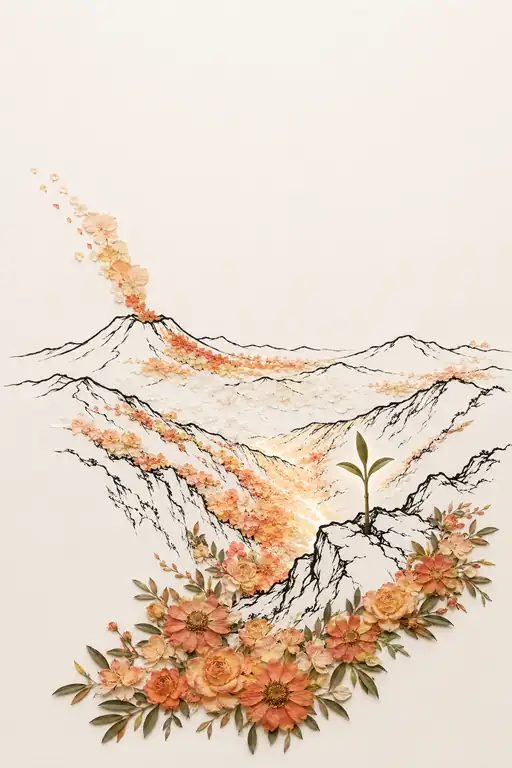 Sprout of Hope on the Volcanic Crest
Similar Artworks
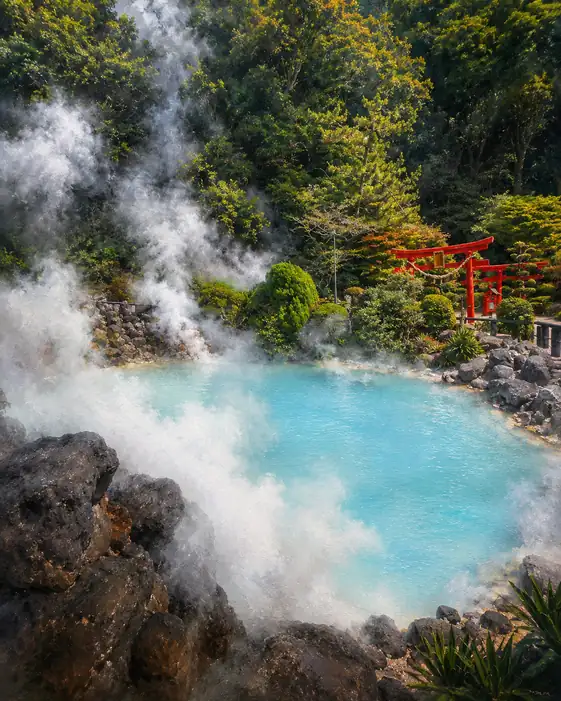 Rising Steam Over the Turquoise Hot Spring
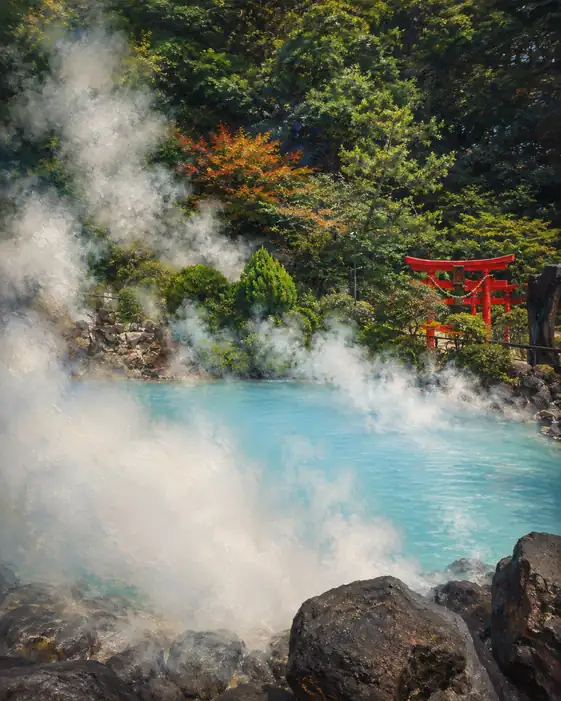 Thermal Mist Rising by the Crimson Torii
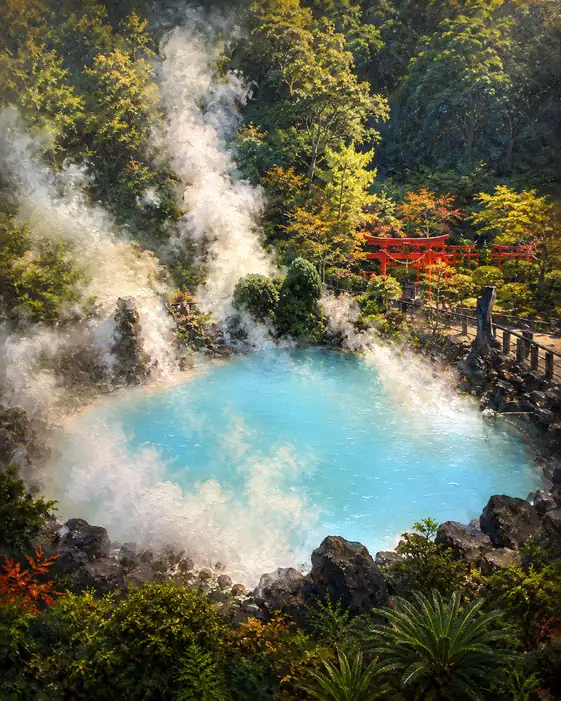 Sunlit Basin of the Azure Sea Hell
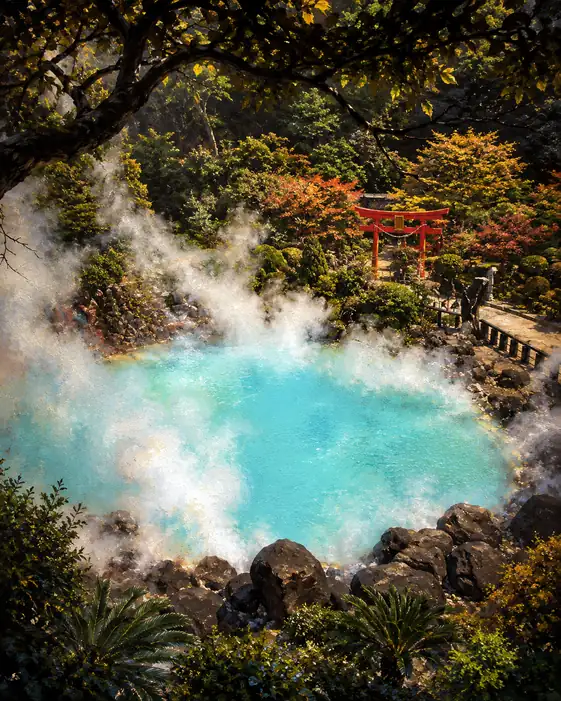 Azure Thermal Waters Framed by the Forest Canopy
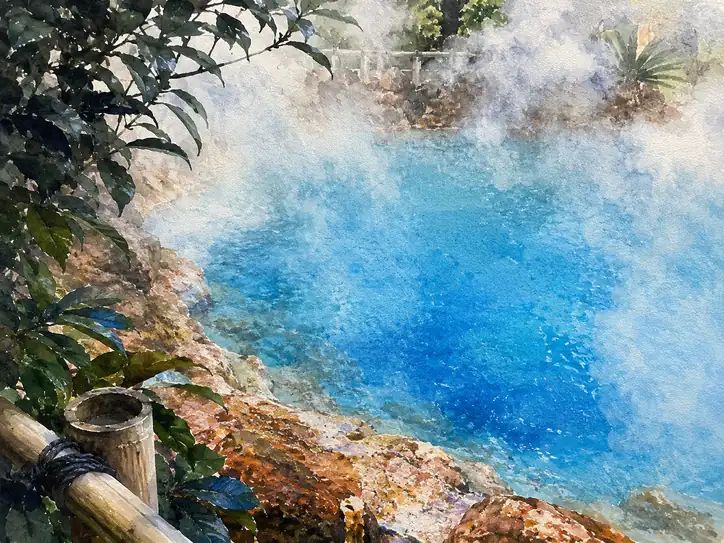 Luminous Depths of the Cobalt Spring
 Crimson Fury and Sacred Serenity
 Where the Mountain Breathes
 Where the Cobalt Burns
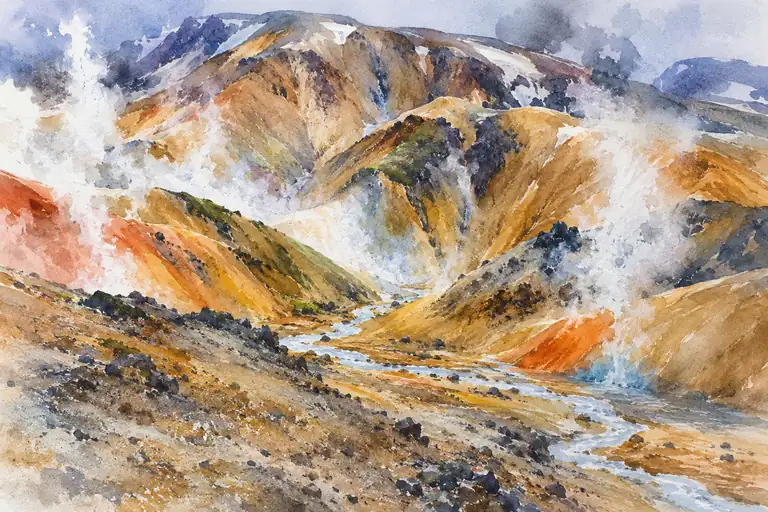 Breath of the Living Earth
 Silent Spring's Breath