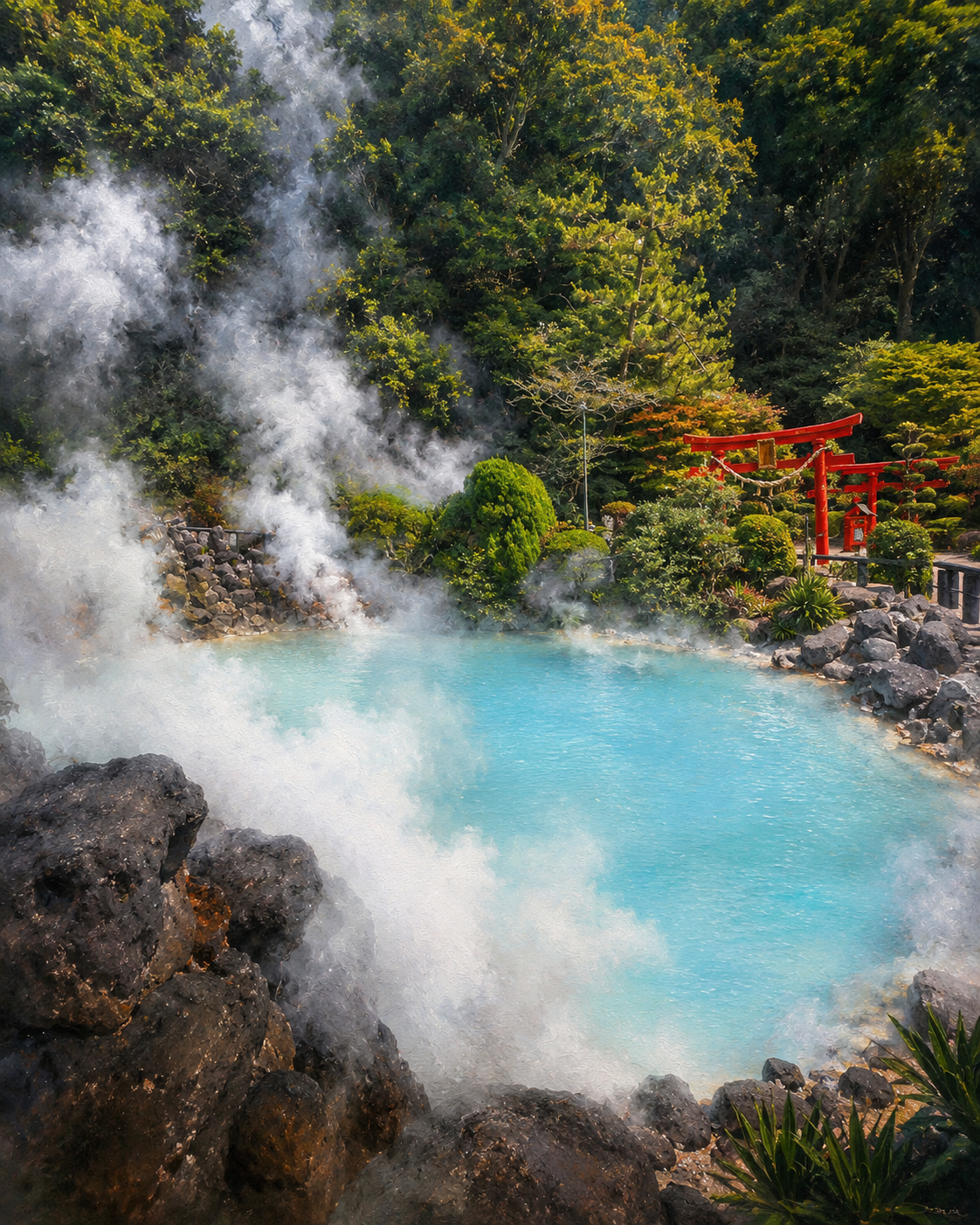
Rising Steam Over the Turquoise Hot Spring
Critique
Composition and Visual Structure Three zones organize the scene: dark foreground rocks, a luminous turquoise pool, and a steep forest wall. Steam cuts from lower center to upper left, binding the layers while concealing their boundaries. A small red torii commands the upper right. Its horizontals stabilize turbulent vapor, and open water creates a convincing interval of approach. Color and Light Cyan water and vermilion architecture provide complementary intensity among greens and charcoal browns. Yellow-green sunlight crowns central trees and shrubs, guiding attention toward the gate. Steam shifts from brilliant white to blue-gray transparency, indicating heat and depth. Rust-colored rock fractures quietly echo the shrine. Technique and Surface Dense broken brushwork distinguishes granular forest from smoother pool. Layered darks establish vegetation before bright flecks describe leaf tips, creating depth without excessive detail. Directional overlapping strokes make vapor rise continuously. Heavier angular marks give rocks weight, while softened shoreline edges let steam and water mingle. Theme and Interpretation Elemental energy meets sacred boundary. The pool occupies the center like a radiant void, while the torii identifies the far shore as passage. Steam is both evidence of heat and a symbolic veil withholding complete access. Without visitors, the scene remains solemn: nature invites approach but stays older, stronger, and partly unknowable. Suggestions for Development The brightest lower plume loses volume against pale water; a cool-gray underside could restore separation. The central tree is close in value to its background, so darker intervals behind its trunk would improve depth and reinforce the route toward the gate. Retain the foreground rocks' scale and darkness, which make the water's brilliance credible.
Same Subcategory
Similar Artworks
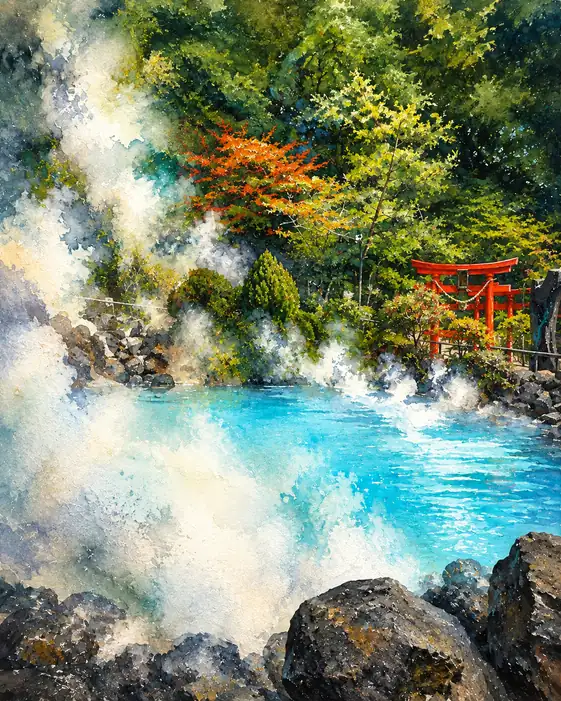 Azure Steam, Vermilion Prayer
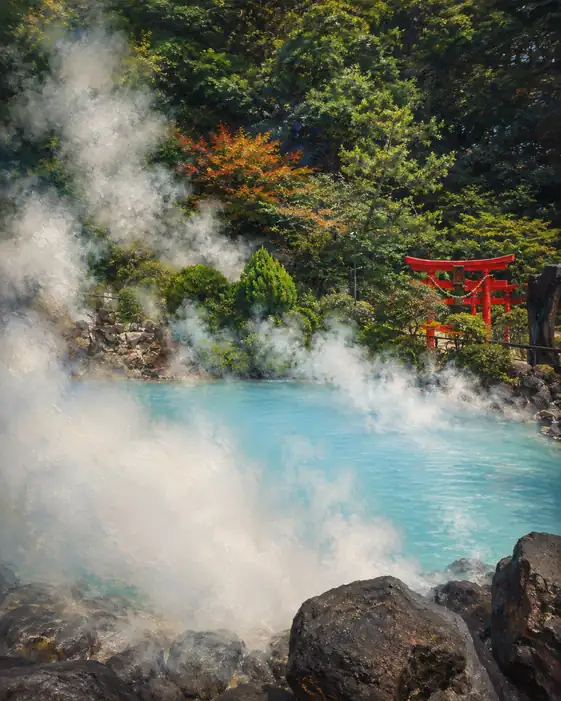 Thermal Mist Rising by the Crimson Torii
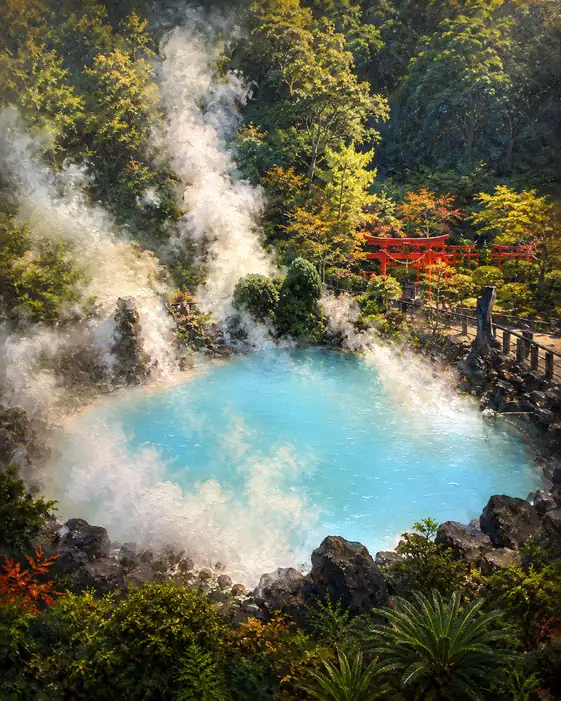 Sunlit Basin of the Azure Sea Hell
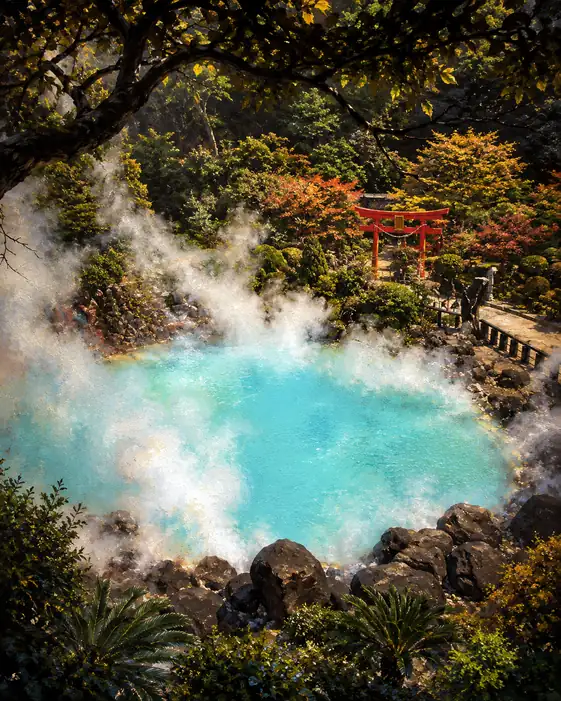 Azure Thermal Waters Framed by the Forest Canopy
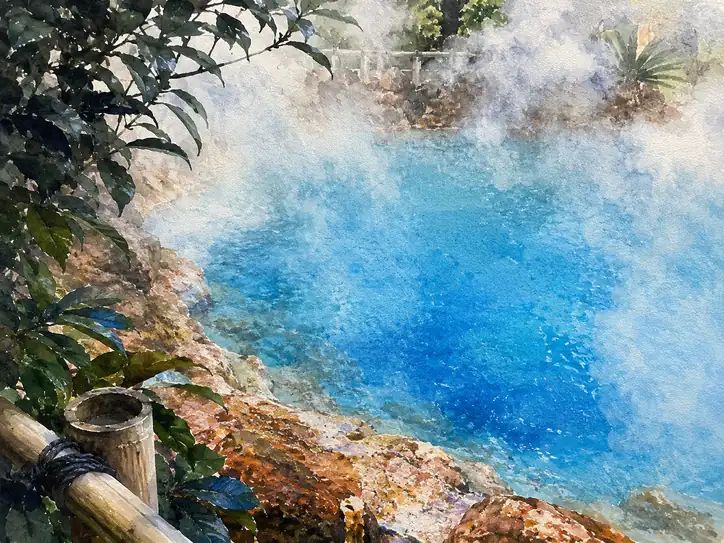 Luminous Depths of the Cobalt Spring
 Crimson Fury and Sacred Serenity
 Where the Mountain Breathes
 Where the Cobalt Burns
 Steam and Spider Lilies
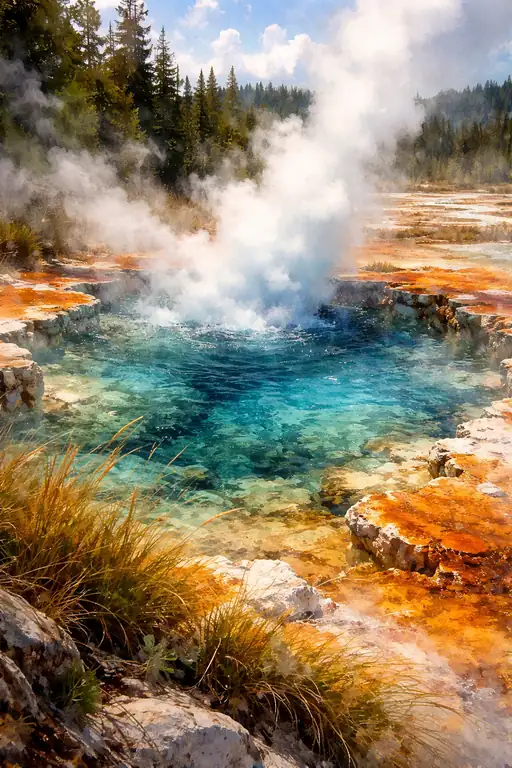 The Turquoise Eye of the Geyser