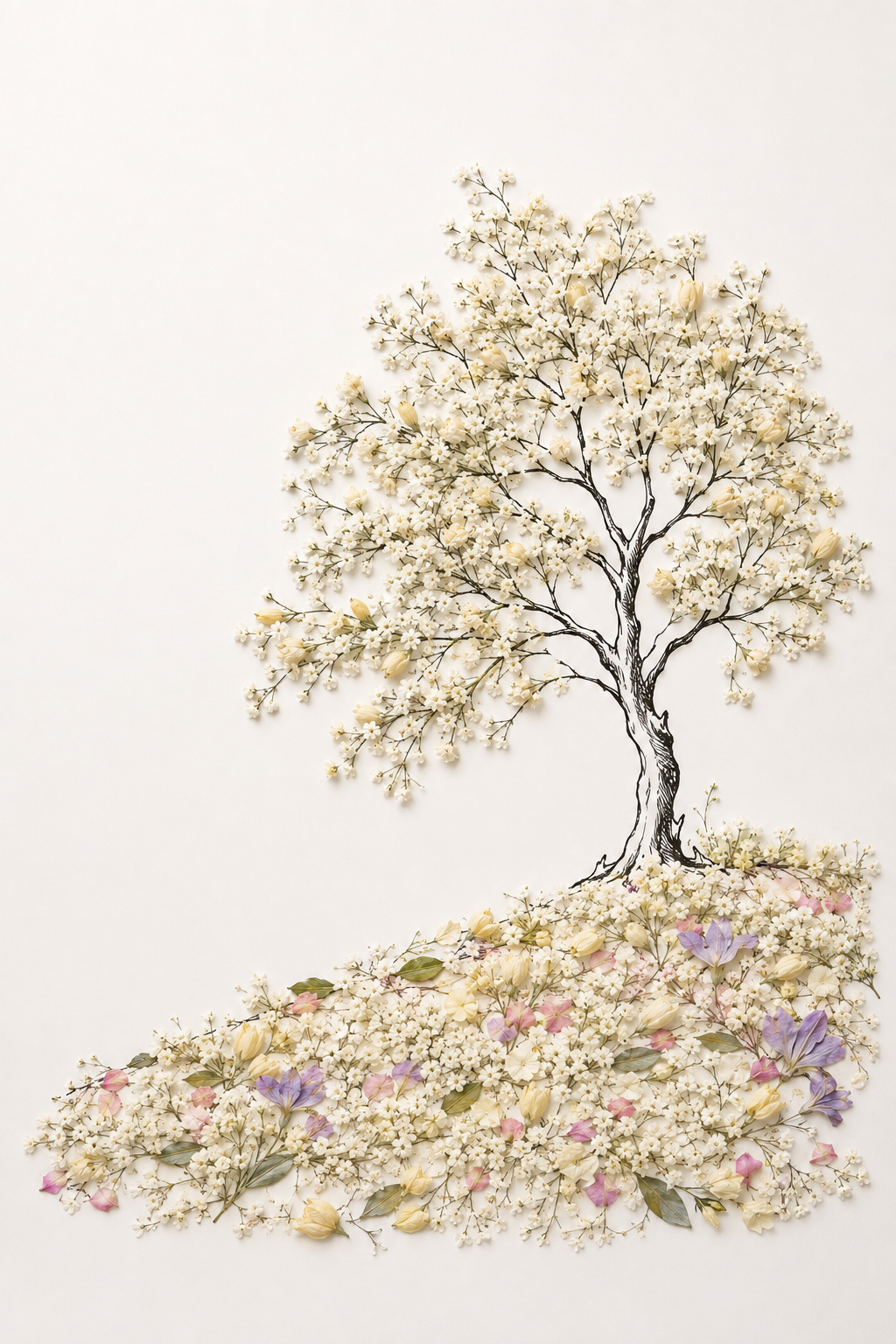
Solitary Flowering Tree on the Blossom Hill
Critique
Composition and Visual Structure A solitary tree rises from a floral slope, its off-center trunk supporting a crown spread upward and left. This placement balances the open upper-left field against the dense lower bed. The hill establishes ascent, repeated in finer branching rhythms. A narrow contact with the ground makes the tree seem rooted yet delicately poised. Color and Light Ivory blossoms dominate, but cream, pale yellow, muted green, pink, and lavender variations animate the near-monochrome surface. The black trunk supplies tonal weight and guides the eye upward. Colored accents gather mainly on the hillside, making the canopy ethereal and the ground sensuous. Soft botanical shadows add quiet dimension. Technique and Material Drawn wood and assembled flowers join convincingly. Ink hatching gives the trunk age, torsion, and authority, while botanical stems continue its branches. Tiny blossoms build a lace-like crown and textured terrain; larger buds interrupt the fine grain. Scale shifts intelligently: stems read as branches above but tangled meadow growth below. Theme and Interpretation The tree suggests endurance surrounded by renewal. Its weathered trunk carries almost weightless bloom, joining age with springlike possibility. Without horizon or landscape detail, it becomes an emblem rather than a specimen. The rising crown and hill evoke resilience, remembrance, and experience flowering beyond visible scars. Suggestions for Development Abundance remains disciplined by clear structure. Tiny openings in the dense upper-right canopy could reveal branches and improve depth. One dark root line among the white flowers might clarify the trunk's contact with the hill. Lavender and pink accents should remain scarce to preserve the distinction between airy crown and varied ground.
Same Subcategory
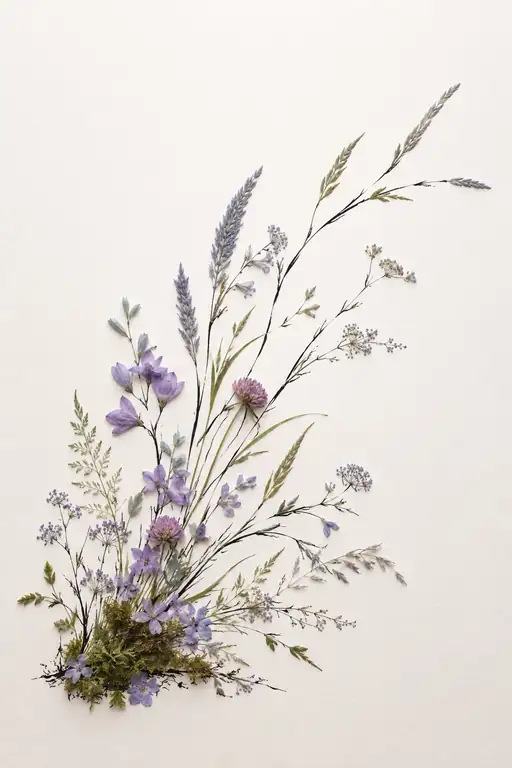 Meadow Winds in Lavender
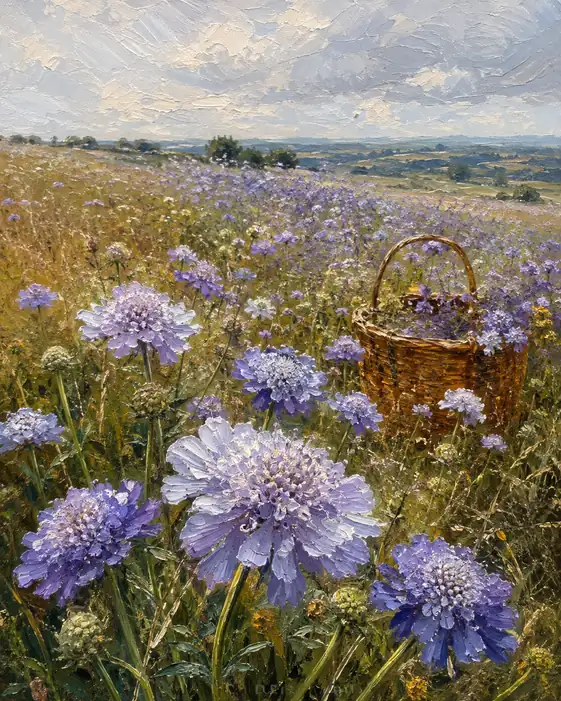 Afternoon Whispers in the Wicker Basket
Similar Artworks
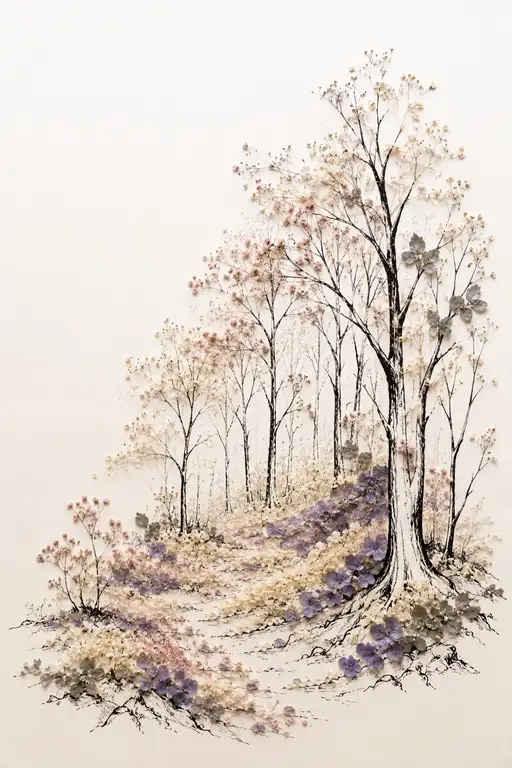 Path of Blossoms in the Birch Grove
 Dew Pearls upon the Pale Petals
 Bush Clover Slopes and the Old Iron Bridge Spanning the Mist
 Path of Wildflowers
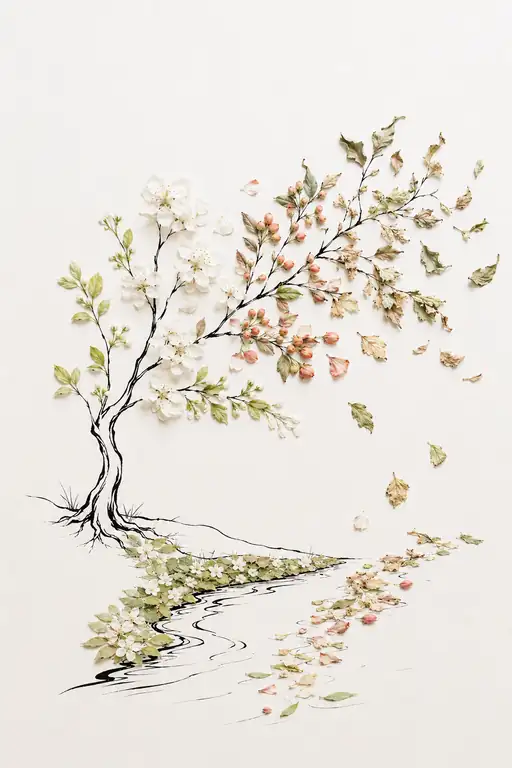 Drifting Petals Along the Winding Stream
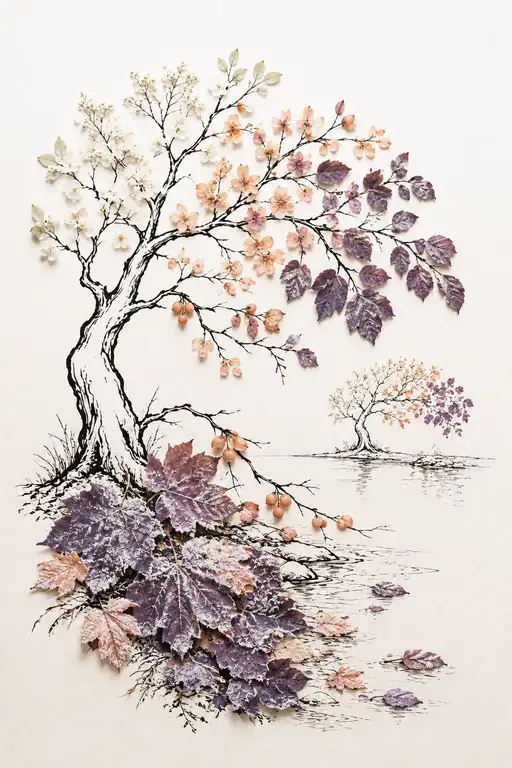 Dialogue of Seasons Across the Water
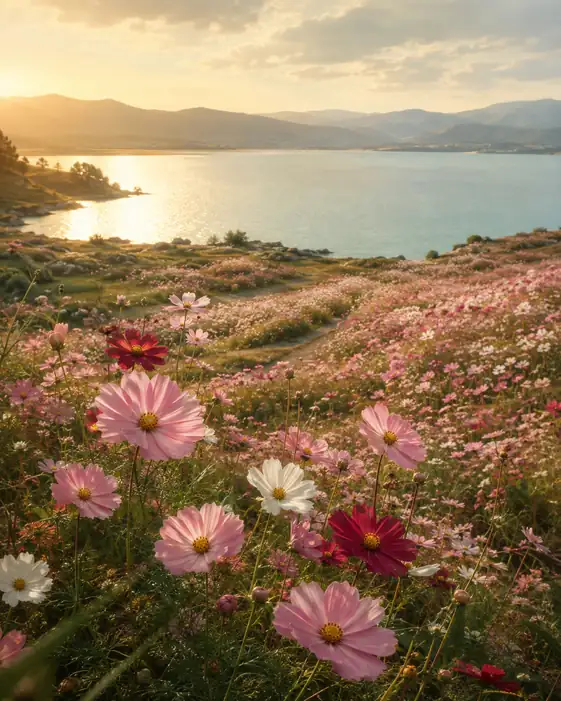 Sunset Lake View and Carpet of Blooming Cosmos
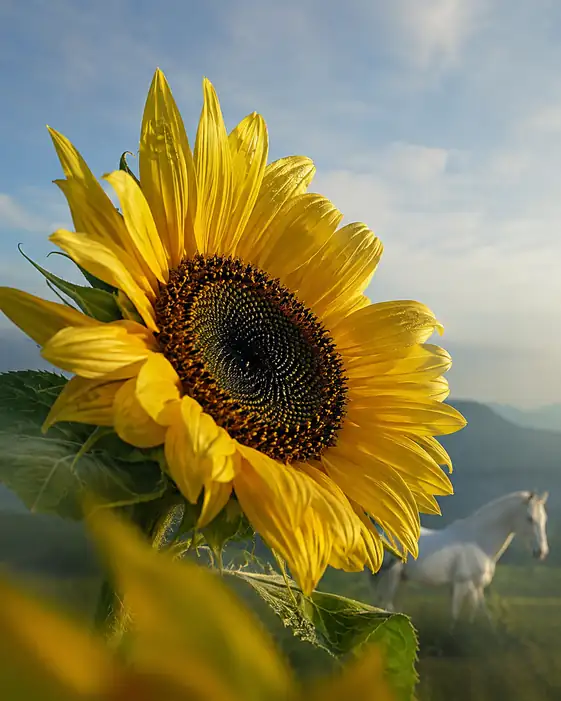 Pastoral Reverie with Sunflower and Steed
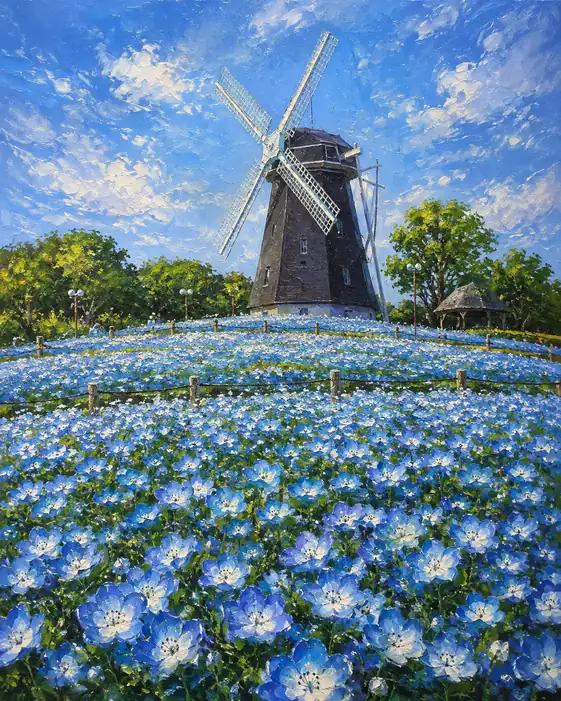 Stepped Horizons of Nemophila and Sky
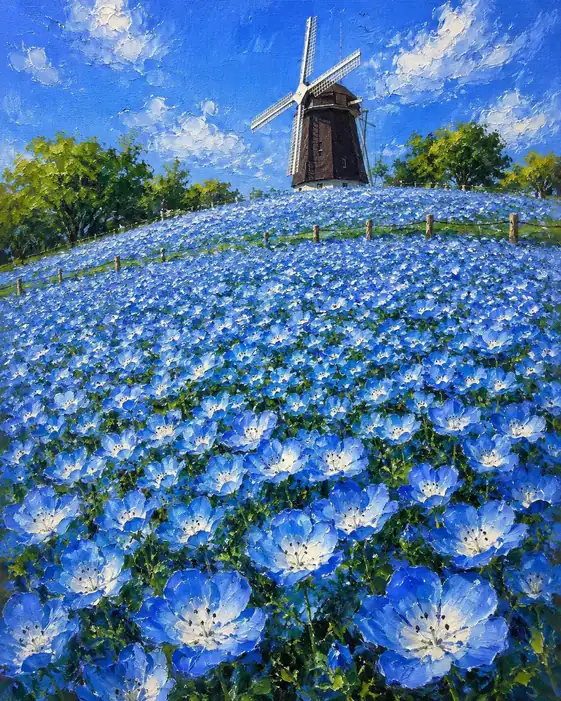 Azure Sea of Blossoms Beneath the Windmill