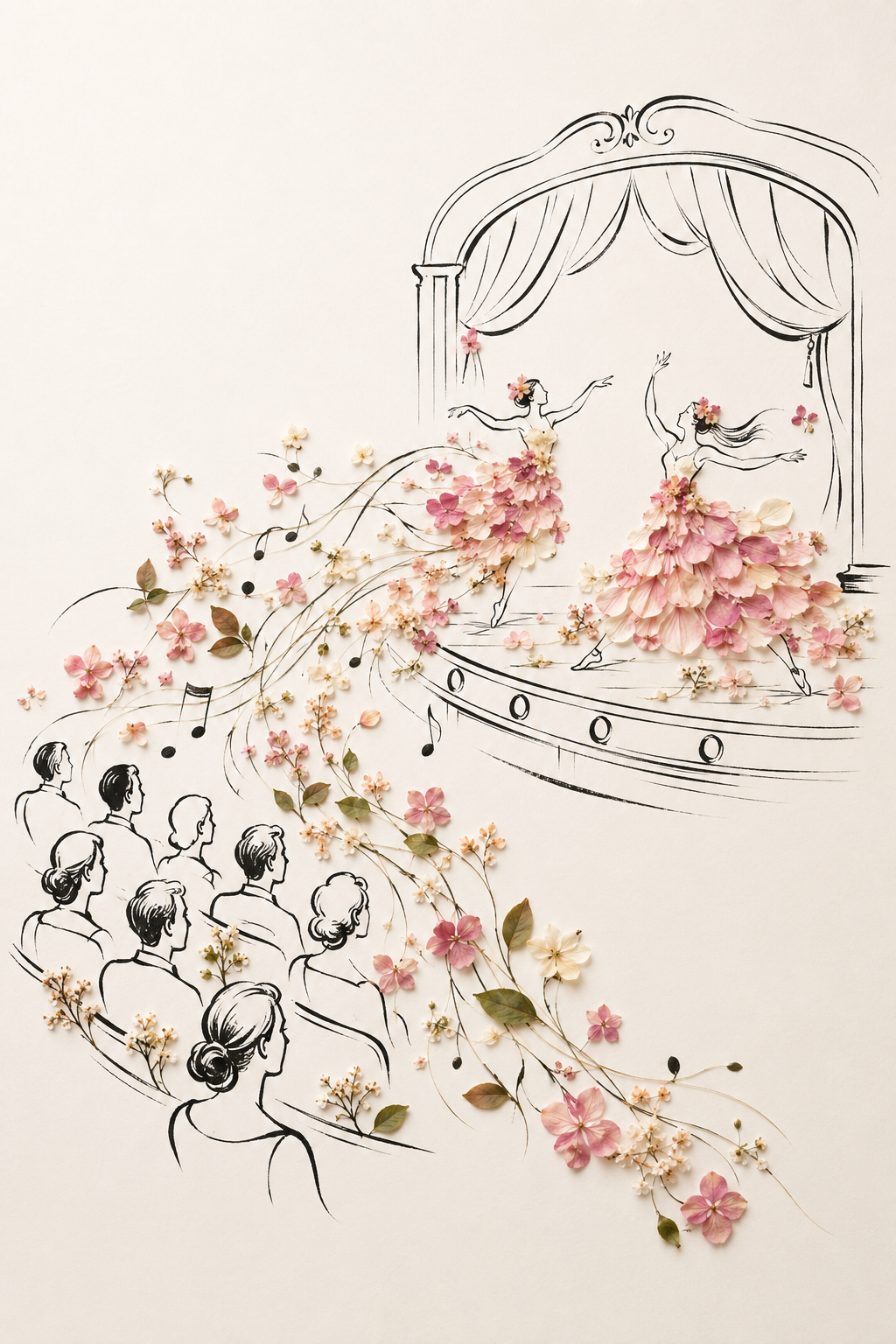
Grand Ballet and the Cascading Melodies
Critique
Introduction This theater scene presents two dancers on a curved stage before an audience. Black contour defines architecture and figures, while pink, coral, and ivory petals form dresses and spill into the auditorium. Botanical stems mingle with musical notes, turning performance into a current crossing the space. Description An arch and parted curtains frame the stage. One dancer extends both arms; the other turns with one arm raised and hair streaming behind. Their petal skirts spread into irregular masses. Spectators are seen from behind. Flowers and stems travel diagonally between audience and performers beside black notes. Analysis The stage curve forms a firm horizontal boundary, while floral lines cross it and connect the two zones. The dancers' opposed gestures expand the composition outward. Dense skirts anchor the upper right, balanced by the clustered audience at lower left. Pink blossoms repeat at decreasing intervals through the center, guiding the eye upward. Crisp architectural lines contrast with translucent petals, wiry stems, and softly shadowed leaves. Interpretation and Evaluation Music and dance do not remain confined to the stage but circulate among viewers. Flowers become costume, rhythm, and emotional trace. Clear diagonal organization controls abundant ornament. Restrained warm color, readable poses, and distinctions among cloth, petals, wood, and silhouettes demonstrate skill. Botanical relief combined with theatrical drawing gives the scene originality. Conclusion At first the petal dresses command attention, but closer viewing reveals a continuous exchange linking dancers and audience. Notes and flowering stems cross the stage edge like shared responses. Through poised gesture, controlled asymmetry, and tactile detail, the work presents performance as a collective experience rather than an isolated display.
Same Subcategory
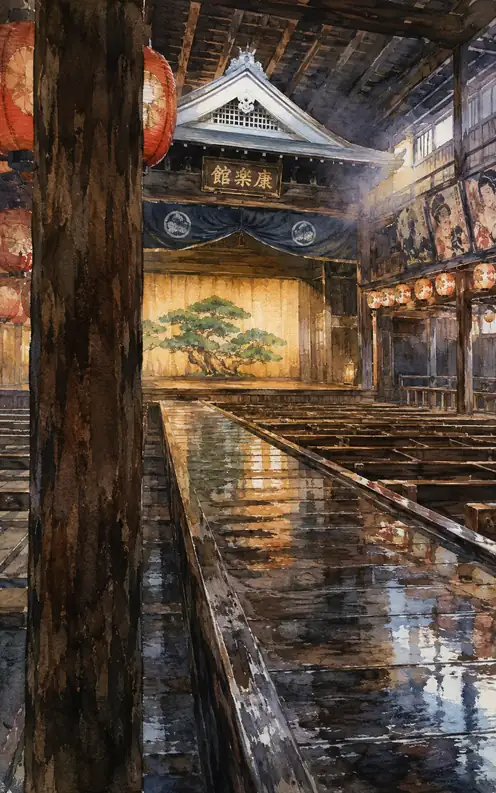 After the Applause Became Rain
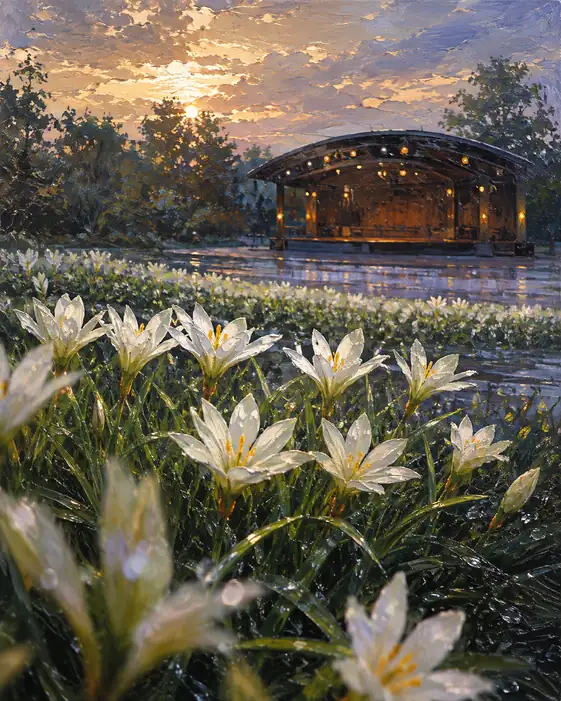 Twilight Overture of an Empty Stage
Similar Artworks
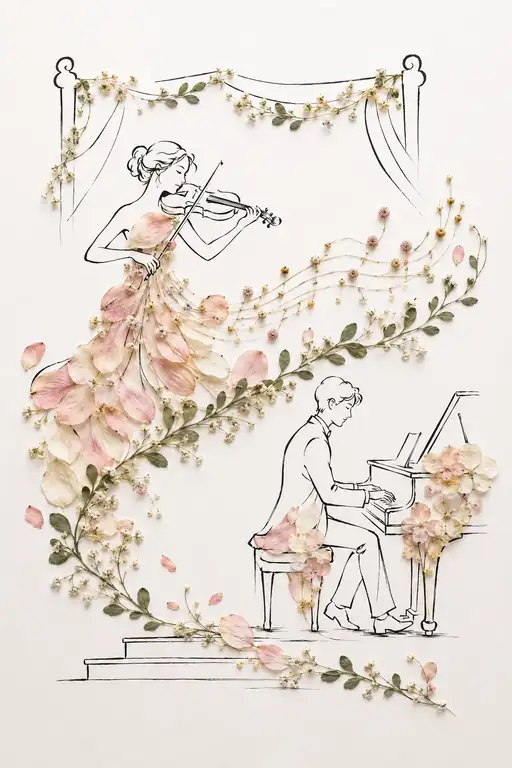 Duet of Blossoming Melodies
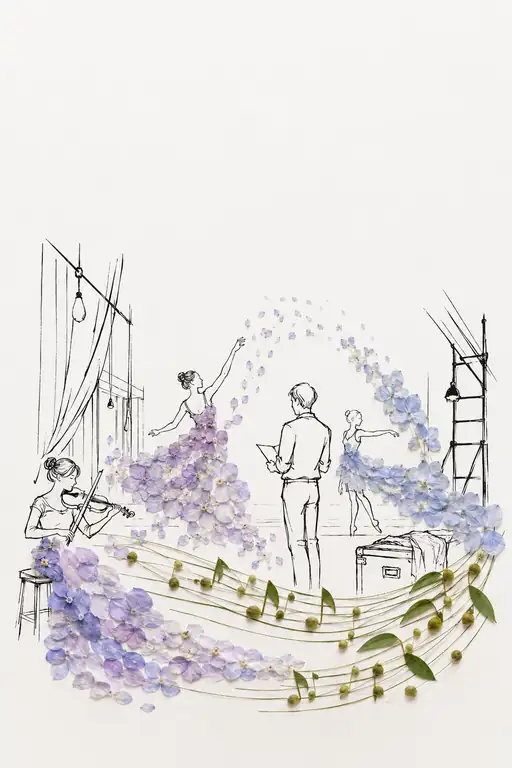 Rehearsal of Blossoms and Melodies
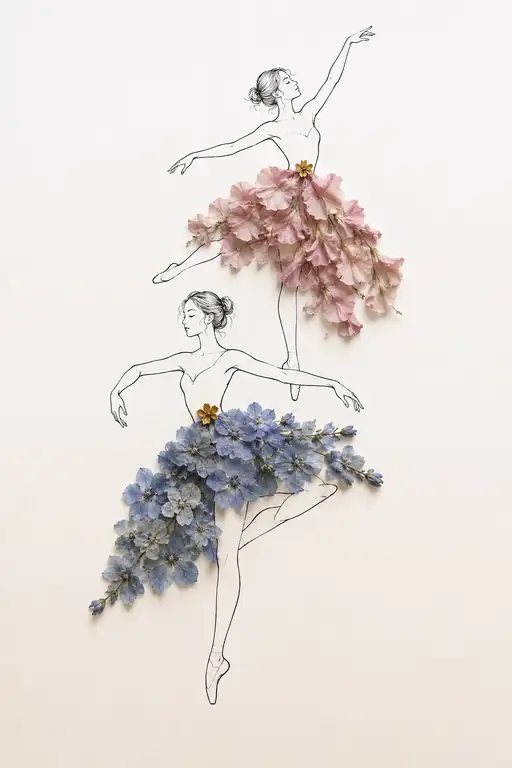 Harmony of Flight and Ground
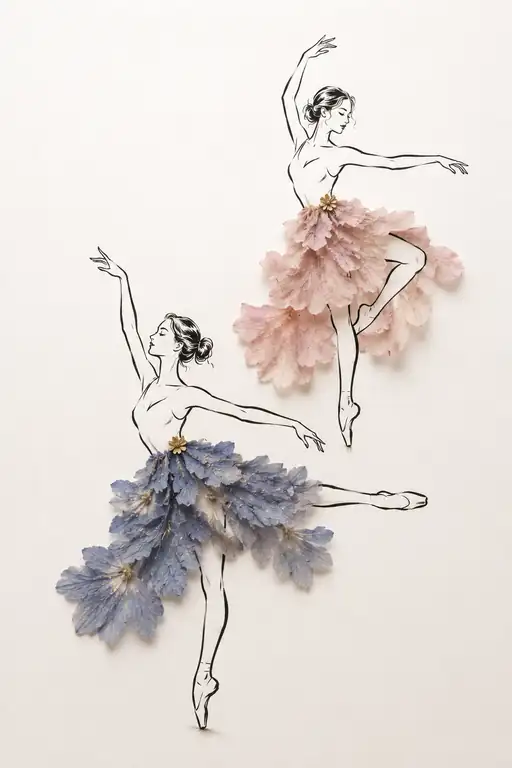 Duet in Suspended Grace
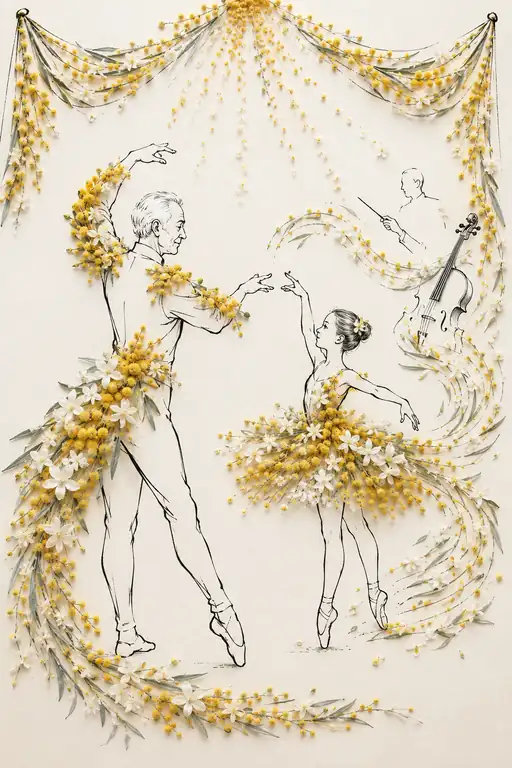 Pas de Deux Beneath Golden Garlands
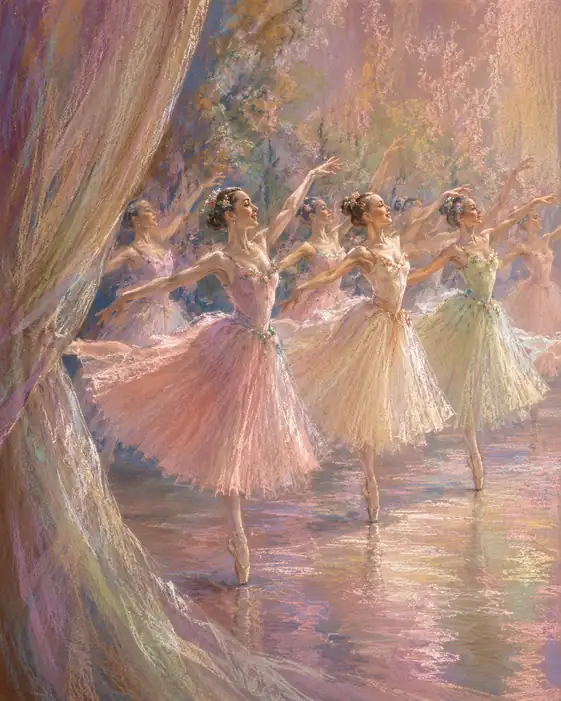 Whispers from the Wings
 Weightless Soul in the Spotlight
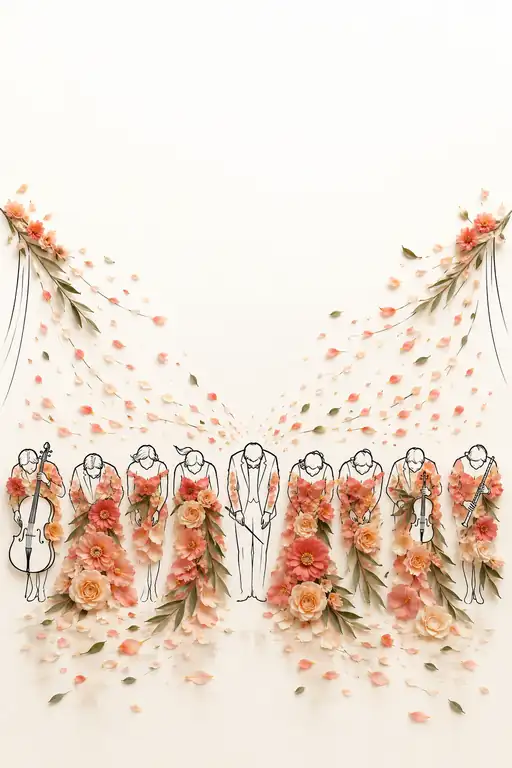 Resonance of the Final Bow
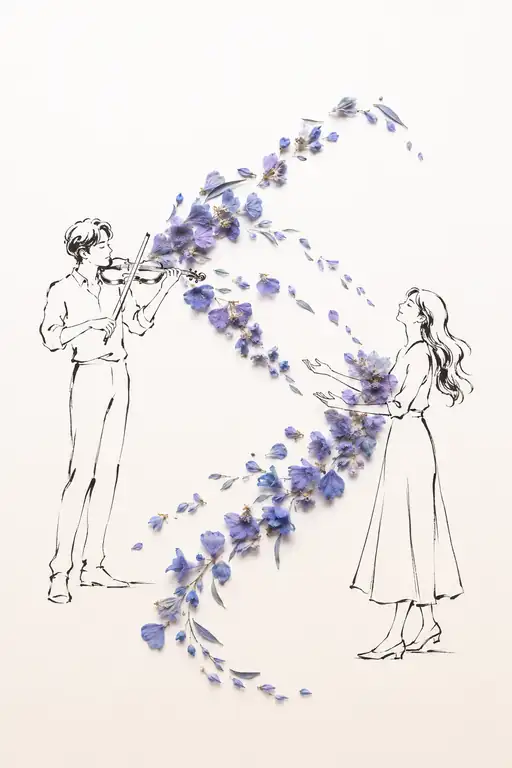 Melody of Blue Blossoms for the Listener
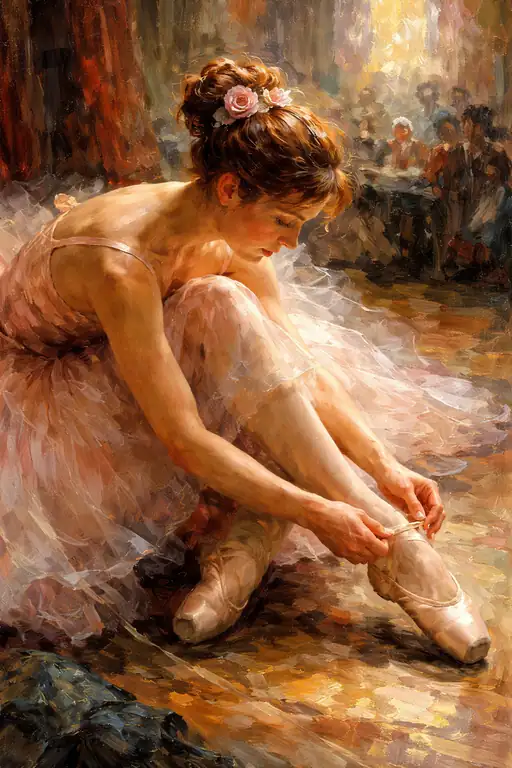 Whispers Before the Curtain Rises