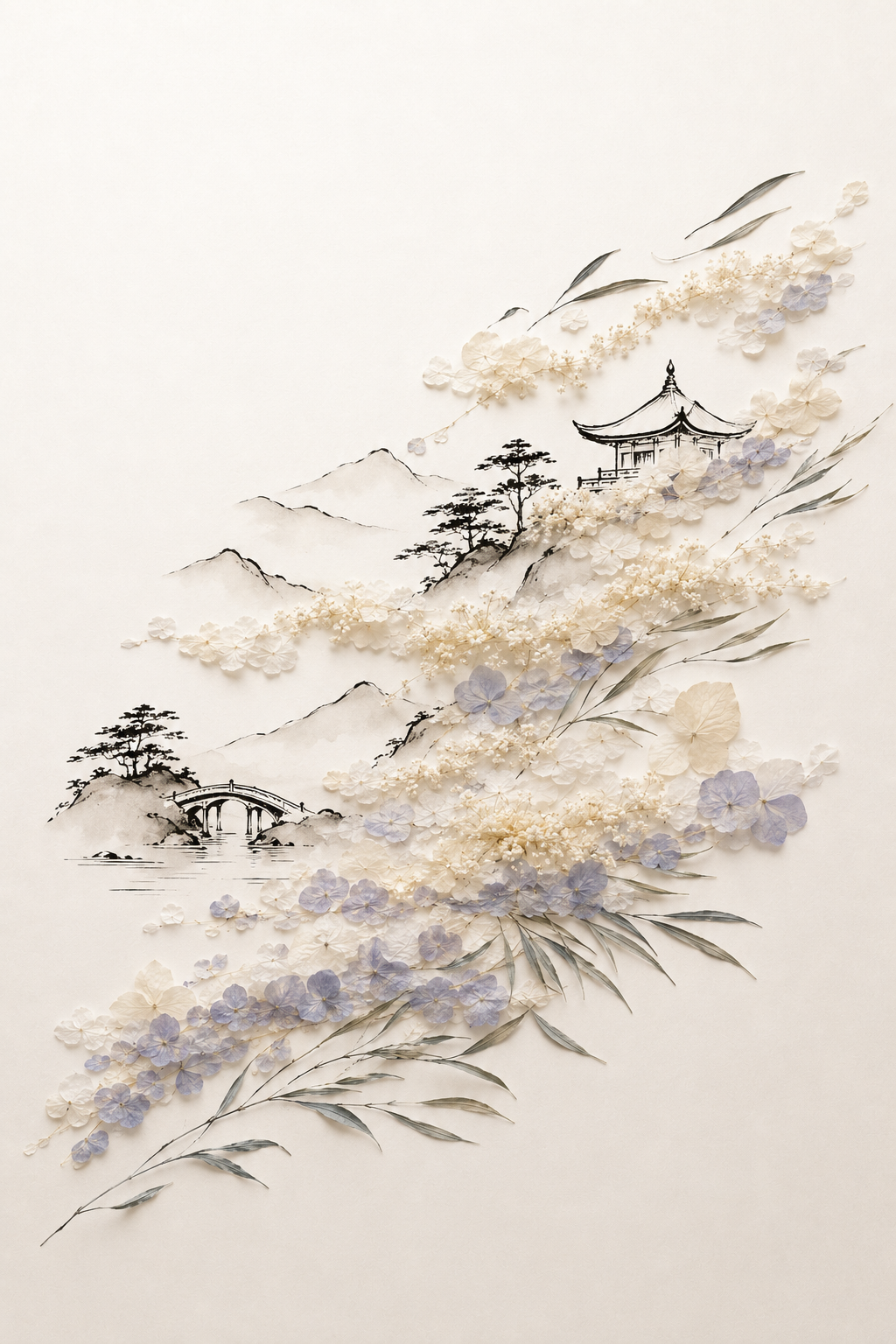
Flowered Mist to the Mountain Pavilion
Critique
Introduction This landscape combines an ink-like mountain retreat with diagonal bands of white and blue flowers. A pavilion crowns the upper-right ridge, while an arched bridge crosses water below. Botanical relief passes through the scenery, joining near and far space in a restrained palette. Description Faint mountains recede behind dark pines. The pavilion's curved roof rises above a steep slope, and the bridge links rocky banks below. Hydrangea-like clusters sweep from lower left to upper right in parallel tiers. Narrow leaves project outward, and tiny cream sprays fill gaps between translucent petals. Analysis The floral diagonal provides the dominant movement and counters the horizontal recession of mountains and water. Dark architecture and pines act as sharp anchors among pale, shadow-casting blossoms. Blue petals gather most strongly in the lower half, creating weight near the viewer, while whiter clusters rise toward the pavilion. Alternation between drawn depth and physical overlap makes the flowers function as foreground, mist, and pathway. Interpretation and Evaluation The pavilion and bridge suggest passage through an idealized landscape, while flowering bands make it sensuous rather than purely architectural. Nature connects separated sites more fully than the bridge does. Abundant material does not diminish spaciousness. Precise linework, tonal recession, coherent color, and varied floral textures demonstrate skill, giving the traditional mountain motif fresh originality. Conclusion At first the flowers appear to decorate a quiet ink landscape, but closer viewing shows that they organize its movement and depth. Their diagonal flow carries the eye from the lower bridge toward the elevated pavilion. The work unites structure and growth in a balanced meditation on ascent, distance, and cultivated seclusion.
Same Subcategory
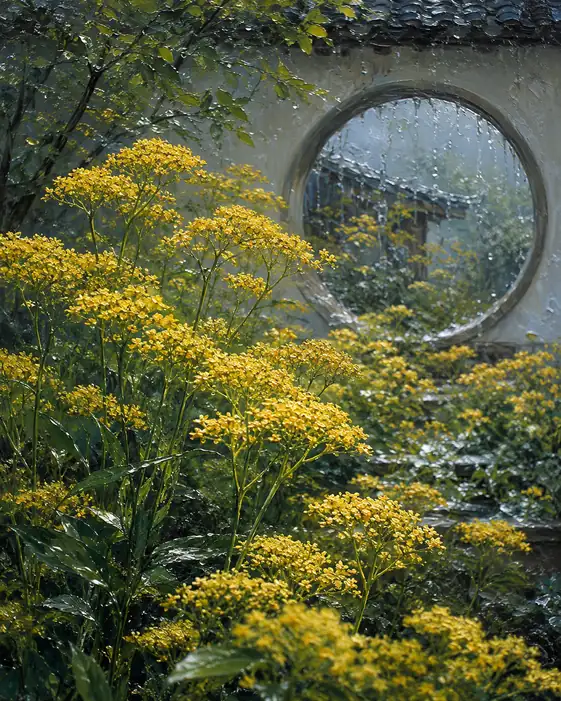 Rain on the Circular Window and Golden Fields
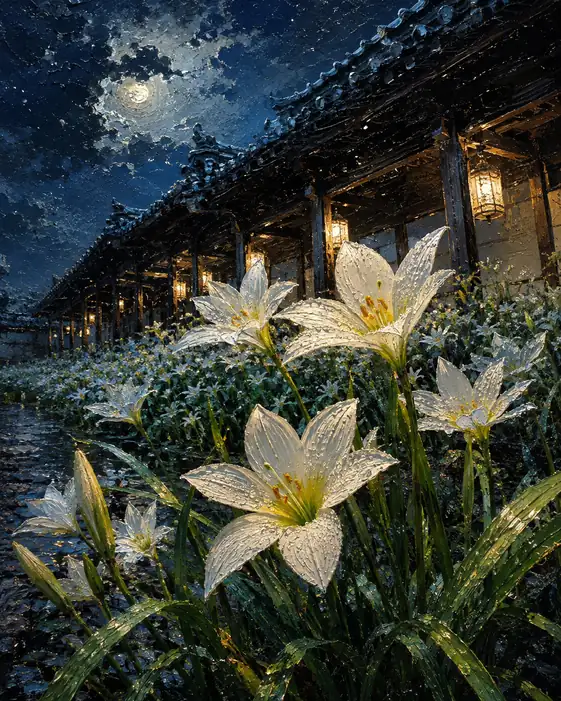 Night Corridor in Lantern Light
Similar Artworks
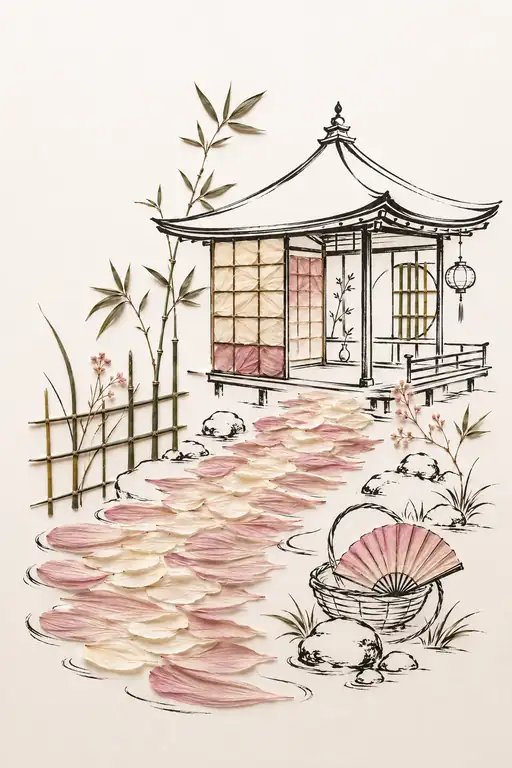 Petal Path to the Bamboo Teahouse
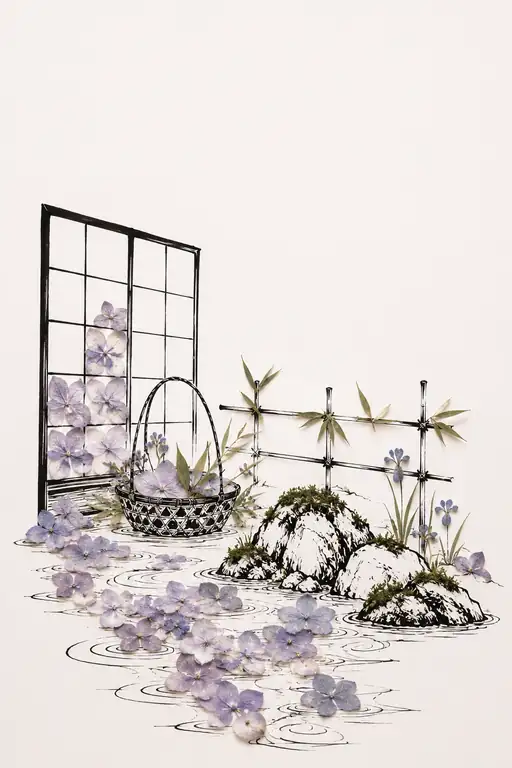 Drifting Blossoms Beyond the Garden Fence
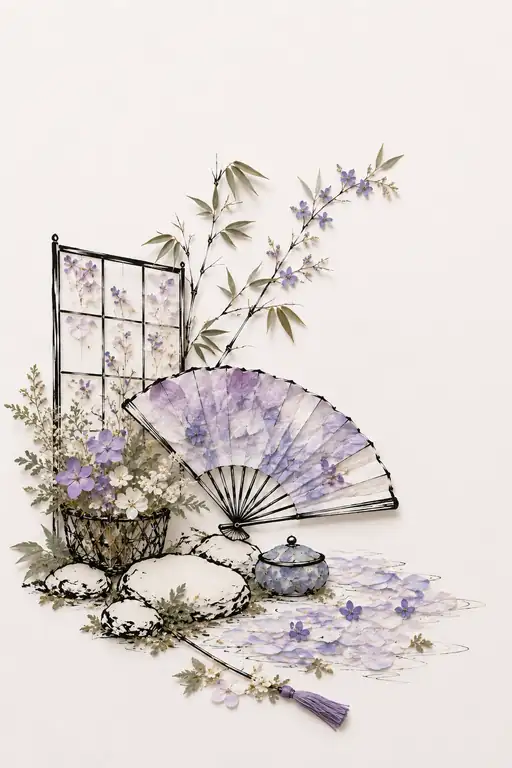 Lavender Folding Fan in the Quiet Alcove
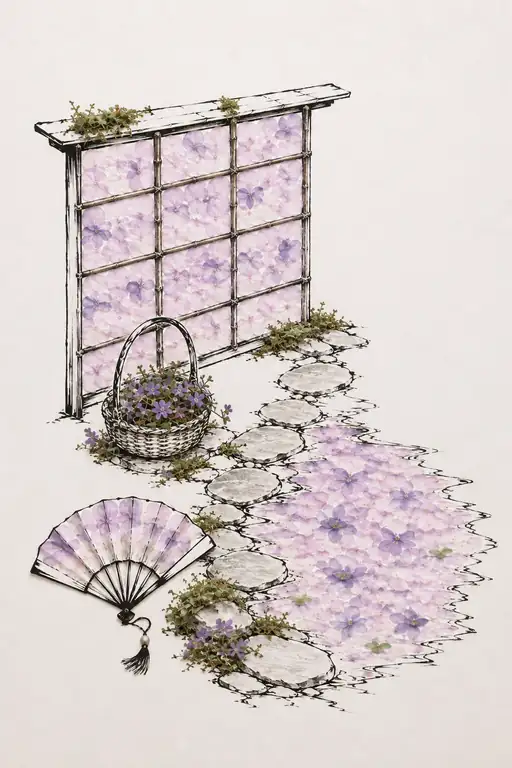 Stream of Violet Petals by the Shoji Screen
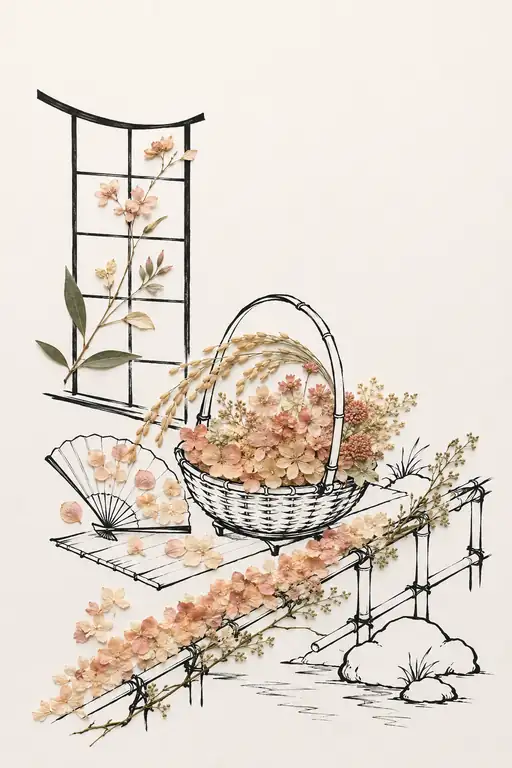 Harvest Basket and Peach Blossoms on the Veranda
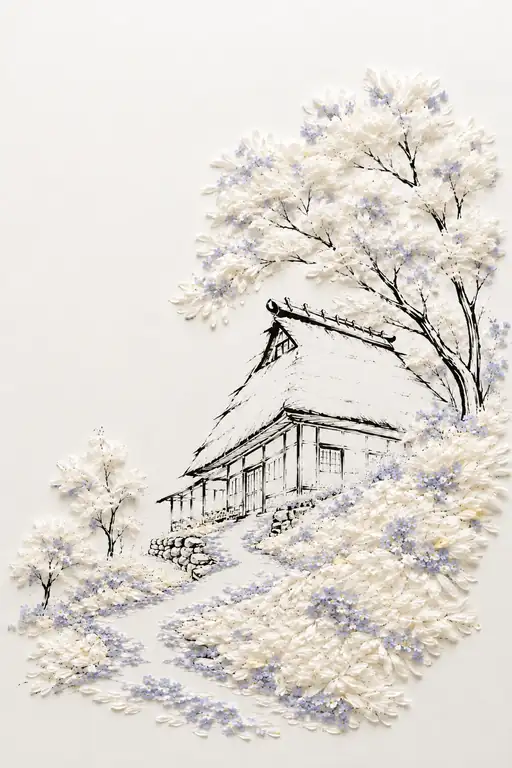 Thatched Cottage Beneath the Flowering Tree
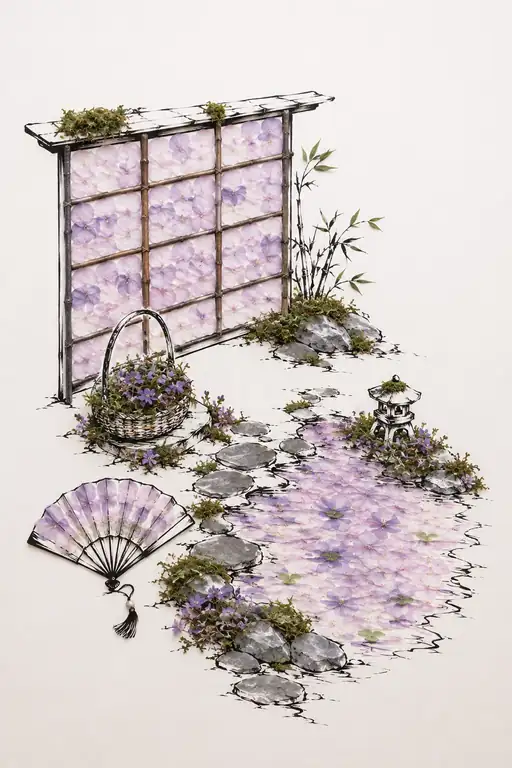 Lantern in the Violet Blossom Garden
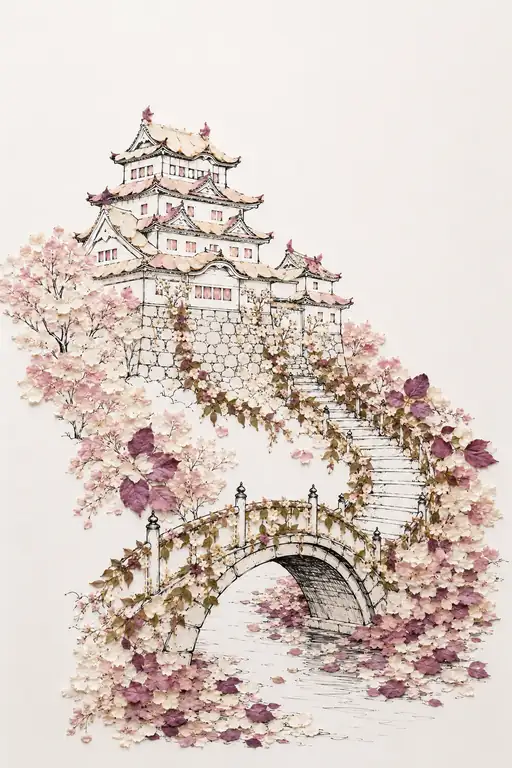 Castle Ascent Through Petal-Strewn Waters
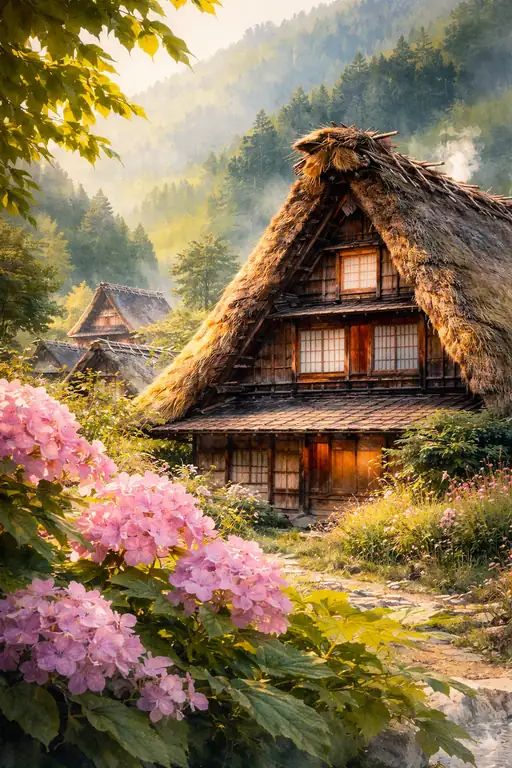 Summer Bloom Beneath the Thatched Eaves
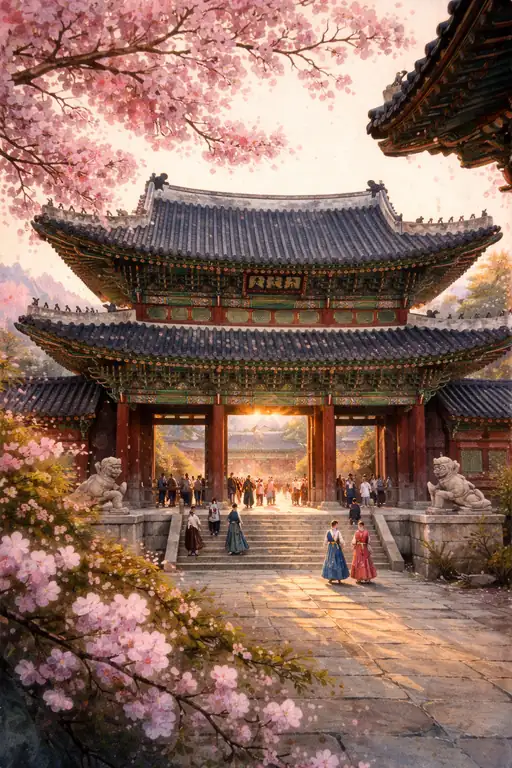 Spring Steps at the Ancient Gate