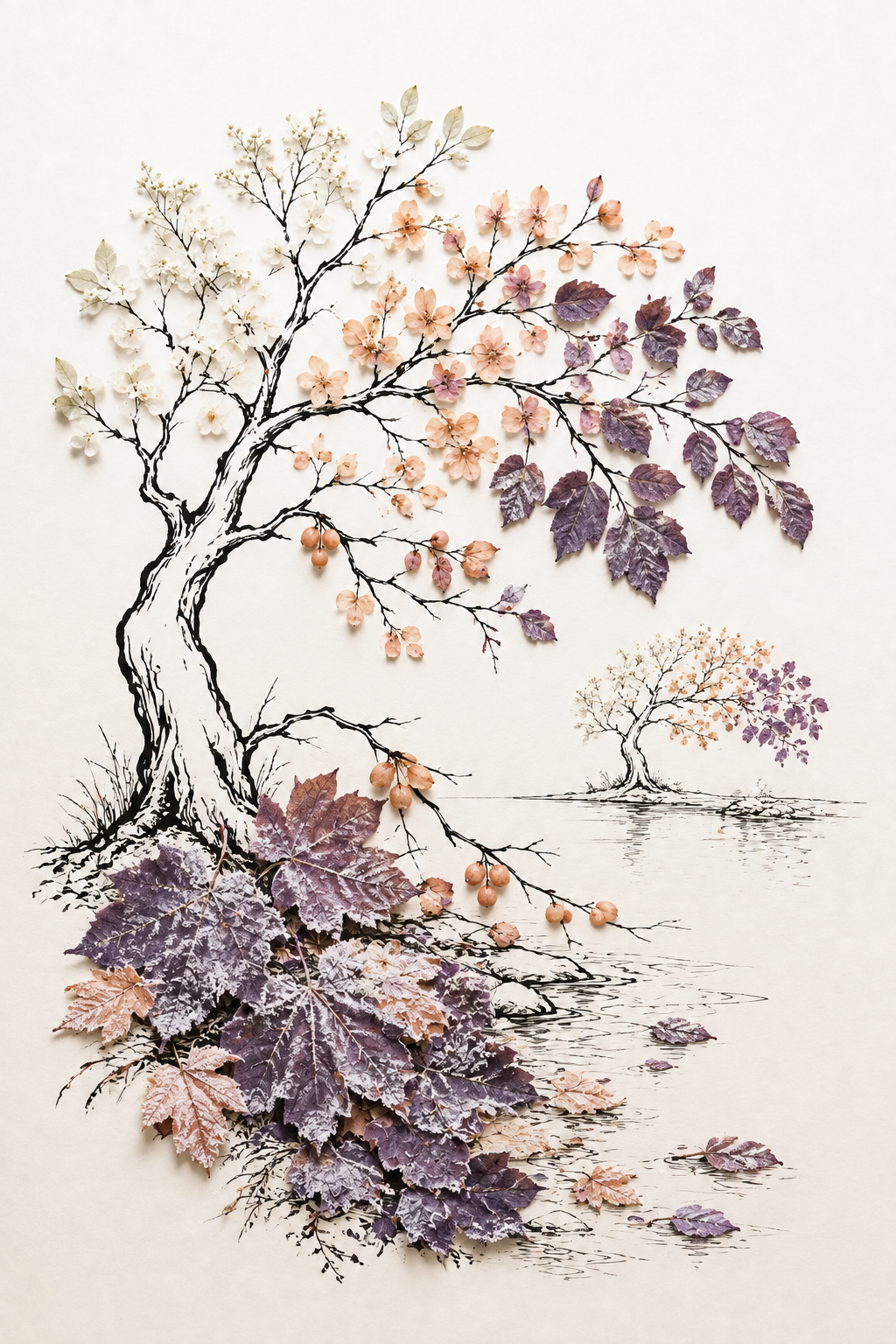
Dialogue of Seasons Across the Water
Critique
Introduction This landscape presents an old tree beside still water, combining black drawing with raised blossoms, fruit, and autumnal leaves. The trunk dominates the left foreground, while a smaller tree stands across the water. White space gives the scene a contemplative atmosphere. Description The main trunk bends upward from a rocky bank and divides into branches carrying white and peach flowers, orange fruit, and violet foliage. A dense mound of purple and salmon leaves fills the lower left. Thin ripples extend across the right half, where several detached leaves float. On the far shore, the small tree repeats the larger tree's mixed colors. Analysis The heavy trunk and clustered foreground leaves establish a strong leftward weight, countered by open water and the distant tree. Black contours vary from thick, broken strokes in the bark to hairline marks in the reflections. Powdery pale surfaces on the purple leaves contrast with smooth translucent petals. Repeated violet and peach accents connect canopy, ground, floating leaves, and distance. Interpretation and Evaluation Blossom, fruit, and fallen foliage compress seasonal change into one imagined moment. The small tree acts as an echo, extending recurrence beyond the immediate bank. The asymmetrical composition remains balanced, and the limited palette gives diverse textures coherence. Confident drawing distinguishes wood, water, and vegetation, while ink-like line and botanical relief lend the familiar motif originality. Conclusion Initially the richly colored foreground leaves command attention, but closer viewing shifts emphasis toward the dialogue between the two trees and their separating water. The scene becomes an image of continuity across distance rather than a simple seasonal study. Its controlled emptiness, rhythmic repetitions, and precise material contrasts sustain both visual clarity and reflective depth.
Same Subcategory
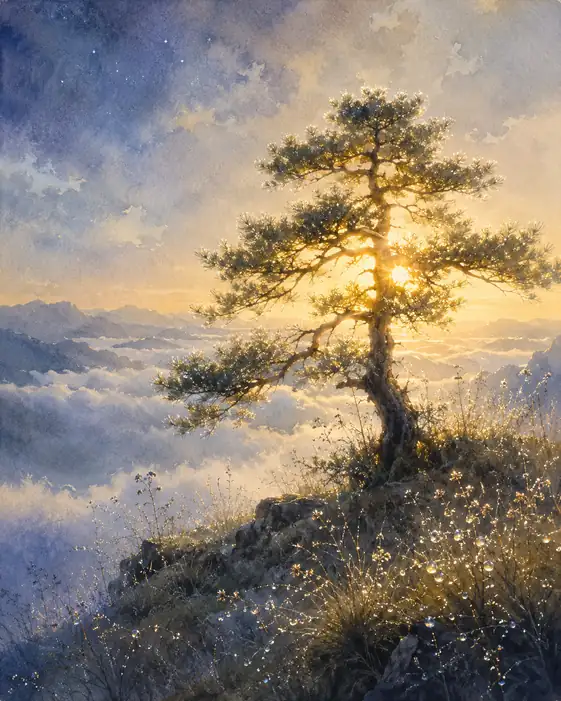 The Pine That Kept the Dawn
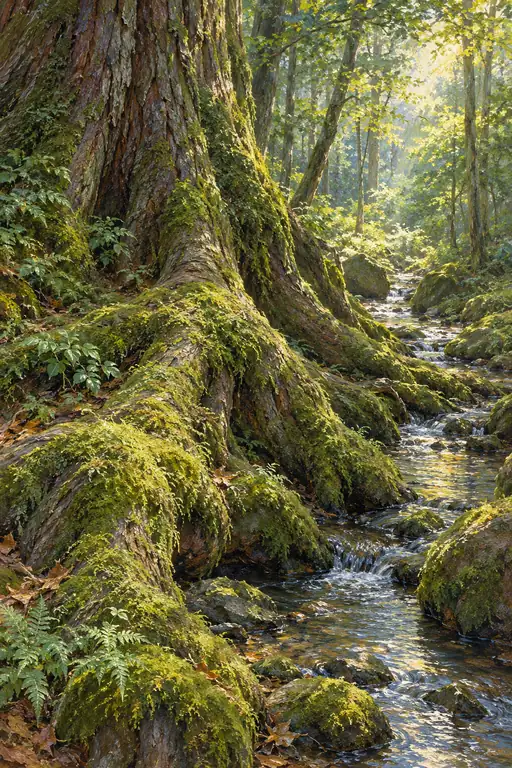 Roots Embracing Ancient Waters
Similar Artworks
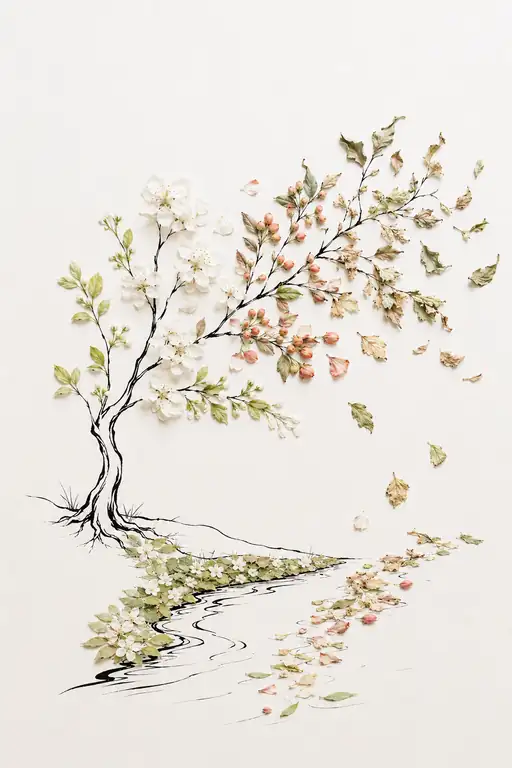 Drifting Petals Along the Winding Stream
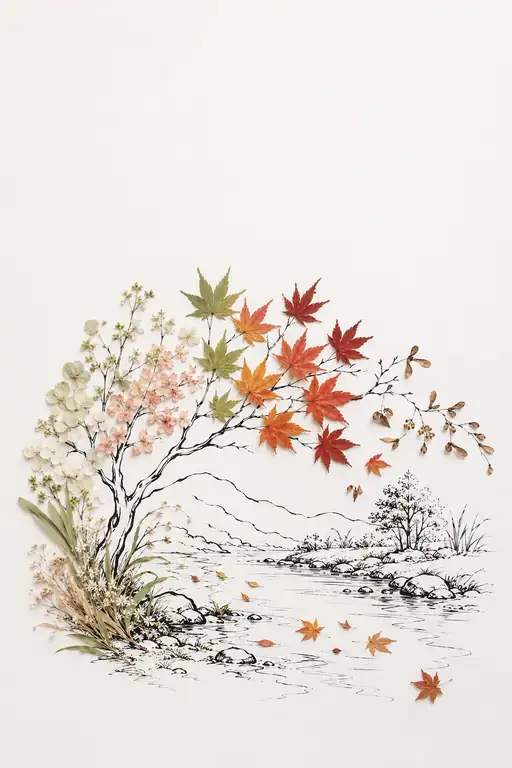 Seasons Flowing on a Single Branch
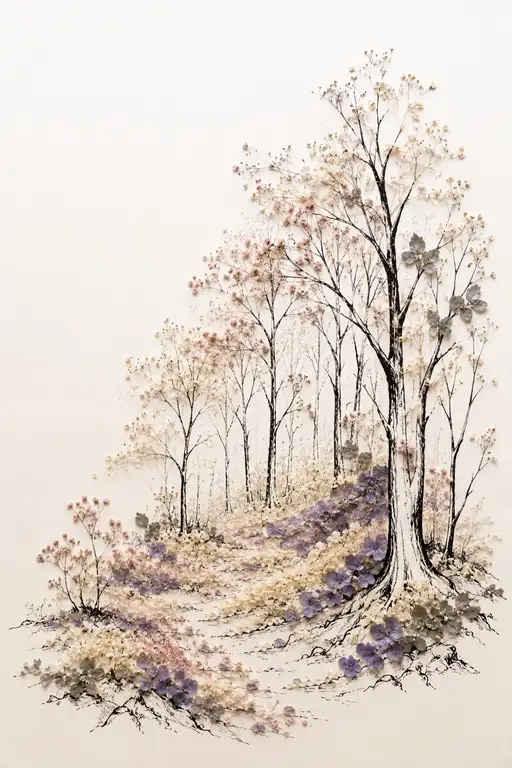 Path of Blossoms in the Birch Grove
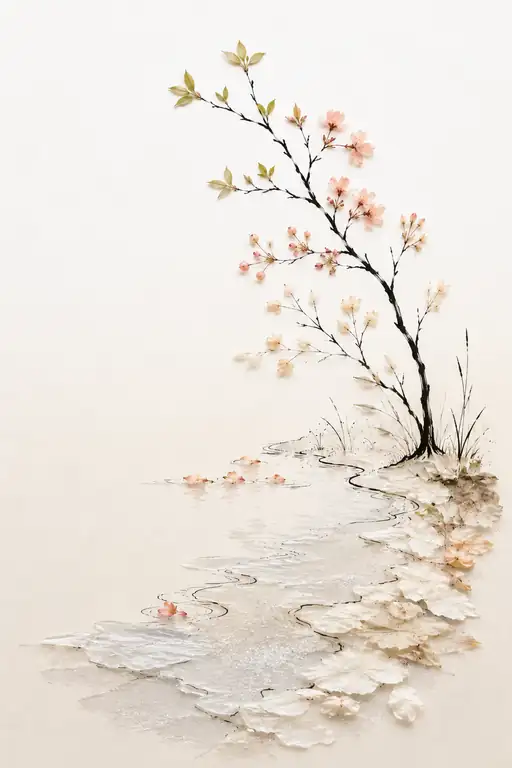 Stream of Early Blossoms and Thin Ice
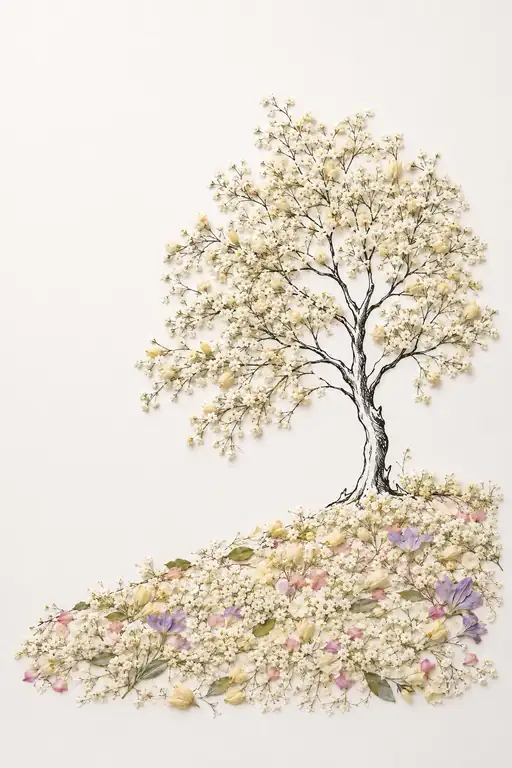 Solitary Flowering Tree on the Blossom Hill
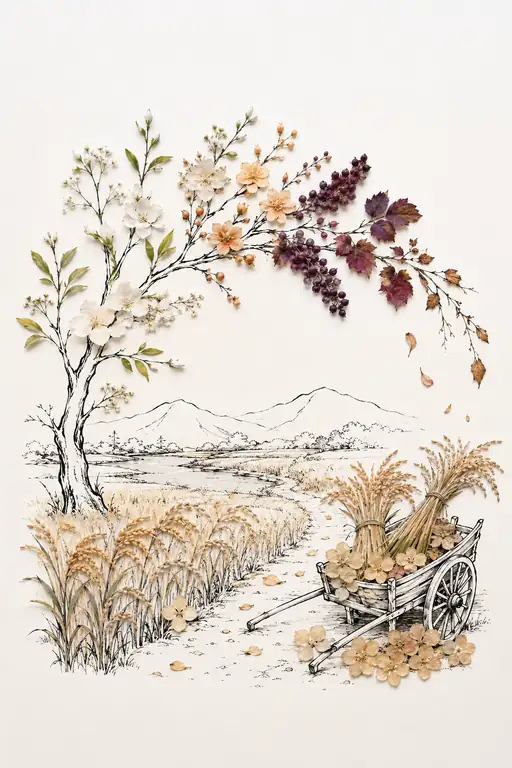 Harvest Cart Along the Flowered Lane
 Silent Watcher of the Flowered Branch
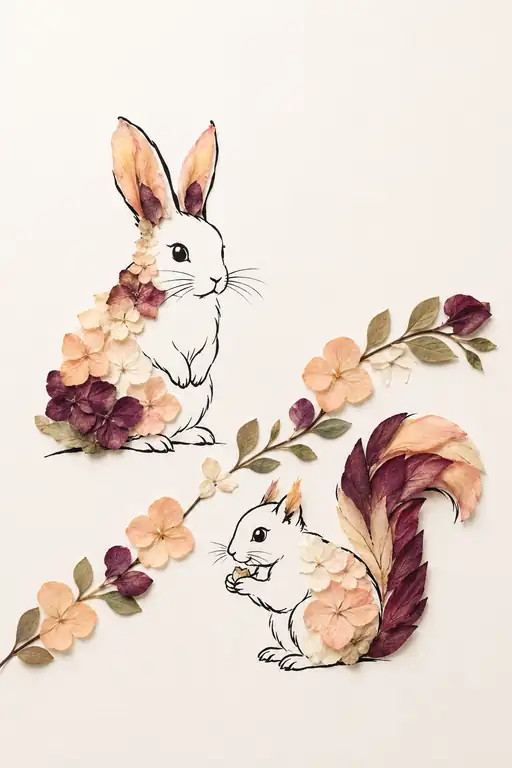 Woodland Encounter Across the Flowered Bough
 Silent Encounter in the Forest Bower
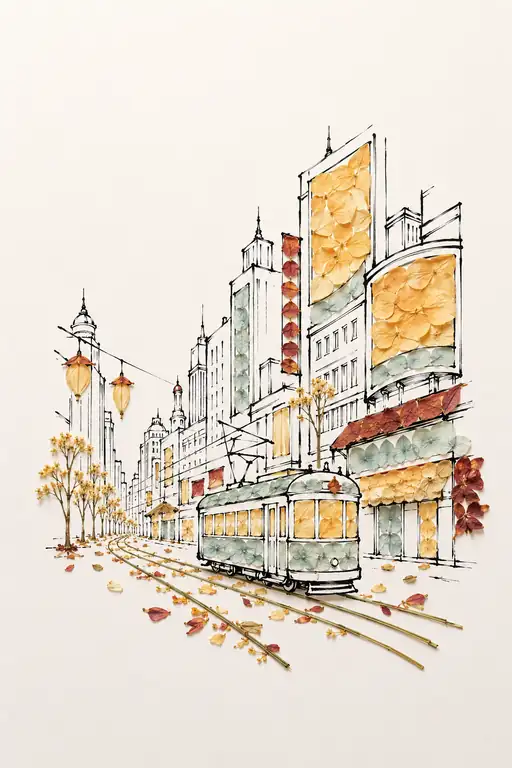 Autumn Transit Along the Golden Boulevard