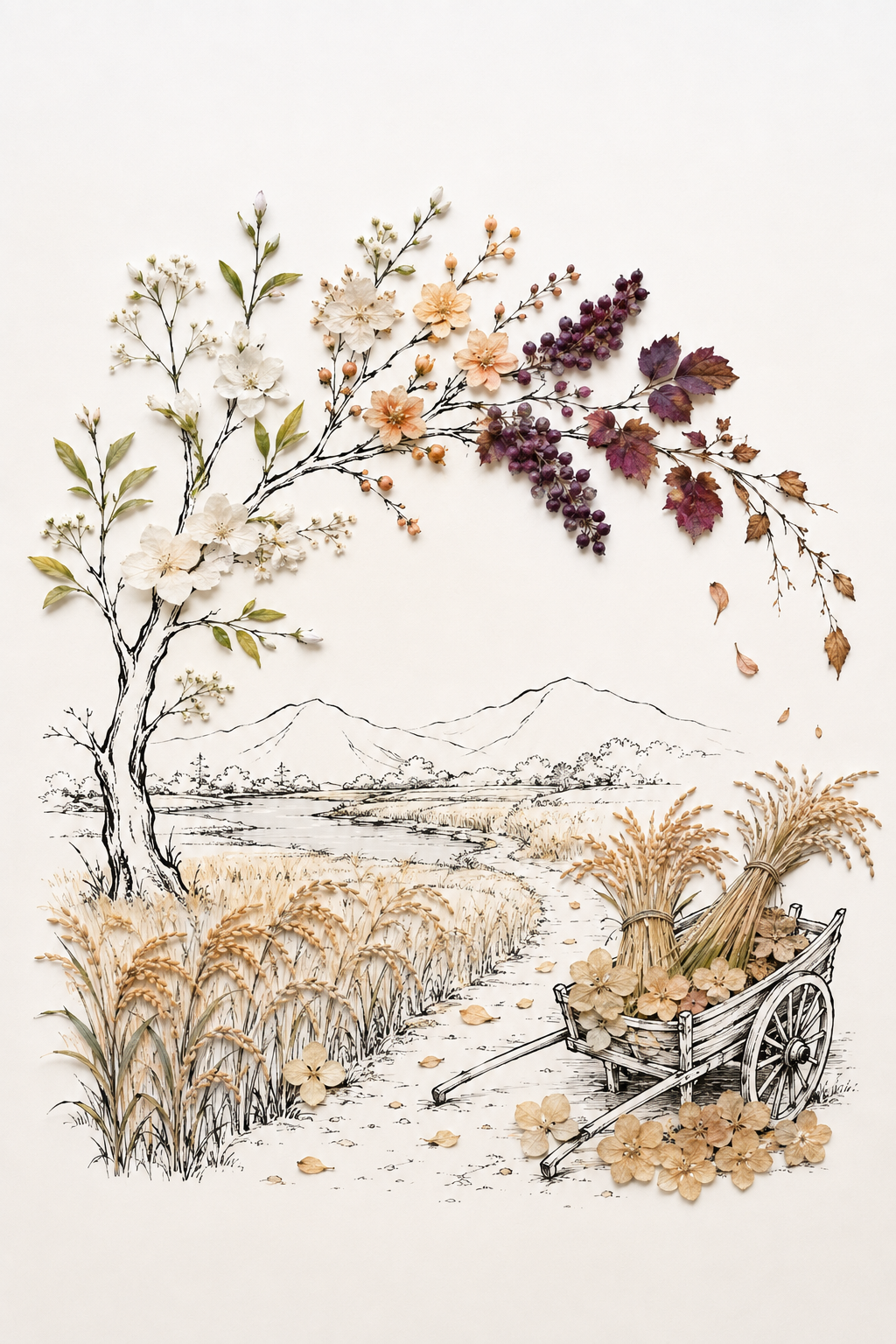
Harvest Cart Along the Flowered Lane
Critique
Introduction This rural scene joins an ink-drawn harvest landscape with tactile blossoms, berries, leaves, and grain. A large tree anchors the left, while a loaded cart occupies the lower right. The white ground clarifies seasonal details and keeps the countryside airy. Description The tree rises beside a field and spreads flowering branches across the upper half. White and peach blossoms shift into purple fruit and russet leaves toward the right. Below, a curving path passes golden grain and recedes toward low mountains. A two-wheeled cart holds tied sheaves, with pale flowers scattered near its shafts and wheels. Analysis The trunk and path establish curves leading from the foreground toward the horizon. Fine black drawing describes mountains, fields, and cart construction, whereas raised flowers and grain project forward through their shadows. Warm wheat and peach tones balance the heavier purple fruit overhead. The cart's circular wheel and the hanging clusters introduce repeated rounded forms within the branching diagonals. Interpretation and Evaluation Spring blossom and autumn harvest appear together, compressing several stages of cultivation into one imagined season. The scene reads less as reportage than as an ordered account of abundance and renewal. Its clear composition, restrained colors, and differentiation of wood, grain, petals, and foliage show descriptive control. Combining pastoral drawing with material collage gives familiar agricultural imagery distinctive freshness. Conclusion At first the work attracts attention through its decorative flowering canopy, but closer viewing reveals a carefully connected cycle from bloom to fruit and gathered grain. The empty background prevents its wealth of detail from becoming crowded. Through balanced placement, varied textures, and assured linear technique, the image presents labor and natural growth as parts of one continuous rural rhythm.
Same Subcategory
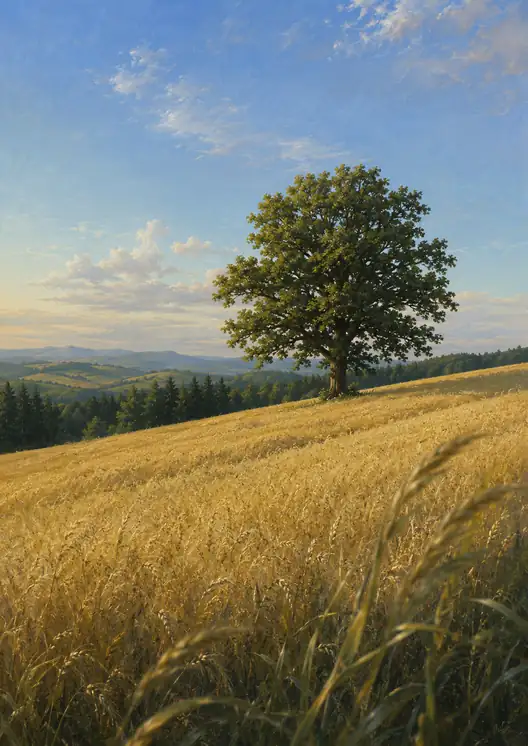 The Silent Master of the Golden Hill
Similar Artworks
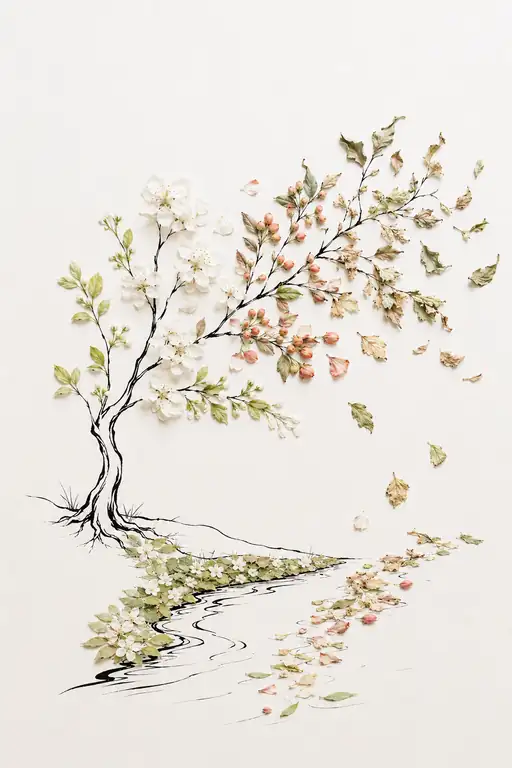 Drifting Petals Along the Winding Stream
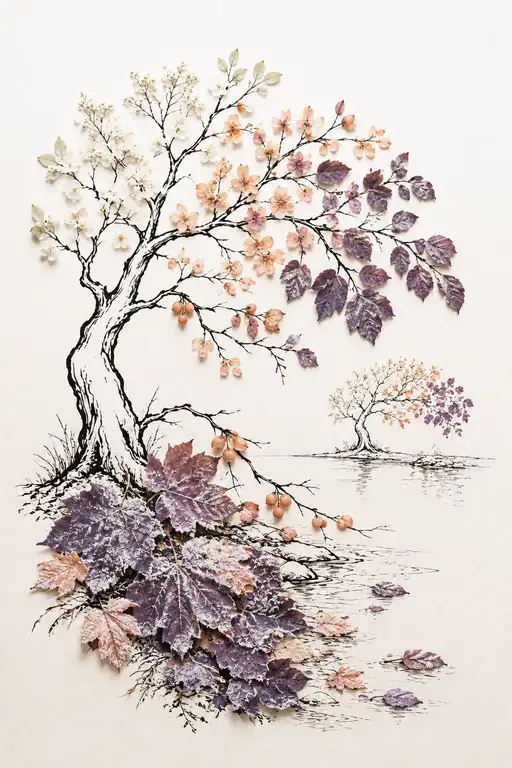 Dialogue of Seasons Across the Water
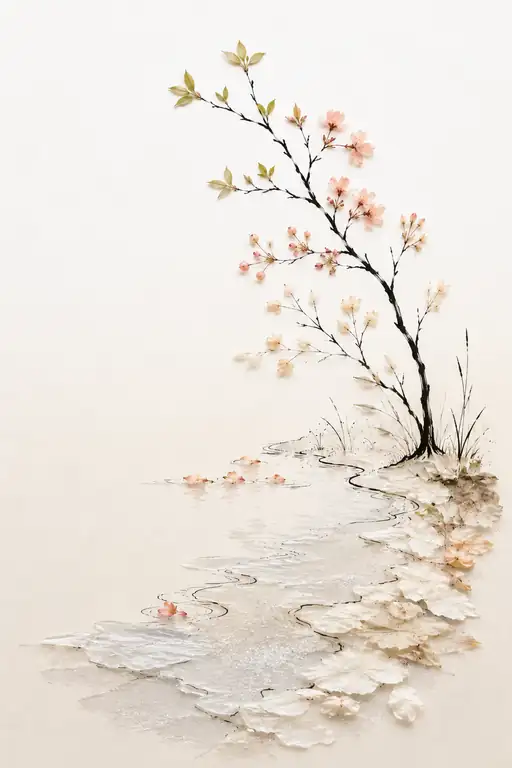 Stream of Early Blossoms and Thin Ice
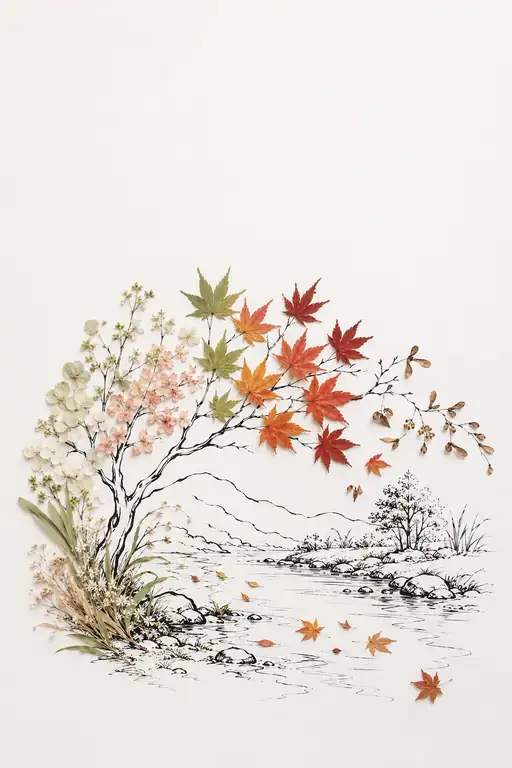 Seasons Flowing on a Single Branch
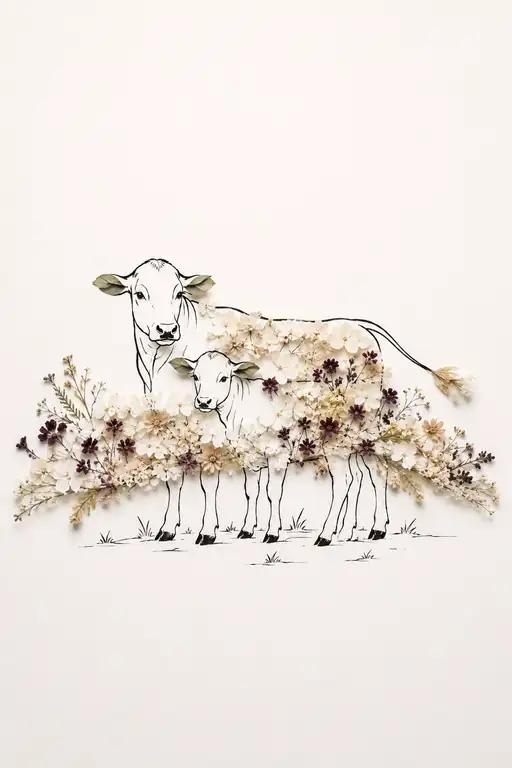 Warm Blossom Coats in the Pasture
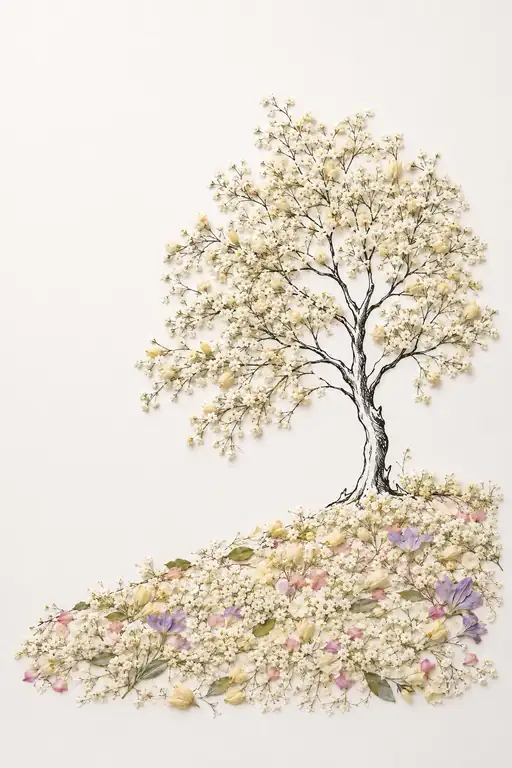 Solitary Flowering Tree on the Blossom Hill
 Silent Snowfall Over the Village Chapel
 Warm Blossoms in the Spring Pasture
 Harvest Basket and Peach Blossoms on the Veranda
 Harvest Trail and Smiling Cosmos