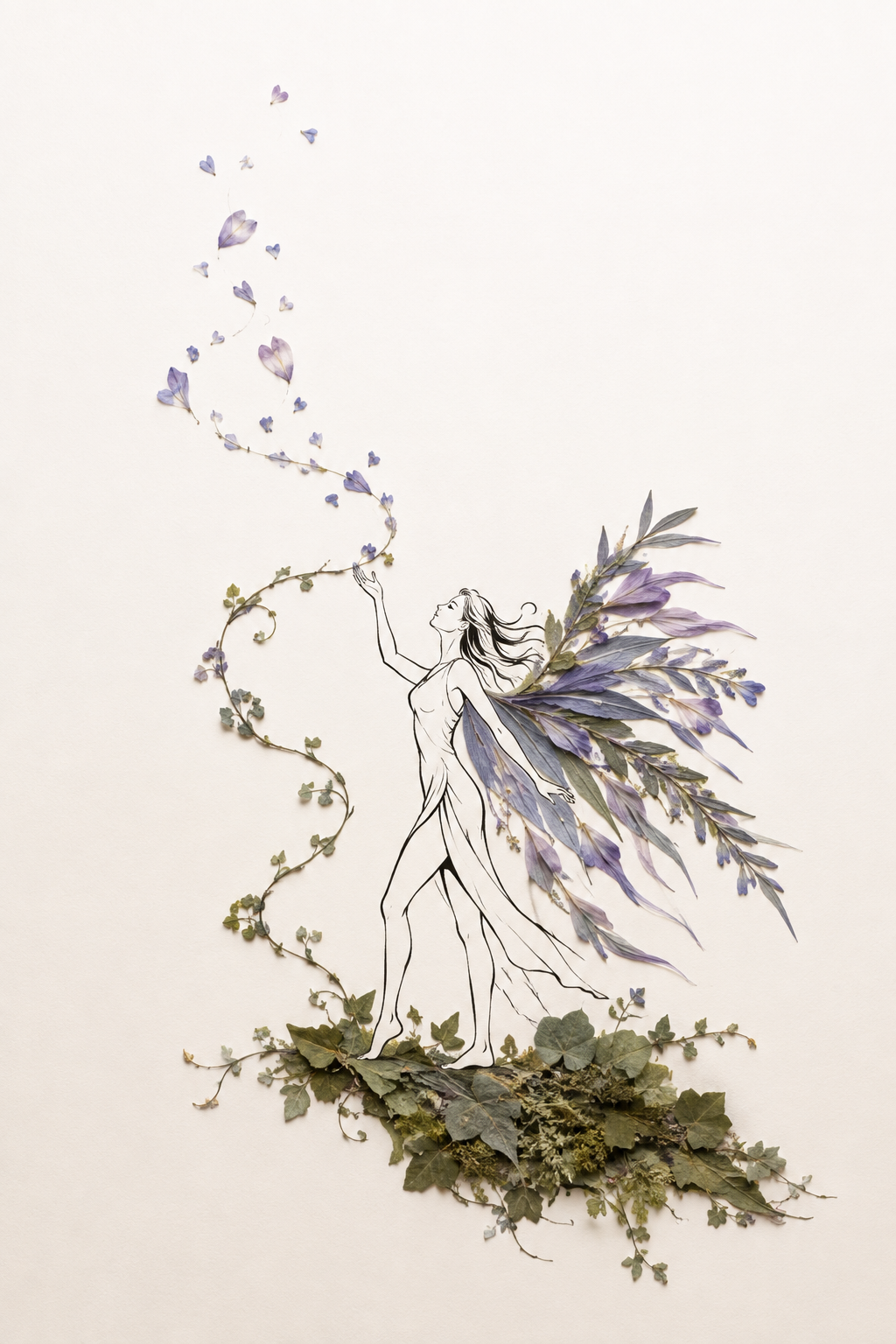
Wings of Lavender and the Rising Vine
Critique
Introduction This fantasy portrays a woman stepping from ivy. Black drawing describes body and dress, while violet and green petals create wings. The composition combines aspiration with weight. Description The figure stands slightly right of center, one foot forward and torso leaning back. Her raised left hand approaches a curling vine that travels from the ground, loops around her, and releases small purple petals into the upper left. Hair streams toward the wings. Layered spear-shaped leaves fan strongly to the right, while moss, broad ivy leaves, and trailing stems form a dark uneven base beneath her feet. Analysis Two opposing curves organize the image: the vine sweeps left and upward, whereas the wings open decisively rightward. The figure’s narrow black silhouette acts as a hinge between them. Violet supplies the strongest chromatic rhythm, alternating with gray-green leaves and the dark olive base. Long tapered petals repeat the direction of hair and dress folds, creating windlike movement. Actual moss and overlapping ivy cast heavier shadows below, anchoring the otherwise airy ascent. Interpretation and Evaluation The raised hand does not grasp the vine but nearly meets it, making emergence appear voluntary and unfinished. Wings formed from plants suggest that flight grows from earth rather than escaping it. The drawing is graceful and economical, and the asymmetrical composition balances opposing forces confidently. Cool color enhances the mood. The technique is most original in its continuous transformation from ground ivy to curling stem, airborne petals, and featherlike wings. Conclusion What first appears as a romantic fairy image becomes a coherent meditation on freedom supported by attachment. Directional line, layered botanical texture, and productive empty space make the figure’s upward movement both credible and provisional.
Same Subcategory
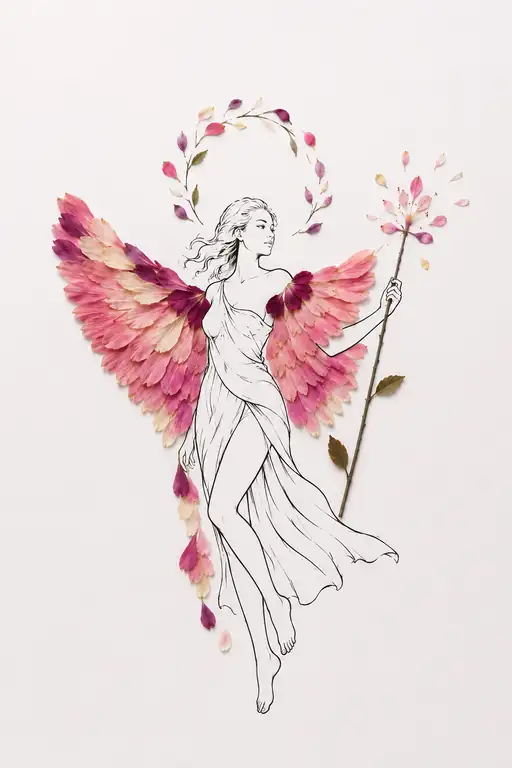 Winged Goddess of Roseate Blossom Flight
Similar Artworks
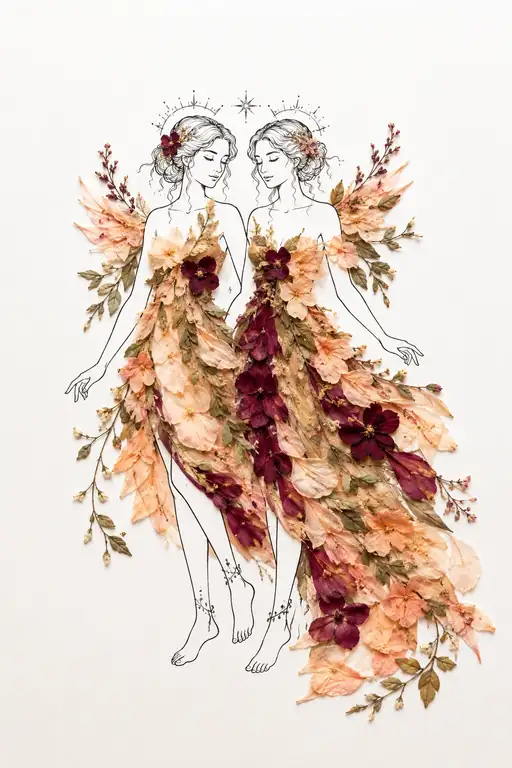 Twin Spirits Beneath the Evening Star
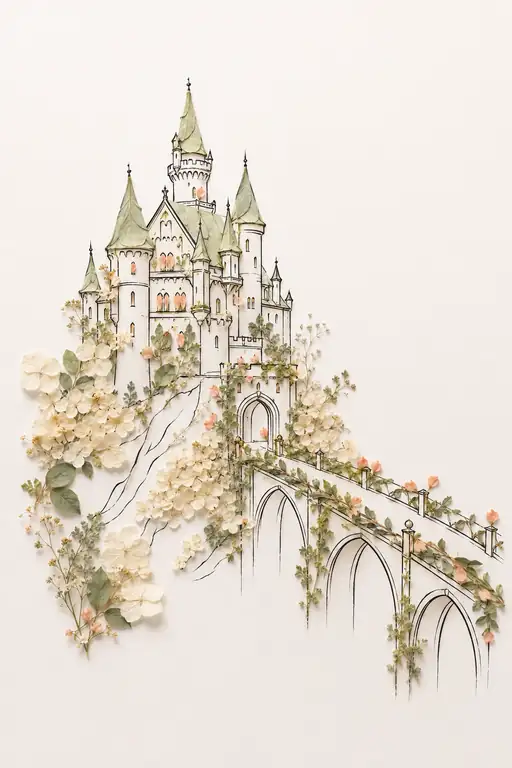 Bridged Gateway to the Verdant Spires
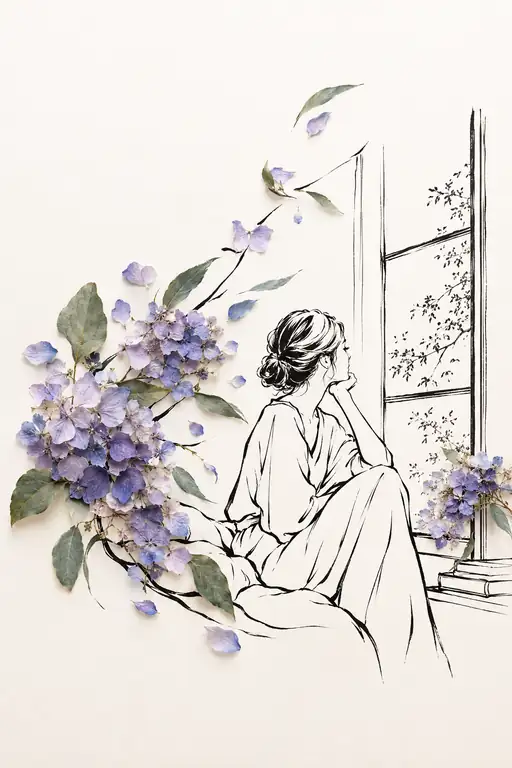 Hydrangeas and Quiet Thoughts by the Window
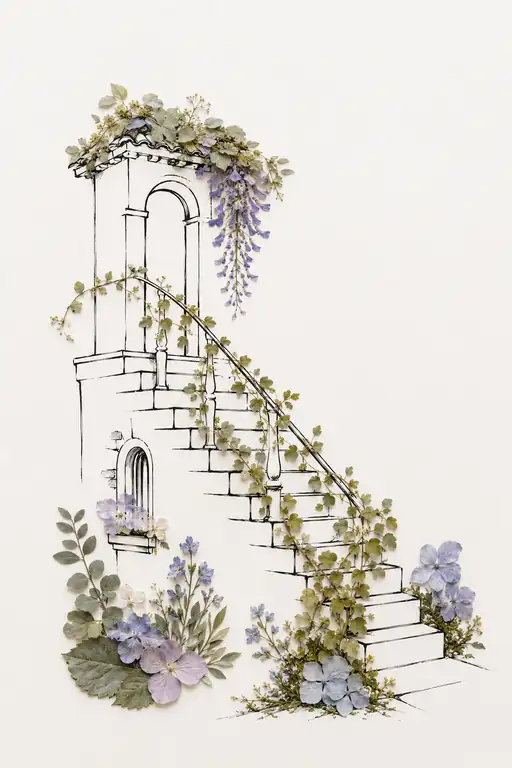 Wisteria Cascades Along the Tower Stair
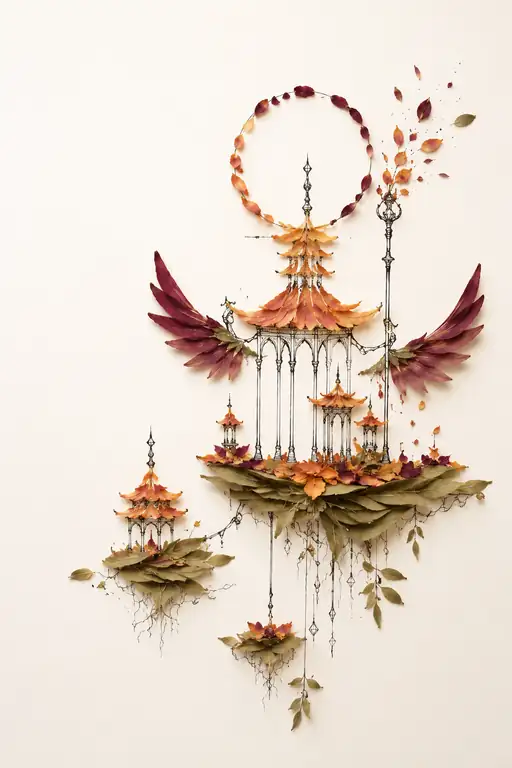 Winged Pavilion Floating in the Ether
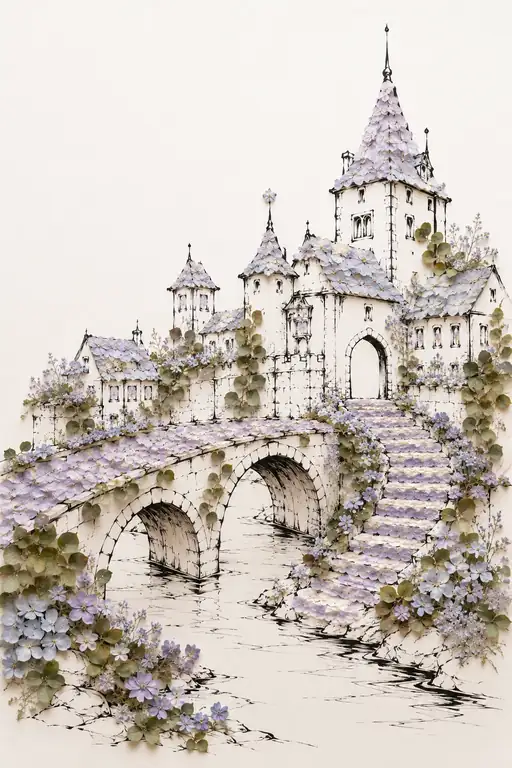 Flowered Stairway to the Castle Gate
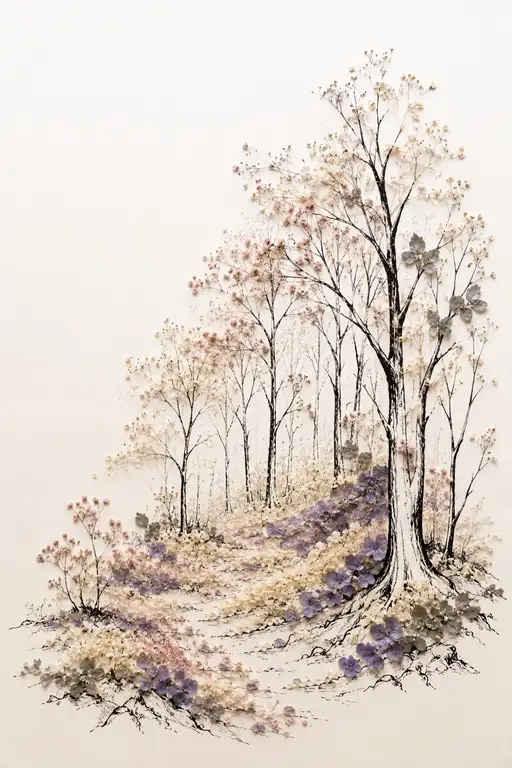 Path of Blossoms in the Birch Grove
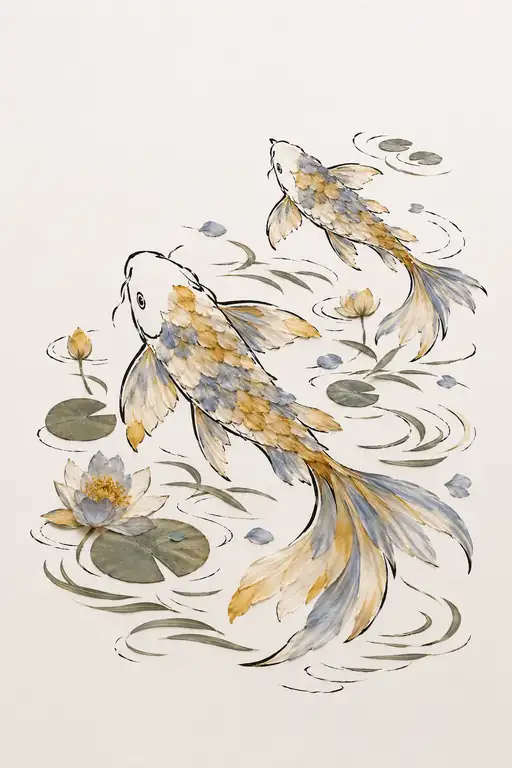 Graceful Glides in the Lotus Pond
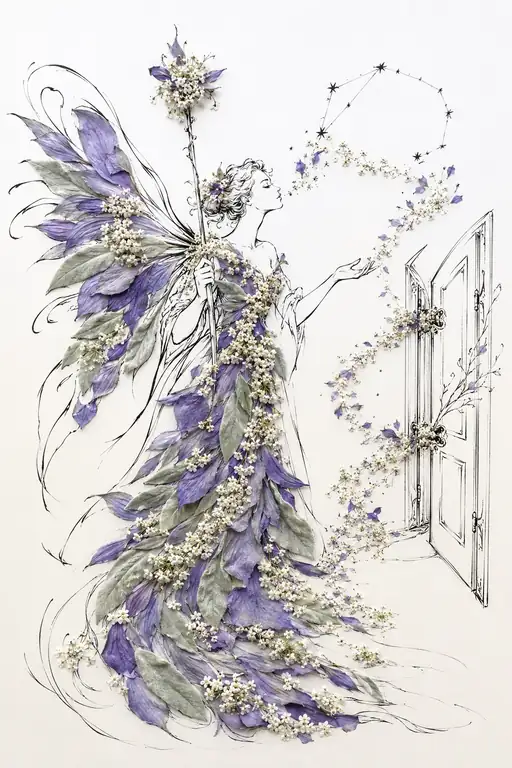 Whispering Stardust Through the Veil
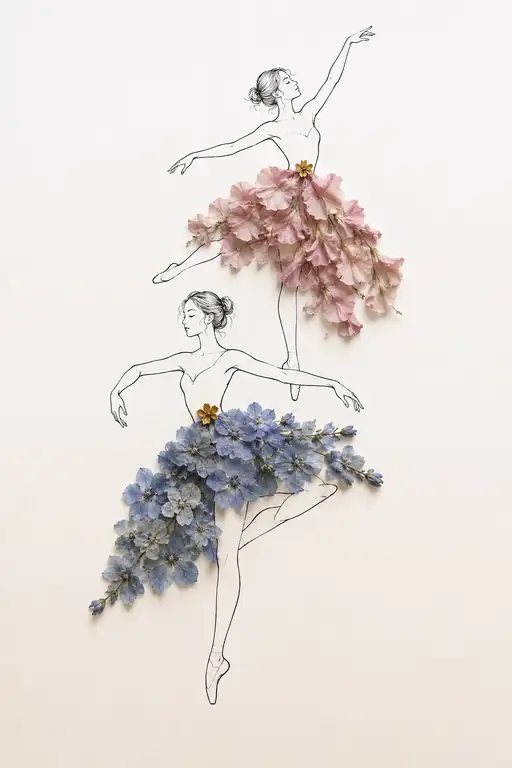 Harmony of Flight and Ground