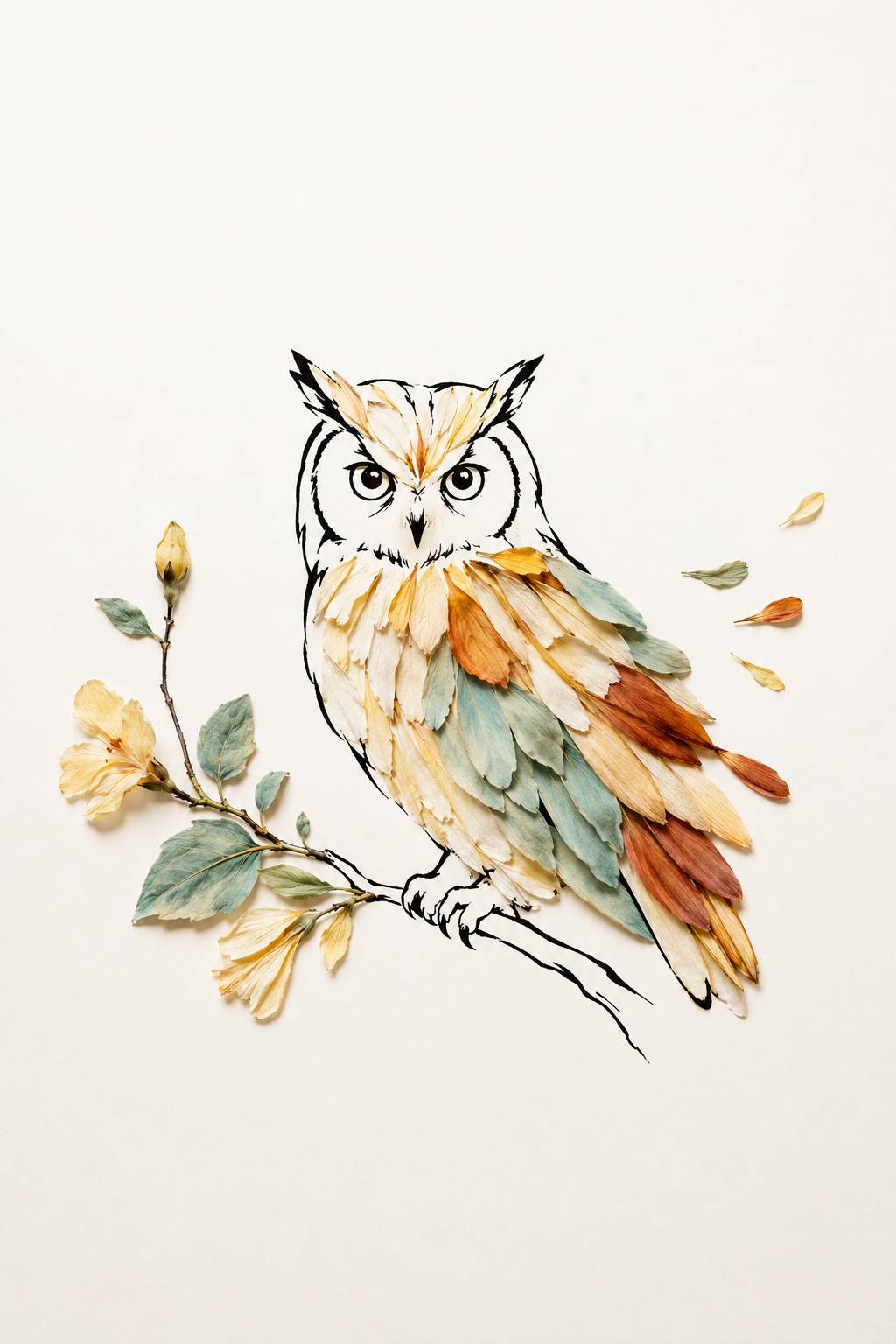
Silent Watcher of the Flowered Branch
Critique
Introduction This portrait depicts a frontal owl on a branch. Black ink defines face, talons, and silhouette, while cream, sage, ochre, and rust petals create plumage. The figure conveys vigilance. Description The owl occupies the center, turning its body slightly right while looking directly outward. Large circular eyes sit beneath sharply angled brows, and pale pointed petals form hornlike ear tufts. Layered leaves descend across the chest and right wing in bands of green, cream, gold, and red-brown. A dark branch enters from lower left, carrying yellow flowers and blue-green leaves. Several loose petals float at right. Analysis The eyes provide an immediate focal pair, reinforced by the symmetrical facial outline. Below them, feather layers shift diagonally right and give the body volume and direction. Warm ochre and rust interrupt the dominant pale green and cream, leading attention from brow to wing tip. Strong ink contours prevent the botanical surface from dissolving the animal’s structure. Veins, torn edges, and small cast shadows make individual feathers tactile, while detached petals extend implied motion into blank space. Interpretation and Evaluation The direct gaze establishes watchfulness, but floral materials soften any sense of threat. The owl seems composed from the same branch it grips, suggesting perception rooted in environment. Facial draftsmanship is especially controlled, and the centered composition remains lively through the angled body and drifting fragments. Restrained earthy color supports coherence. Using pointed petals for brows, ear tufts, and feathers demonstrates precise material selection rather than generalized ornament. Conclusion What first reads as a striking emblematic owl becomes a study of alert stillness sustained by natural texture. Strong focus, layered color, and disciplined collage give the familiar symbol an attentive, living presence.
Same Subcategory
Similar Artworks
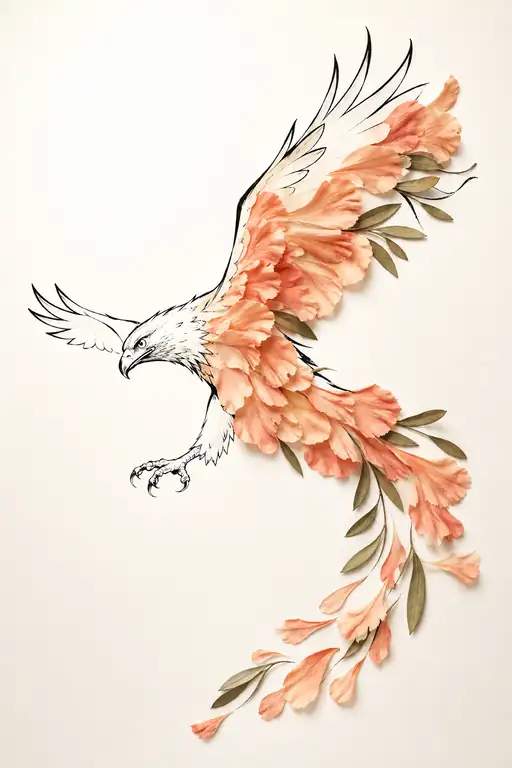 Descent of the Coral Plumage
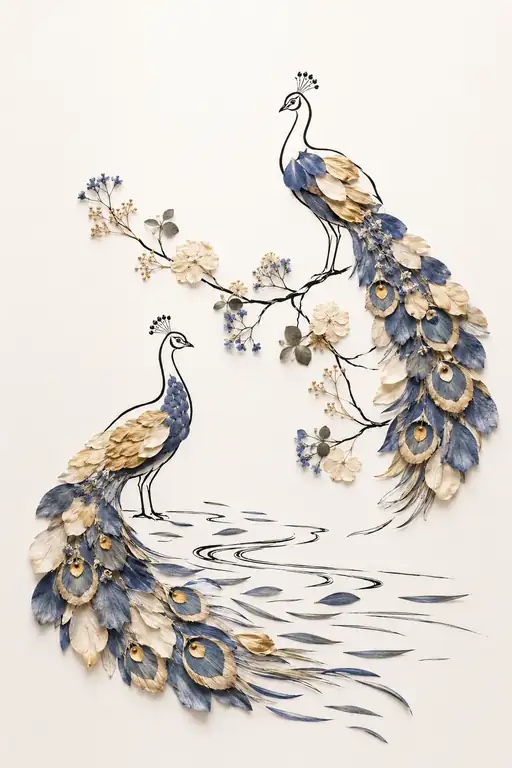 Cascades of Blue Feathers and Blossom Boughs
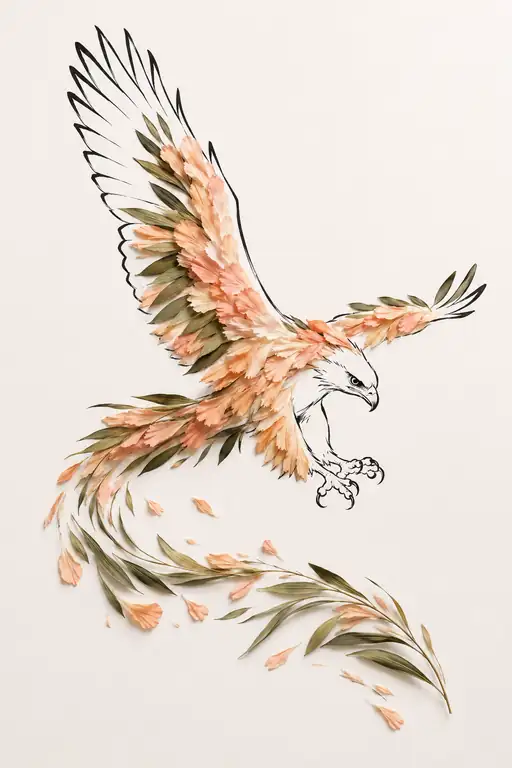 Swooping Raptor with Petal Feathers
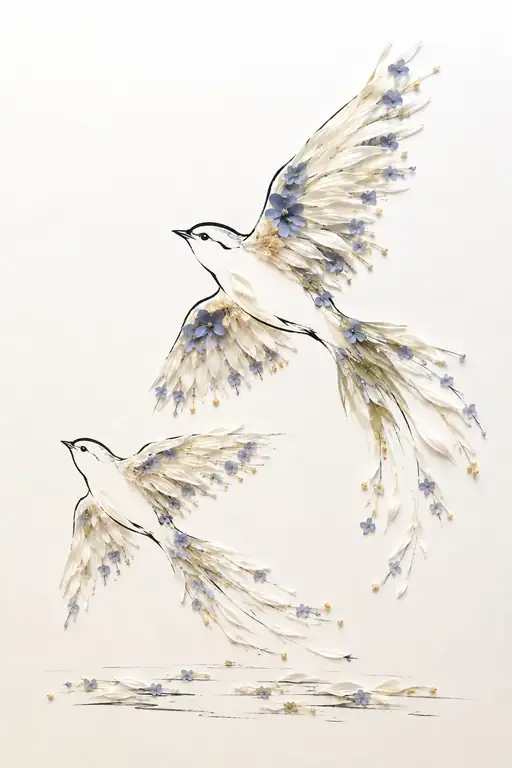 Flight of Paired Birds with Petal Wings
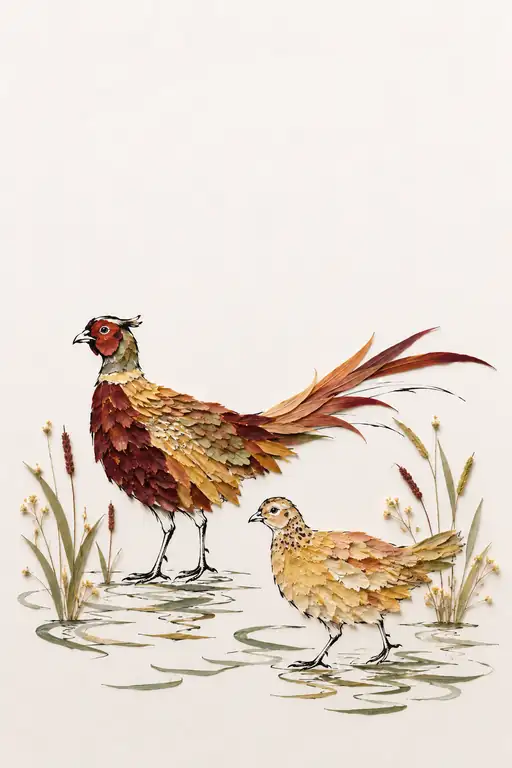 Plumed Pair in the Autumn Reeds
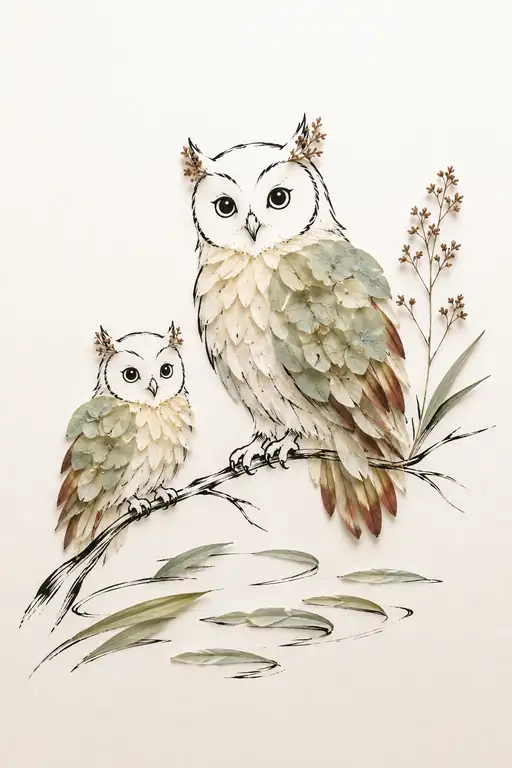 Silent Watch from the Sage Bower
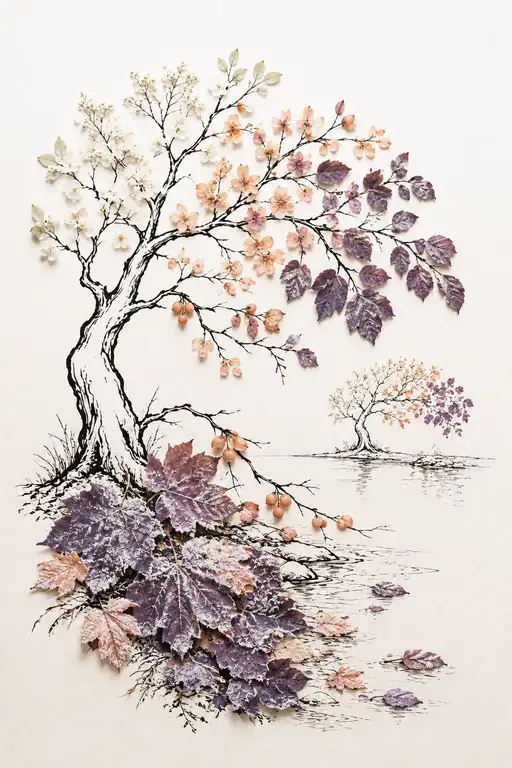 Dialogue of Seasons Across the Water
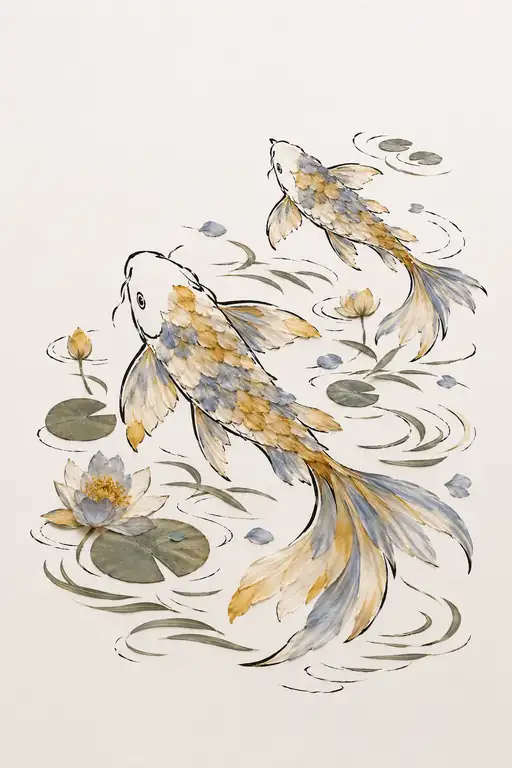 Graceful Glides in the Lotus Pond
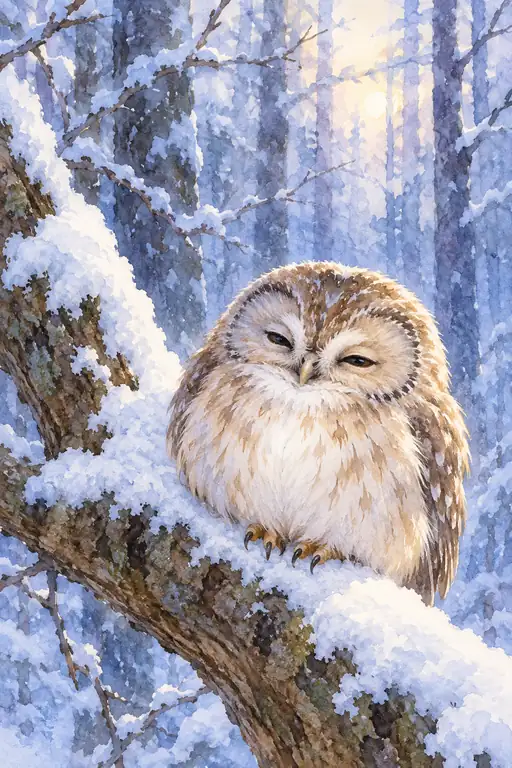 Slumber in the Frostwood
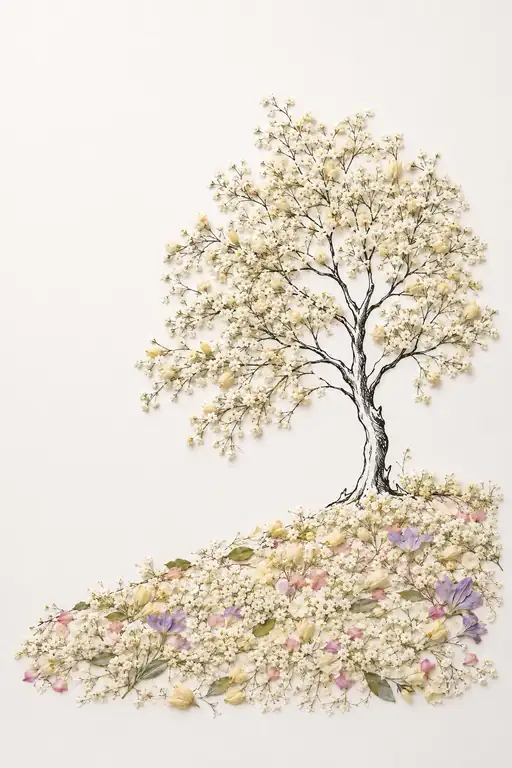 Solitary Flowering Tree on the Blossom Hill