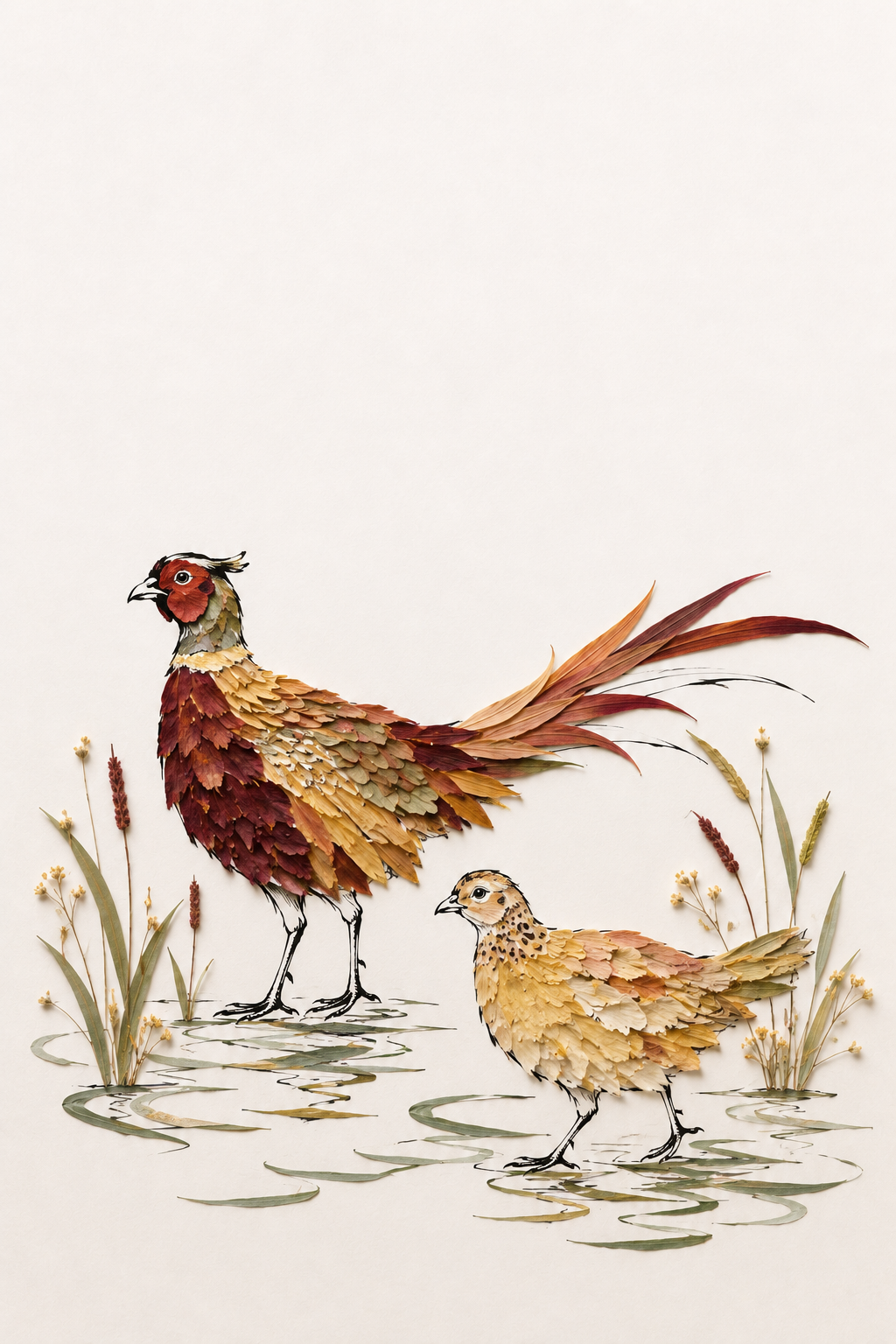
Plumed Pair in the Autumn Reeds
Critique
Introduction This mixed-media scene portrays male and female pheasants in marsh grass. Black drawing defines heads, legs, and water, while petals create plumage. The restrained setting emphasizes bodily difference. Description The taller male stands at left, facing outward with a red face, dark breast, mottled back, and extremely long tail sweeping right. The smaller female occupies the lower right and turns left toward him. Her body is composed mainly of ochre and pale peach petals marked with dark spots. Upright reeds frame both sides, and curved green leaves with broken black lines suggest reflective, shallow water beneath their feet. Analysis The male’s vertical neck and horizontal tail form the composition’s principal angle, balanced by the female’s lower compact mass. Layered petals imitate overlapping feathers with convincing directional changes. Burgundy and ochre concentrate on the male, whereas lighter gold makes the female recede slightly. Long leaf-blades repeat the tail’s tapering forms and connect the birds to the marsh. Fine ink legs remain visible against the pale surface, preserving anatomical structure beneath the decorative plumage. Interpretation and Evaluation The paired birds present contrast rather than narrative action: display and camouflage, height and groundedness, outward watchfulness and inward attention. Their shared waterline nevertheless establishes one habitat. The drawing handles differing proportions persuasively, and the uneven placement remains balanced through the tail’s reach. Color is rich but controlled. Using narrow petals to reproduce feather growth is technically assured, especially where the male’s plumage shifts from dense breast to streaming tail. Conclusion The first impression of brilliant ornamental birds develops into an attentive comparison of two adaptive appearances. Strong silhouette, rhythmic layering, and economical marsh marks make biological difference visually coherent rather than merely decorative.
Same Subcategory
 Symphony of Eternal Spring: The Pheasant's Paradise
Similar Artworks
 Flight of Paired Birds with Petal Wings
 Cascades of Blue Feathers and Blossom Boughs
 Silent Watcher of the Flowered Branch
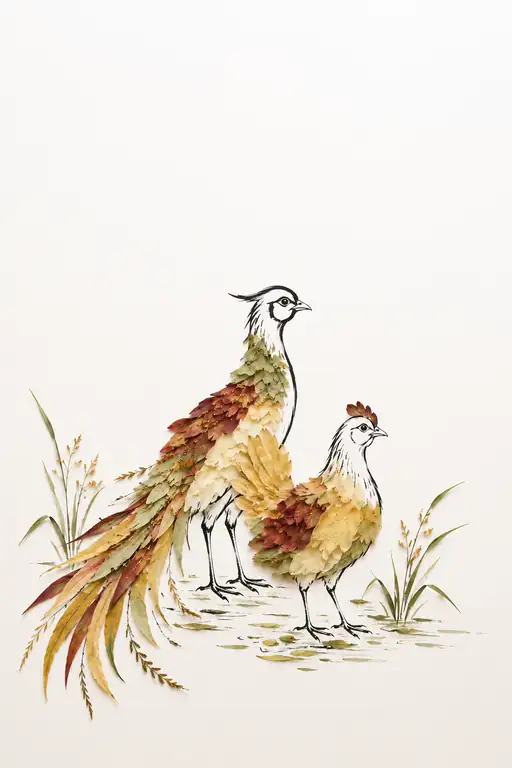 Plumed Companions in Autumnal Glow
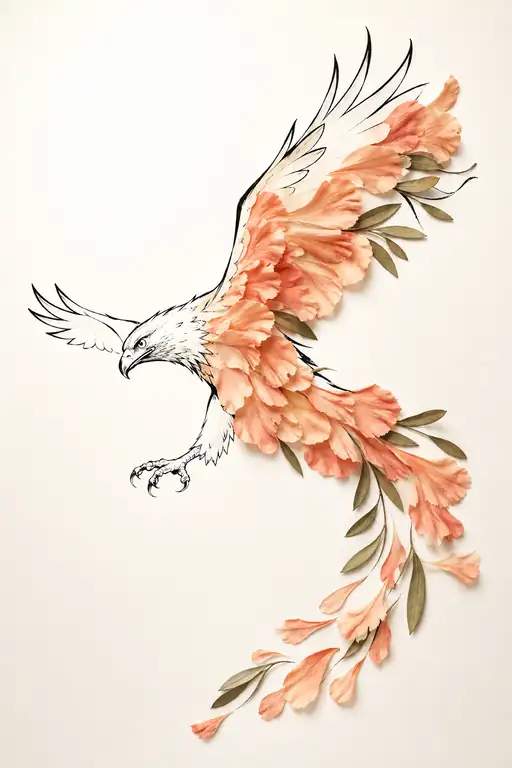 Descent of the Coral Plumage
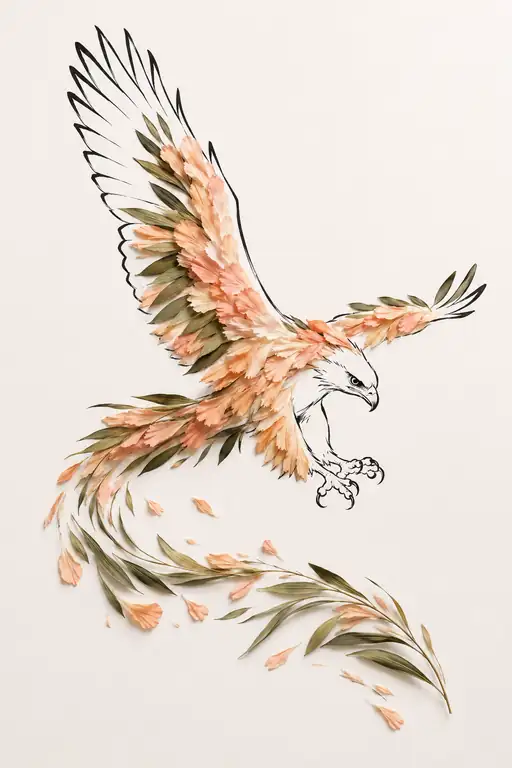 Swooping Raptor with Petal Feathers
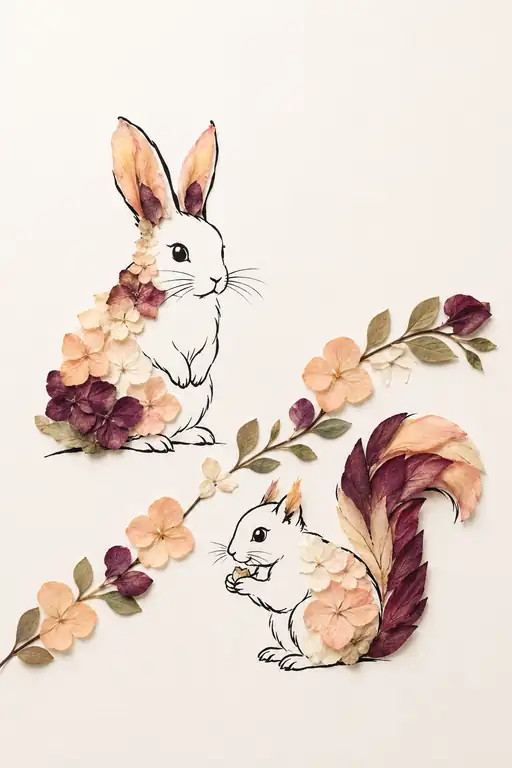 Woodland Encounter Across the Flowered Bough
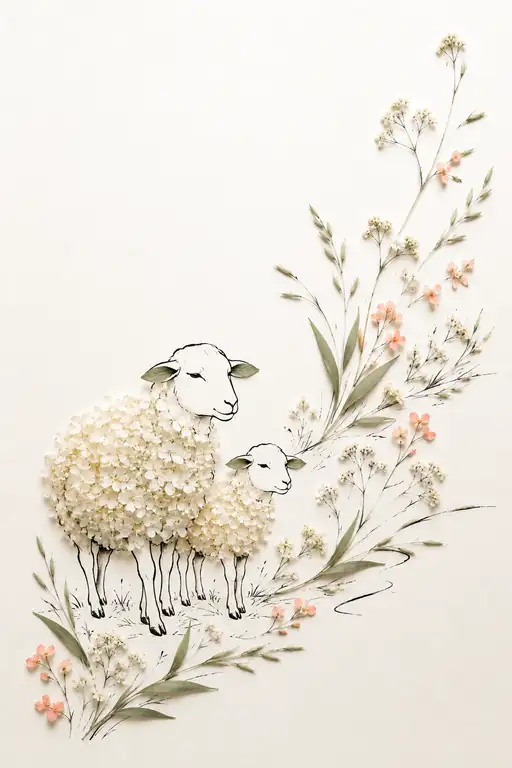 Warm Blossoms in the Spring Pasture
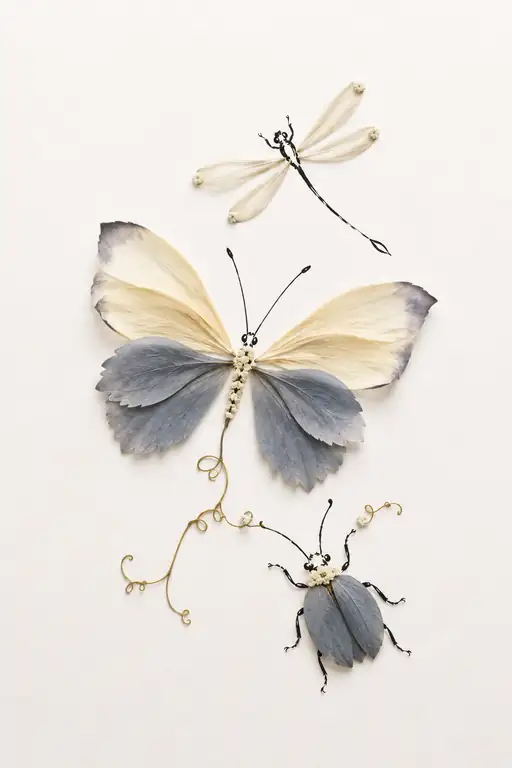 Wings of Petals and Leaf Shells
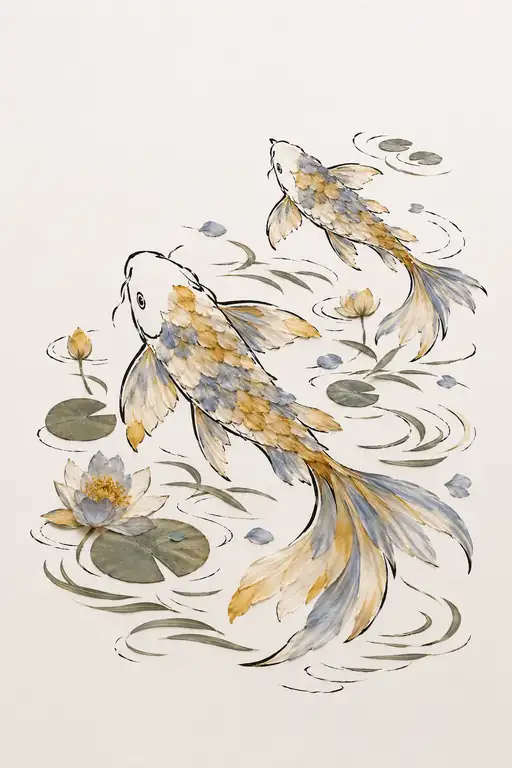 Graceful Glides in the Lotus Pond