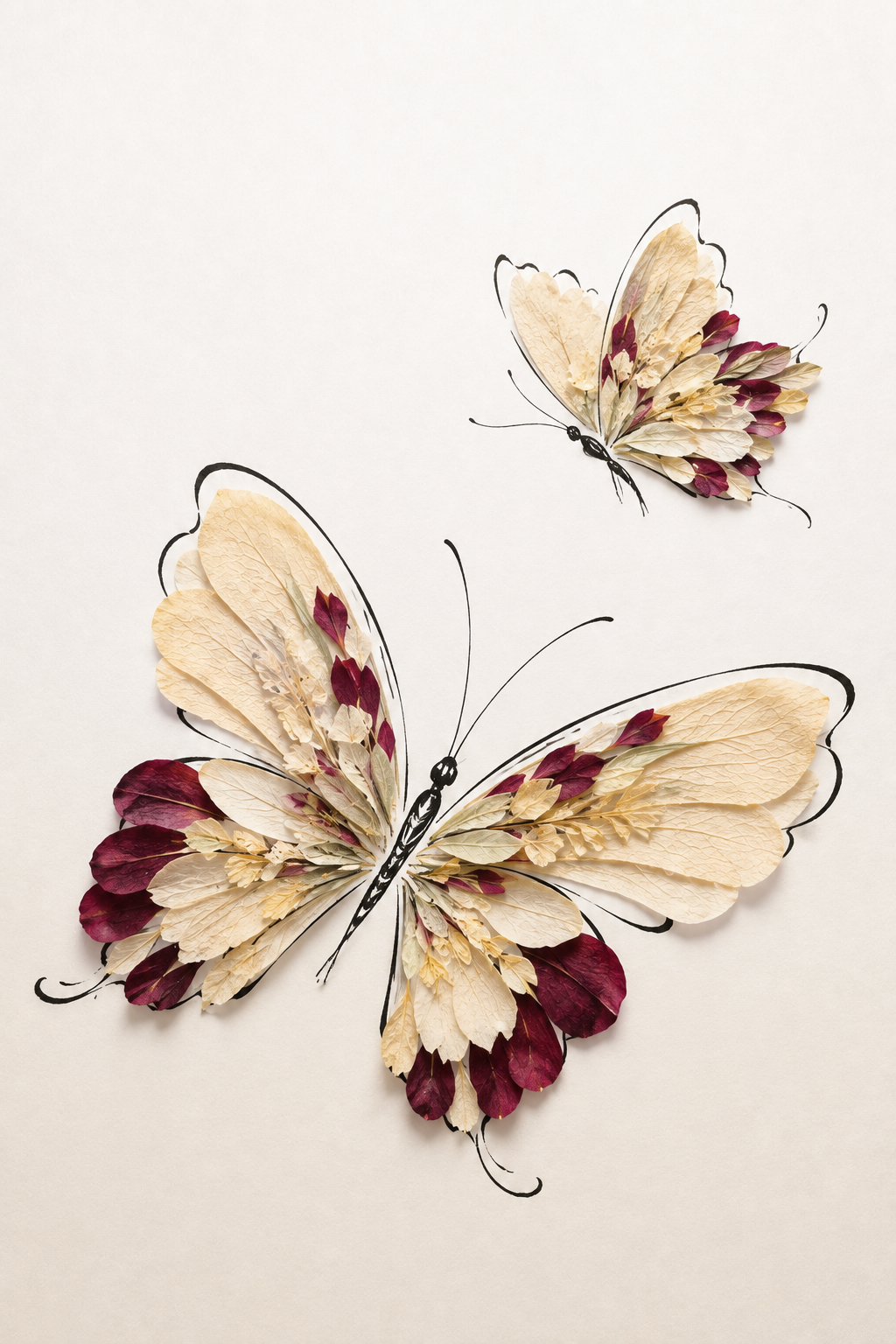
Flight of the Crimson-Edged Wings
Critique
Introduction This spare composition presents two butterflies constructed from cream and burgundy botanical fragments, completed by sweeping black ink contours. Their unequal scale and diagonal separation turn a material study into an image of emergence and companionship. Description The larger butterfly spreads across the lower center, its body angled from lower right to upper left. Broad cream petals form the upper wings, while layered ivory leaves and deep wine-red petals fill the lower sections. Long antennae and curling wing outlines extend beyond the collage. A smaller butterfly hovers at upper right, repeating the same palette and layered structure in a more compact form. Analysis The large wings establish near symmetry, but variations in petal size and burgundy placement keep them organic. Black contours sometimes coincide with botanical edges and sometimes float beyond them, suggesting transparent wing membranes. Fine pale sprigs radiate from each body and contrast with the broad outer petals. Soft shadows supply relief, while the diagonal pairing activates the broad white field. Interpretation and Evaluation Because plant parts remain visibly leaves and petals, transformation is shown rather than concealed. The smaller butterfly can read as echo, offspring, or a later stage of flight, though the image leaves the relation open. Economy of drawing, balanced asymmetry, and disciplined color are notable. The technique convincingly converts veins, wrinkles, and overlapping tips into wing structure without relying on elaborate background. Conclusion What first appears as elegant butterfly decoration becomes a concise meditation on metamorphosis through materials. Scale, repetition, and open space allow fragility to carry both visual strength and quiet motion.
Same Subcategory
Similar Artworks
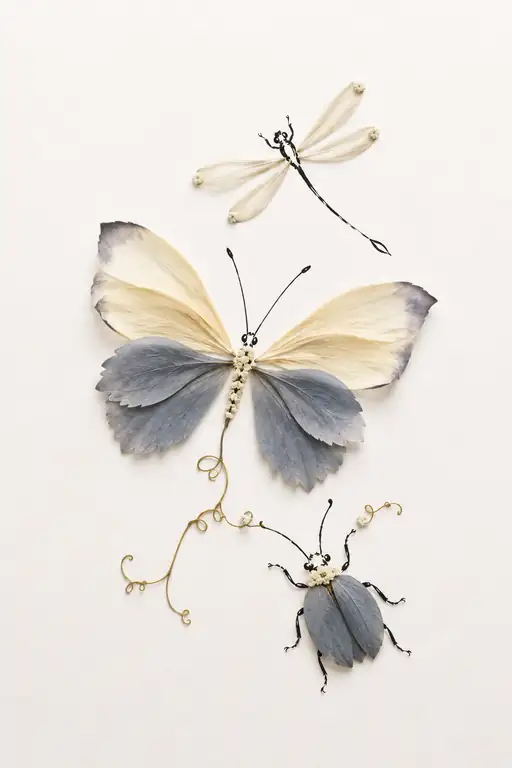 Wings of Petals and Leaf Shells
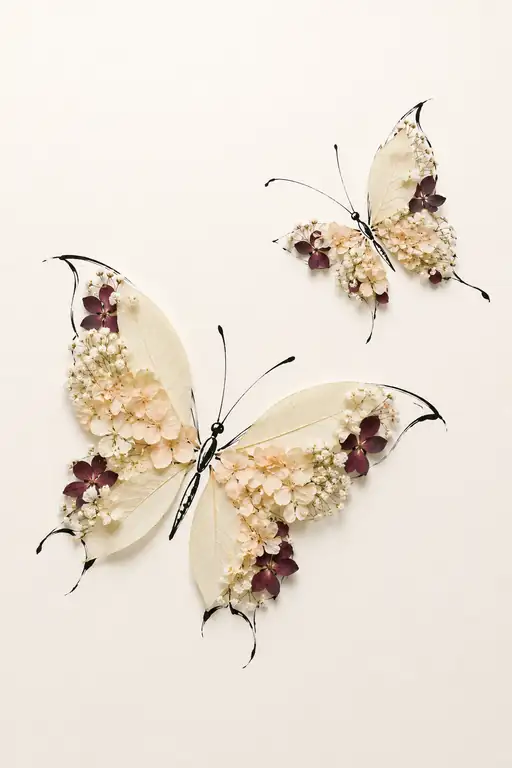 Wings of Veined Whispers
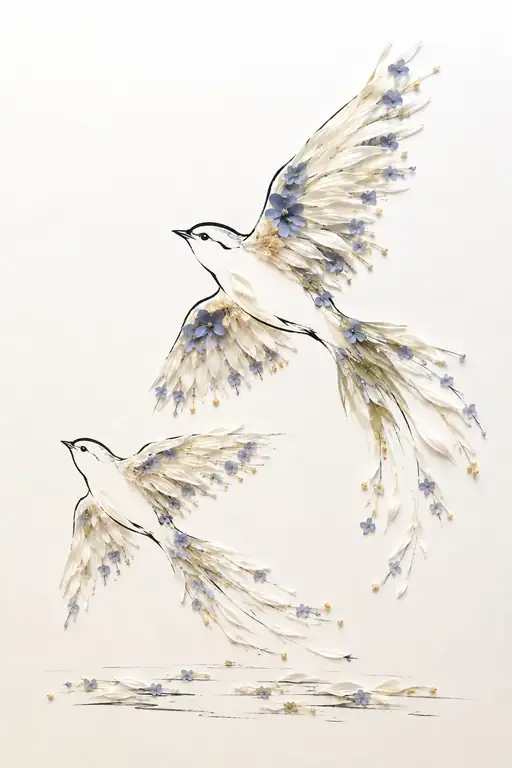 Flight of Paired Birds with Petal Wings
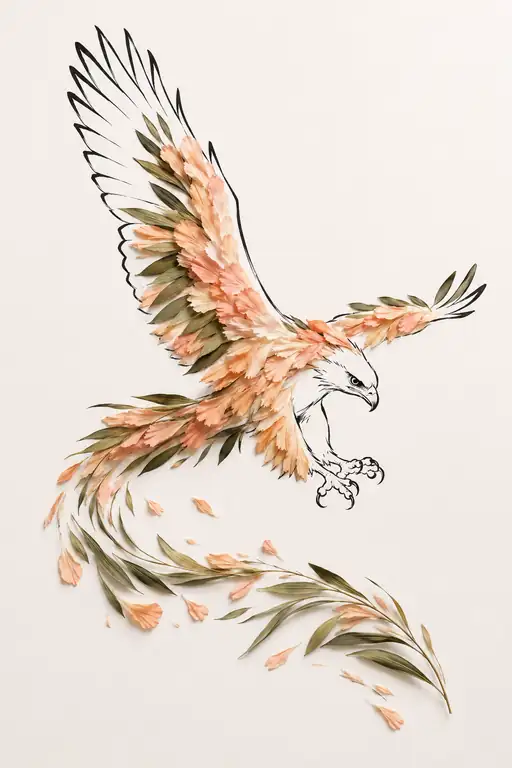 Swooping Raptor with Petal Feathers
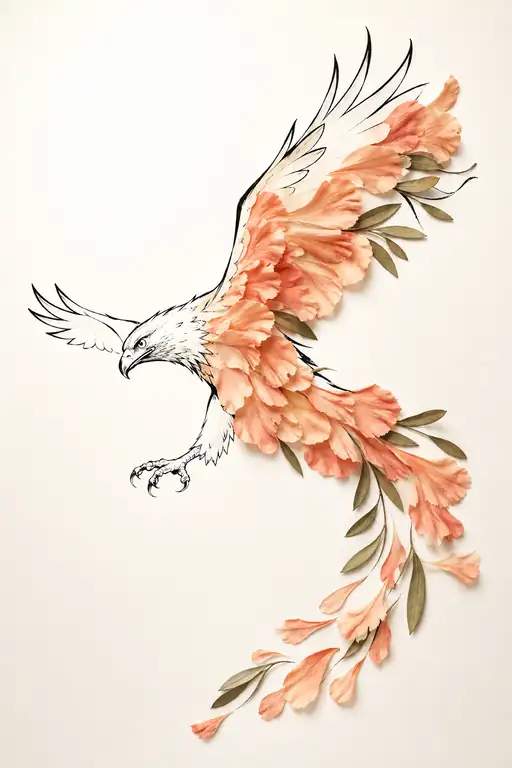 Descent of the Coral Plumage
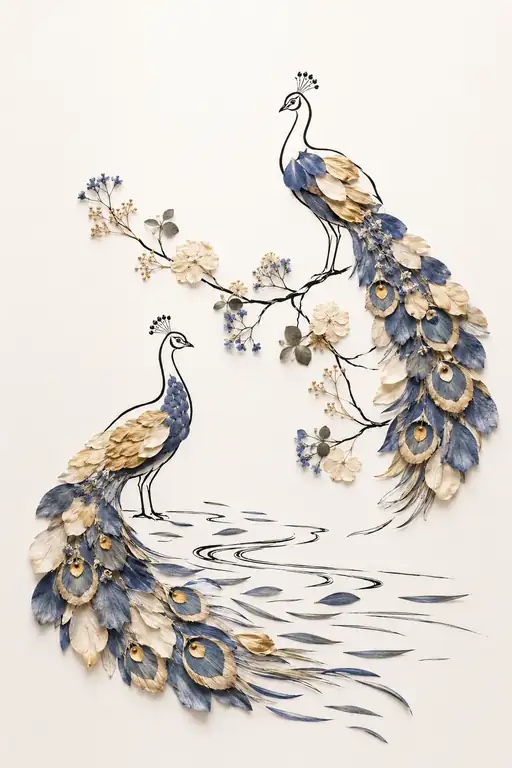 Cascades of Blue Feathers and Blossom Boughs
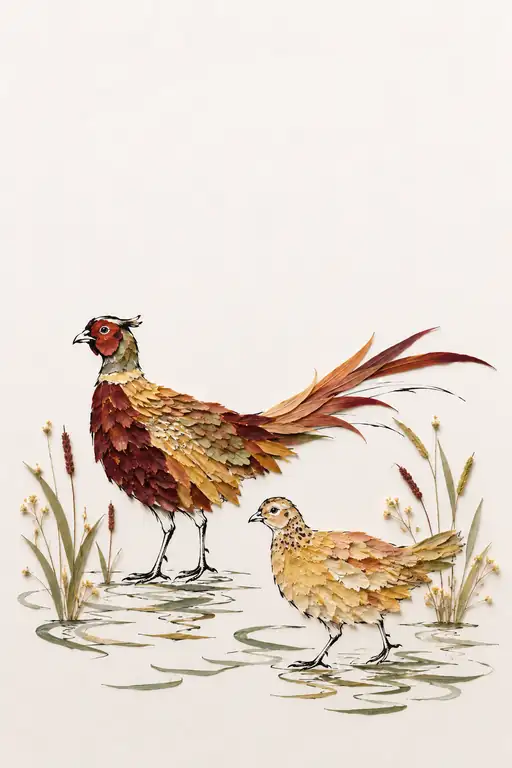 Plumed Pair in the Autumn Reeds
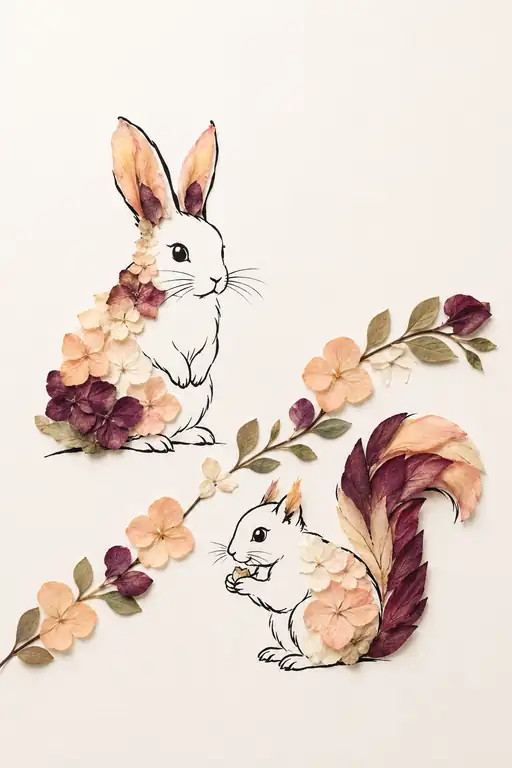 Woodland Encounter Across the Flowered Bough
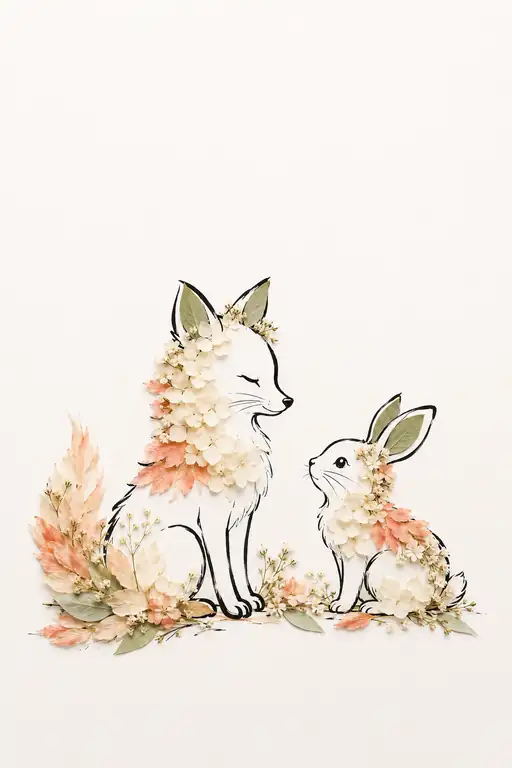 Silent Encounter in the Forest Bower
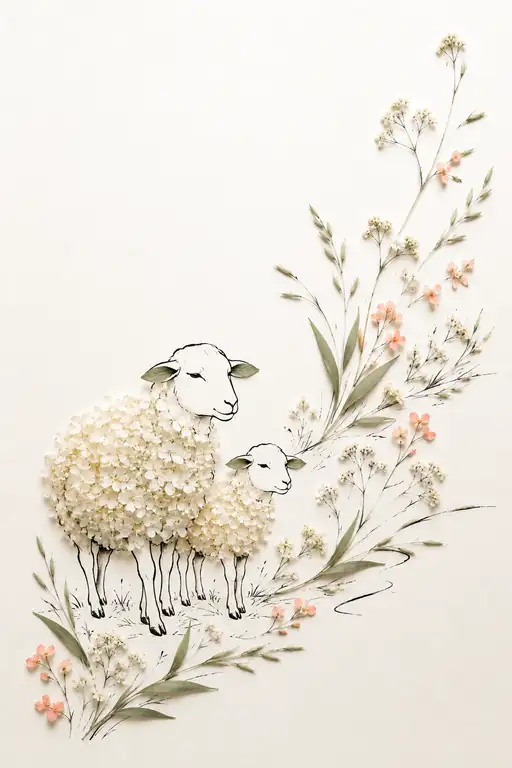 Warm Blossoms in the Spring Pasture