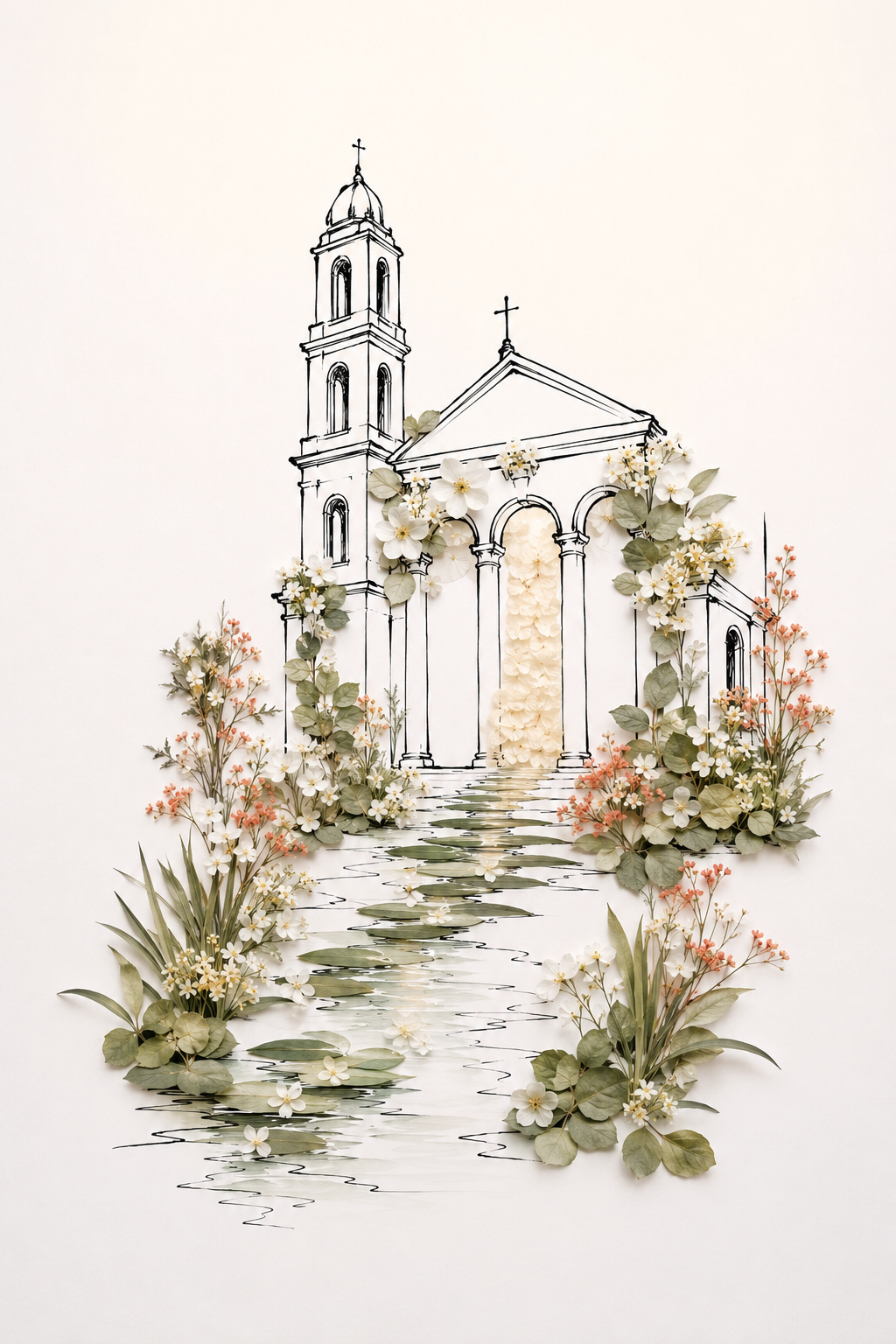
Sanctuary Across the Waterway of Light
Critique
Introduction This vertical mixed-media composition depicts a church beyond a reflective, flower-bordered approach. Black drawing defines architecture, while leaves and blossoms create water, gardens, and a luminous doorway. Description A gabled church with a tall bell tower occupies the upper center. Three arches mark the façade, and a pale column of petals fills the central entrance. Dense plant clusters rise on both sides of a long watery path: white flowers, coral buds, gray-green leaves, and pointed grasses. Flattened green leaves float across the foreground like lily pads, interspersed with blossoms and wavering ink reflections. Analysis The central axis leads from floating leaves to the doorway, while asymmetrical plants soften the symmetry. The tower counters the widening water. Black contours remain crisp in the building but loosen into ripples. Greens dominate, white repeats the paper’s luminosity, and coral marks depth. Overlapping leaves make water both illusion and tactile surface. Interpretation and Evaluation The flooded or reflective path converts approach into contemplation: progress toward the entrance requires visual passage through plants and light. The central petal column may suggest illumination without depending on literal radiance. Architectural drawing is proportioned with care, and the composition balances solemn symmetry with organic variation. The restrained palette supports serenity, while using leaves as both water plants and reflected shapes demonstrates technical imagination. The garden does not merely frame the church; it actively structures the viewer’s approach. Conclusion What initially appears to be a flower-framed sanctuary becomes an image of attention guided through a living threshold. Precise line, measured color, and layered natural texture give the sacred space an accessible stillness.
Same Subcategory
Similar Artworks
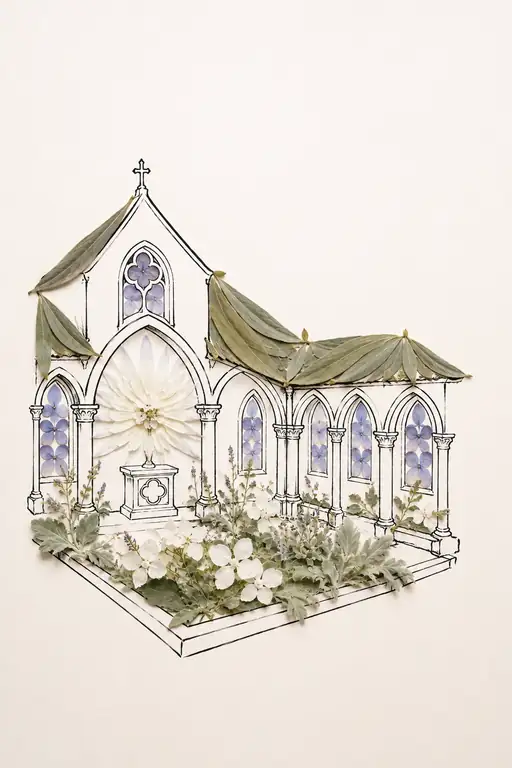 Gothic Chapel Blooming with Prayer
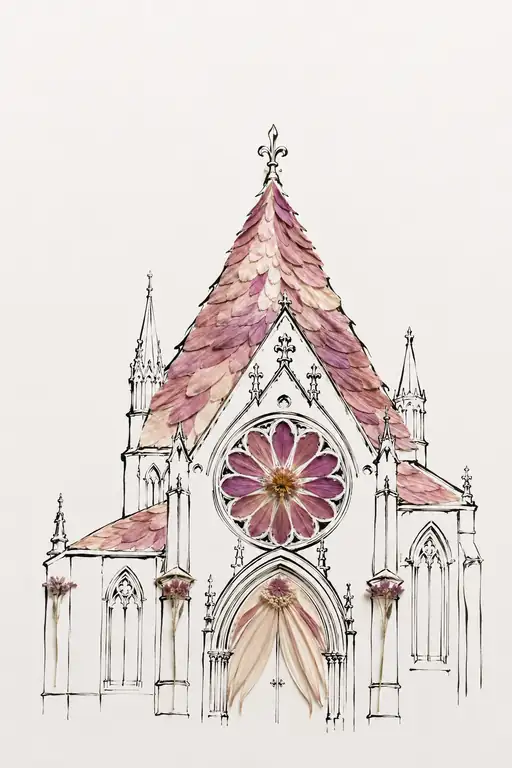 Gothic Church Crowned with Rose Petal Roof
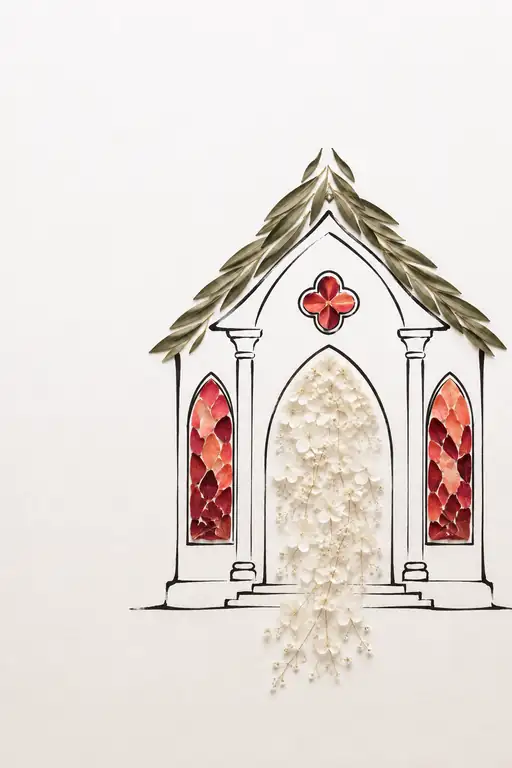 Chapel Threshold Where White Light Cascades
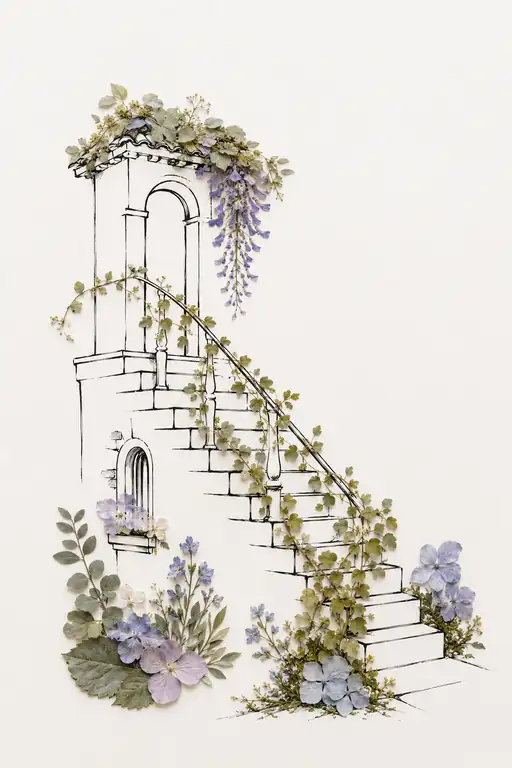 Wisteria Cascades Along the Tower Stair
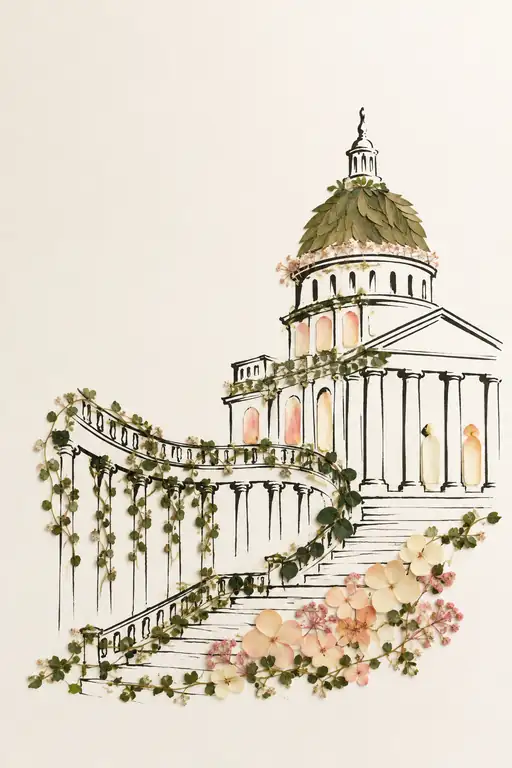 Grand Stairway to the Verdant Dome
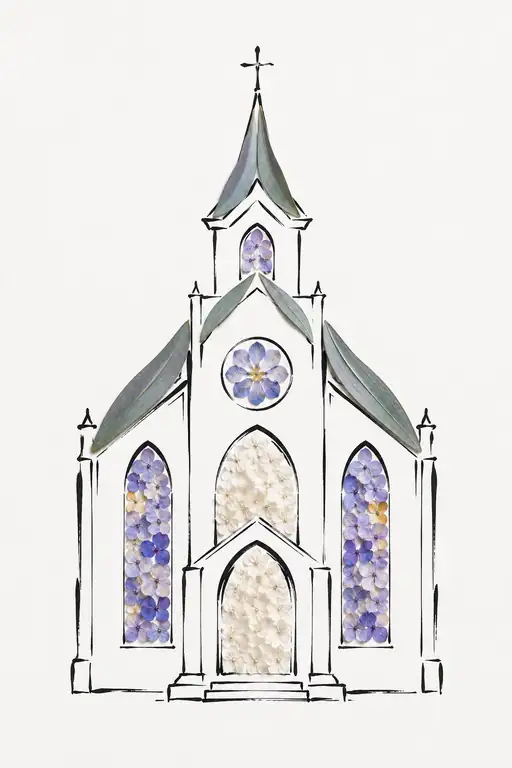 Flora Rose Window in Quiet Devotion
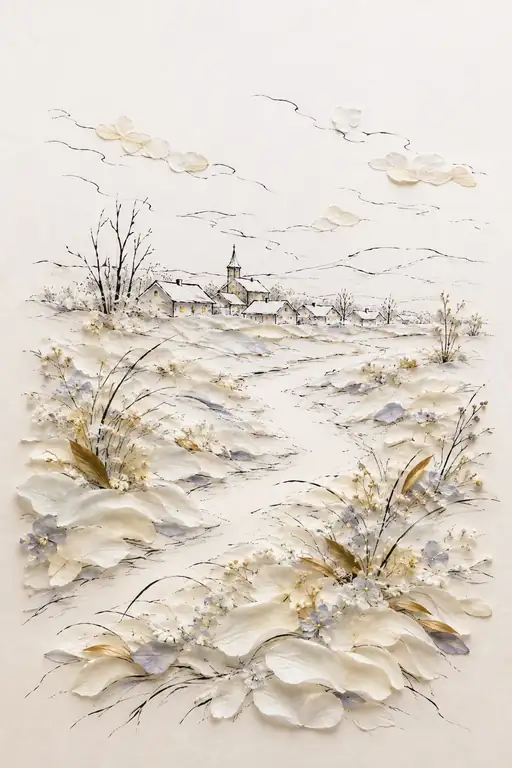 Silent Snowfall Over the Village Chapel
 Bridged Gateway to the Verdant Spires
 Arrival on Rain-Soaked Rails
 Lantern Lights Along the Tramway Street