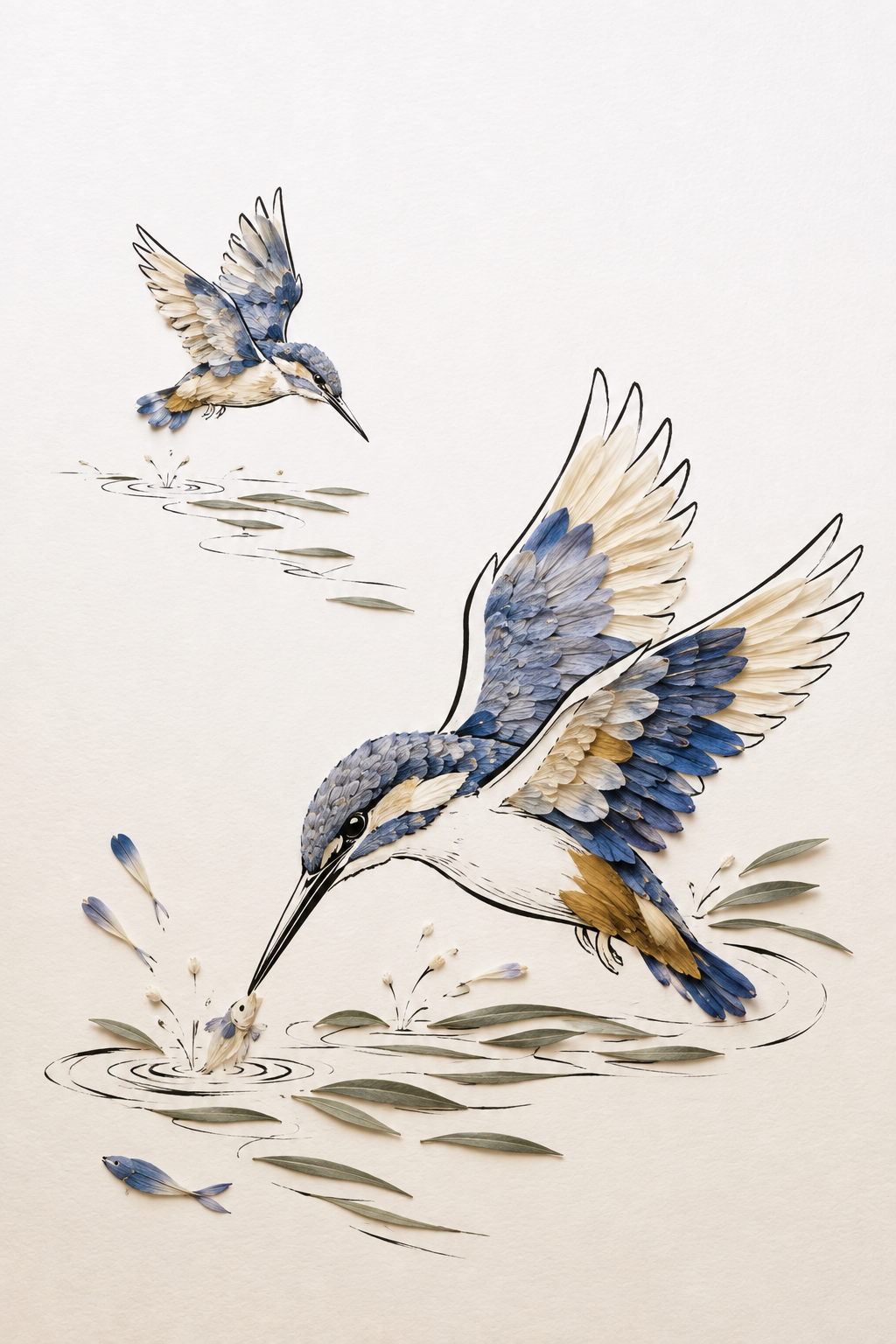
Plunge of the Cobalt Arrow
Critique
Introduction This vertical work captures two kingfishers above water by joining forceful ink contours to layered blue and cream petals. Rather than presenting a settled wildlife scene, it concentrates on the instant of descent, pursuit, and impact. Description A large bird dominates the lower right, wings fully raised and long bill aimed at a small fish breaking the surface. A second bird approaches from the upper left. Cream, slate blue, and deep cobalt petals construct the wings and backs, with ocher marking the nearer bird's flank. Ink ripples, splashes, narrow leaves, and several tiny fish spread across the lower half. Analysis The two descending diagonals converge toward separate points on the water, organizing the action across a broad white field. The nearer wings create a strong V, while repeated feather shapes lead the eye from their tips to the bill. Black outlines sharpen the soft petal edges, and circular ripples oppose the birds' angular momentum. Cool blues unify air and water; the ocher patch supplies a compact warm accent. Interpretation and Evaluation The suspended bodies make time appear briefly arrested just before contact. Loose feathers at left and droplets around the fish intensify the event without overcrowding it. The drawing is especially effective in the bills, eyes, and wing extremities, while the collage technique gives plumage palpable depth. Scale, negative space, and directional rhythm are handled with precision, and the material translation remains inventive. Conclusion What first seems a decorative pair of blue birds becomes a carefully staged account of speed and concentration. Converging movement, responsive water marks, and tactile feathers allow the viewer to sense both the violence and delicacy of the hunt.
Same Subcategory
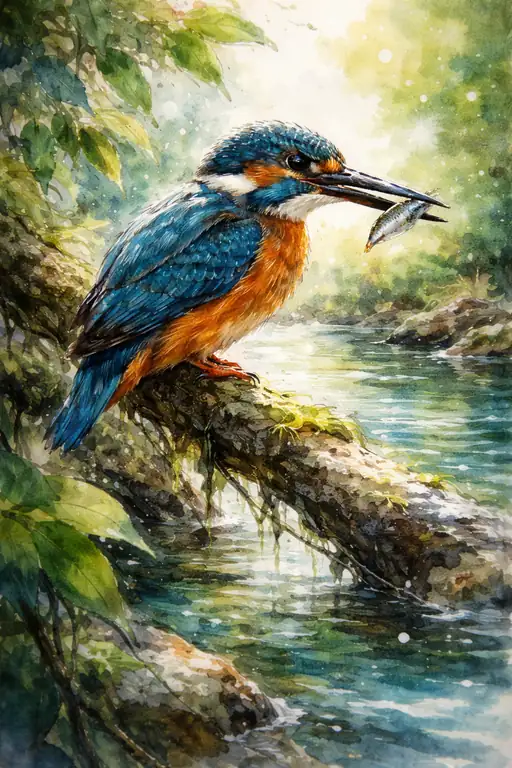 The Turquoise Hunter's Rest
Similar Artworks
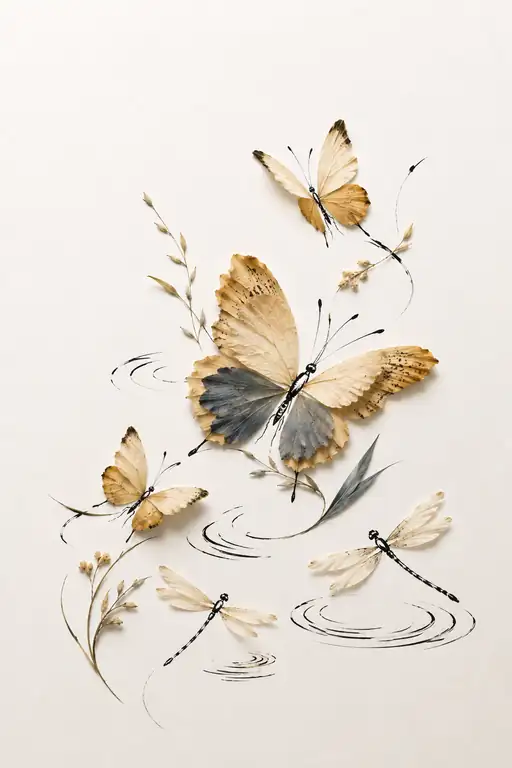 Dance of Wings Above Rippling Water
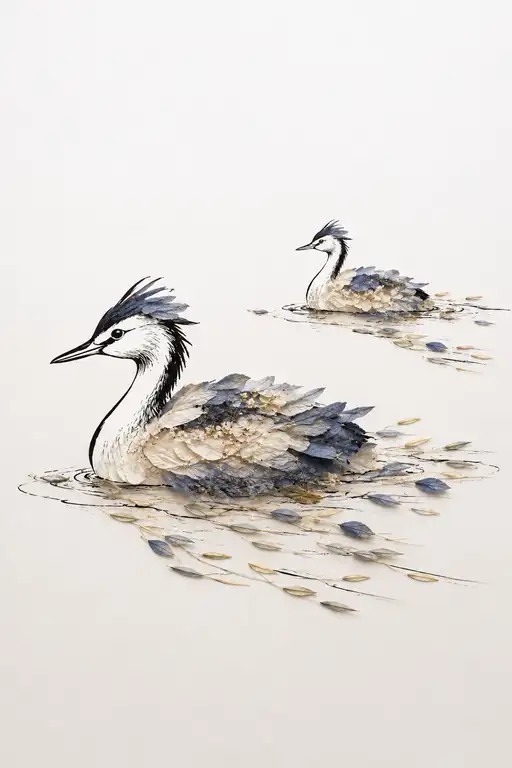 Gliding Across Cerulean Ripples
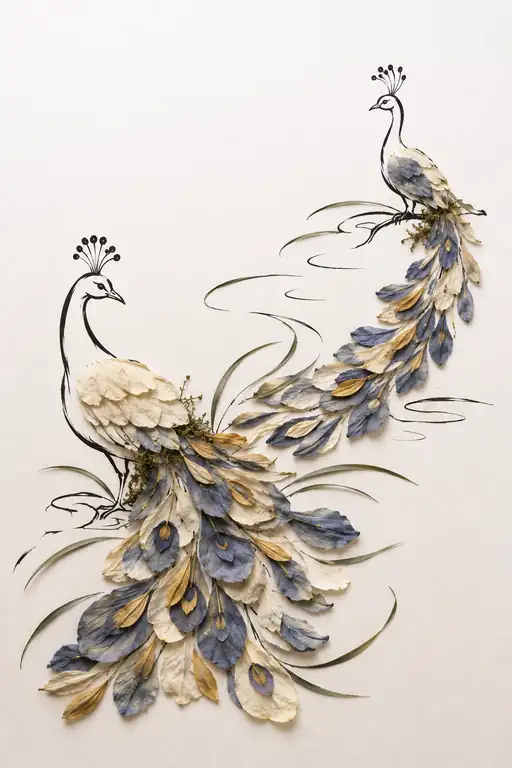 Splendor of the Cerulean Plumage
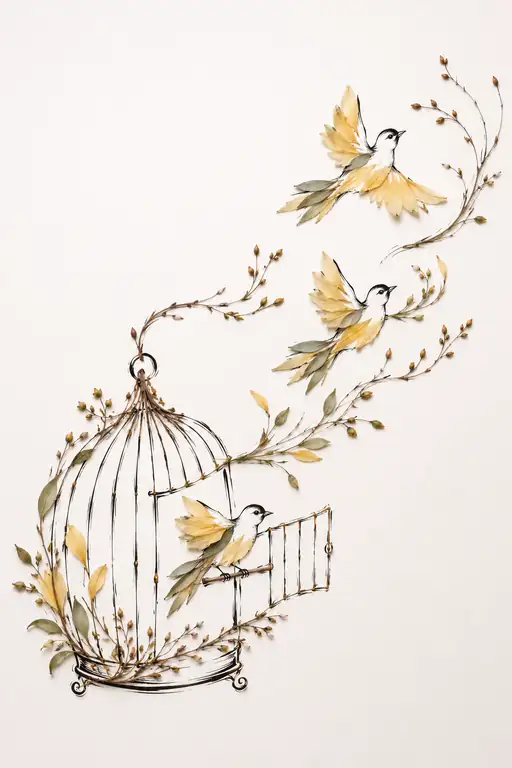 Flight from the Gilded Cage
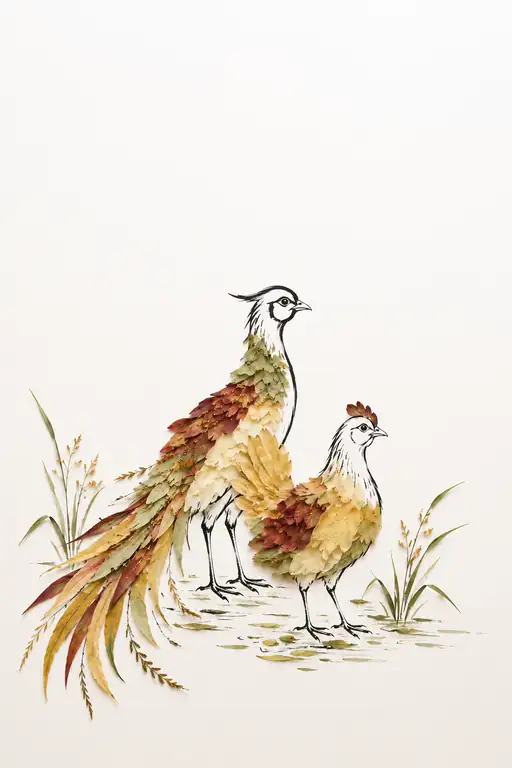 Plumed Companions in Autumnal Glow
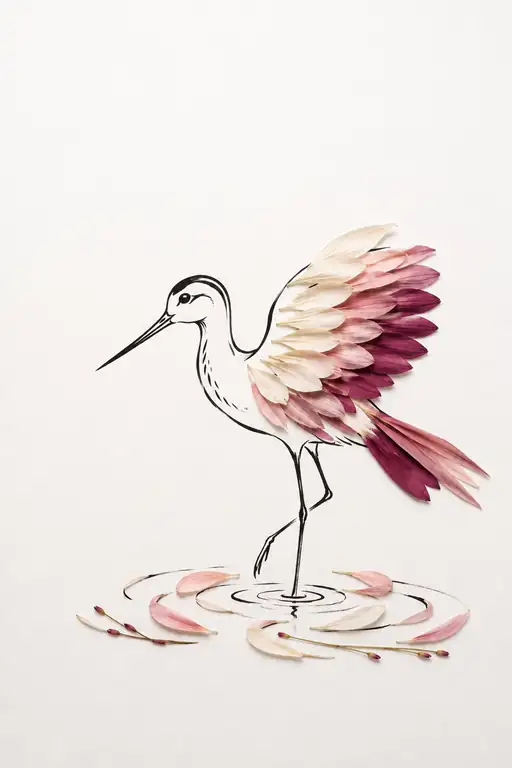 Crimson Plumage Poised Above Still Waters
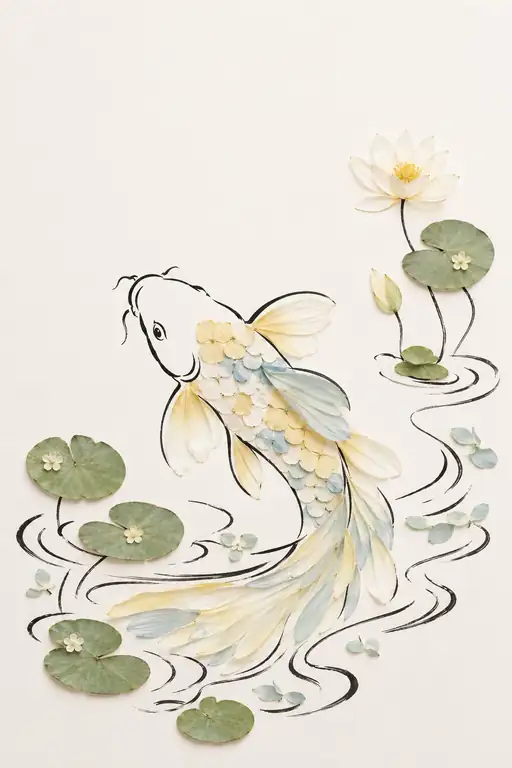 The Celestial Carp Clad in a Dream of Dawn
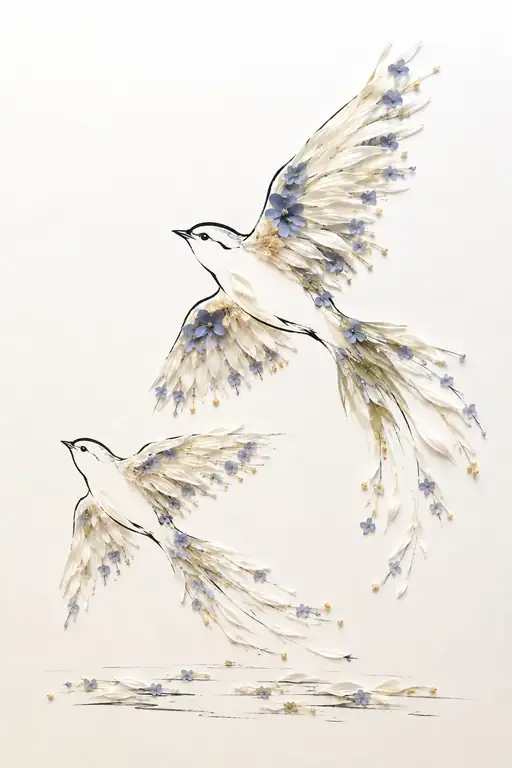 Flight of Paired Birds with Petal Wings
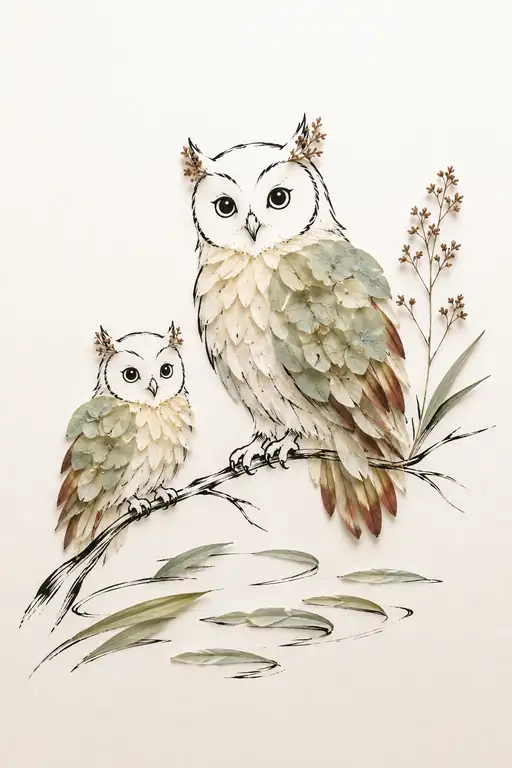 Silent Watch from the Sage Bower
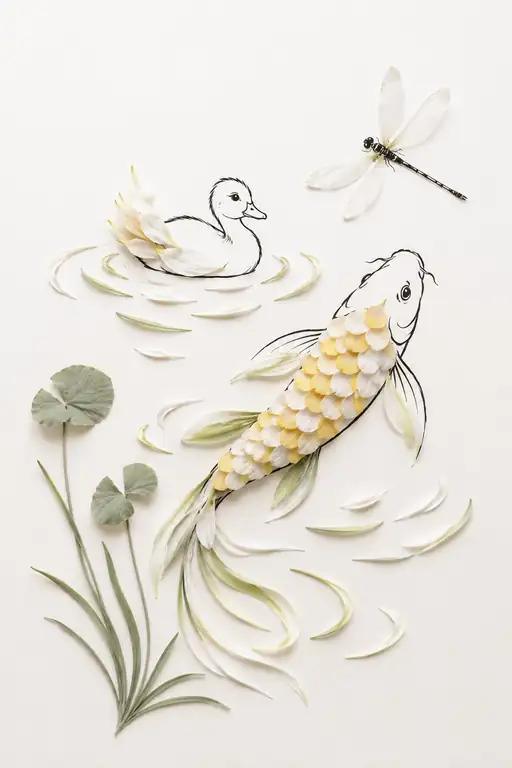 Ripples of the Pale Gold Koi