
Ruined Stairway and the Mossy Steps
Critique
Introduction This image isolates a ruined stone stairway against a broad cream ground. Ink drawing supplies broken masonry, while moss, blue-gray leaves, and lavender petals inhabit its cracks. The absence of a surrounding landscape concentrates attention on ascent, erosion, and the return of vegetation. Description The stairs begin wide at the lower left and turn upward toward a fractured wall near the upper right. Uneven treads are outlined with wavering black marks and interrupted by thick green moss. Thin vines climb both sides, bearing small rounded leaves. Several large violet flowers cluster at the base, while loose petals and drawn chips scatter across the foreground. Analysis Strong diagonal recession gives the isolated structure convincing depth. Each step becomes narrower and shallower as it rises, and the high wall creates a firm terminal mass. Black cracks divide the pale blocks but never fill them, preserving the luminosity of the paper. Moss supplies rough horizontal bands, vines introduce vertical movement, and lavender accents lead the eye upward through repeated intervals. Soft cast shadows distinguish actual foliage from drawn stone. Interpretation and Evaluation The stairway proposes passage, yet its destination is blocked or incomplete. Growth does not merely decorate the ruin; it marks time by occupying joints, edges, and abandoned surfaces. The draughtsmanship communicates weight with minimal shading, and the composition makes emptiness an active setting. Its inventive fusion of brittle line, spongy moss, and delicate petals balances decay with renewal without overstating either idea. Conclusion An initial impression of a romantic floral staircase deepens into a focused meditation on persistence. Controlled perspective, selective color, and precise placement of organic textures make the upward route feel both inviting and irrecoverably altered.
Same Subcategory
 The Gate Above the Sea of Clouds
Similar Artworks
 Stairway of Blossoms to the Ancient Arch
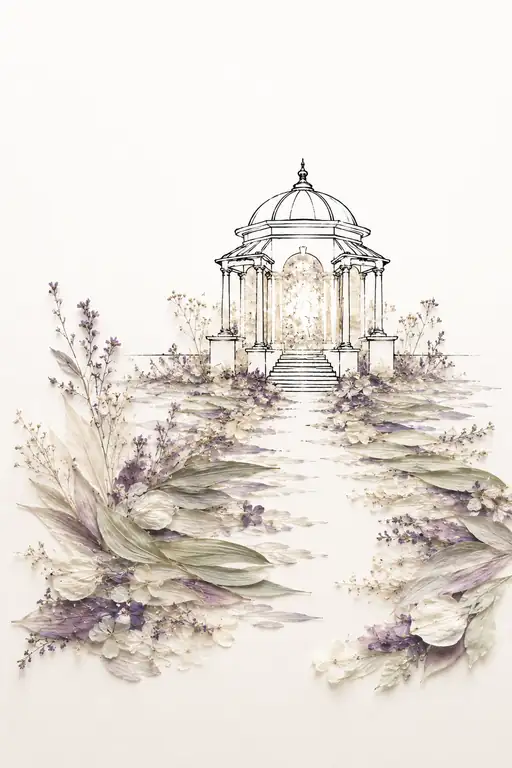 Pathway to the Sunlit Gazebo
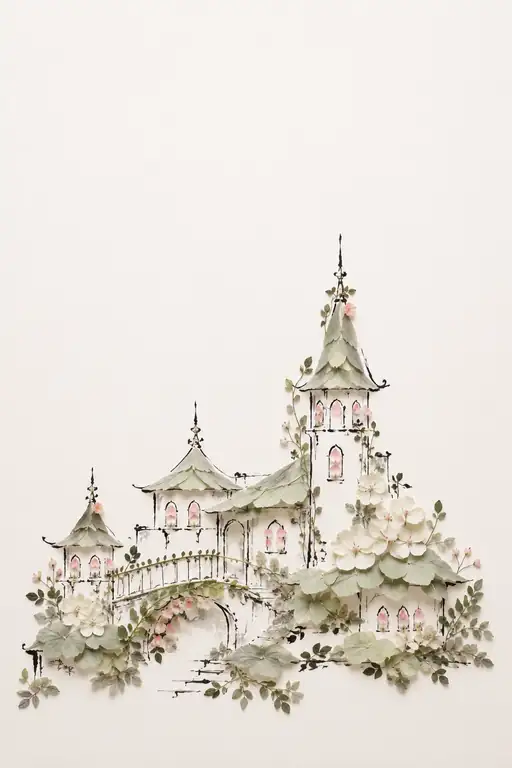 Sage Spire Castle and the Blossoming Bridge
 Fairytale Spire and the Arched Bridge
 Stairway Across Whispering Seasons
 Beyond the Bridge at Dawn, a Castle of Dreams
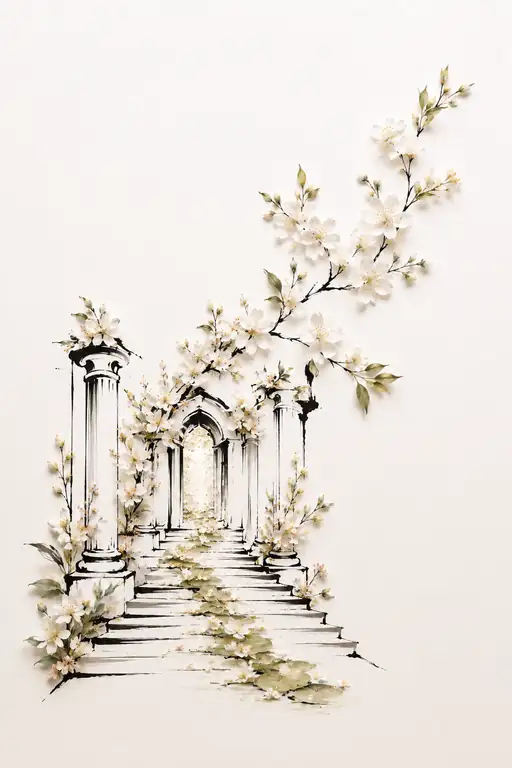 Blooming Ascent to the Luminous Portal
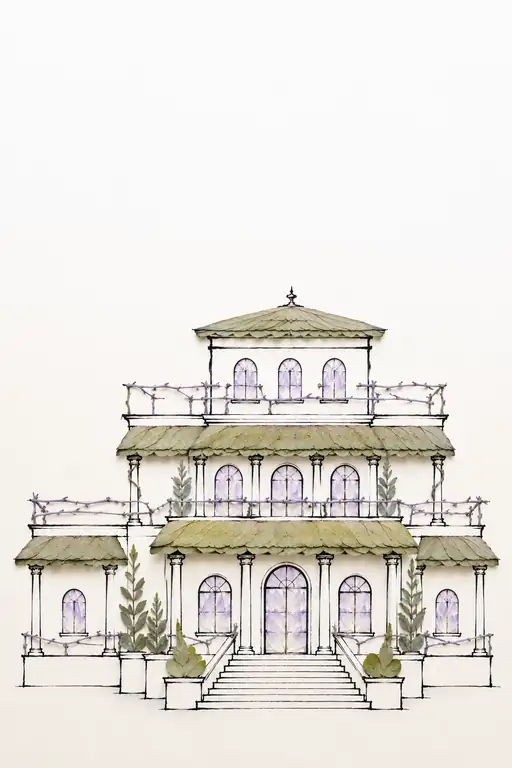 Pavilion of Petal and Tier
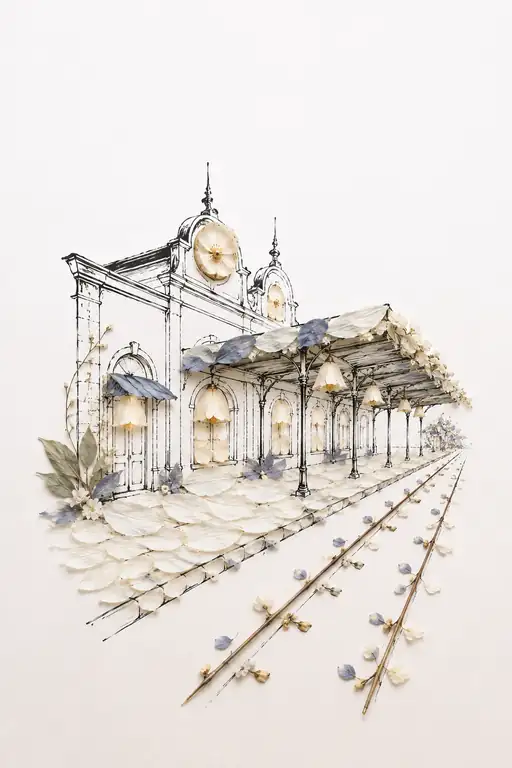 Station of the Silent Departure
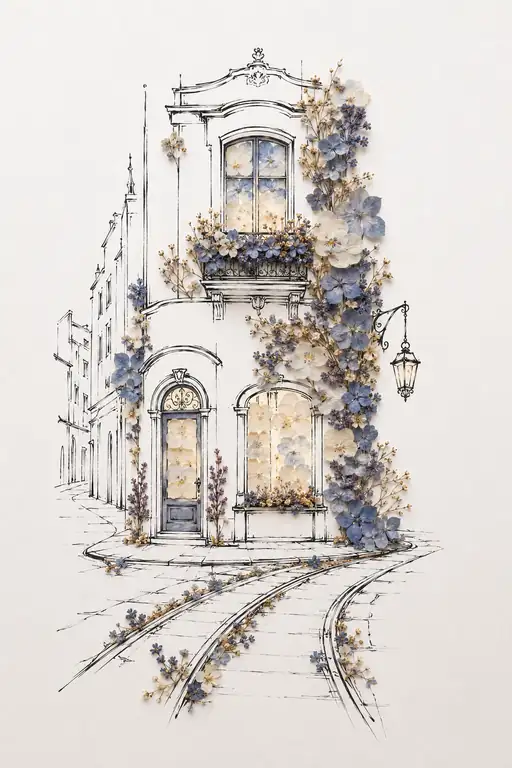 Azure Hydrangea at the Street Corner