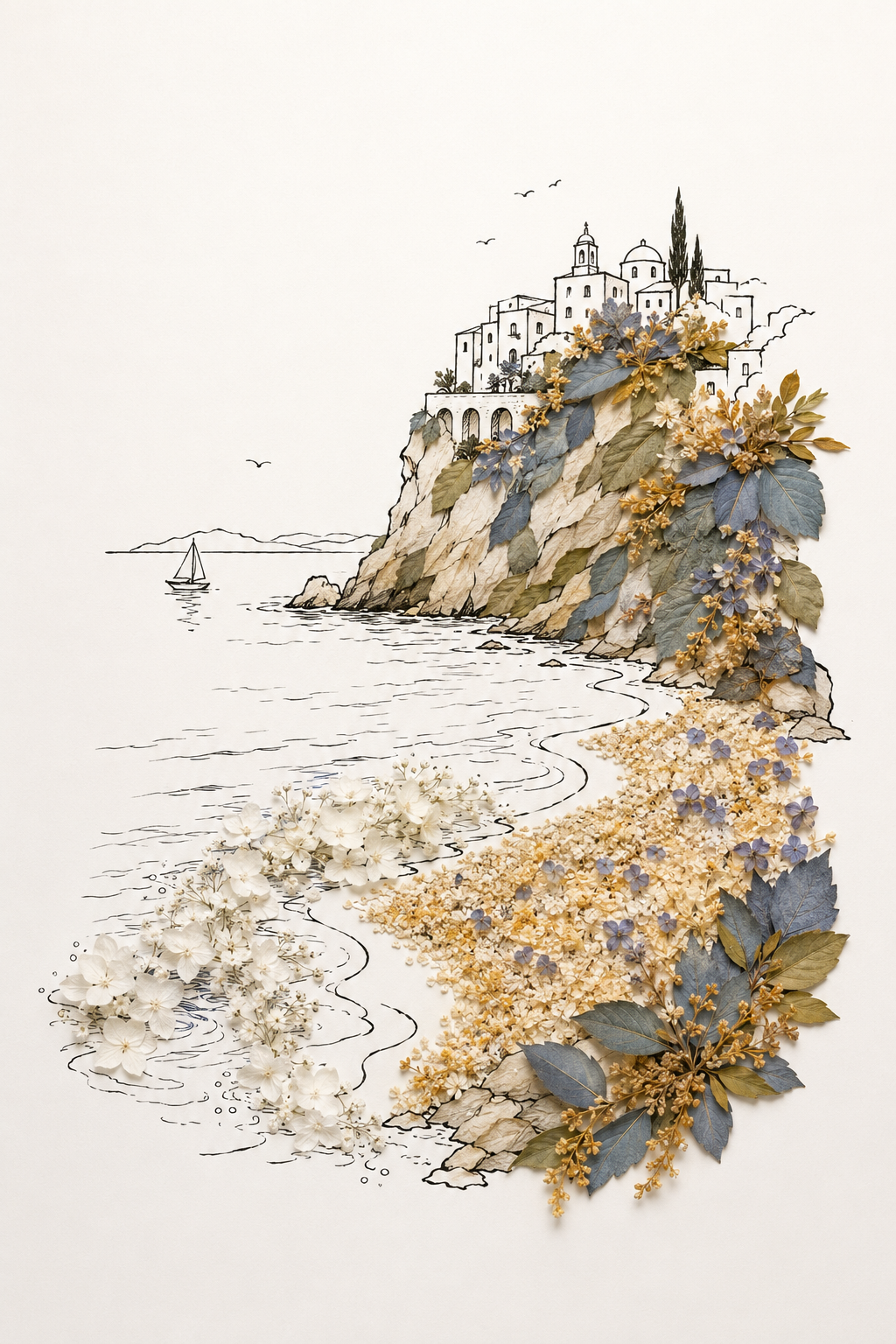
Cliffside Village and the Gilded Shore
Critique
Introduction This coastal view places a hill town above a shore assembled from flowers and leaves. Architectural drawing remains airy, while cliff and beach project from the pale ground. The work converts a seascape into a study of surfaces and scales. Description White buildings, a domed church, a bell tower, and two dark cypresses crown the upper-right promontory. Broad blue-gray and olive leaves descend over its rock face among gold and lavender blossoms. Below, a granular ocher beach curves from the lower right toward the center. White flowers float along the ink-drawn shallows, and a tiny sailboat appears far left. Analysis The shoreline forms a sweeping arc that links the dense foreground to the elevated town. Vertical towers and cypresses stabilize this curve, while the remote boat opens space across the left. Black lines describe architecture, cliff edges, ripples, and birds with different degrees of pressure. Muted blue-gray foliage cools the warm gold beach, and the white blossoms brighten the water without breaking the restrained harmony. Interpretation and Evaluation The town seems to grow from the cliff because leaves cross freely between geology and vegetation. This fusion suggests habitation as an extension of the natural coast rather than an isolated structure. The drawing is economical yet descriptive, and the composition guides the gaze persuasively around the bay. Particularly successful are the varied textures: crisp building contours, veined leaves, granular shore, and soft floral surf remain distinct but coherent. Conclusion What first appears to be a delicate travel vignette gradually reveals disciplined spatial construction. The high settlement, low floral beach, and distant vessel create a measured circuit of looking, while restrained color and inventive material transitions give the coast enduring presence.
Same Subcategory
 Sunset Glow over the Coastal Town and Plumeria Stairway
Similar Artworks
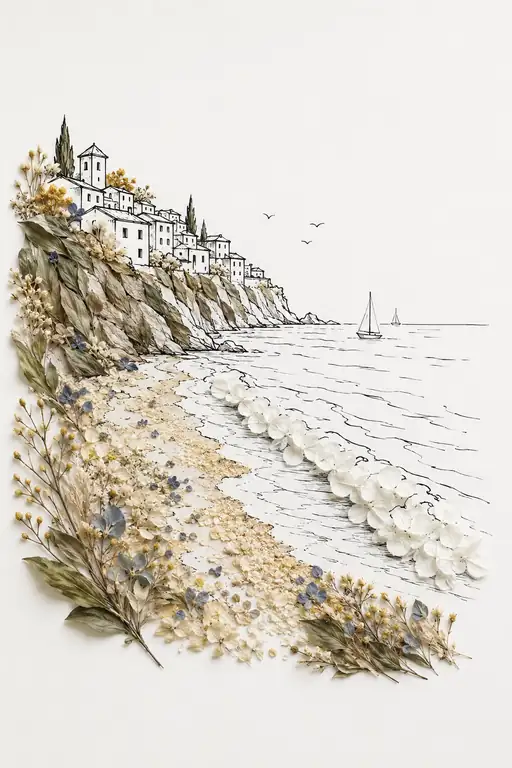 White Surf Below the Cliffside Town
 Leaf-Winged Breeze Over the Purple Shoals
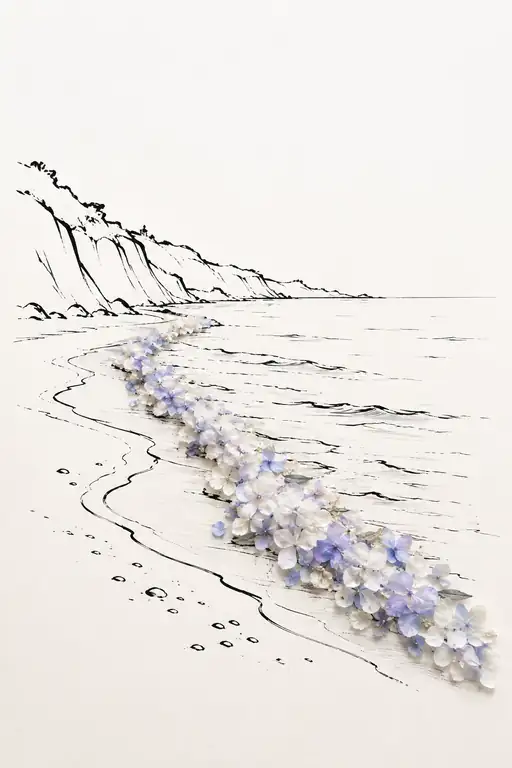 Song of the White Shoreline
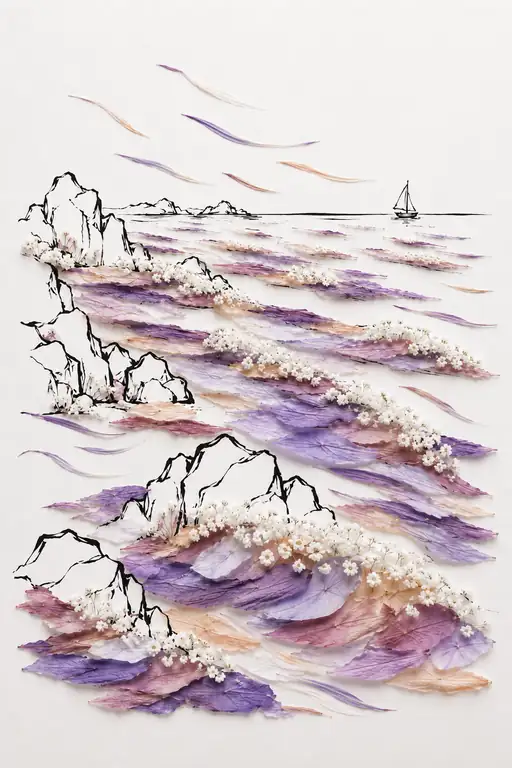 Purple Breakers Against the Coastal Crags
 Mauve Tides and the Distant Sail
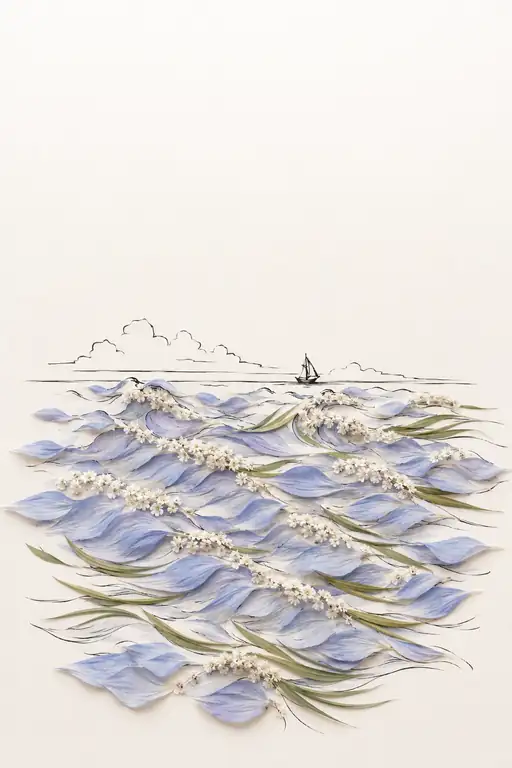 Blue Swells and the Solitary Sail
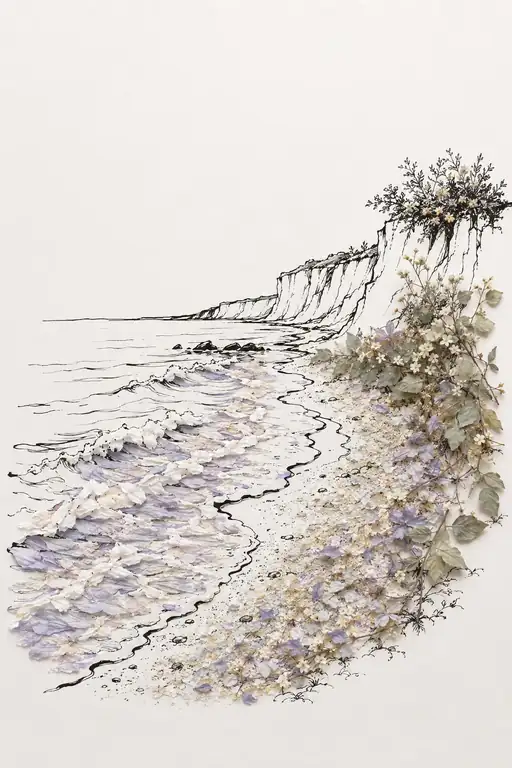 Floral Whitecaps Crashing upon the Cliff
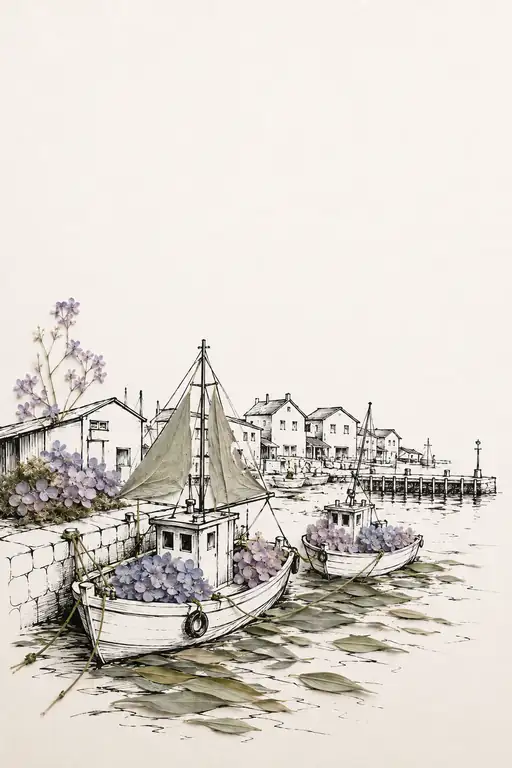 Harbor of Slumbering Tides
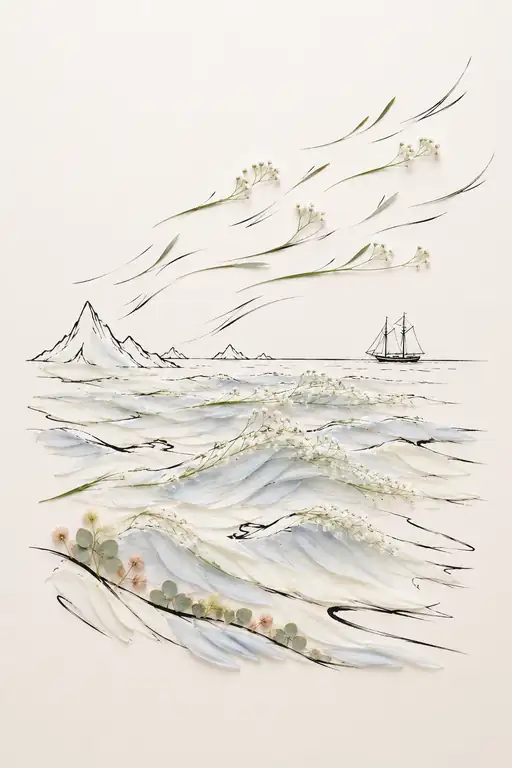 Frigid Waters and the Windborne Sprigs
 Echoes of the White Cliff