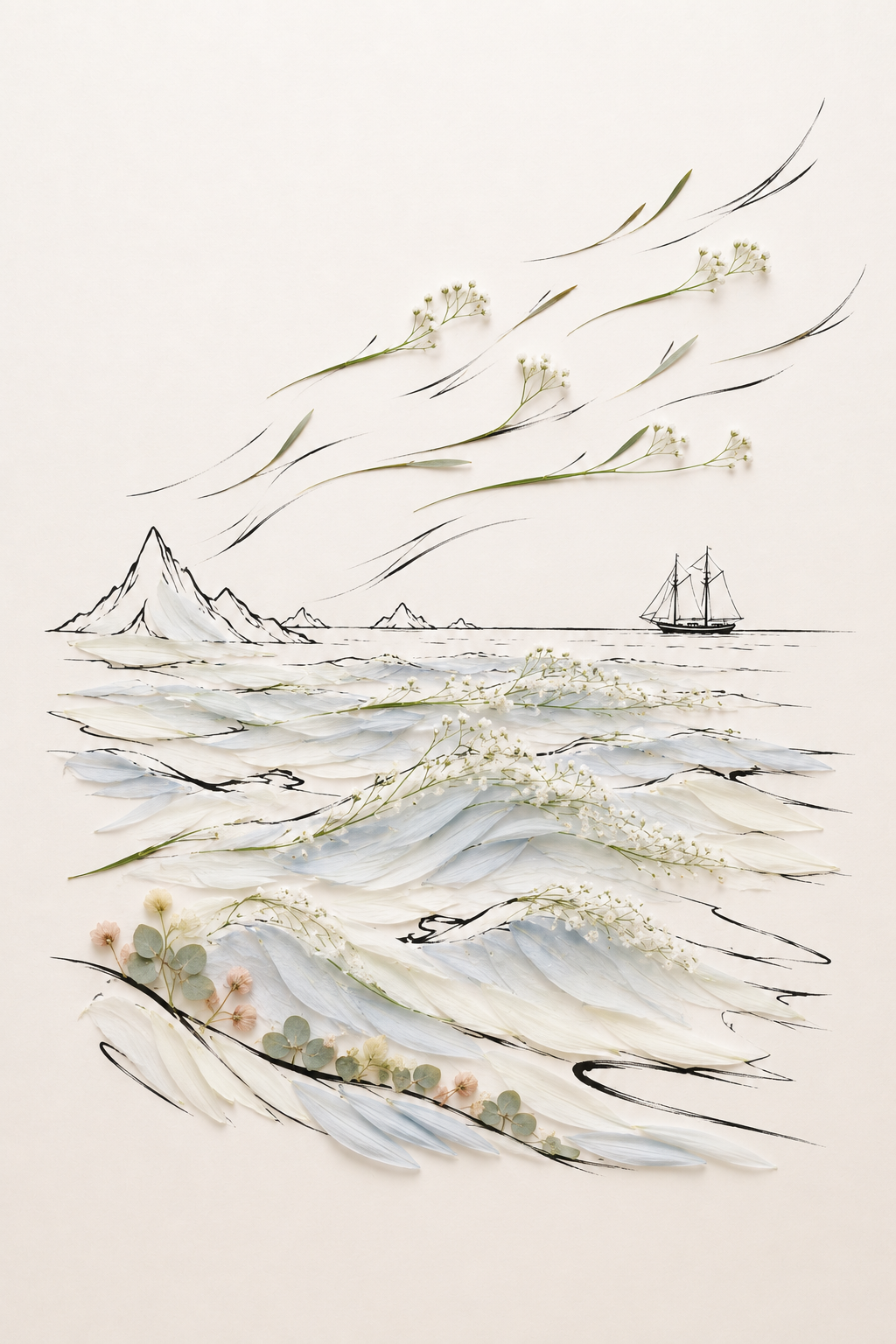
Frigid Waters and the Windborne Sprigs
Critique
Introduction This seascape sets a two-masted ship between an ink-drawn mountain coast and a foreground assembled from pale petals. Nearly monochrome at first glance, the work reveals blue, green, and blush accents. Its open ground makes scattered natural materials feel as light as wind and spray. Description At left, a steep angular mountain rises above a chain of smaller islands, while the ship occupies the right horizon. Layered white and icy-blue petals form broad waves below. Slender sprays of tiny white blossoms lie across several crests, and rounded gray-green leaves with small peach flowers mark the lower-left edge. Isolated stems drift diagonally through the upper sky. Analysis The mountain and ship create separated anchors connected by the thin horizon. In the foreground, black loops and broken lines cut through the pale relief, lending force to otherwise soft materials. Repeated diagonal stems carry the eye from lower left toward upper right, crossing the horizontal structure. Gentle shadows distinguish petal layers, while the limited color range turns small peach blossoms into quiet points of warmth. Interpretation and Evaluation The floating stems make the distinction between sea and air deliberately porous. Botanical fragments can read as waves, foam, currents, or wind, suggesting one continuous circulation across the landscape. The contrast between sharp mountain contours and feathered petals is technically effective, and the sparse palette supports the work's clarity. Its originality lies in using actual fragility to describe a cold, expansive environment without losing monumentality. Conclusion What begins as a restrained maritime sketch becomes a meditation on movement shared by water, vegetation, and air. Precise spacing, tactile layering, and the balanced separation of mountain and ship sustain both breadth and delicacy.
Same Subcategory
Similar Artworks
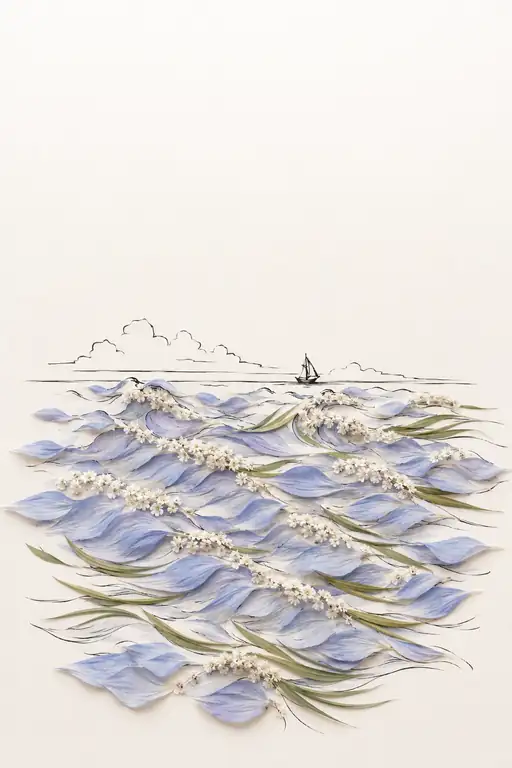 Blue Swells and the Solitary Sail
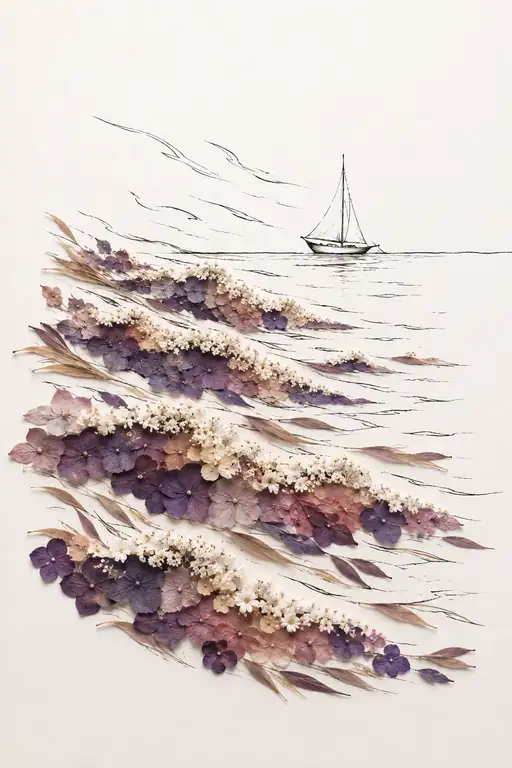 Mauve Tides and the Distant Sail
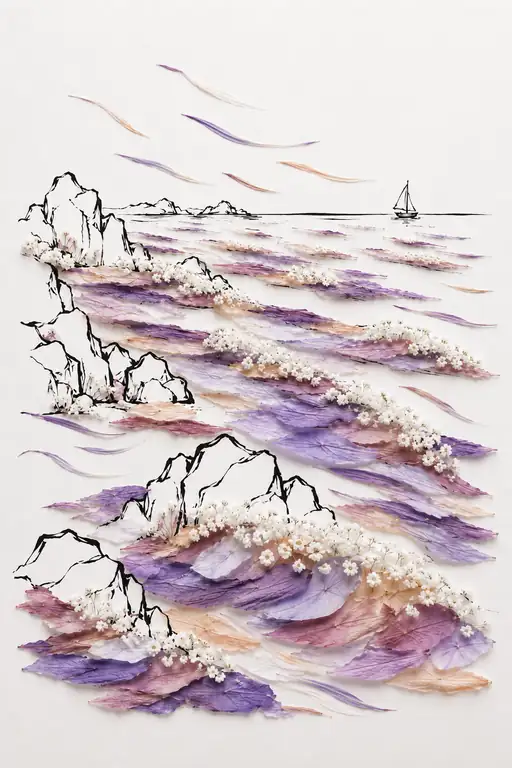 Purple Breakers Against the Coastal Crags
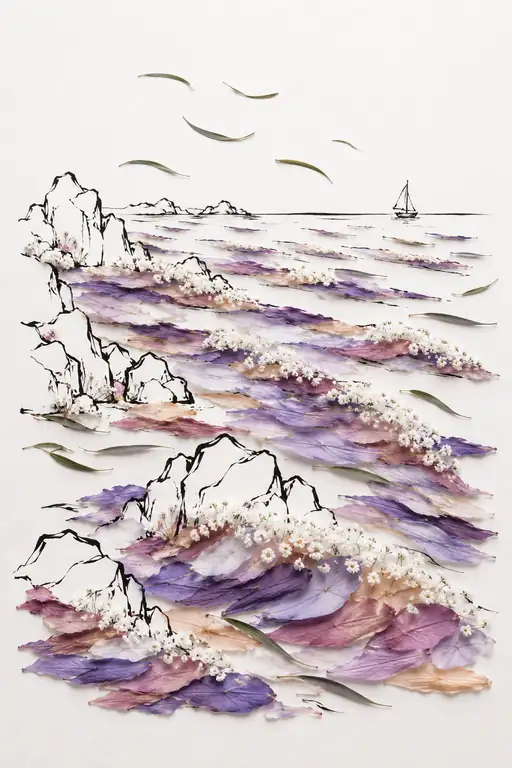 Leaf-Winged Breeze Over the Purple Shoals
 Lavender Inlet and the Moored Boat
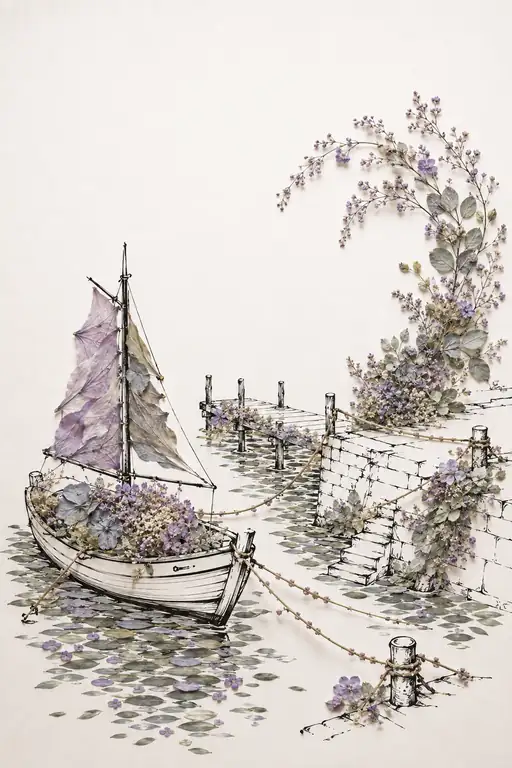 Flower-Laden Sail at the Stone Wharf
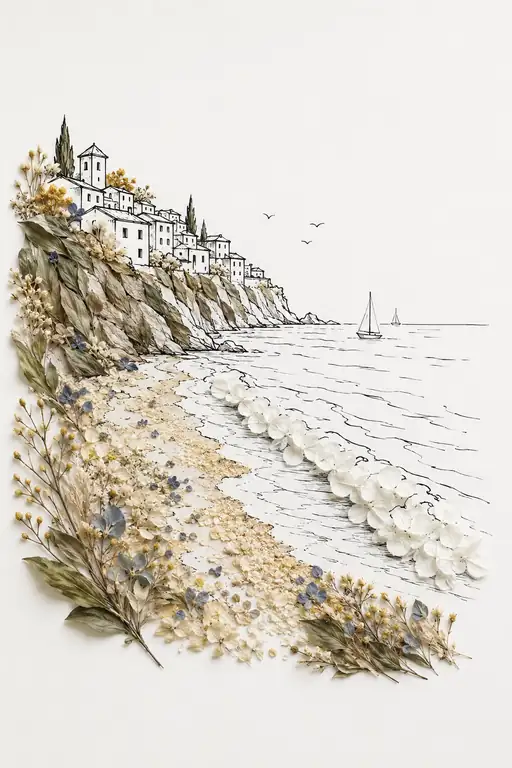 White Surf Below the Cliffside Town
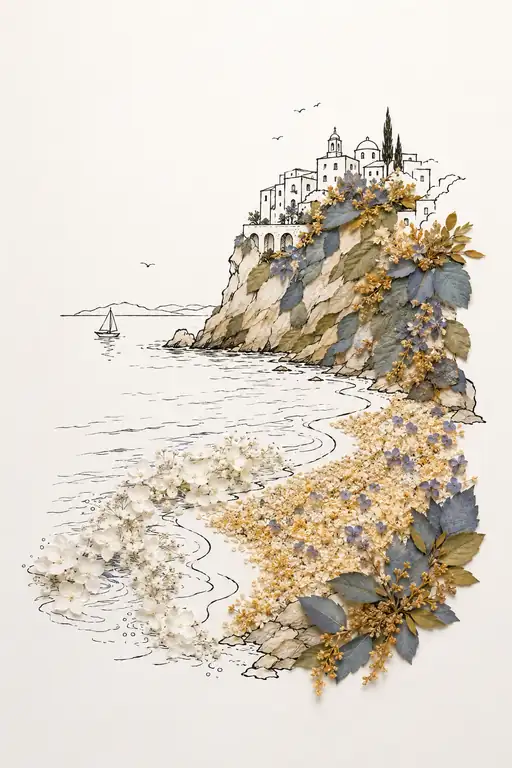 Cliffside Village and the Gilded Shore
 Flower-Laden Haven
 Harbor of Slumbering Tides