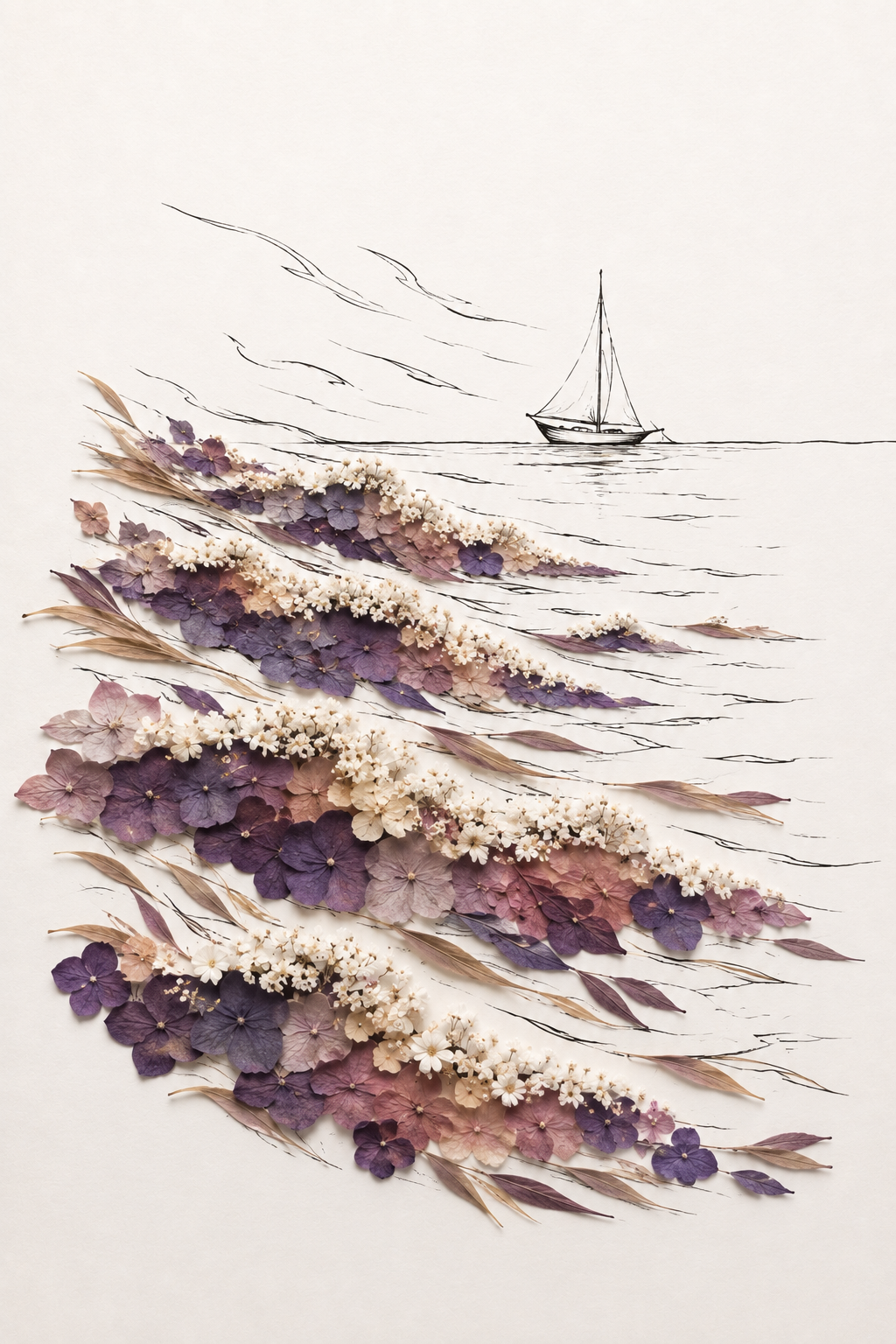
Mauve Tides and the Distant Sail
Critique
Introduction This coastal image combines an ink-drawn sailboat with bands of pressed purple and rose-colored flowers. The scene is spare above and materially rich below, allowing a marine subject to emerge through an unexpected floral vocabulary. Its calm atmosphere depends on controlled asymmetry. Description A single boat rests near the upper right, its tall mast and triangular sail defined by thin black lines. From the lower left, four principal banks of blossoms taper diagonally toward the right. Broad hydrangea-like petals in plum, mauve, and dusty pink are edged with clusters of tiny white flowers, while tan and violet leaves project beyond them. Analysis The diagonal floral bands counter the stable horizon and create a slow outward flow. Their decreasing width establishes recession, and the empty paper around the vessel makes its delicate rigging legible. Fine ink strokes between the bands suggest ripples without competing with the relief. Dark purple masses anchor the foreground, whereas pale blossoms form luminous crests; shallow shadows emphasize the overlap of every layer. Interpretation and Evaluation Rather than depicting water directly, the work treats each wave as a floating garden. The pressed materials retain veins, curled edges, and slight irregularities, so natural aging becomes part of the sea's movement. The composition demonstrates strong economy, the drawing is precise, and the muted color harmony is especially convincing. The narrow white borders on each floral surge prevent the dense arrangement from becoming visually heavy. Conclusion The first impression of decorative blossoms develops into an articulate study of distance and directional rhythm. Through restrained linework and measured layering, the scene balances the stillness of a solitary boat with the gentle, persistent approach of flower-built waves.
Same Subcategory
Similar Artworks
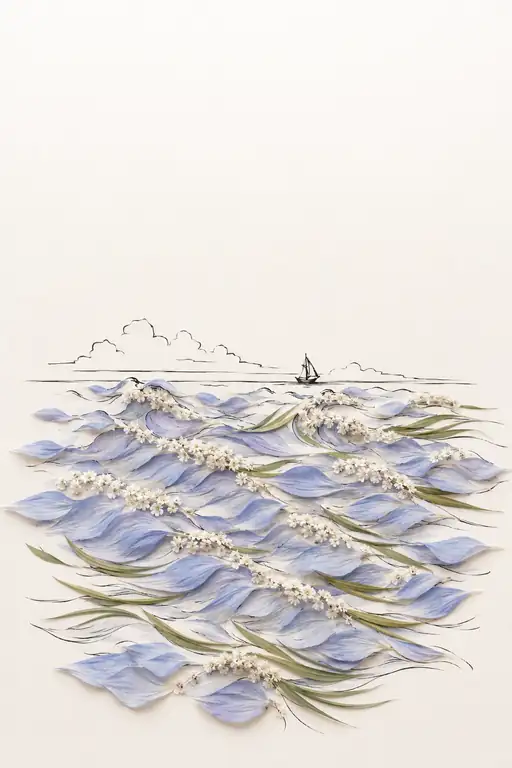 Blue Swells and the Solitary Sail
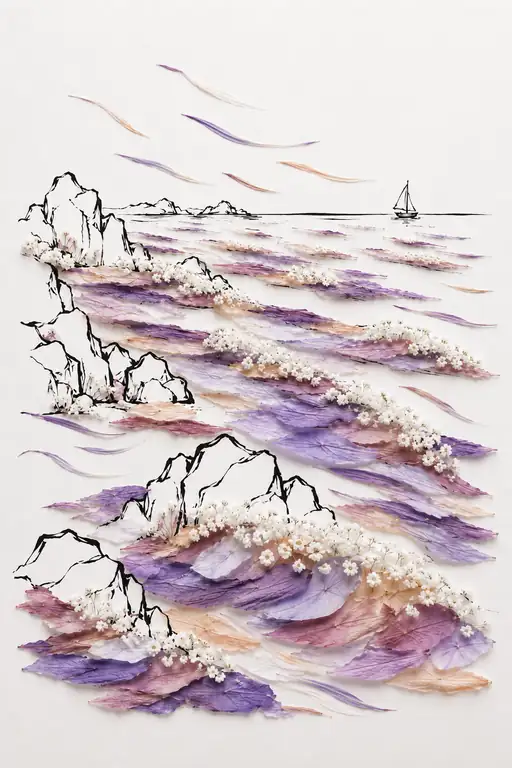 Purple Breakers Against the Coastal Crags
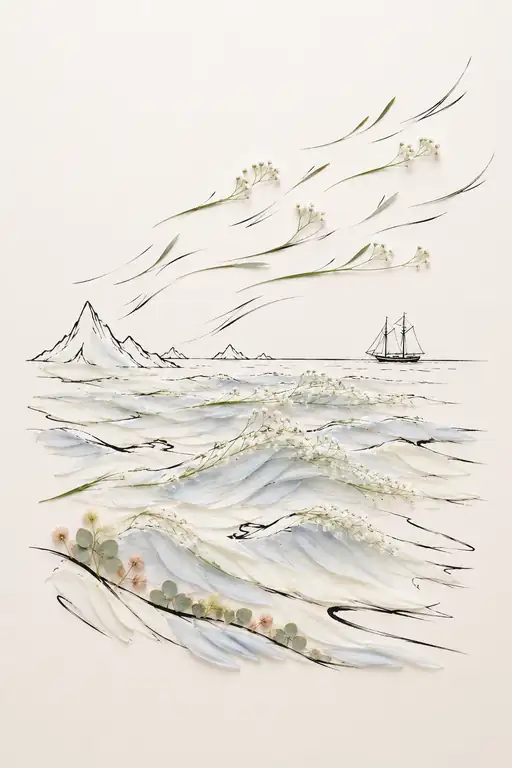 Frigid Waters and the Windborne Sprigs
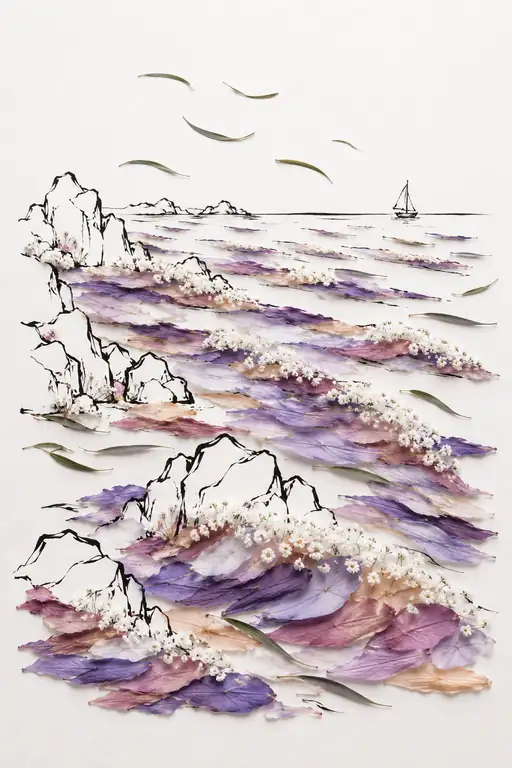 Leaf-Winged Breeze Over the Purple Shoals
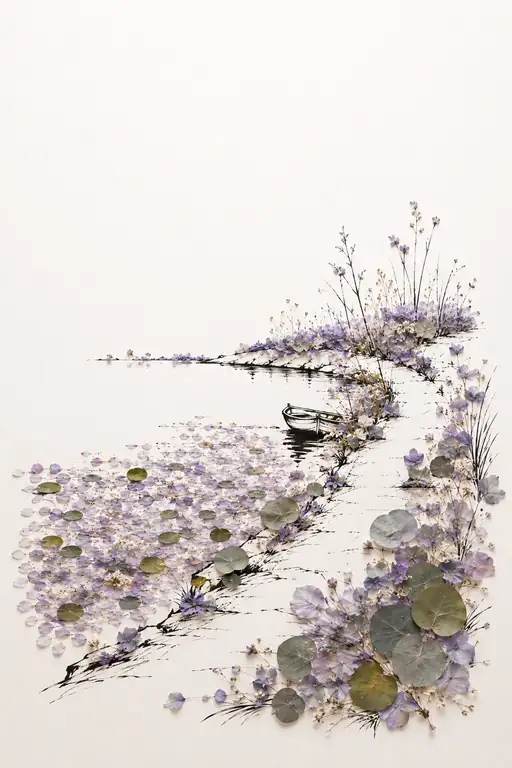 Lavender Inlet and the Moored Boat
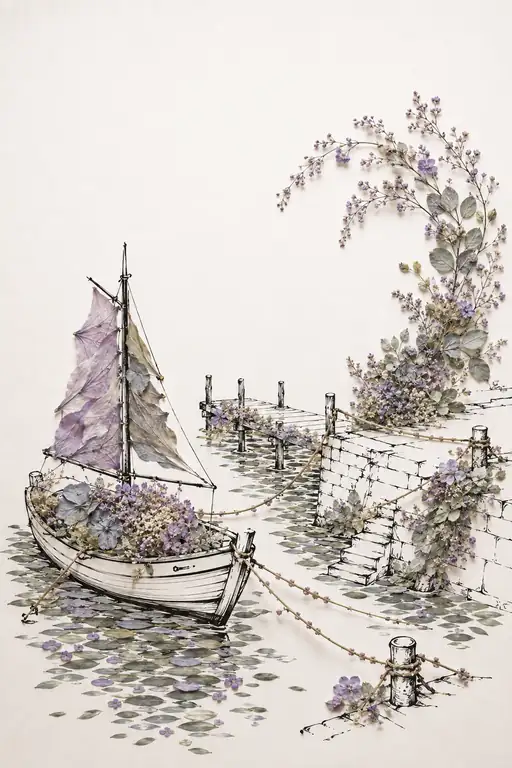 Flower-Laden Sail at the Stone Wharf
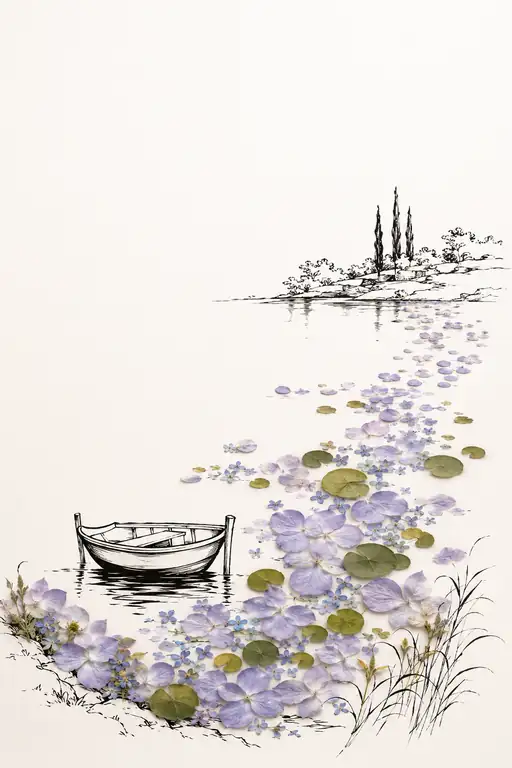 Drifting Stream Toward the Island of Cypresses
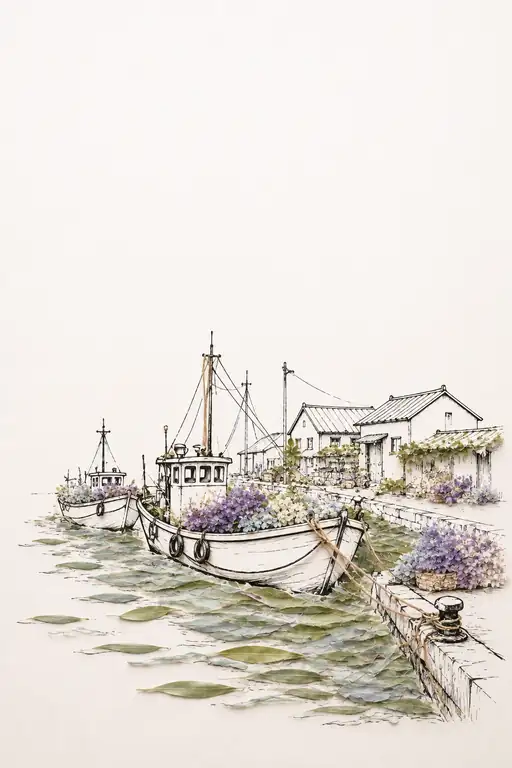 Flower-Laden Haven
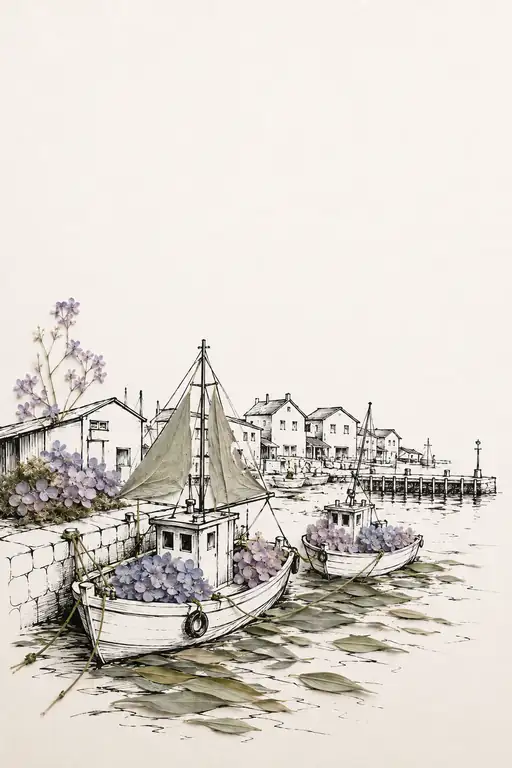 Harbor of Slumbering Tides
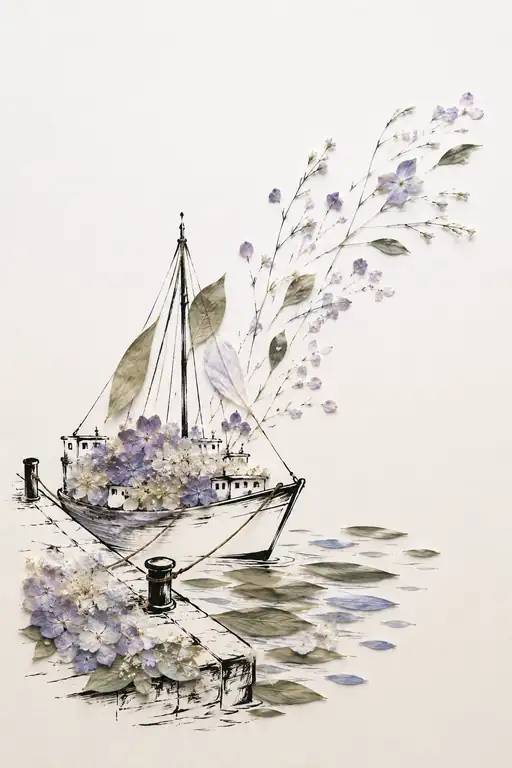 Harbor of the Blossom Voyage