1787953013822
Critique
Introduction This work constructs a domestic rural scene from fine architectural drawing, dried-looking plants, and fabriclike forms. A steep half-timbered house rises at center, while a wheelbarrow, pitcher, basket, lantern, dress, and bonnet spread across the foreground. The limited blue and straw palette unifies this abundance. Description The house has exposed beams, three shuttered windows, a narrow door, and a patchwork roof of blue-gray and cream petals. Blue flowers grow around its base and along a rough fence. At left, a floral pitcher stands behind a wheelbarrow filled with blossoms; at right, a pale dress hangs from the fence beneath a bonnet tied with blue ribbon. Analysis The triangular roof establishes a strong central axis, balanced by the diagonal wheelbarrow and the descending folds of the dress. Repeated blue accents move among shutters, roof, flowers, ribbons, and cloth, binding separate objects into one rhythm. Ink lines clarify structure, while wrinkled paper, petals, twigs, and woven basket surfaces create pronounced tactile differences. Cast shadows make these additions appear to project from the ground. Interpretation and Evaluation No figure is shown, yet work, care, and personal presence are conveyed through arranged belongings. The dress and bonnet introduce vulnerability, while the barrow and basket suggest completed gathering. Detailed draftsmanship makes the imagined dwelling persuasive, and controlled color prevents sentiment from becoming excessive. The technique is original in allowing botanical materials to become architecture, clothing, garden growth, and evidence of use. Conclusion At first the scene appears as a charming inventory of country objects, but closer viewing reveals a carefully composed portrait of absent inhabitants. Its strongest qualities are coherent color, descriptive texture, and the balance between structural precision and handmade irregularity.
Same Subcategory
Similar Artworks
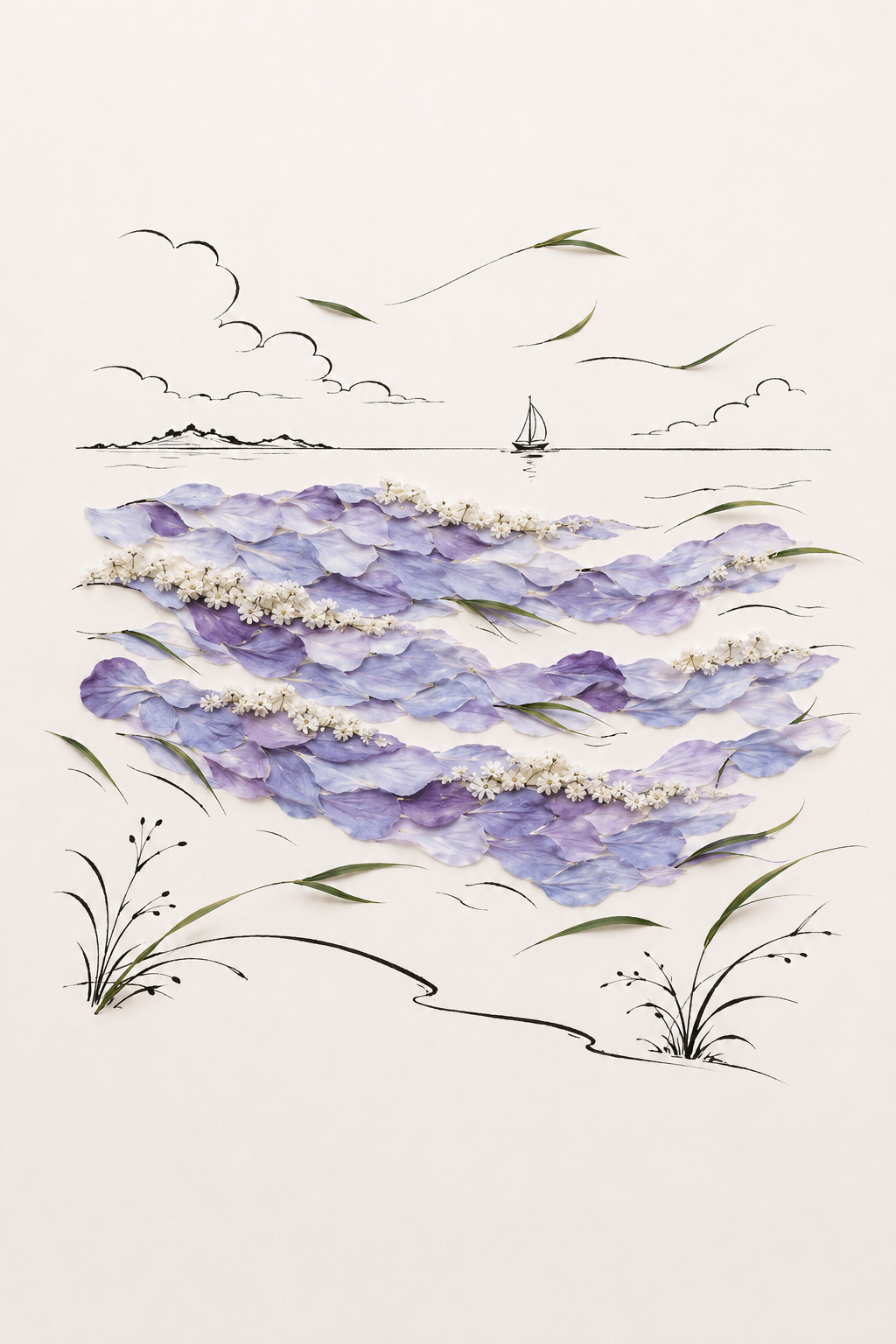
 Ripple Where the Skies Descend
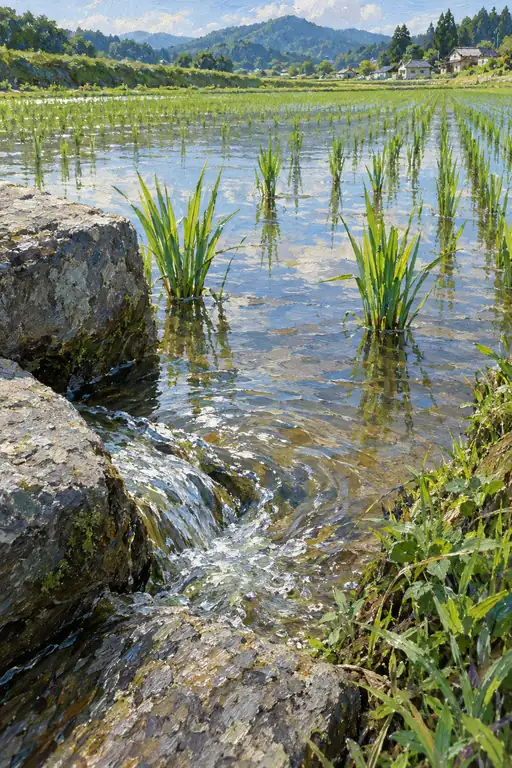 Blue Sky Flowing Through the Stones
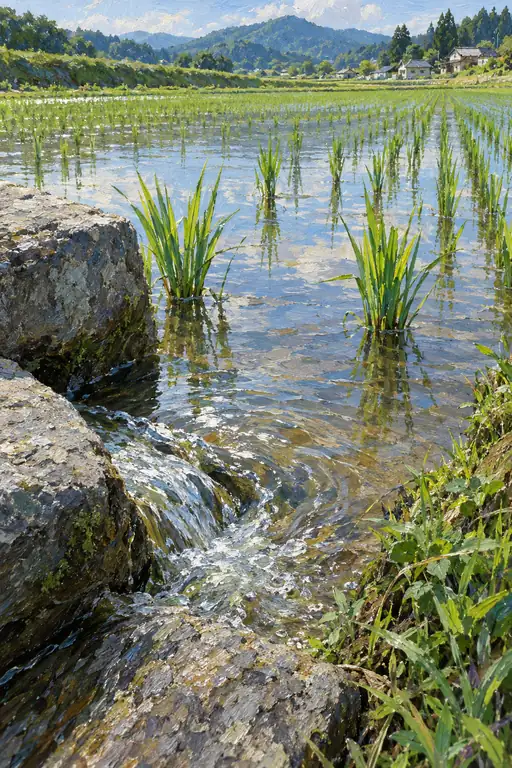 Source of the Living Mirror
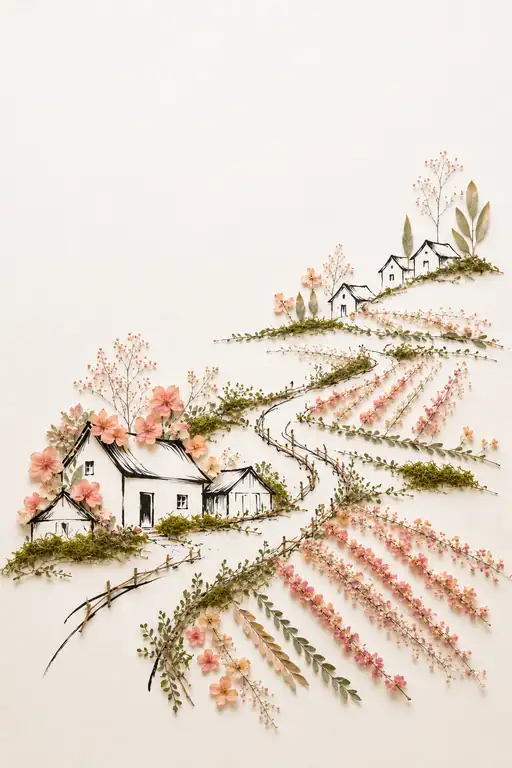 Spring Ascent to the Hilltop Cottages
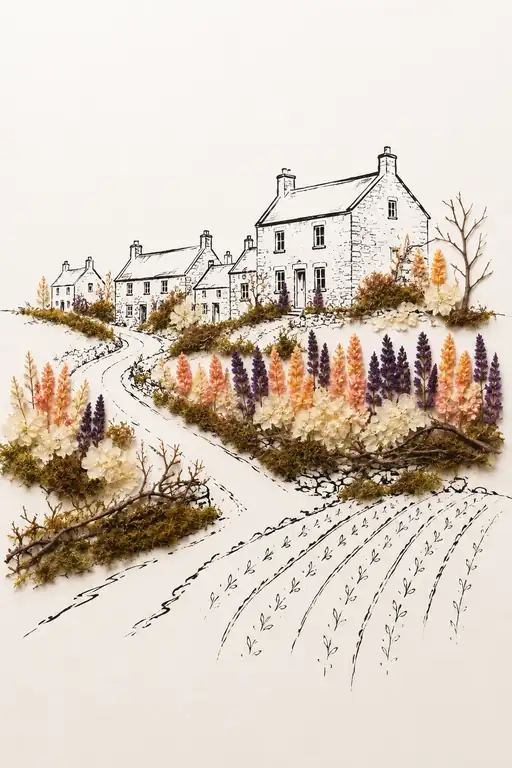 Village Road in Lupine and Stone
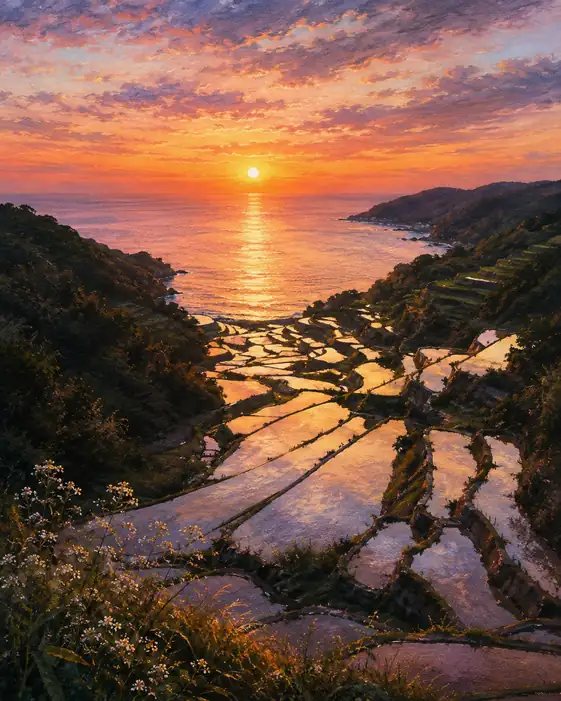 Twilight Mosaic Over the Coast
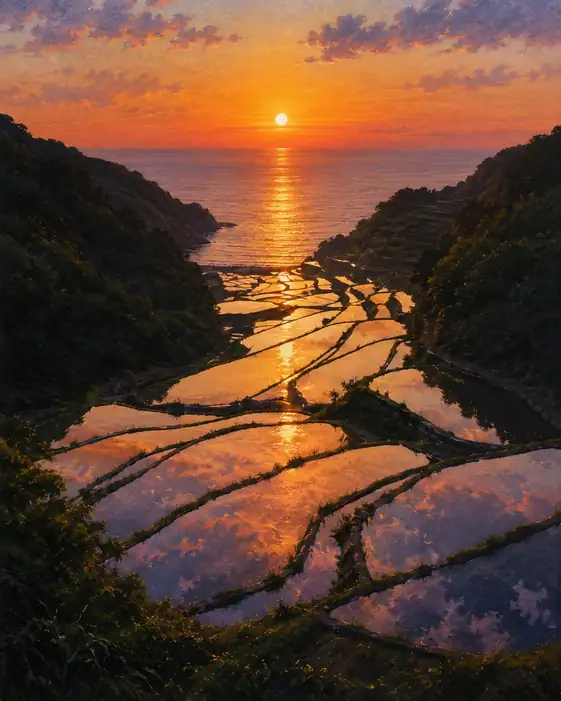 Golden Mirror to the Horizon
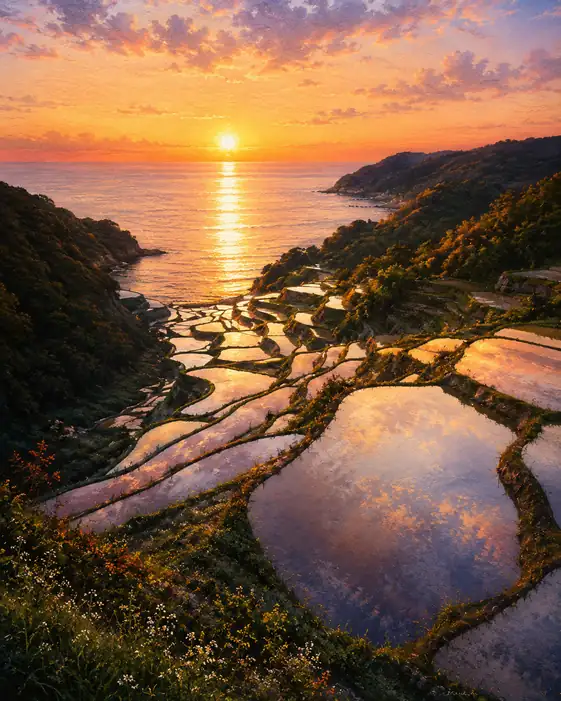 Two Hundred Eighty-Three Skies Asleep in the Cove
 Whispering Harvest and Autumn Petals
 Harvest Wagon in the Autumn Meadow