1787952808106
Critique
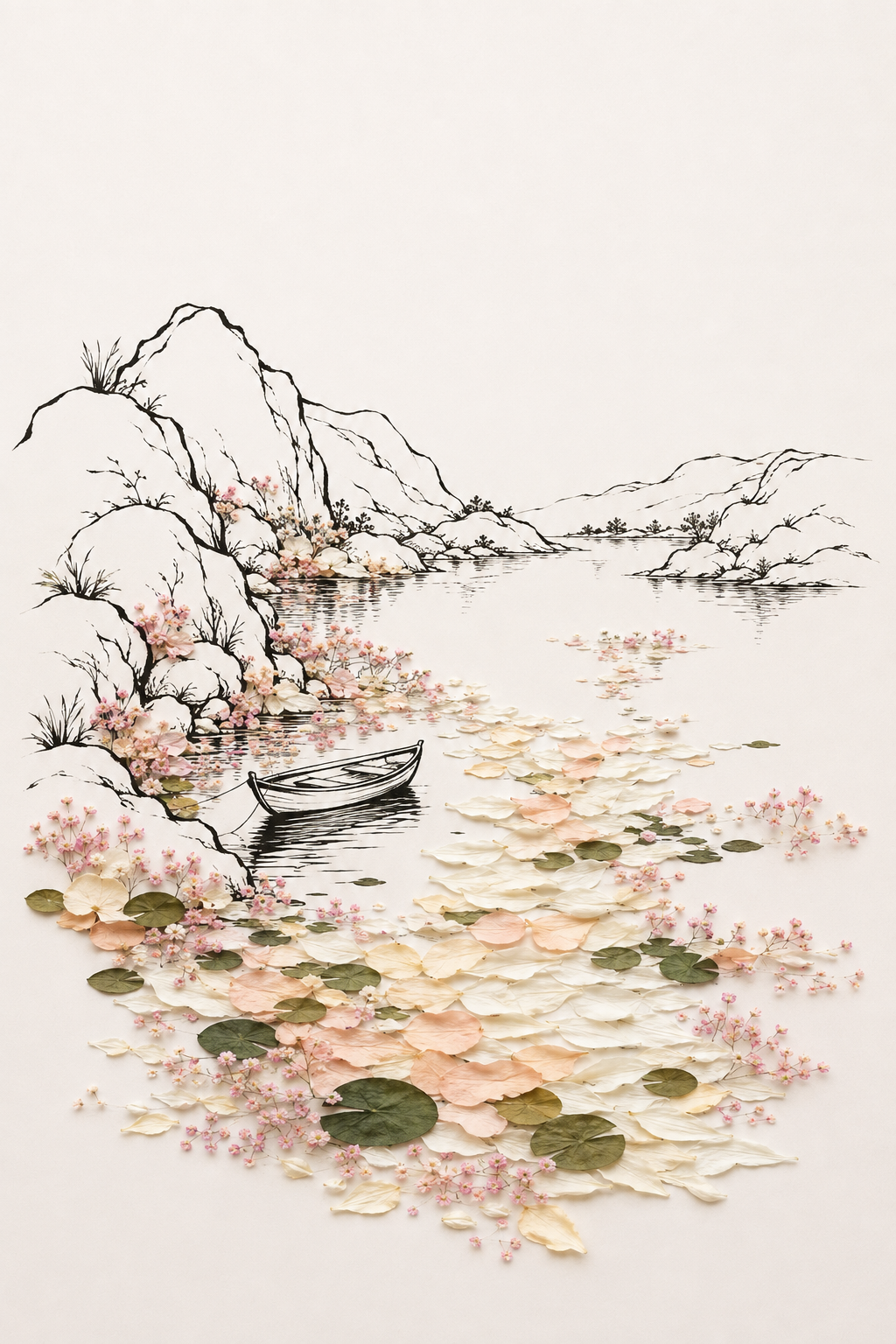
Introduction This work presents a lakeside village through disciplined black drawing and lavender botanical relief. A tethered rowboat occupies the lower left, while clustered white houses rise along the curving far shore. A tall flowering tree on the right links the water, settlement, and open upper field. Description The boat is secured to a single post, and broken reflection lines darken the water beneath it. Loose violet blossoms and round blue-green leaves spread diagonally from the foreground toward the village. Small white sprays interrupt this broad floral current. Behind a low embankment stand stepped houses, narrow cypress forms, shrubs, and a faint mountain outline. Analysis The diagonal band of flowers creates recession through decreasing scale and density. Its soft edges contrast with the crisp architecture and heavy boat contour. Repeated rooflines climb gently to the right, while the tall tree’s branching silhouette carries movement upward. Large untouched areas prevent the many small forms from feeling crowded, and the mooring line quietly connects the nearest object to the shore. Interpretation and Evaluation The scene suggests habitation held in equilibrium with water and seasonal growth. The empty boat implies access and return, whereas the closed, simplified houses remain calm rather than narrative. Strong draftsmanship distinguishes timber, masonry, foliage, and reflection with economical marks. The muted violet, blue-green, and black palette is coherent, and the inventive use of real-looking petals as both surface and perspective gives the composition distinction. Conclusion At first the village and flowers appear chiefly picturesque, but sustained viewing reveals a carefully measured sequence from boat to water, bank, houses, tree, and mountain. The work succeeds by making tactile abundance and spacious restraint support each other.
Same Subcategory
Similar Artworks
 Twilight Reflection of the Lakeside Hamlet
 Where the Lake Whispers to the Flowers
 A Gaze Into the Blue Eternity
 Lemon Breeze Over Lake Como
 Reflections of a Peaceful Dream
 Where the Journey Pauses
 A Luminous Dream by the Shore
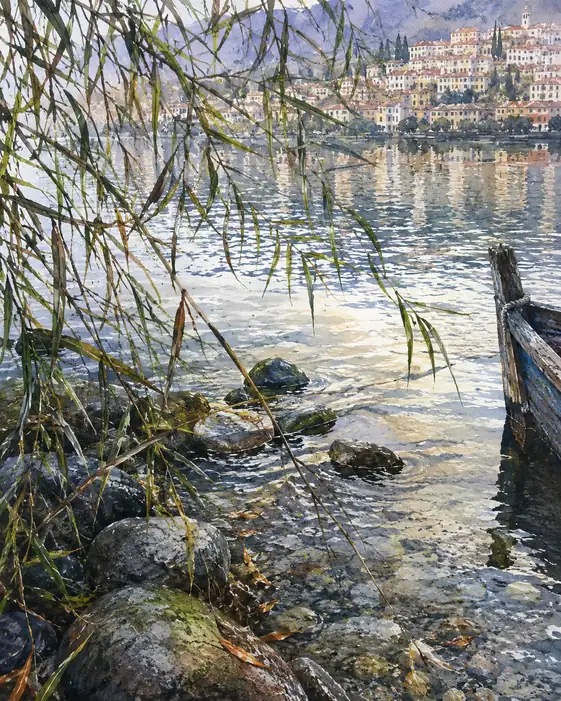 Reflections of a Forgotten Voyage
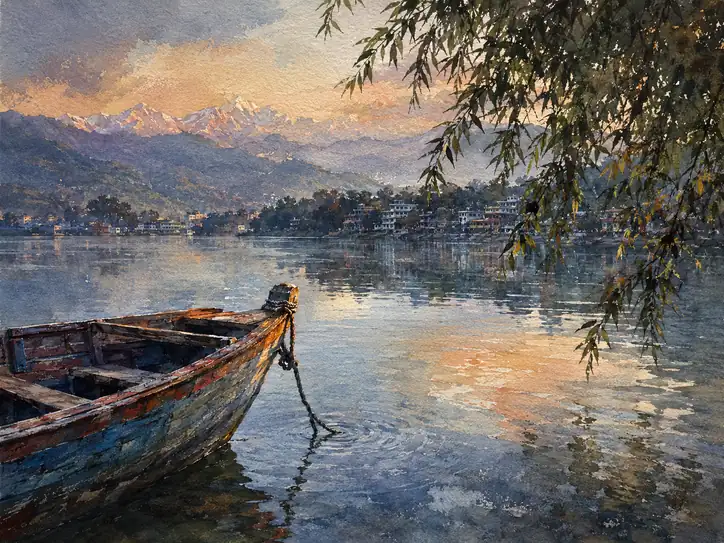 Anchored in Serenity
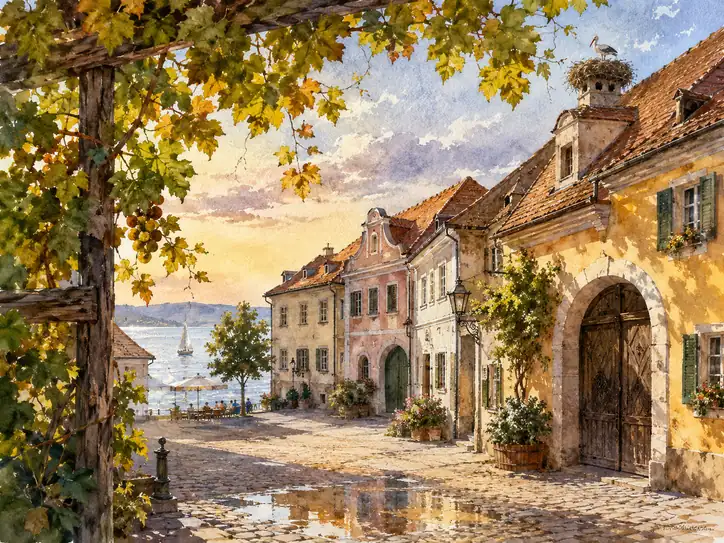 Under the Grapevine and Nesting Sky