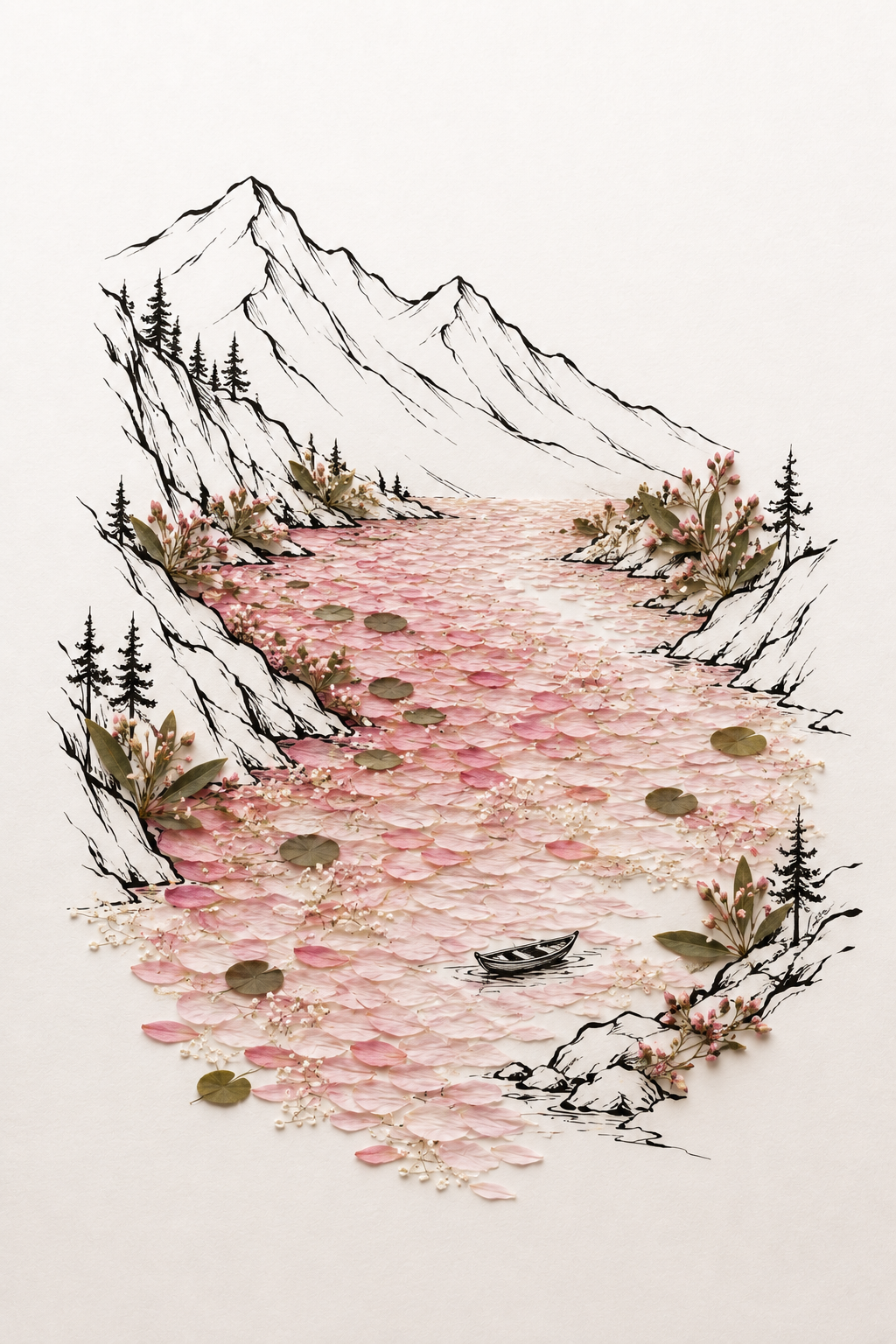
Roseate Valley and the Drifting Skiff
Critique
Introduction This work transforms a mountain lake into a meeting of spare ink drawing and densely layered pink petals. A small boat rests near the lower right, while steep peaks rise along the left and recede toward the upper center. The contrast between austere rock and tactile water immediately organizes the scene. Description Jagged black contours define the mountain walls, scattered fir trees, and narrow inlets. The lake widens toward the foreground, where overlapping petals shift from deep rose to nearly white. Round olive leaves float at irregular intervals, and tiny cream sprigs thread between them. Circular ripples isolate the dark boat from the floral surface. Analysis The tapering channel and descending mountain ridges create convincing recession without conventional shading. Against these light outlines, the petal field has weight, texture, and a subtle directional flow. Dark trees establish vertical accents, while the boat acts as the strongest compact shape. Its angled hull interrupts the broad pink current and anchors the expansive foreground. Interpretation and Evaluation The image proposes water as a substance made from accumulated blossoms, joining landscape and botanical still life. The empty boat suggests pause rather than narrative action, and its solitude heightens the calm scale of the valley. Draftsmanship is economical yet descriptive; the restrained palette and careful distribution of leaves prevent the decorative surface from becoming uniform. The technique is inventive because physical layering carries both color and spatial meaning. Conclusion At first the lake reads chiefly as an ornamental carpet, but closer viewing reveals a disciplined landscape built from contrasts of line, relief, and emptiness. The work balances delicacy with monumental space, making the boat a quiet measure of distance and human absence.
Same Subcategory
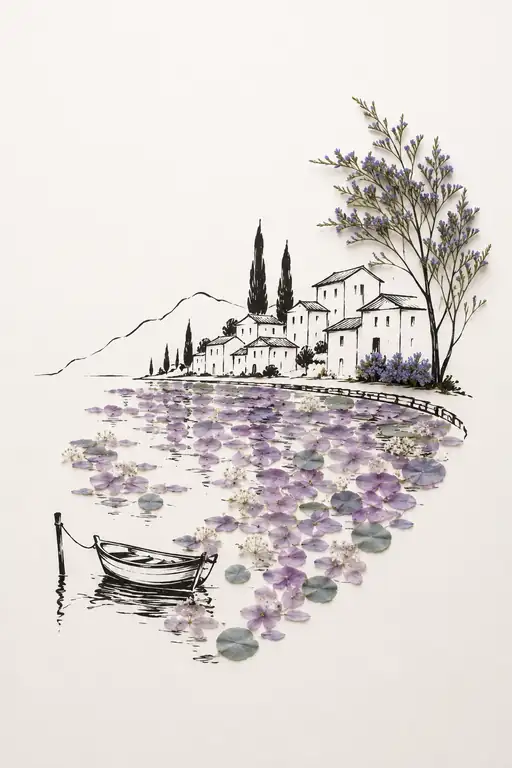 1787952602233
Similar Artworks
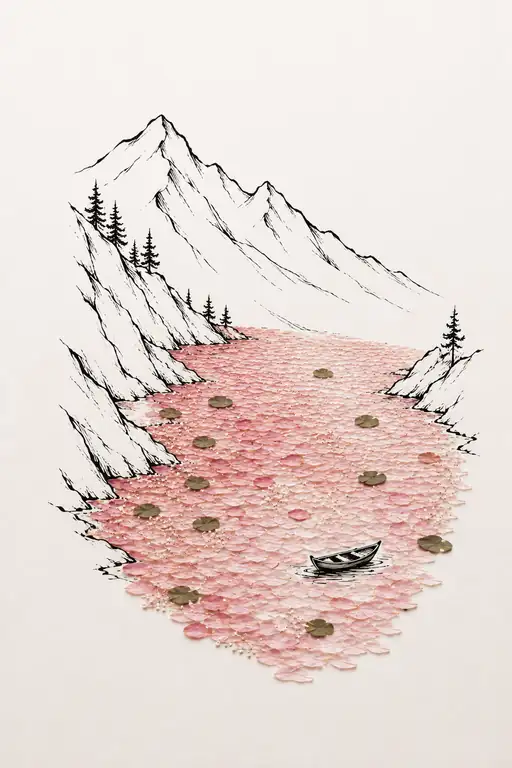 Alpine Gorge of Blossom Waters
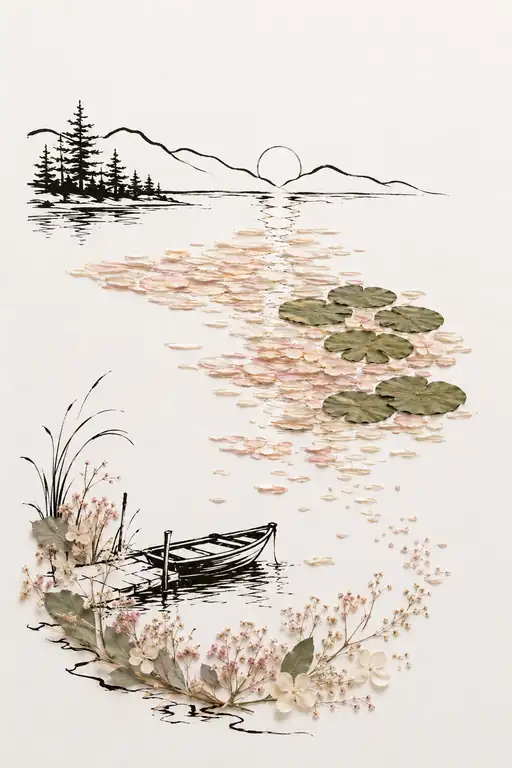 Sunroad Across the Petaled Lake
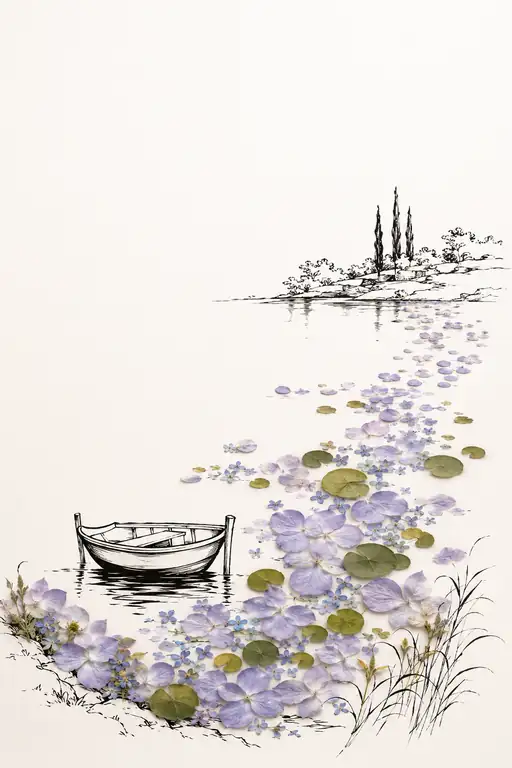 Drifting Stream Toward the Island of Cypresses
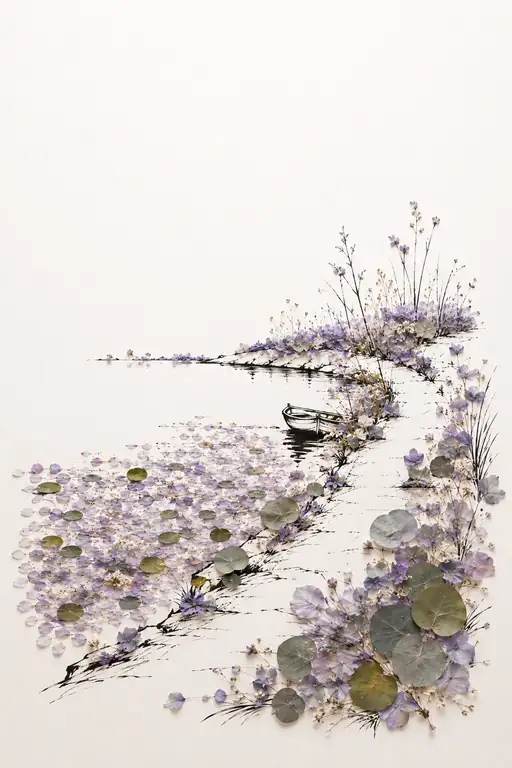 Lavender Inlet and the Moored Boat
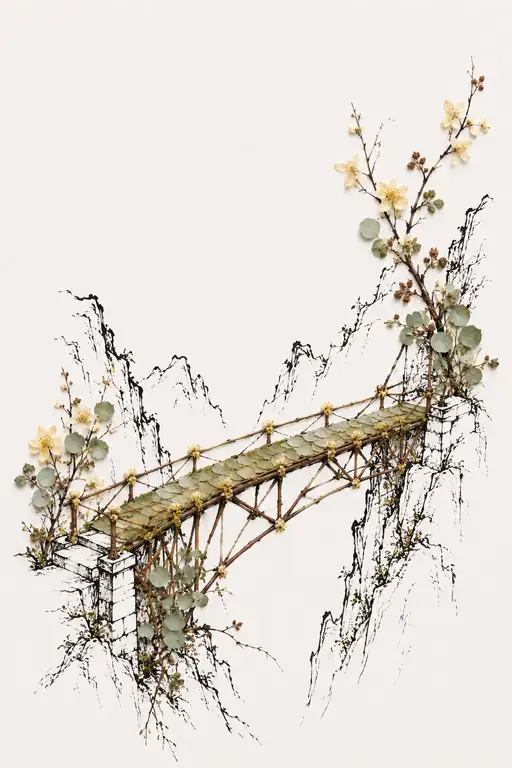 Span Across the Verdant Chasm
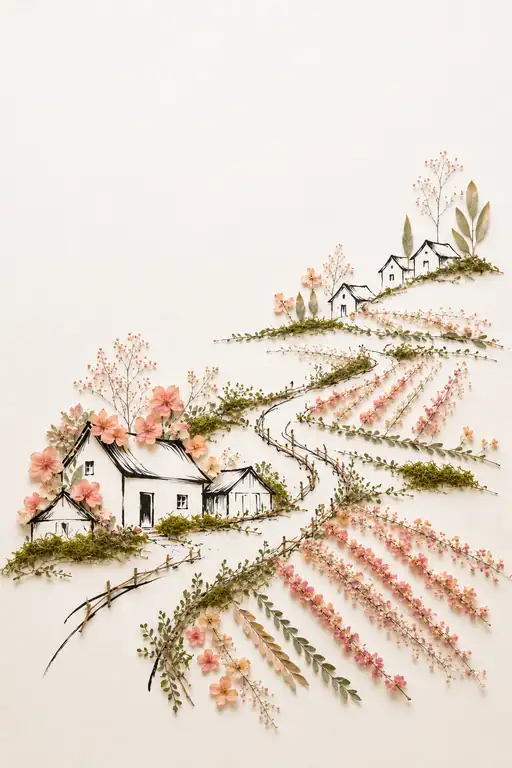 Spring Ascent to the Hilltop Cottages
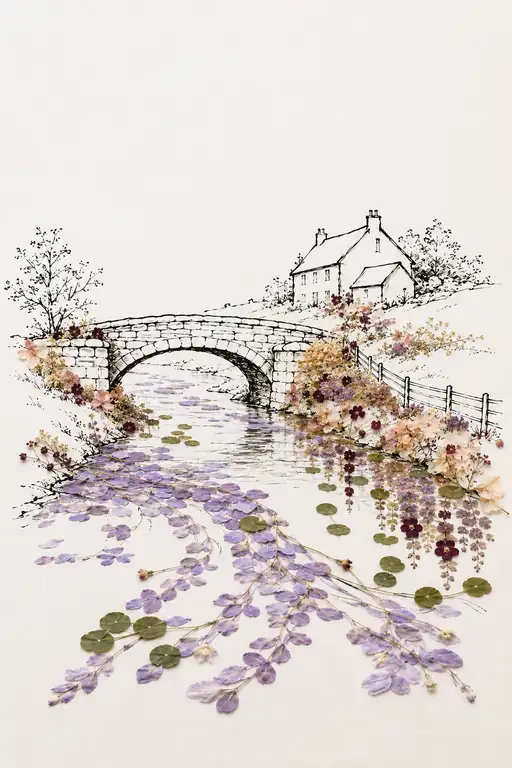 Flow of Blossoms by the Stone Bridge
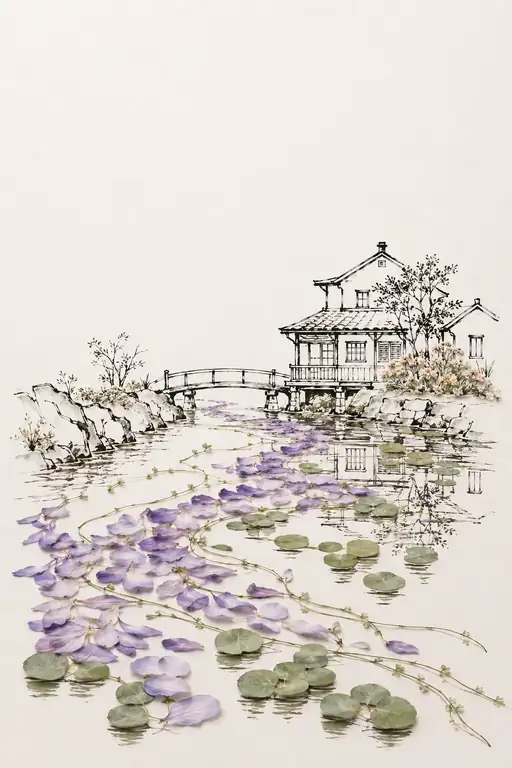 Ripple and Reflection at the Canal House
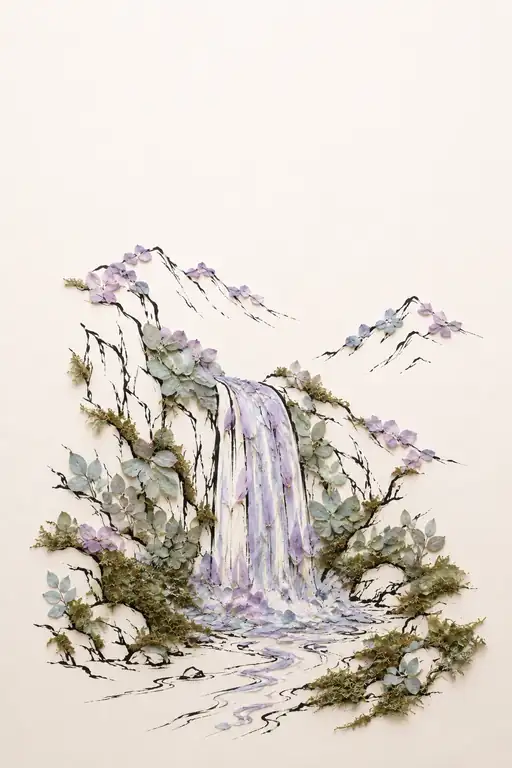 Violet Cascade in Misty Crags
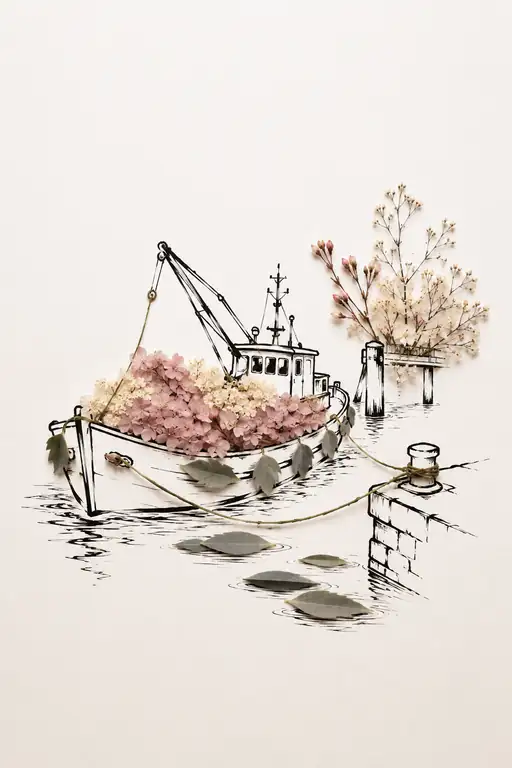 Blossom Cargo of the Harbor Trawler