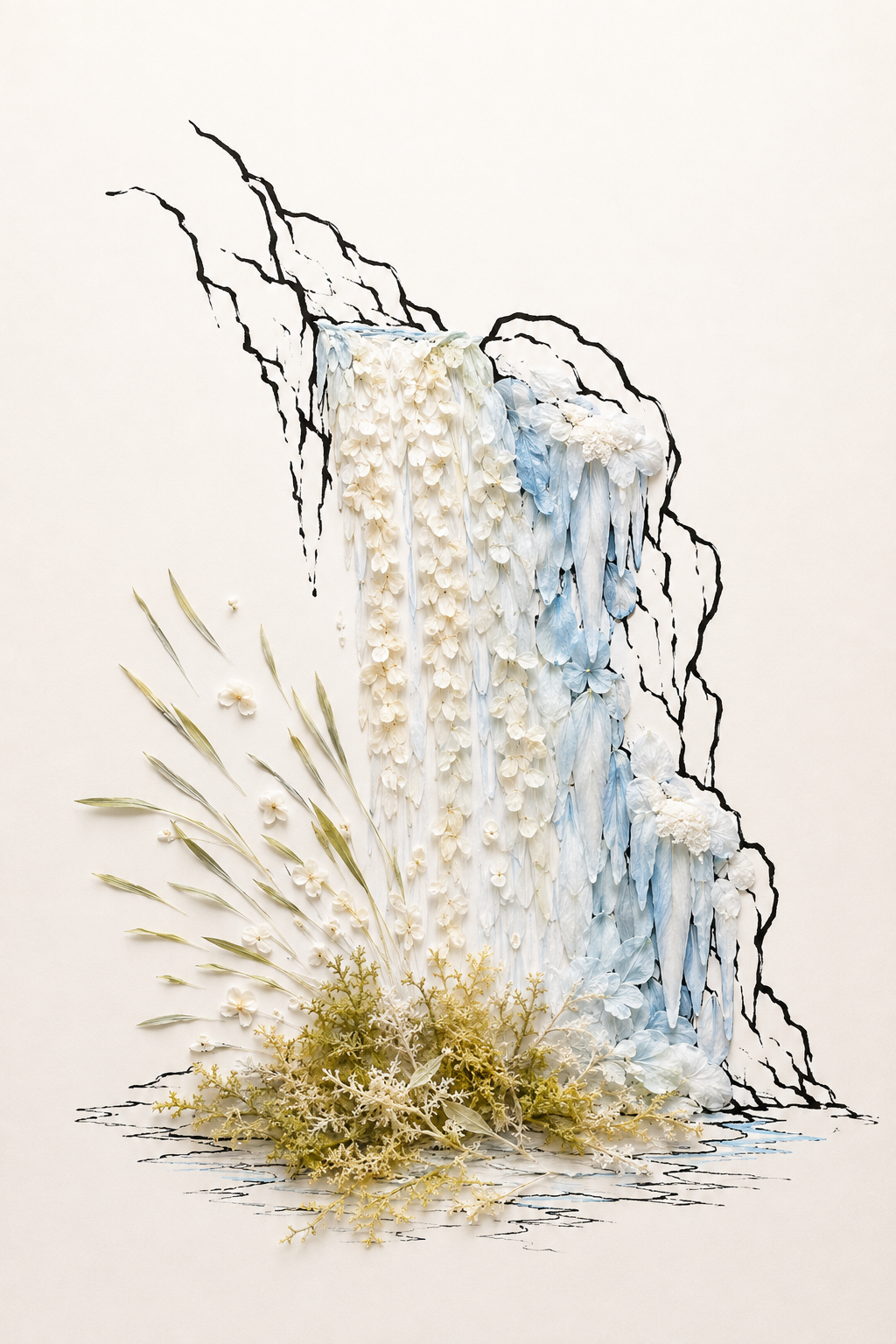
Petal Cascade on the Inky Crags
Critique
Introduction This waterfall uses ink, blossoms, petals, and dried plants. It descends from a cliff into a pool amid paper. Botanical fragility represents water and rock. Description A tall rectangular fall occupies the center, with smaller stepped drops continuing down the right. Cream flower chains and long blue-white petals hang vertically from each ledge. Jagged black lines trace the cliff behind them. At the base, olive and beige sprays form a dense mound, while narrow green leaves and scattered white flowers fan outward to the left. Blue ink marks indicate shallow water. Analysis The principal vertical establishes gravity, countered by the leftward fan of leaves and the diagonal descent of right-hand ledges. Dense floral relief overlaps the sparse cliff drawing, making water physically project from the page. White-on-white distinctions depend on cast shadow, petal edge, and cream variation. Blue accents cool the fall and guide the eye downward. Broad empty margins amplify the concentrated sound and mass at center. Interpretation and Evaluation The substitution of flowers for water captures a paradox: the cascade appears continuous yet is assembled from preserved, motionless fragments. Petals suggest droplets, foam, and eroded stone simultaneously. The dry base plants resemble debris nourished by moisture. Ink provides permanence and direction; botanical material supplies transience. The handling is inventive and technically controlled, especially where relief remains legible against the pale support. Conclusion At first the floral construction may read as decorative, but sustained viewing restores the sensation of falling water. Repetition creates flow, and irregular petal lengths produce changing velocity. The black cliff never becomes fully solid, allowing emptiness to participate in the terrain. By joining still objects to implied motion, the work turns a waterfall into a meditation on preservation, erosion, and renewal.
Same Subcategory
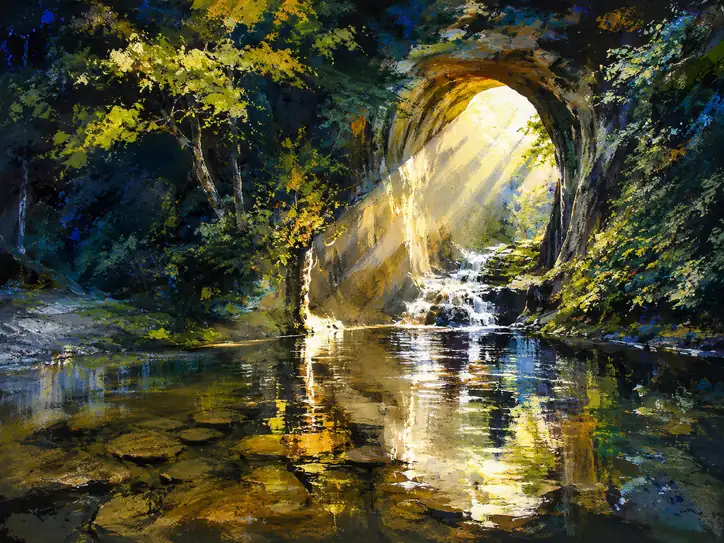 The Bright Passage of Water
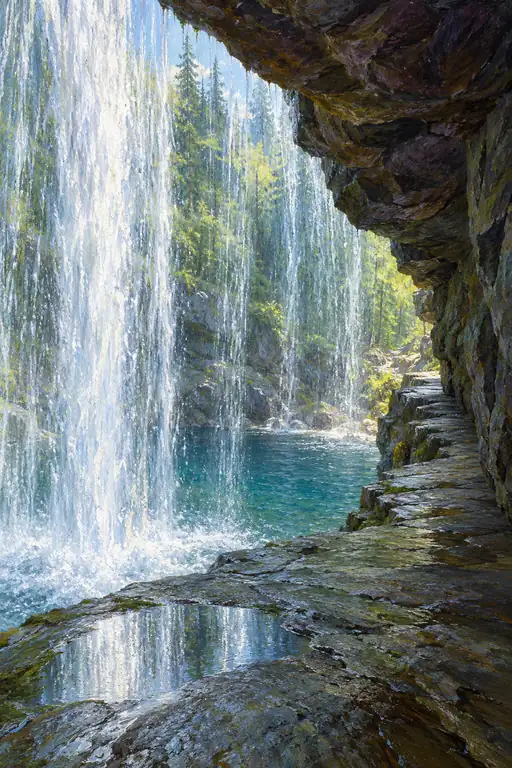 Sanctuary Behind the Veil
Similar Artworks
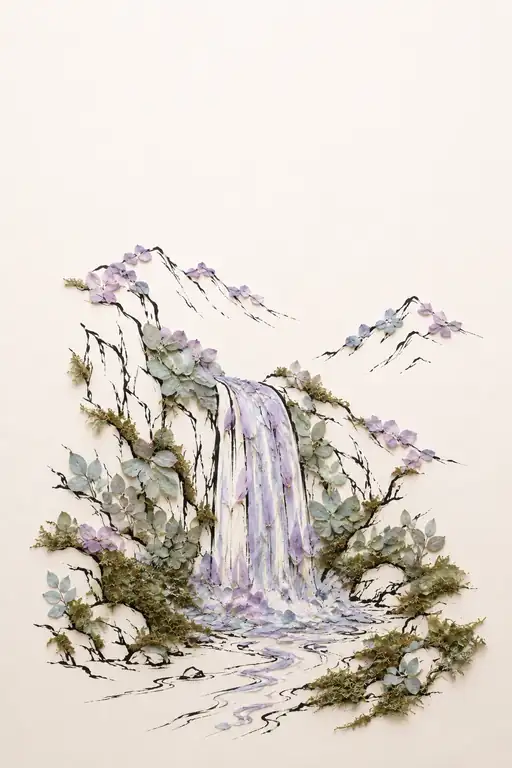 Violet Cascade in Misty Crags
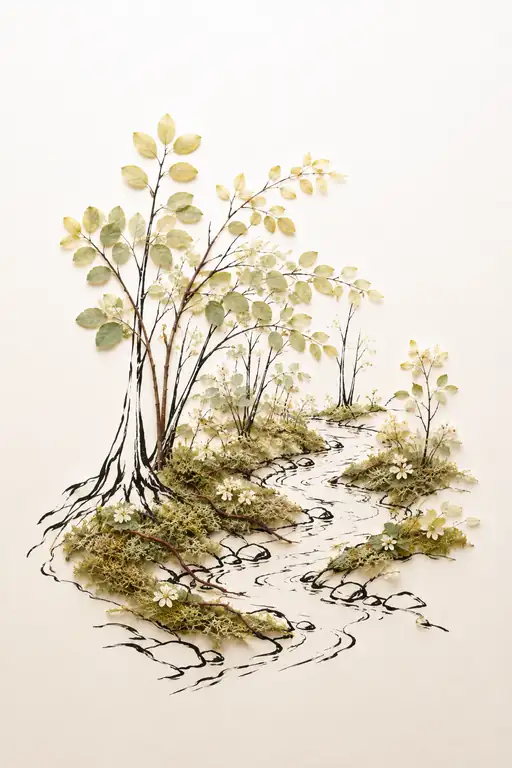 Serenade of the Winding Stream
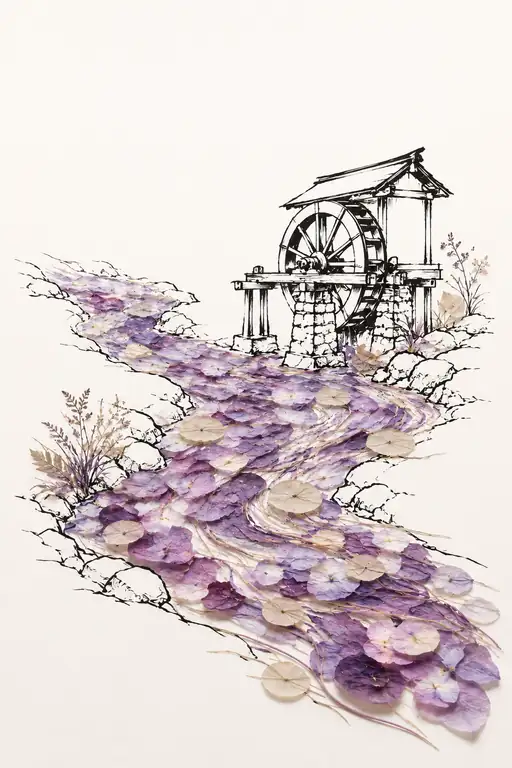 Wheel Turning by the Violet Stream
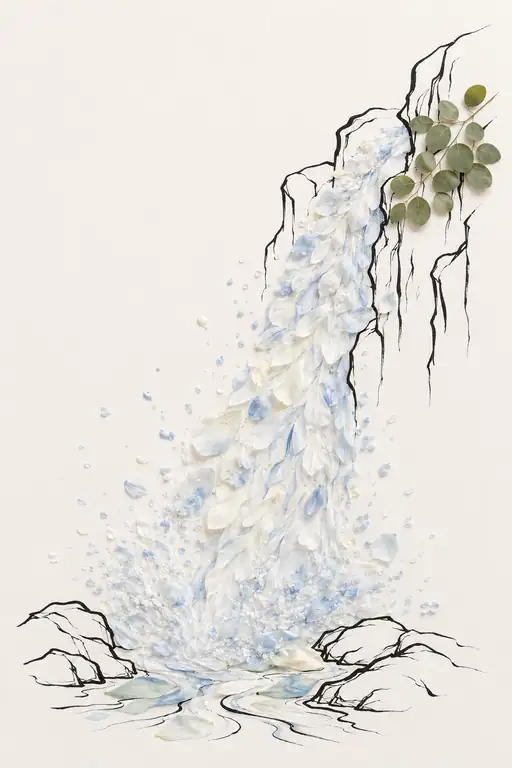 Crystal Torrent in the Silent Gorge
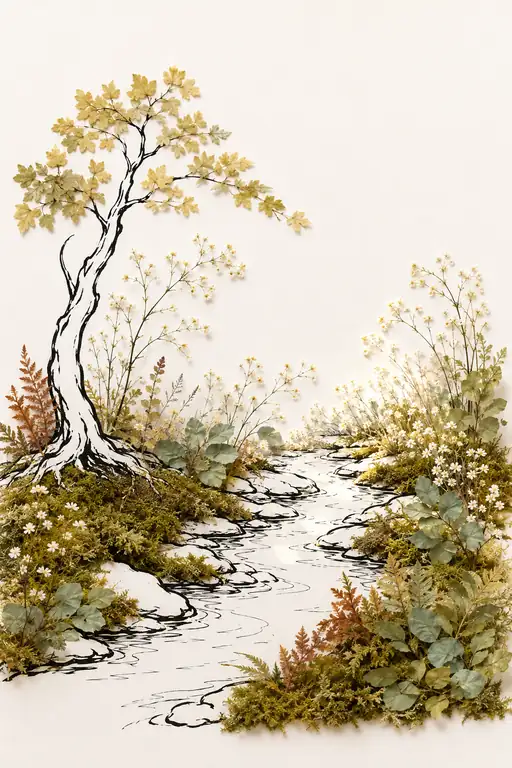 Whisper of the Autumn Stream
 Solitude on the Azure Ridge
 Stone Lantern and Flowing Water in the Moss Garden
 Cascade Down the Cliffside
 Cascade of White Blossoms in the Silent Gorge
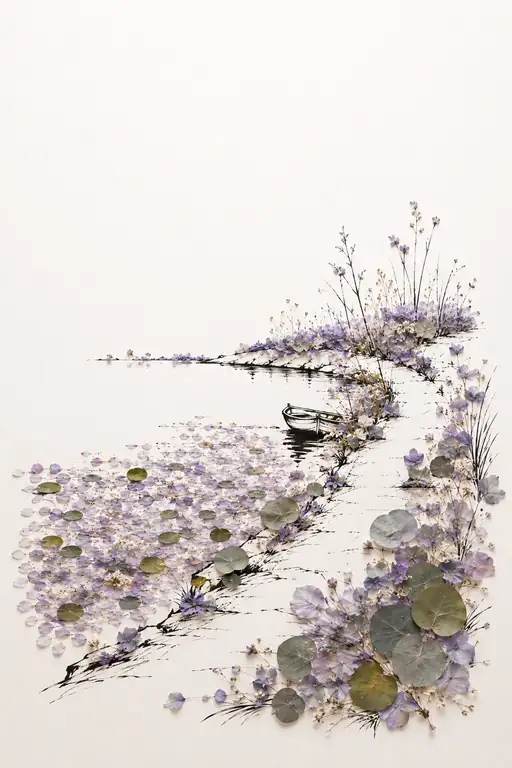 Lavender Inlet and the Moored Boat