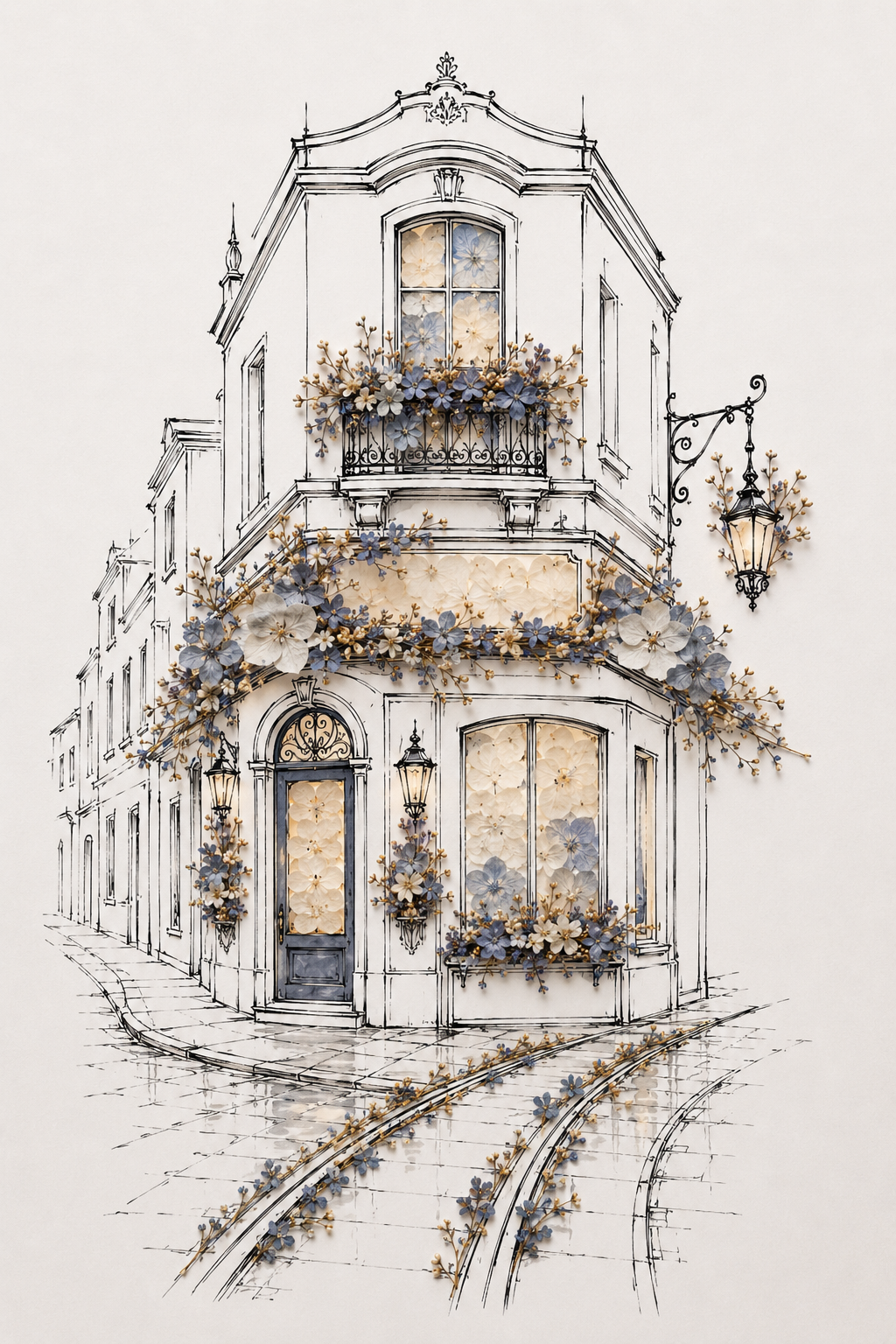
Festoon of the Corner Salon
Critique
Introduction This architectural portrait places a corner house at two curving tram tracks. Black linework defines walls, while cream and blue flowers occupy windows, balconies, and cornices. The elevation is softened by botanical relief and a wet street. Description The three-story building culminates in a scalloped parapet with a small crest. A central upper window opens above an iron balcony overflowing with blue blossoms and gold seed sprays. A broad floral garland crosses the middle cornice. Below, an arched dark door and large bay window face the viewer. Hanging lanterns mark both corners, while two tracks curve apart across the reflective foreground. Analysis The facade is organized by a powerful central axis, repeated in parapet, window, balcony, and door. Side walls recede at different angles, preventing the symmetry from becoming flat. Horizontal flower bands counter the vertical elevation. Cream petals merge with white plaster, whereas dusty blue flowers articulate openings and edges. The rails and their floral fragments expand toward the viewer, linking precise ink perspective to tactile foreground space. Interpretation and Evaluation The building seems dressed for a civic or private celebration, yet no event or inhabitant is shown. Flowers therefore act both as ornament and as evidence of care. Their placement at thresholds—windows, door, balcony, corner—emphasizes exchanges between inside and street. The technical balance is assured: dense collage never obscures the facade's proportions, and fine reflections keep the lower field airy despite its converging lines. Conclusion At first the house reads like a formal portrait, but branching rails destabilize that stillness. They offer multiple routes around the corner, while blossoms extend the facade into the street. The isolated right lantern provides an asymmetrical accent. Measured drawing and botanical color make architecture ceremonial, porous, and expectant.
Same Subcategory
Similar Artworks
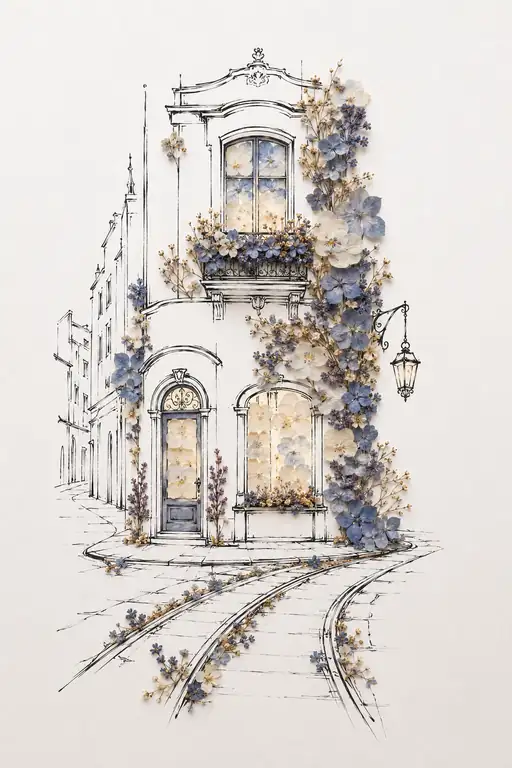 Azure Hydrangea at the Street Corner
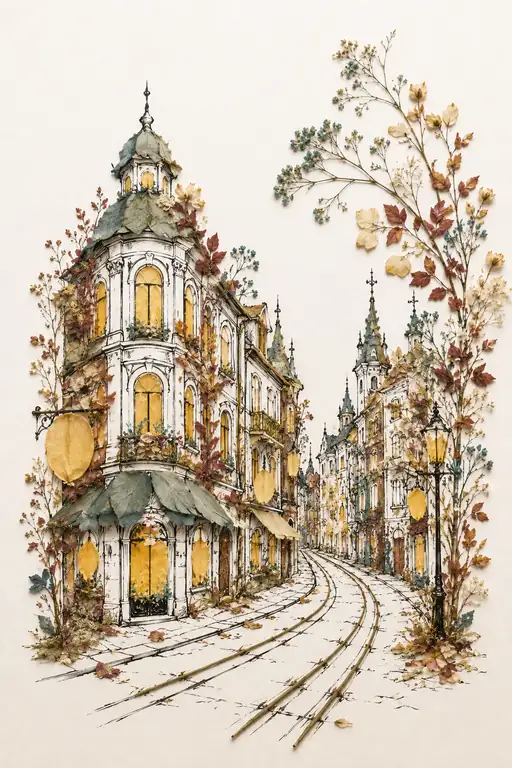 Autumn Nocturne Along the Tramline
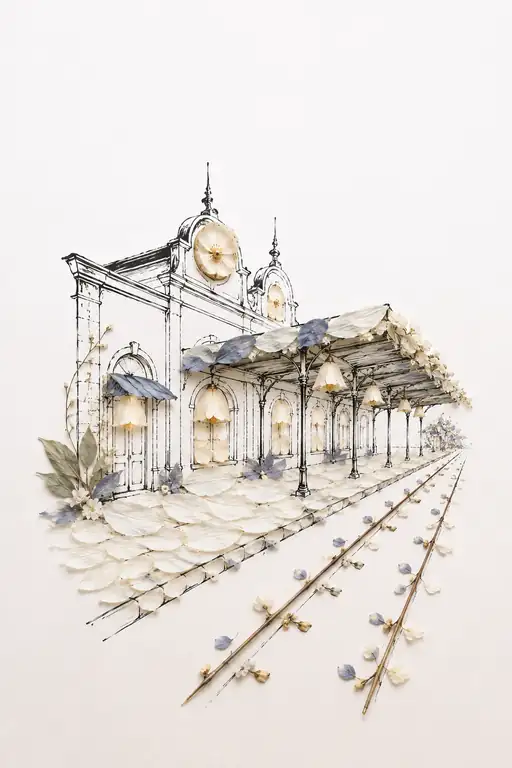 Station of the Silent Departure
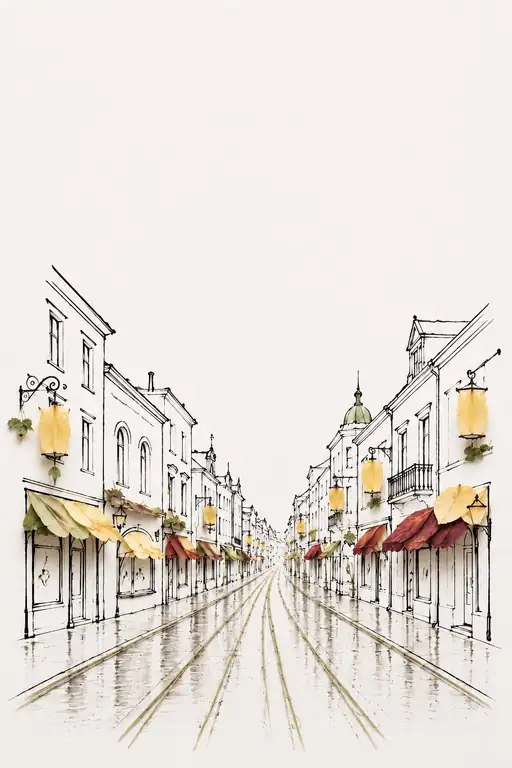 Quiet Convergence After the Rain
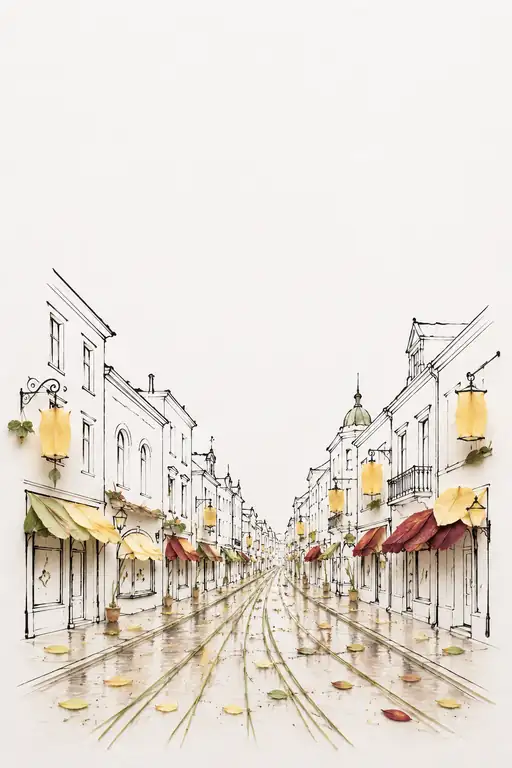 Autumn Rain on the Avenue
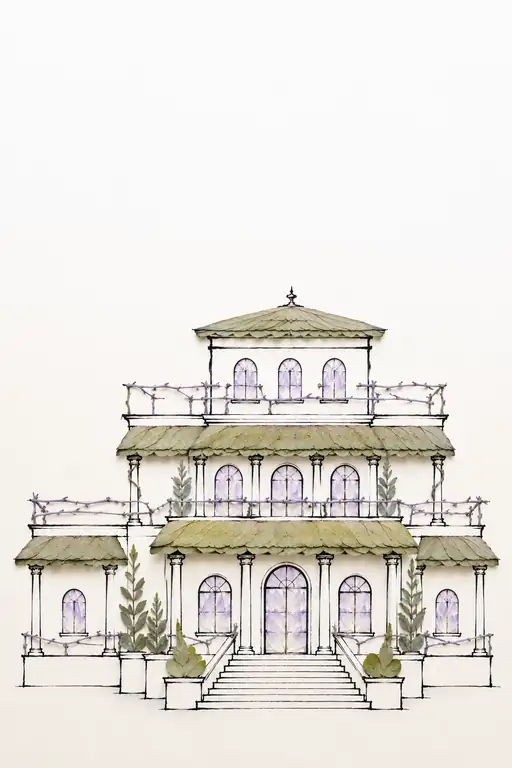 Pavilion of Petal and Tier
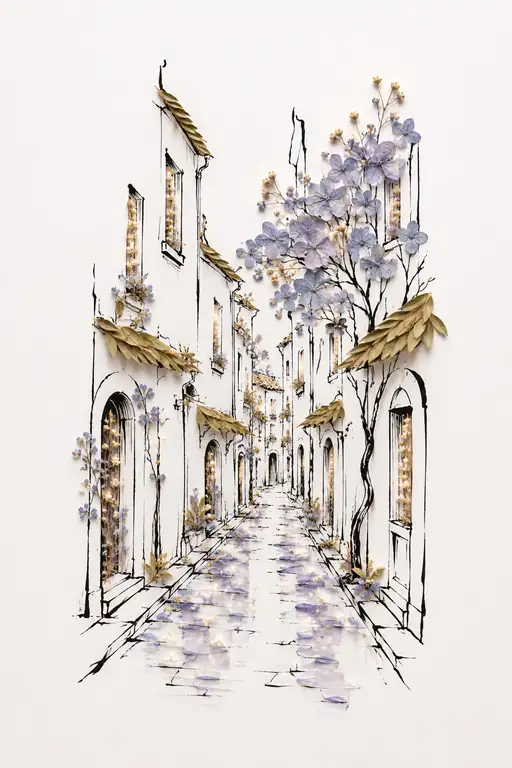 Deep into the Wisteria Lane
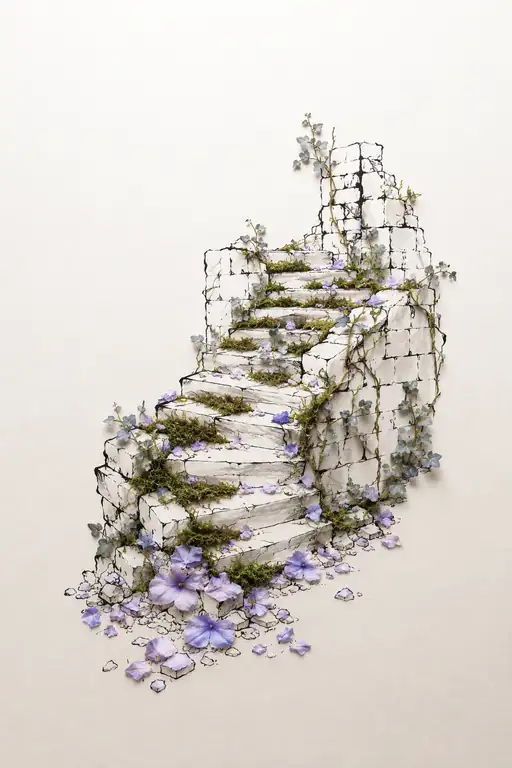 Ruined Stairway and the Mossy Steps
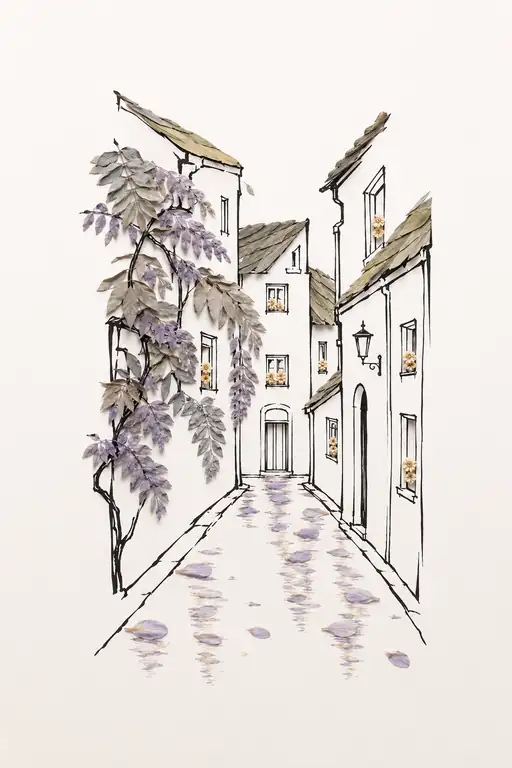 Wisteria Lane Overlooking Cobblestone
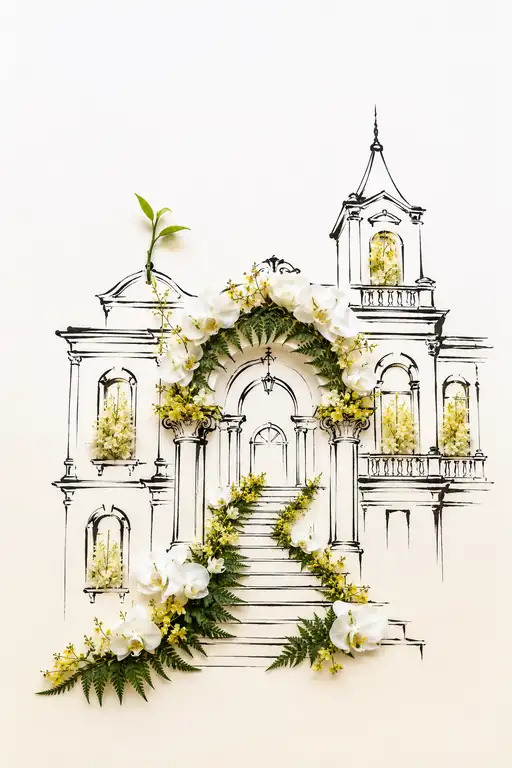 Ascending Grace to the Sacred Portal