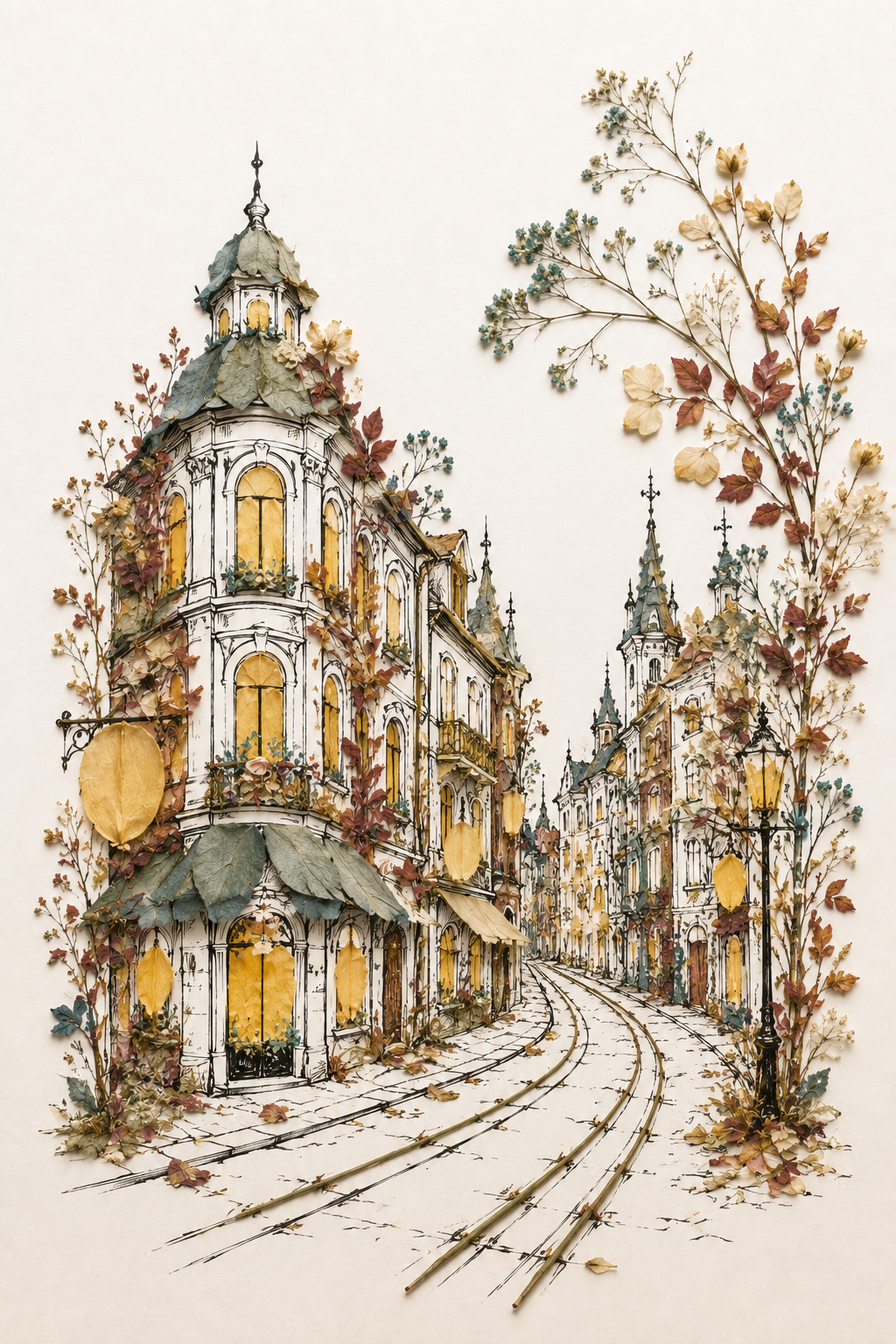
Autumn Nocturne Along the Tramline
Critique
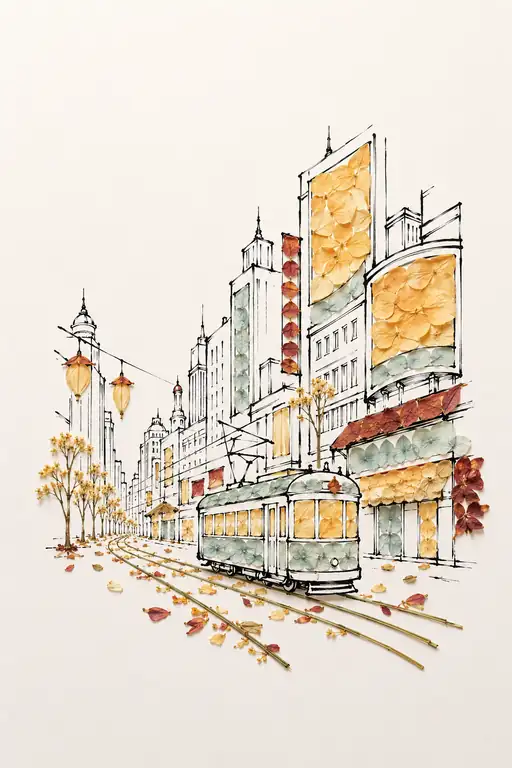
Introduction This streetscape imagines a European town in autumn, where ink facades, curving rails, and dried leaves share one ground. Amber windows glow beneath slate roofs, while botanical branches rise beyond the architecture. Description A large corner building dominates the left, crowned by a domed turret and narrow finial. Smaller gabled and spired buildings recede along both sides of a street that bends toward the center. Four rails sweep outward across the foreground. Golden leaf membranes fill windows and lamps, red-brown foliage climbs balconies, and branching sprays of blue berries arch over the right skyline. Analysis The converging facades establish deep recession, while the curved rails enlarge toward the viewer and supply bodily momentum. Vertical towers and plant stems counter their horizontal sweep. Ochre window shapes repeat at decreasing scales, carrying warmth into the distance. Black pen lines provide structural precision; brittle leaves, veined petals, and raised seed clusters introduce irregular relief. The broad blank sky keeps these dense lower textures legible. Interpretation and Evaluation Architecture and vegetation do not simply coexist: each borrows the other's behavior. Buildings branch into turrets, plants climb like ornament, and rails resemble long stems laid across the street. The absence of figures lets illuminated windows and fallen leaves imply inhabitants indirectly. Perspective is confidently managed despite the added physical materials, and the restrained palette of ochre, burgundy, blue-green, and white sustains a coherent autumn mood. Conclusion The first impression is nostalgic elegance, but prolonged looking reveals exchange between constructed and organic form. Rails promise transit, yet scattered leaves mark a pause. Tall sprays exceed the roofs and make seasonal growth larger than civic order. Precise drawing and collage turn an empty street into a meditation on habitation, change, and remembered warmth.
Same Subcategory
Similar Artworks
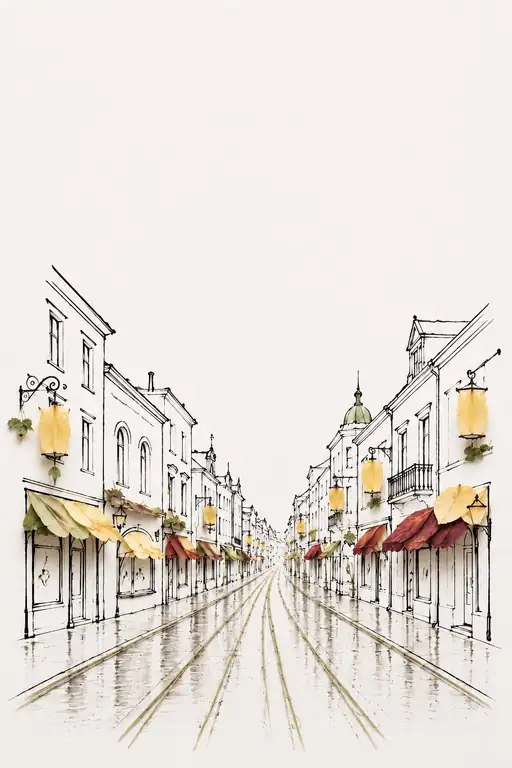 Quiet Convergence After the Rain
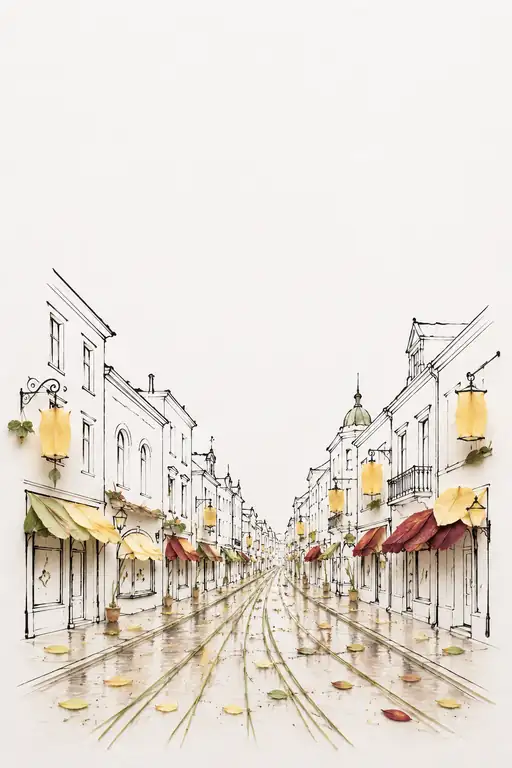 Autumn Rain on the Avenue
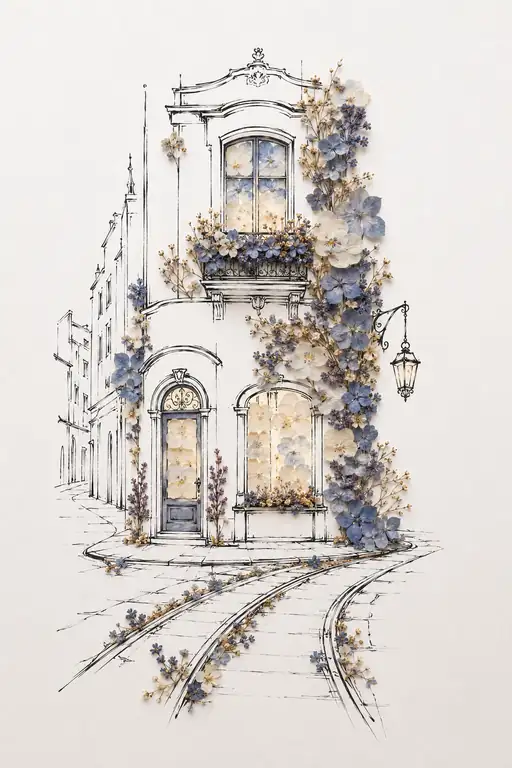 Azure Hydrangea at the Street Corner
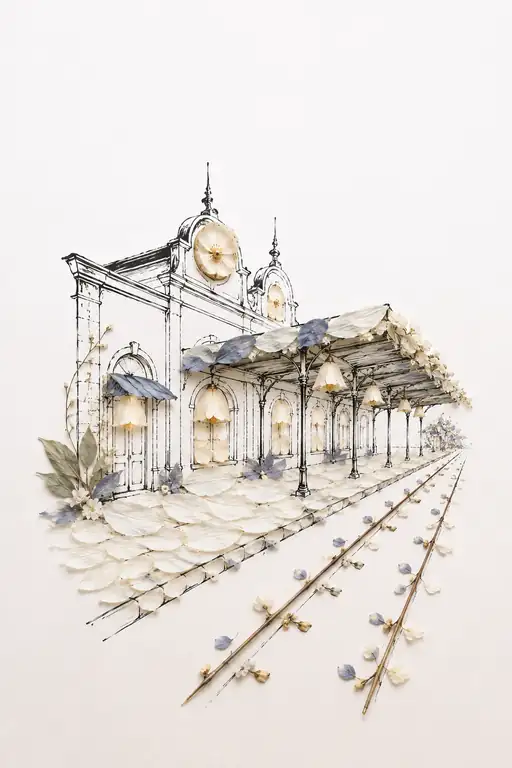 Station of the Silent Departure
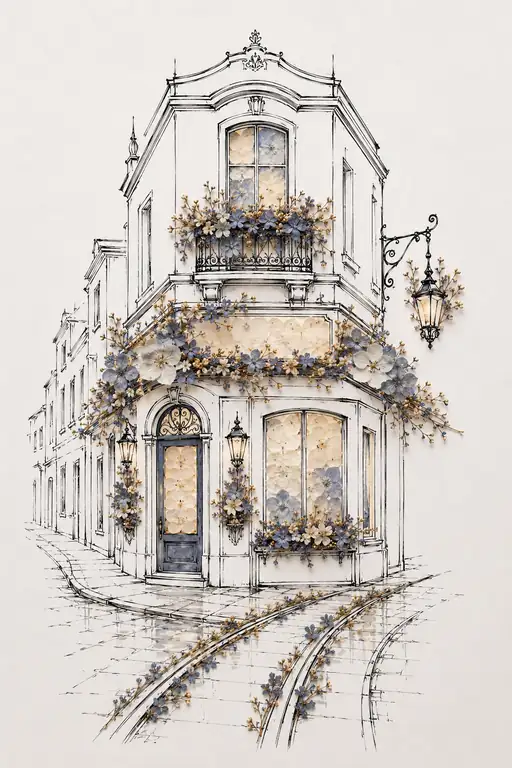 Festoon of the Corner Salon
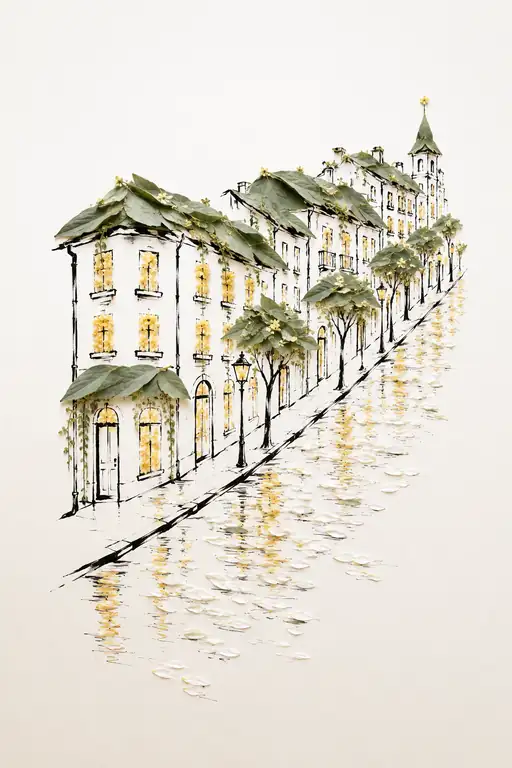 Golden Lights Ascending the Rain-Washed Hill
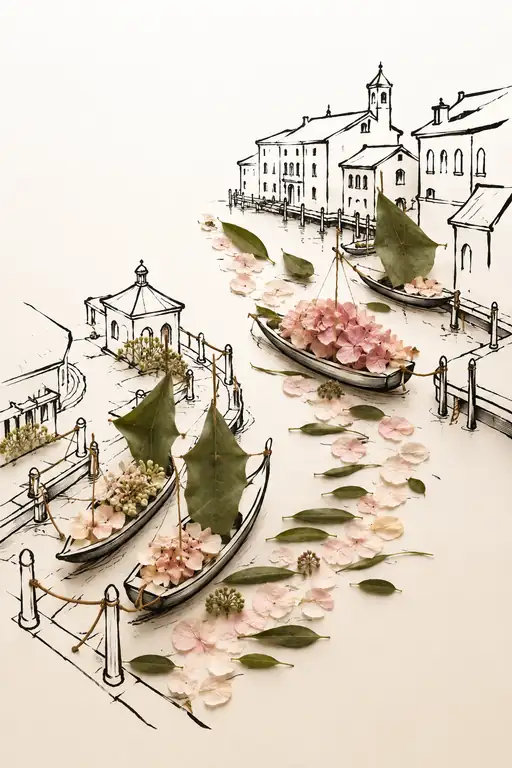 Waterway of Drifting Petals
 Pavilion of Petal and Tier
 Autumn Transit Along the Golden Boulevard
 Ruined Stairway and the Mossy Steps