
Verdant Canopy Above the Fortress
Critique
Introduction This painting sets a black-and-white Japanese castle above a steep stone foundation, viewed from a low garden position and encircled by spring foliage. The architecture is held within an oval canopy of branches, blossoms, and saturated sky, combining grandeur with sheltered discovery. Description The stone base occupies the lower middle and right, its corner rising toward projecting white supports. Above it, dark galleries and multiple triangular gables stack toward a compact tower. Pink-white blossoms cross the lower left, while fresh yellow-green leaves enter from the top and right. Blue sky and streaked white clouds remain visible through the crown-like opening around the roof. Analysis The masonry corner establishes two receding planes and a central axis. Rooflines alternate left and right, creating a zigzag ascent. Surrounding branches bend inward as a secondary frame countering the tower's geometry. Charcoal walls make the cream eaves luminous; green and pink separate against cobalt blue. Directional paint marks animate every surface while preserving architectural edges. Interpretation and Evaluation Here the castle is encountered through nature. The foliage frame suggests a viewer who has stepped beneath a tree and looked upward. Because blossoms overlap the fortress, seasonal growth claims equal pictorial authority with historical mass. The handling of foreshortening, tonal contrast, and distributed color is assured, and the open sky prevents the richly worked perimeter from feeling congested. Conclusion The initial impression is celebratory and spectacular, yet the composition rewards slower attention to thresholds: stone becomes timber, timber meets plaster, and architecture yields to sky. Blossoms establish the nearest plane, the wall the middle plane, and the tower the farthest vertical reach. This lucid layering turns a familiar landmark into an intimate event of looking, poised between protection, memory, and spring renewal.
Same Subcategory
Similar Artworks
 Citadel in Spring Splendor
 Petals on the Spring Gale
 Azure Skies Above the Cherry Fortress
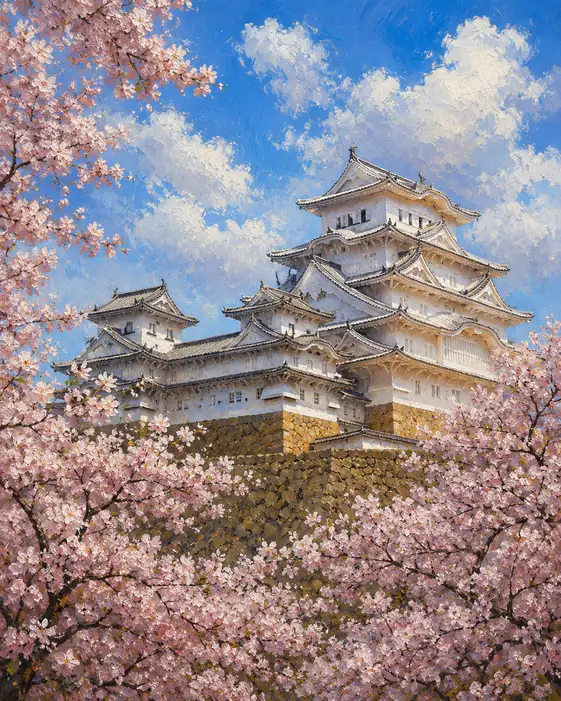 Ancient Stone and Spring Blossom
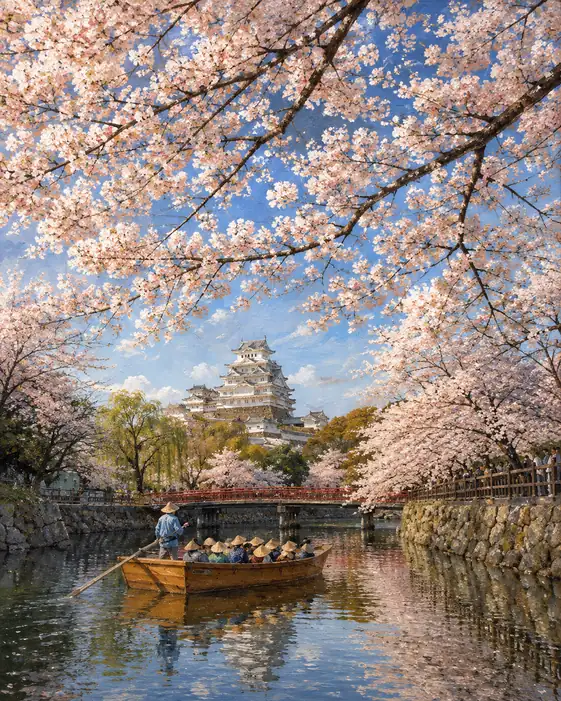 Spring Moat and the White Heron Castle
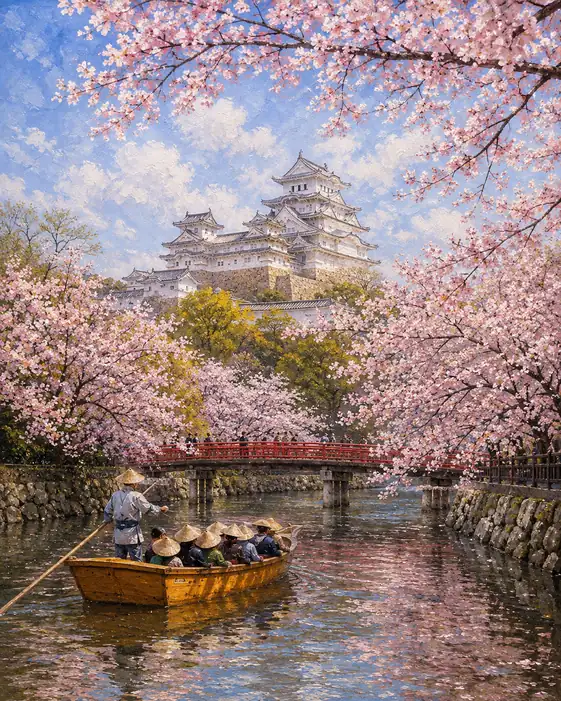 Rowing Through Spring Toward White Heron Castle
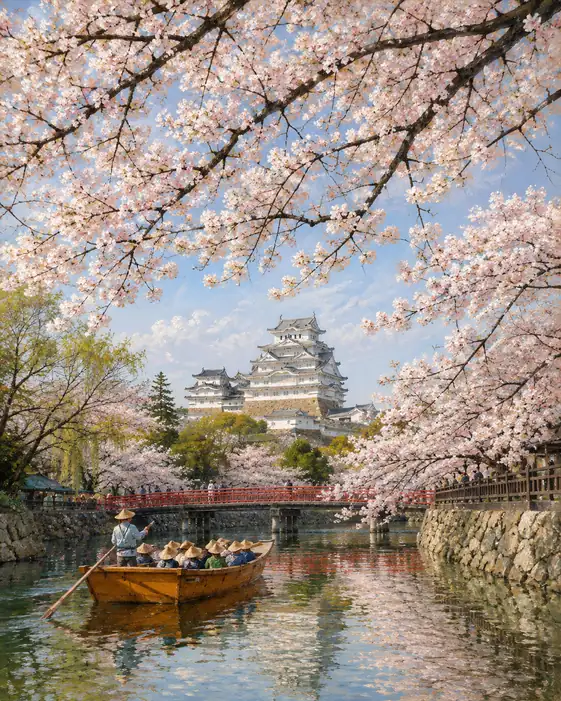 Passage Beneath Sakura Canopy
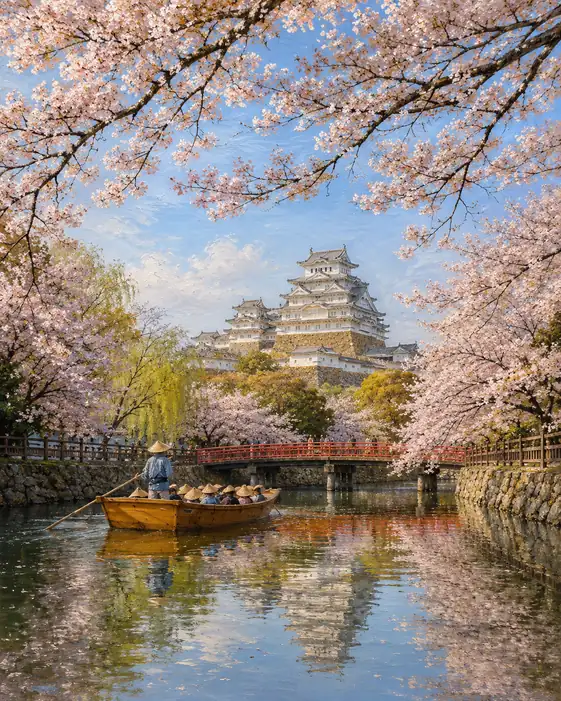 Cherry Blossom Splendor at the White Castle
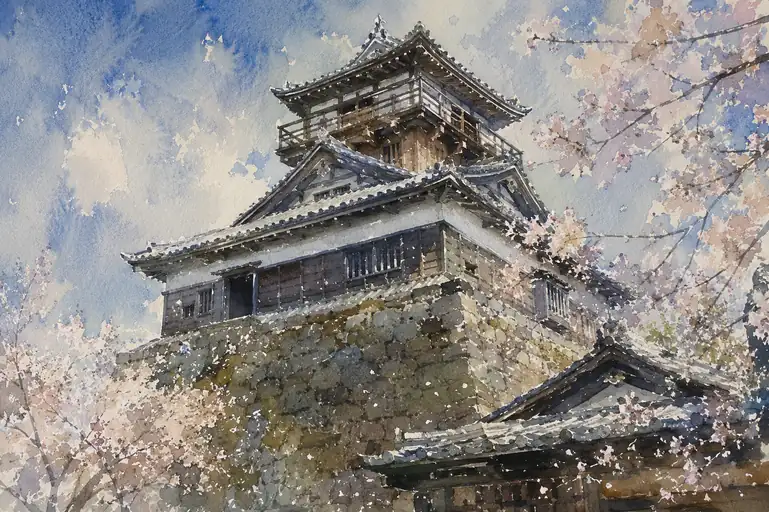 Eternal Stones, Dancing Petals
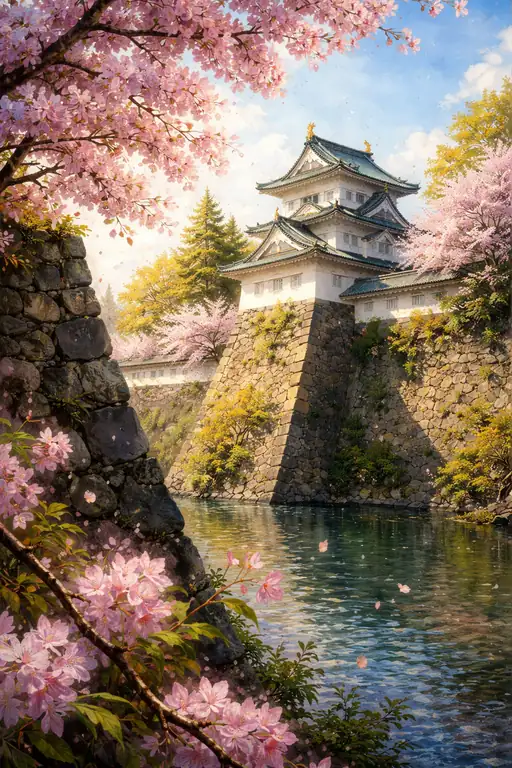 The Silver Castle and Blossoms Unfolding on the Water