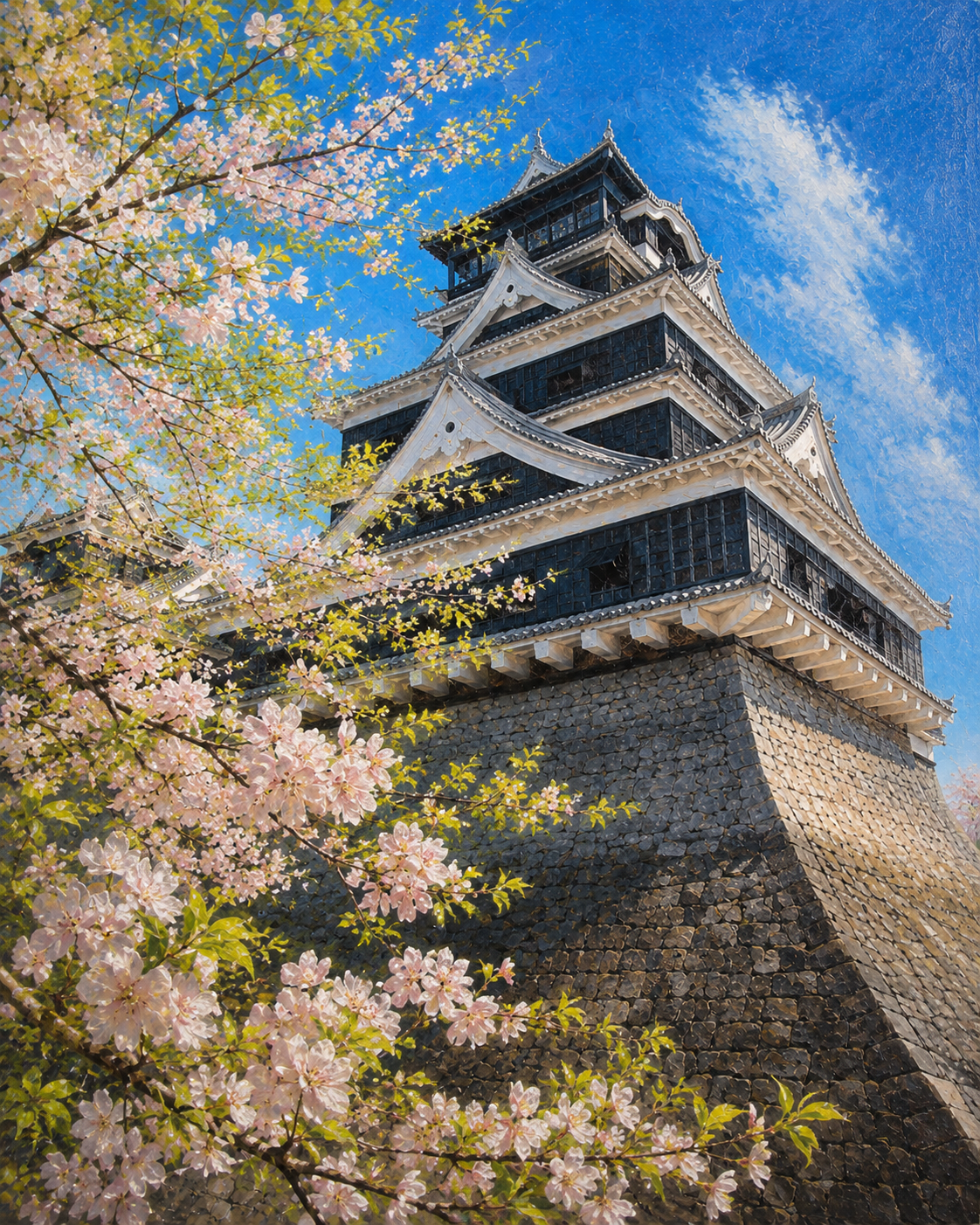
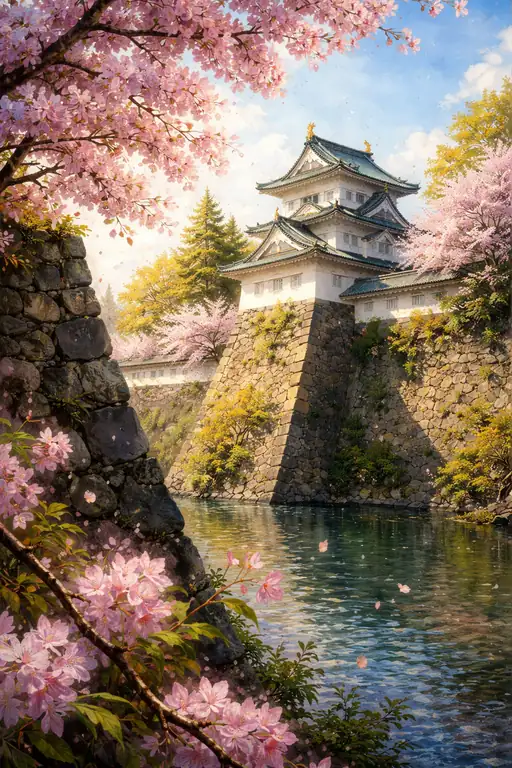
Citadel in Spring Splendor
Critique
Introduction This vertical painting views a many-tiered Japanese castle from below its massive stone base, framing the dark-and-white architecture with spring blossom and brilliant blue sky. Thick strokes give the scene tactile luminosity. Monumental construction and transient flowering become equally forceful presences. Description The battered stone wall rises from the lower right and supports projecting white brackets, black timber galleries, and successively smaller gabled roofs. The tower shifts slightly left as it climbs. A flowering branch fills the left foreground, crossing the facade with pink-white clusters and yellow-green leaves. A smaller roof appears behind it, while a loose white cloud opens the upper right. Analysis The low viewpoint makes the wall's converging edges propel the eye toward the topmost roof. Alternating black bands and white eaves create a strong ascending cadence, moderated by the irregular branching on the left. Warm light catches individual stones on the right face, while the front remains cool and dark. Broken impasto marks unify sky, masonry, foliage, and plaster without erasing their distinct surfaces. Interpretation and Evaluation The image opposes defensive permanence to seasonal fragility without reducing either to a symbol. The castle's mass seems immovable, yet its upward rhythm is echoed by living branches. Blossoms veil the architecture and place the viewer within spring rather than at a documentary distance. Confident perspective, separated values, and controlled saturation keep the dramatic viewpoint legible. Conclusion Initial attention goes to the tower's height, but prolonged viewing makes the blossom screen indispensable. It softens the wall, measures its scale, and introduces time into an image of endurance. The cloud's diagonal sweep carries the branching movement across the sky. Architectural precision and painterly surface remain productively balanced, producing a vivid encounter between civic memory and renewal.
Same Subcategory
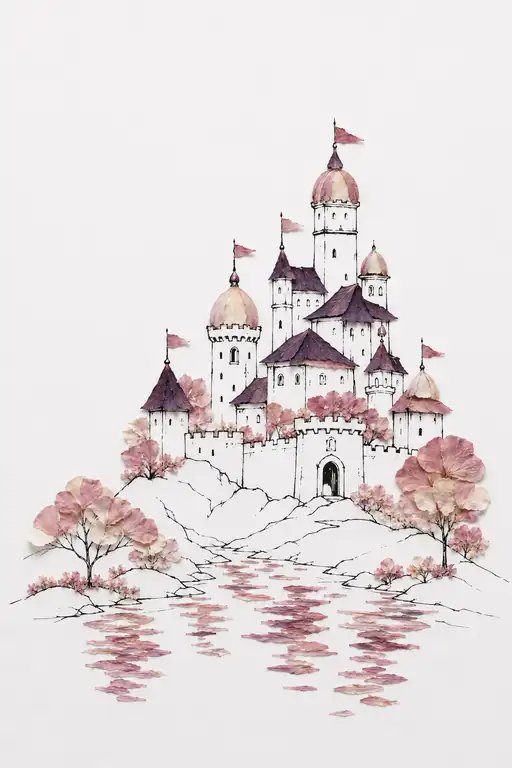 Fairytale Castle Draped in Roseate Petals
Similar Artworks
 Petals on the Spring Gale
 Azure Skies Above the Cherry Fortress
 Verdant Canopy Above the Fortress
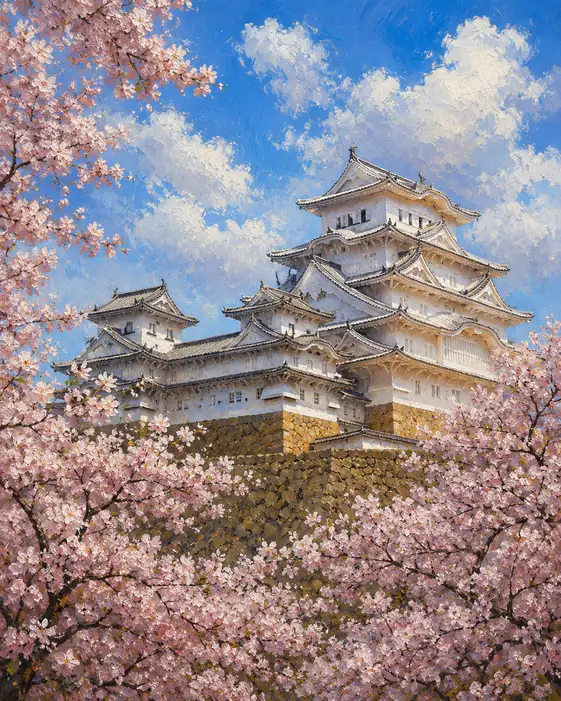 Ancient Stone and Spring Blossom
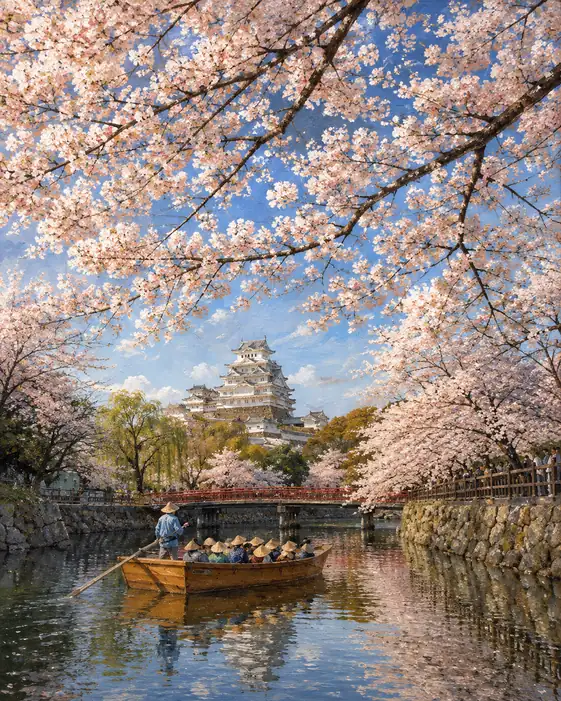 Spring Moat and the White Heron Castle
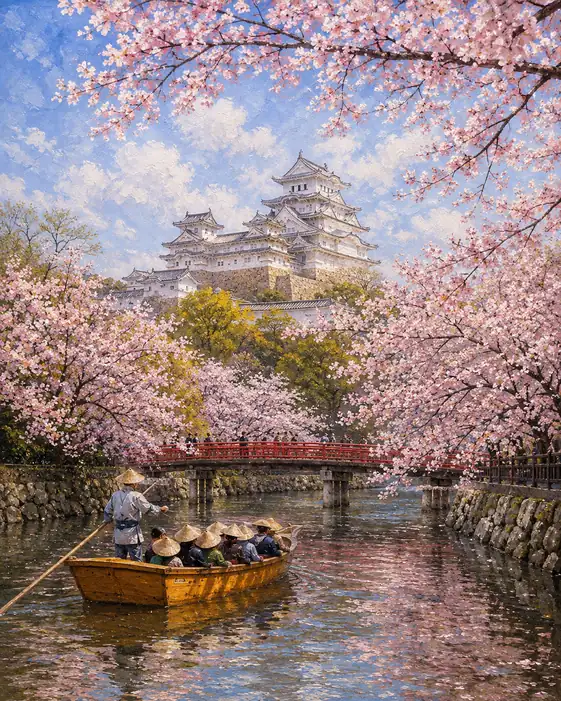 Rowing Through Spring Toward White Heron Castle
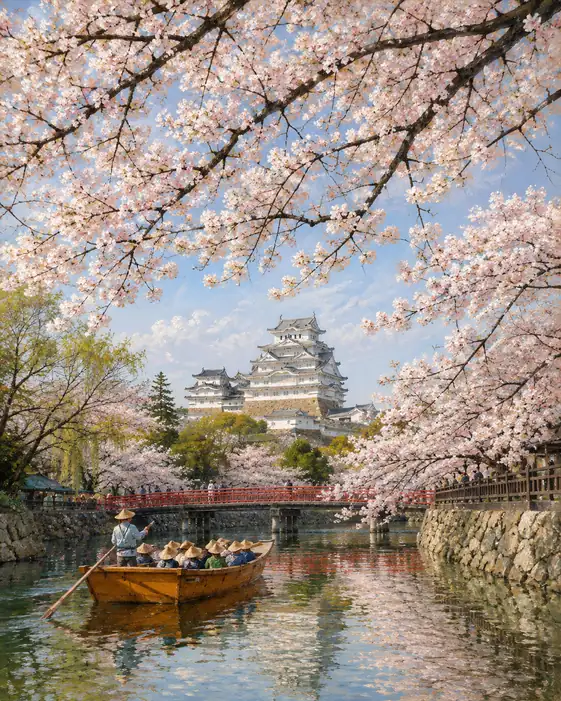 Passage Beneath Sakura Canopy
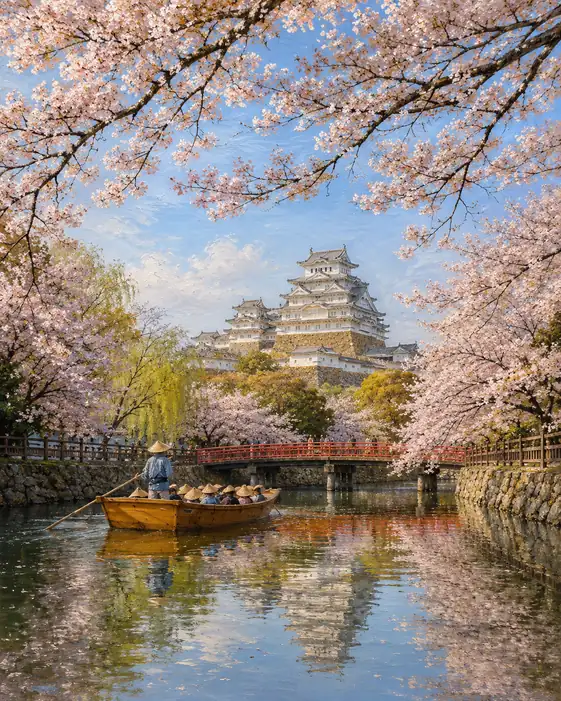 Cherry Blossom Splendor at the White Castle
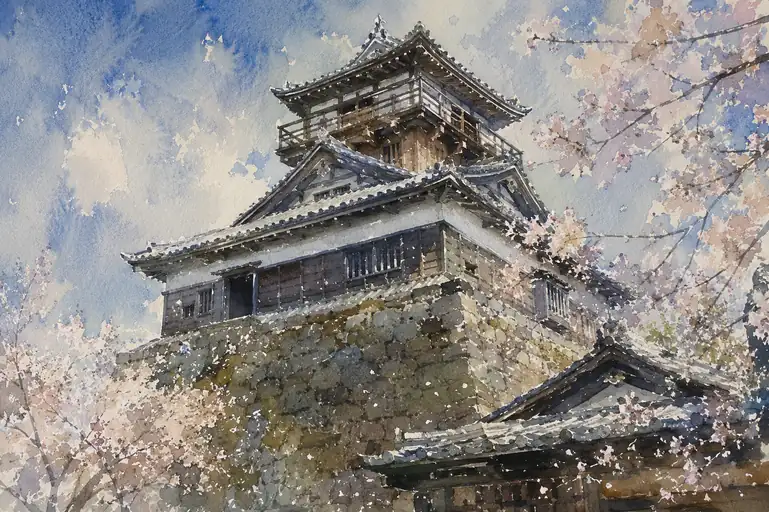 Eternal Stones, Dancing Petals
 The Silver Castle and Blossoms Unfolding on the Water