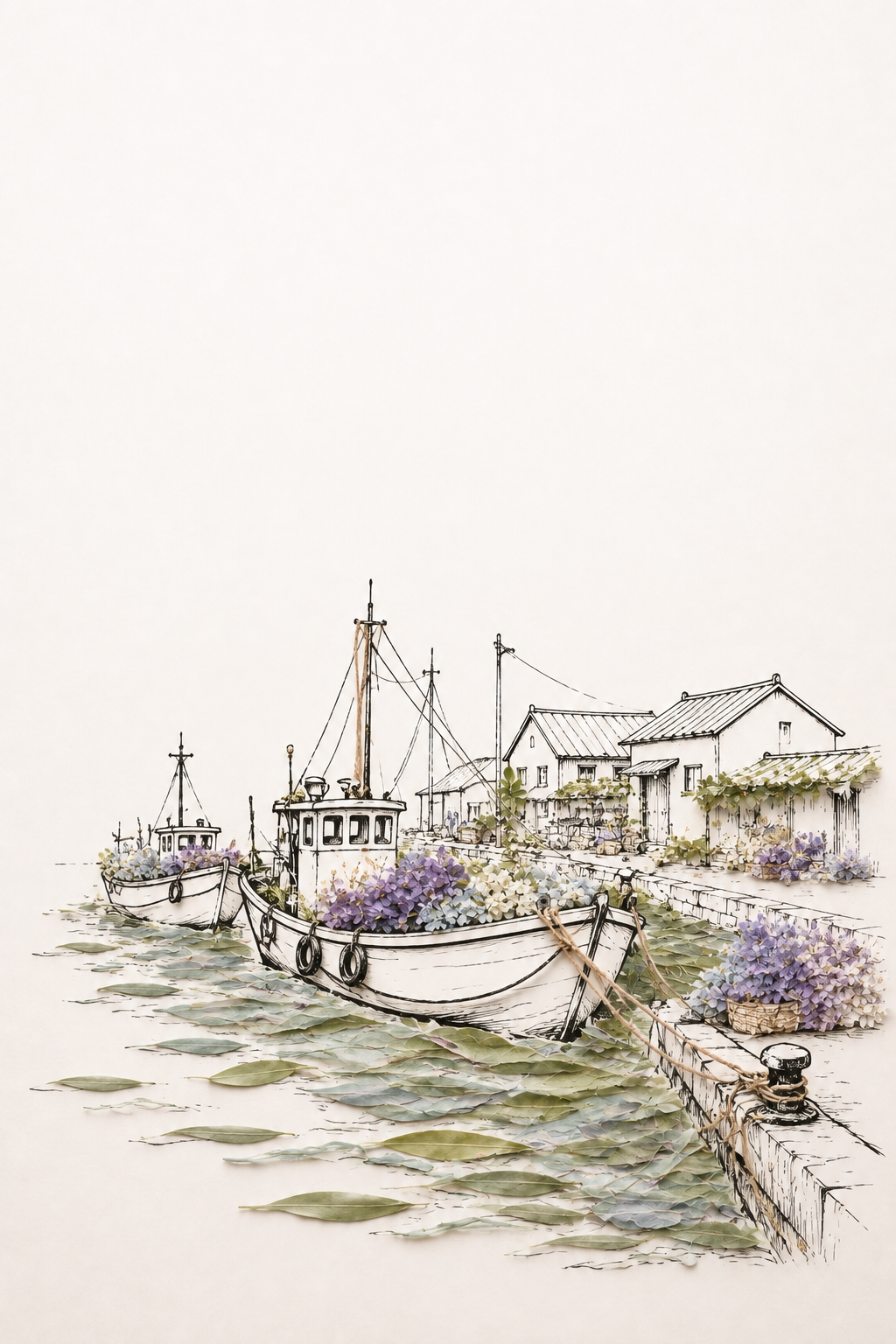
Flower-Laden Haven
Critique
Introduction This work depicts a quiet harbor lined with low tiled-roof houses and several flower-laden boats. Black drawing defines hulls, masts, quay, and buildings, while layered gray-green leaves create the water and lavender-white blossoms turn vessels and baskets into floating gardens. Description The largest boat occupies the middle foreground, tied by thick ropes to a bollard on the right quay. Its broad hull carries dense violet, blue-gray, and cream flowers beneath a cabin and tall mast. Two smaller boats recede toward the left. Along the opposite bank, simple houses, potted plants, vines, and flower baskets follow a stone embankment. Analysis The main boat's diagonal bow and converging quay establish strong recession, reinforced by shrinking vessels and buildings. Masts provide thin vertical accents against the broad empty sky. The water's overlapping leaves vary from pale blue-gray to olive, and their orientations suggest gentle surface movement. Tactile blossoms, rope fibers, flat hull lines, and roof hatching create clear material contrasts. Interpretation and Evaluation The harbor appears as a place where work and cultivation are inseparable. Boats remain functional through cabins, fenders, and mooring lines, yet their floral cargo transforms labor into communal display. The composition handles depth and asymmetry with confidence, while the restrained cool palette is warmed by cream flowers and natural rope. Precise nautical detail and botanical substitution demonstrate technical control and originality. Conclusion At first the flower-filled boats seem decorative, but closer viewing reveals a carefully organized working waterfront. Mooring lines connect water, vessel, and quay, while repeated gardens connect boats to homes. The scene balances movement held in reserve with the stability of daily habitation.
Same Subcategory
 Fire Leads the Cormorants Through Blue Dusk
Similar Artworks
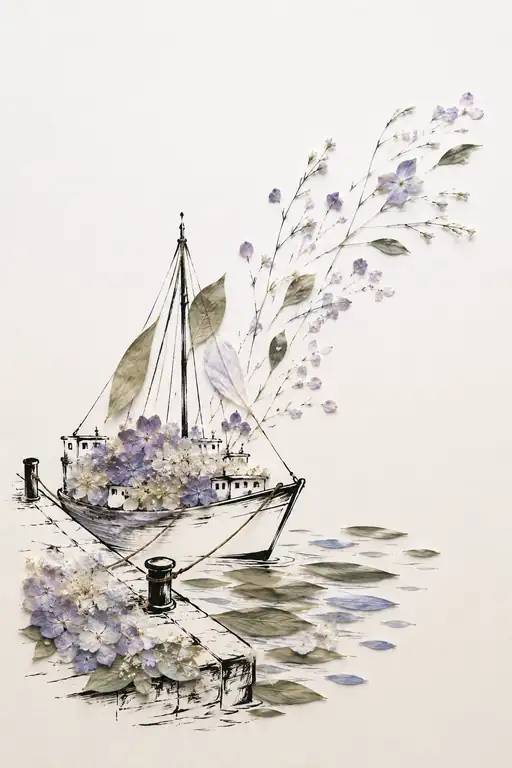 Harbor of the Blossom Voyage
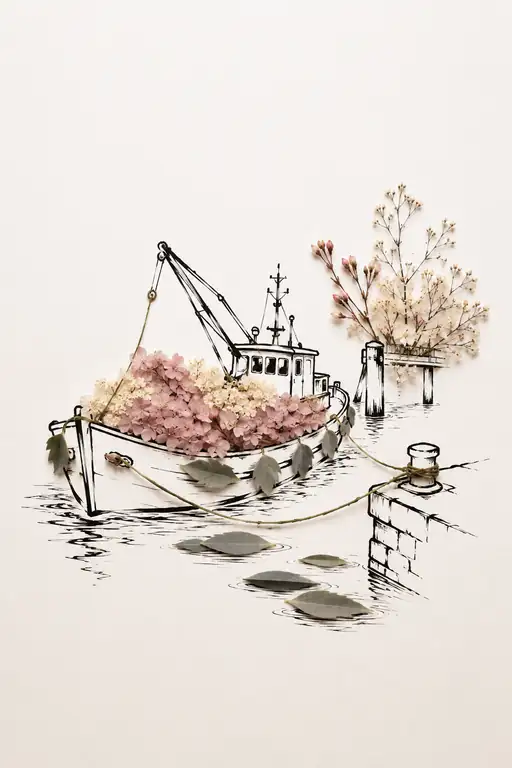 Blossom Cargo of the Harbor Trawler
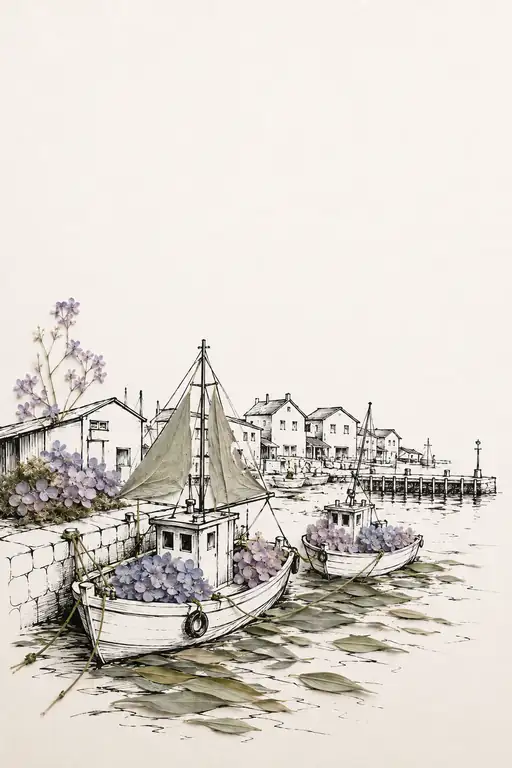 Harbor of Slumbering Tides
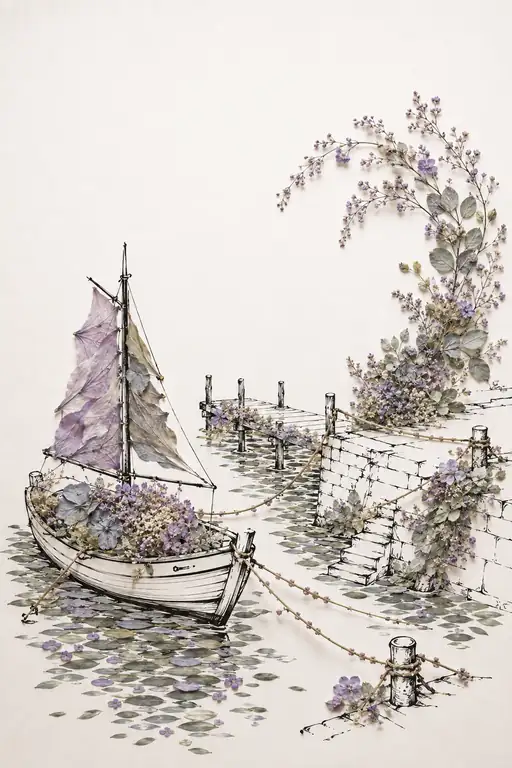 Flower-Laden Sail at the Stone Wharf
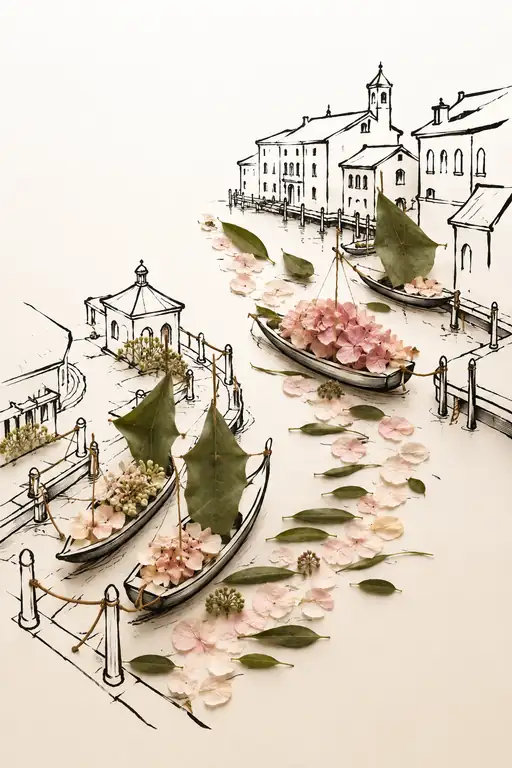 Waterway of Drifting Petals
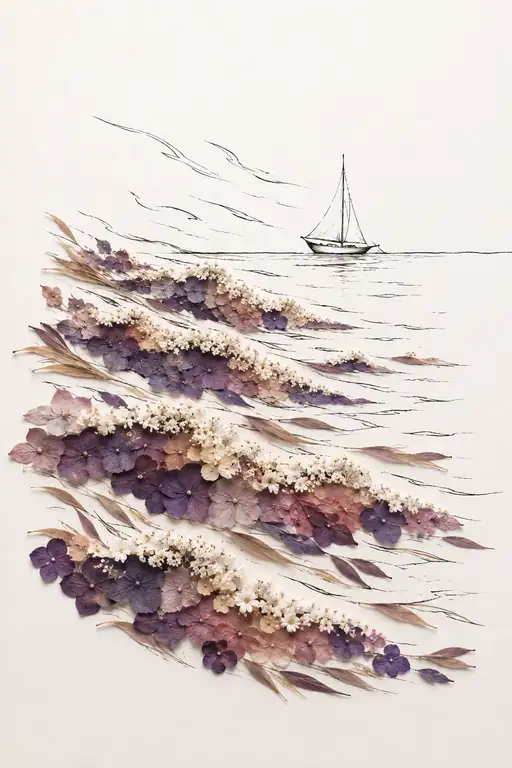 Mauve Tides and the Distant Sail
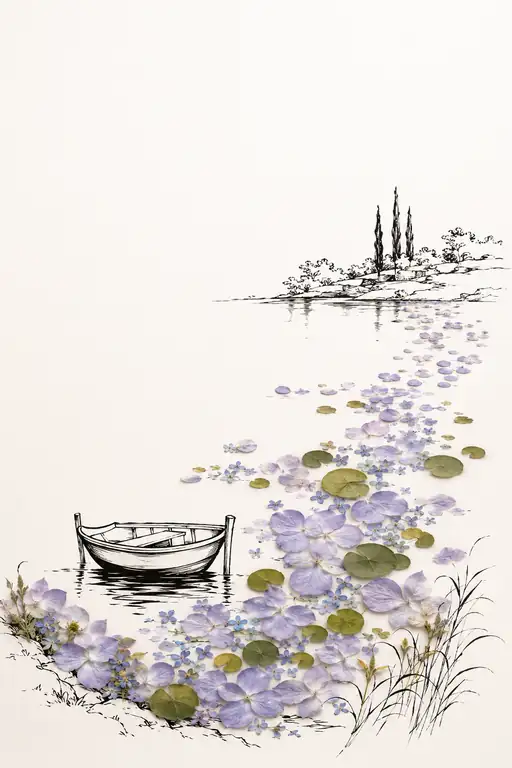 Drifting Stream Toward the Island of Cypresses
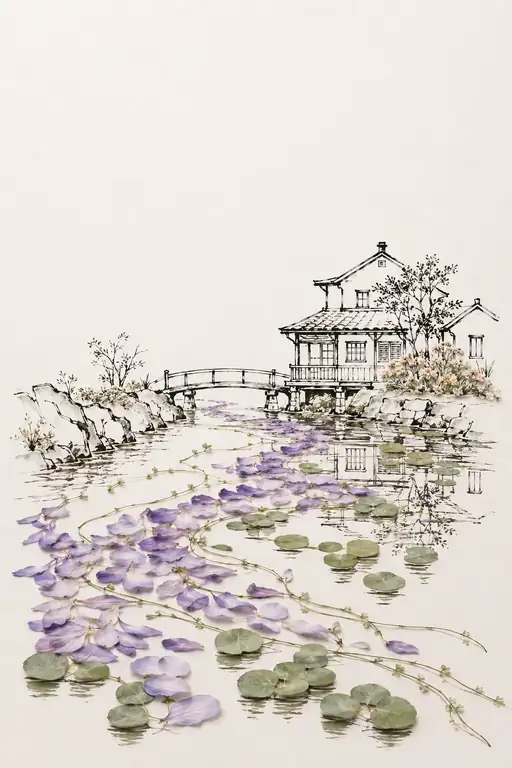 Ripple and Reflection at the Canal House
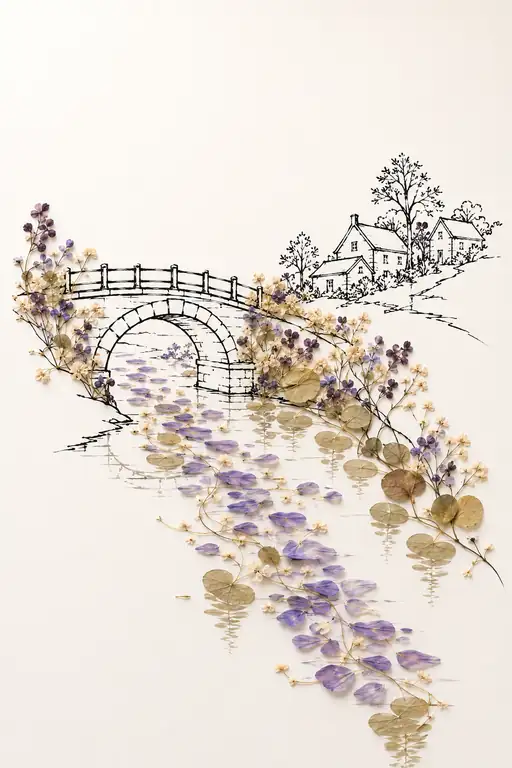 Passage Beneath the Arch
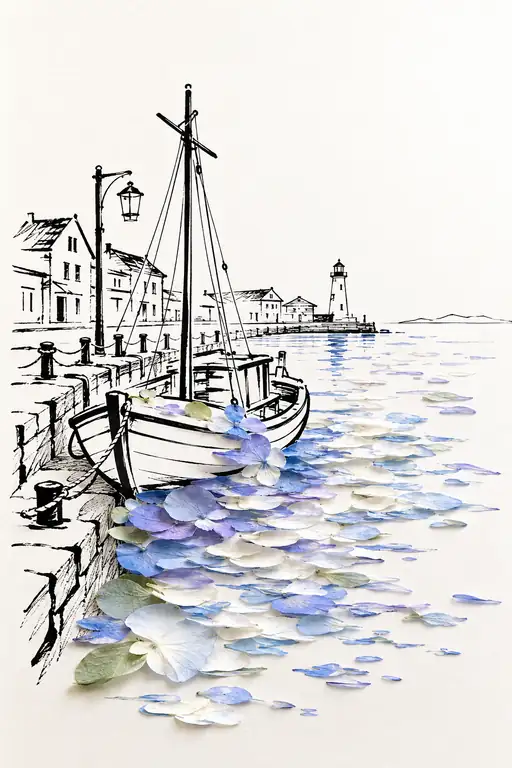 Harbor Rest on Shimmering Waters