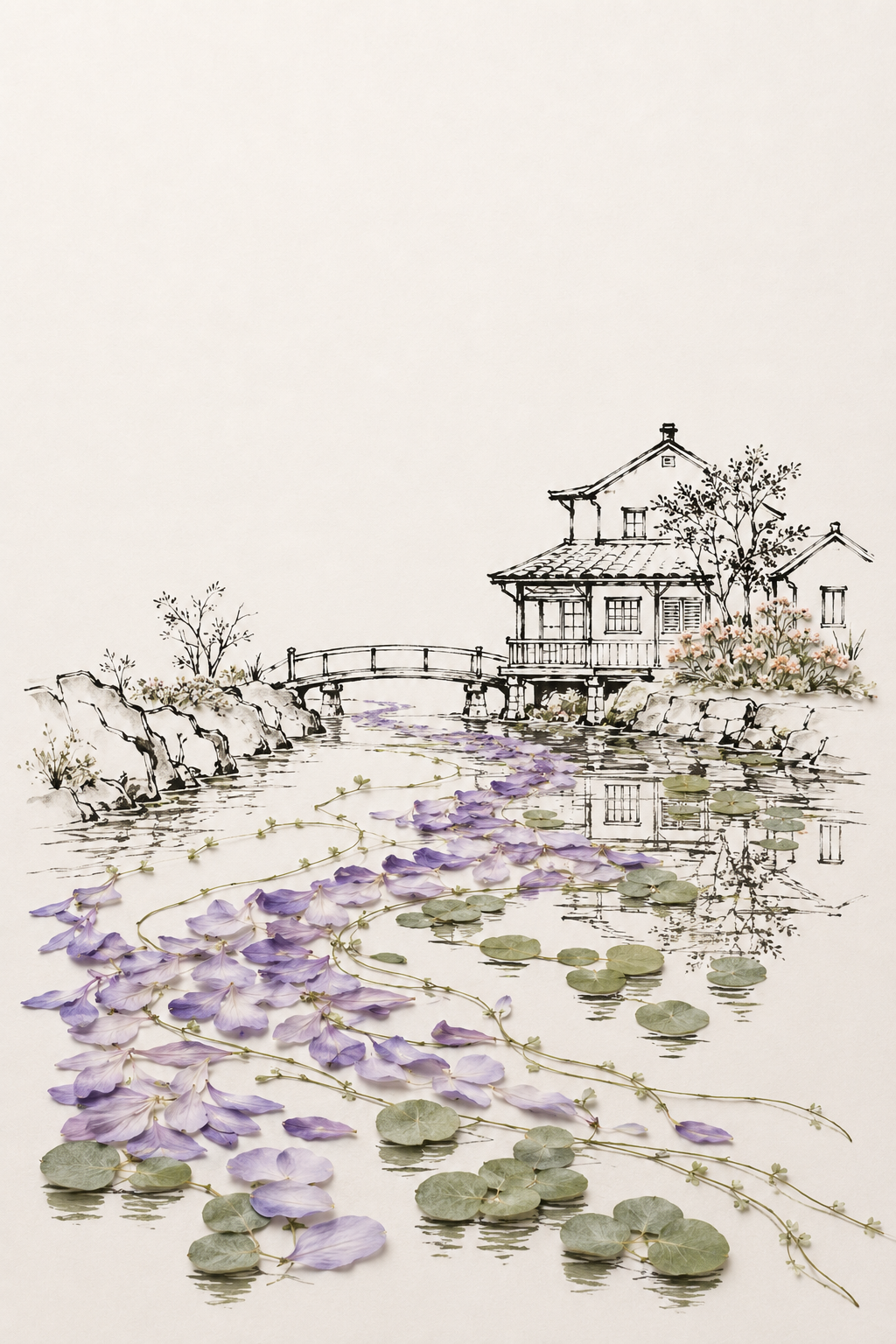
Ripple and Reflection at the Canal House
Critique
Introduction This work depicts a quiet waterside house, low arched bridge, rocky banks, and pond crossed by lavender blossoms and round gray-green leaves. Architecture and reflections remain black line drawing, while physical botanical material spreads from the near water toward the bridge and distant garden. Description The house stands at upper right with layered tiled roofs, balconies, shuttered windows, and supports meeting the water. A curved footbridge spans the middle distance. Bare trees and peach-white flowers rise from the rocky right bank; smaller shrubs occupy the left. In the foreground, long green stems carry many pale violet flowers among scattered circular leaves and drawn ripples. Analysis The broad floral diagonal begins at lower left and narrows toward the bridge, creating the main route into depth. House and bridge form stable horizontal structures above the fluid foreground. Lavender supplies the strongest color, balanced by gray-green disks and small peach accents near the building. Petal relief and leaf veins contrast with thin reflections, tiled roof marks, and open white water. Interpretation and Evaluation The scene presents habitation as something embedded in circulation rather than separated from nature. The bridge connects banks, the elevated house touches the pond through its supports, and drifting flowers carry the foreground toward both. Recession, asymmetrical balance, and restrained color are carefully controlled. Architectural clarity and the integration of real plants with reflected linear forms give the work technical coherence and imaginative freshness. Conclusion At first the house seems to be the principal subject, but sustained viewing shifts attention to the flower current that organizes the entire space. Built structures provide pause and measure, while stems and reflections keep the pond in motion. Domestic stability and seasonal passage remain mutually dependent.
Same Subcategory
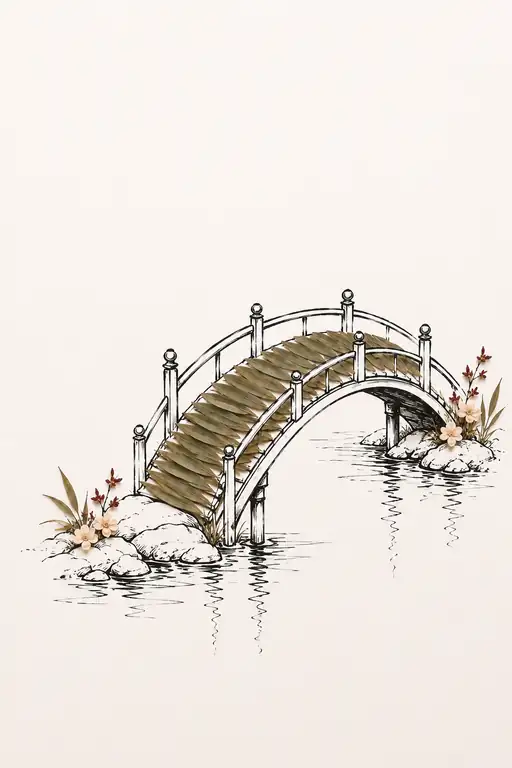 Leaf-Paved Arch Across the Serene Flow
Similar Artworks
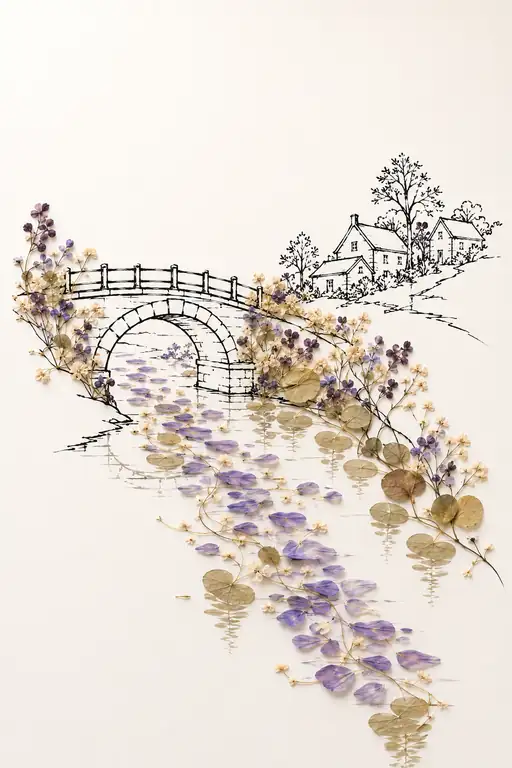 Passage Beneath the Arch
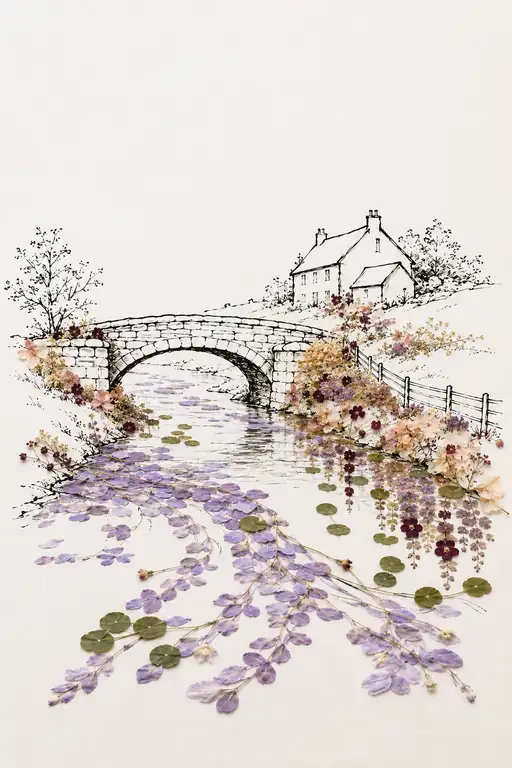 Flow of Blossoms by the Stone Bridge
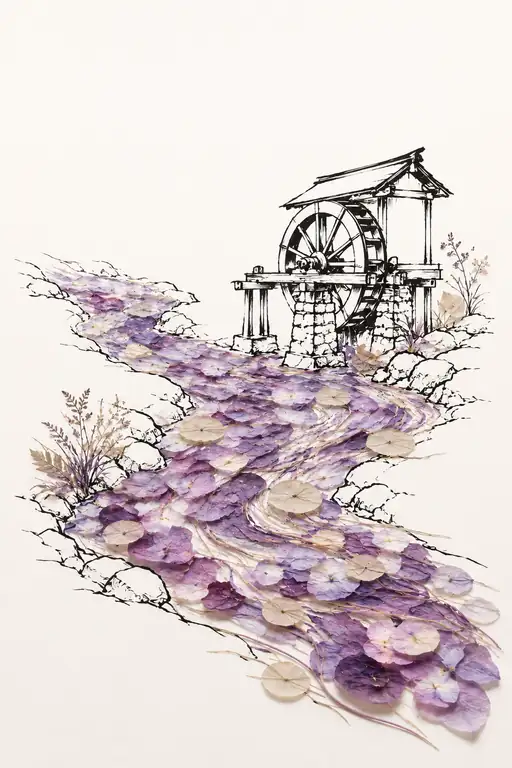 Wheel Turning by the Violet Stream
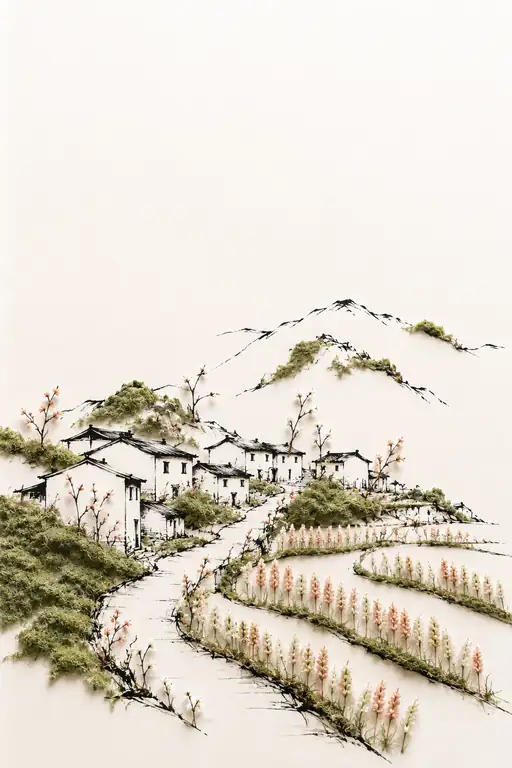 Terraced Haven Beneath the High Peak
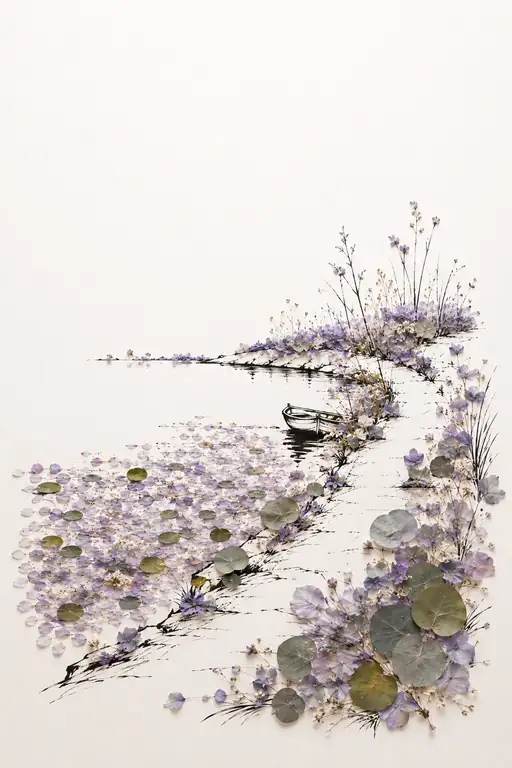 Lavender Inlet and the Moored Boat
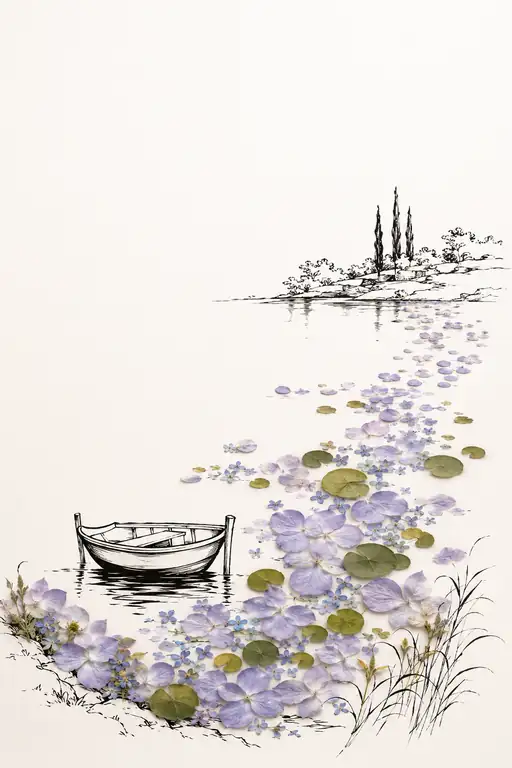 Drifting Stream Toward the Island of Cypresses
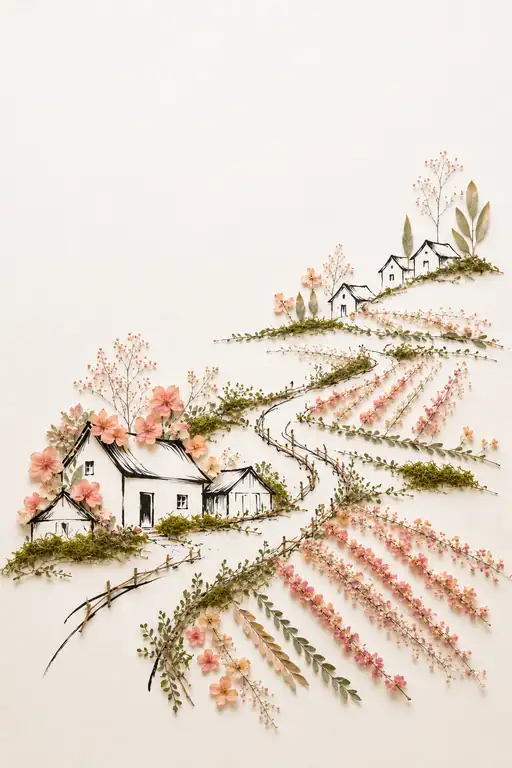 Spring Ascent to the Hilltop Cottages
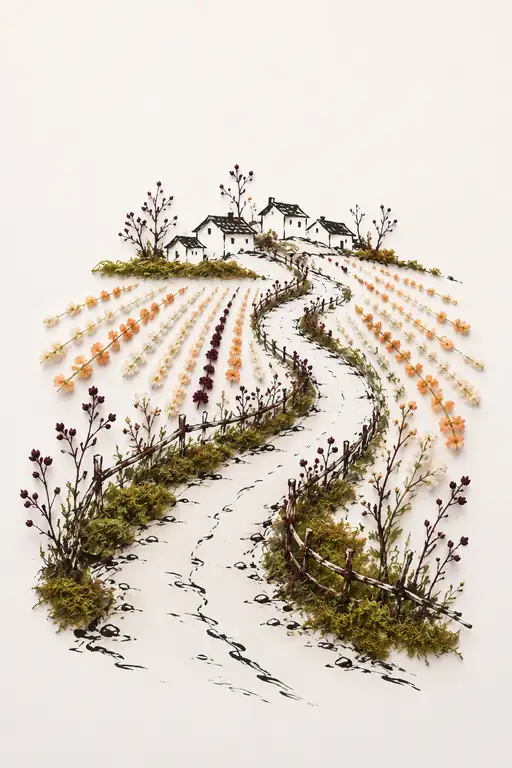 Winding Trail Through the Flowered Hills
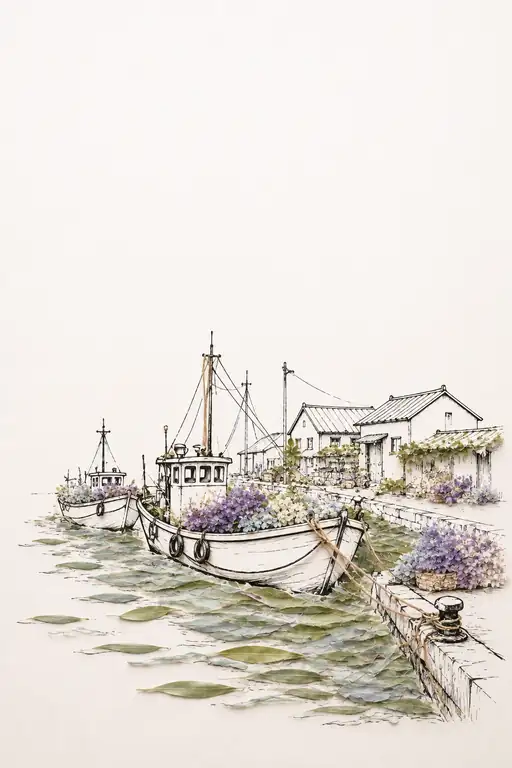 Flower-Laden Haven
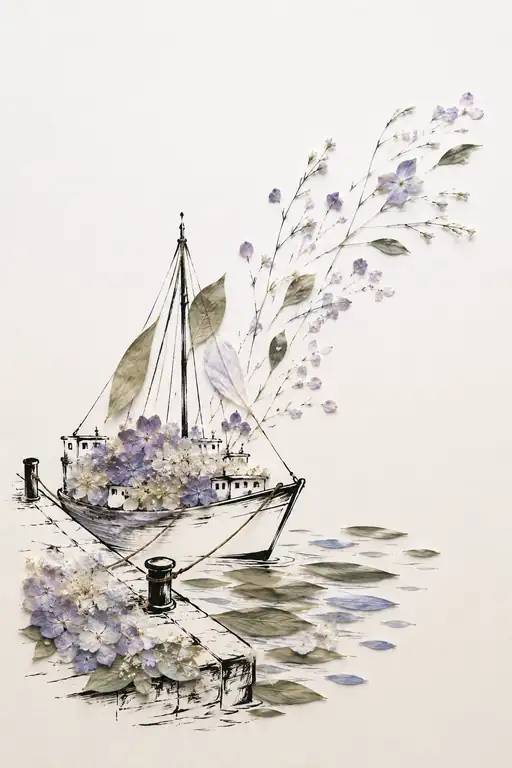 Harbor of the Blossom Voyage