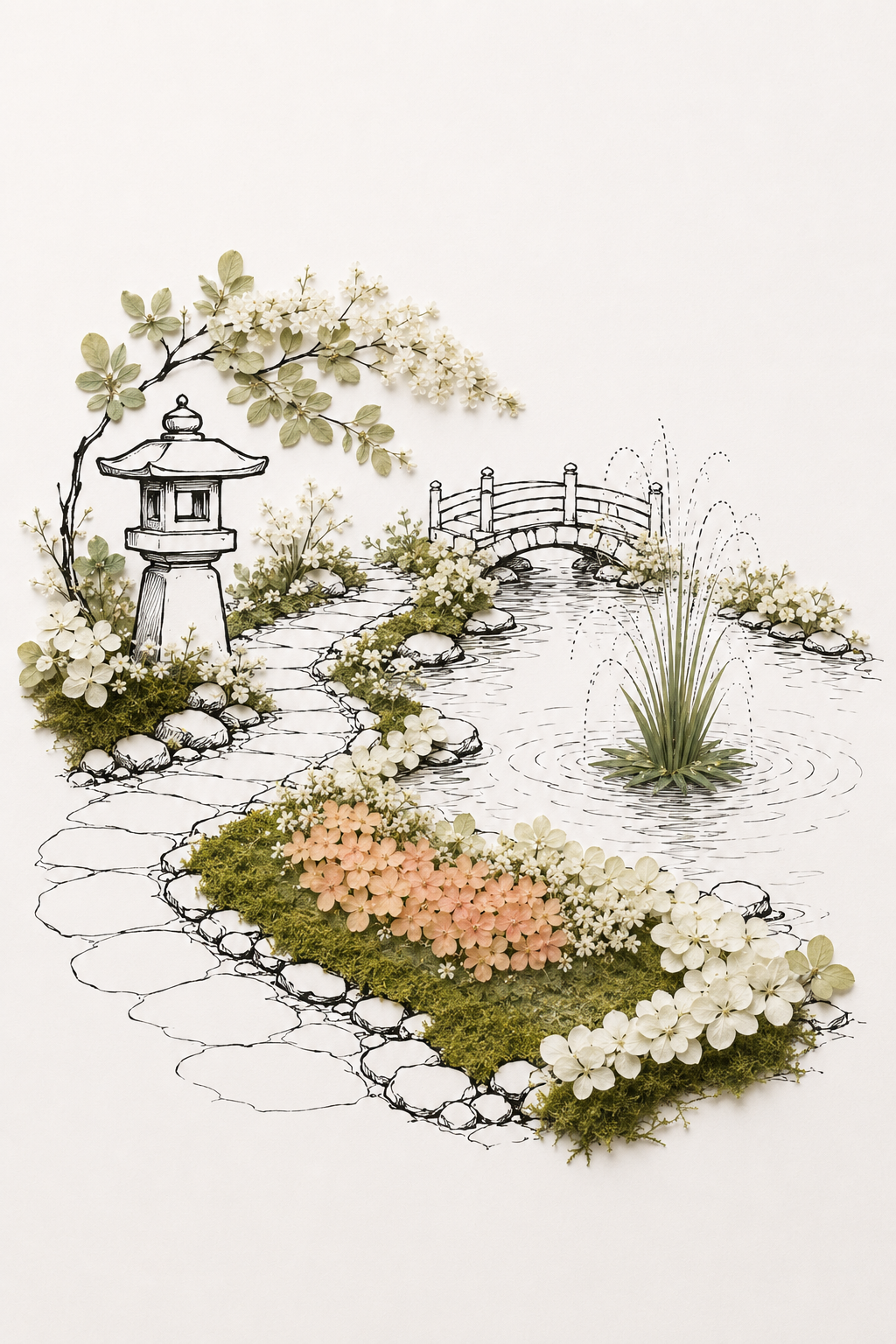
Pathway of the Lantern and Bridge
Critique
Introduction This work constructs a pale Japanese-style garden with a stone lantern, arched bridge, winding path, pond fountain, moss, and abundant white flowers. A single peach cluster warms the foreground, while black line drawing supplies architecture, stones, water, and distant space. Description The path enters at lower left and bends behind a flowered moss island toward the bridge. A lantern stands beneath an overhanging white-blossomed branch on the left. The pond fills the right half, where a central tuft sends dotted streams upward and outward. White flowers line both banks and gather around outlined rocks; the peach cluster lies across the nearest island. Analysis The path's curve and the pond's receding edges establish depth, leading to the bridge as the middle-distance threshold. The lantern provides a firm vertical counterweight to the fountain's finer arcs. White petals dominate but remain legible through green moss and pale leaves; peach creates a restrained foreground focus. Tactile plants alternate with flat stones and ripples, producing clear spatial layers. Interpretation and Evaluation The garden presents contemplation as movement between solid markers and ephemeral growth. Lantern and bridge organize passage, while flowers soften every boundary and the fountain introduces recurring motion. The composition manages asymmetry, recession, and focal hierarchy with confidence. Fine botanical distinctions and economical architectural drawing demonstrate descriptive skill, while their integration gives the scene a lucid hybrid originality. Conclusion At first the image appears almost monochrome and ceremonial, but sustained viewing reveals varied whites, textures, and tempos. The peach flowers establish near space, the lantern marks a pause, and the bridge promises continuation. Restraint allows the garden's quiet sequence to remain its strongest expressive quality.
Same Subcategory
 Circle of Zen and the Arched Bridge
Similar Artworks
 Arched Bridge Over the Stream of Flowing Petals
 Stone Lantern and Flowing Water in the Moss Garden
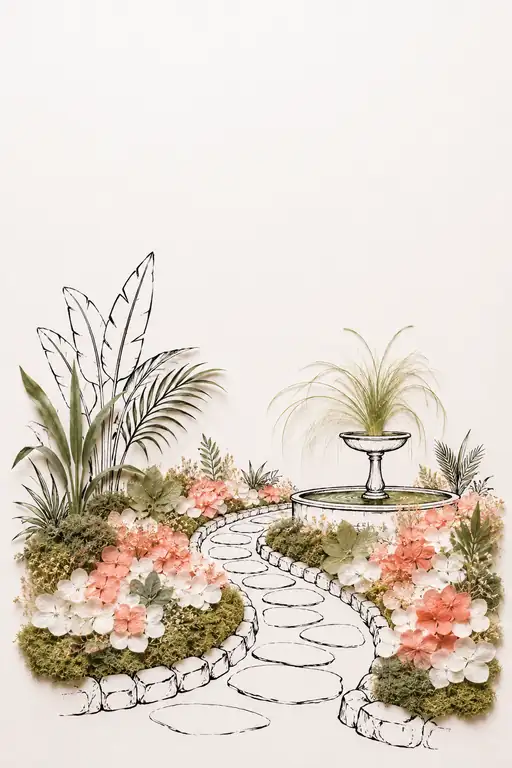 Fountain of the Coral Grove
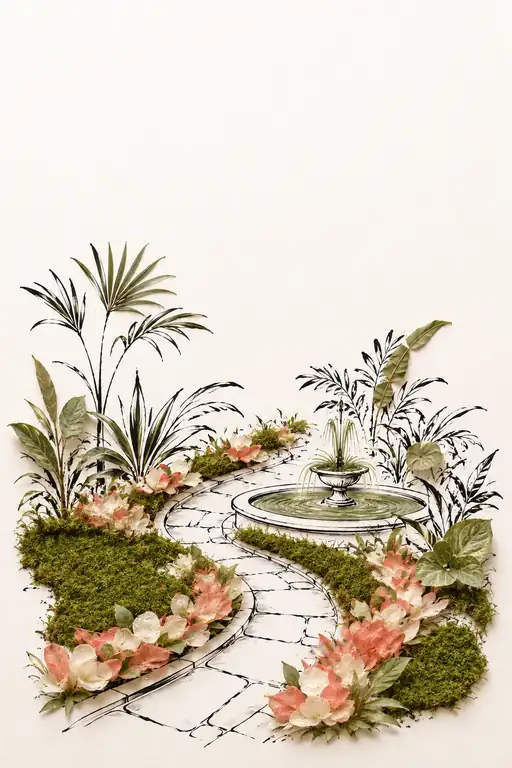 Where the Whispering Water Leads
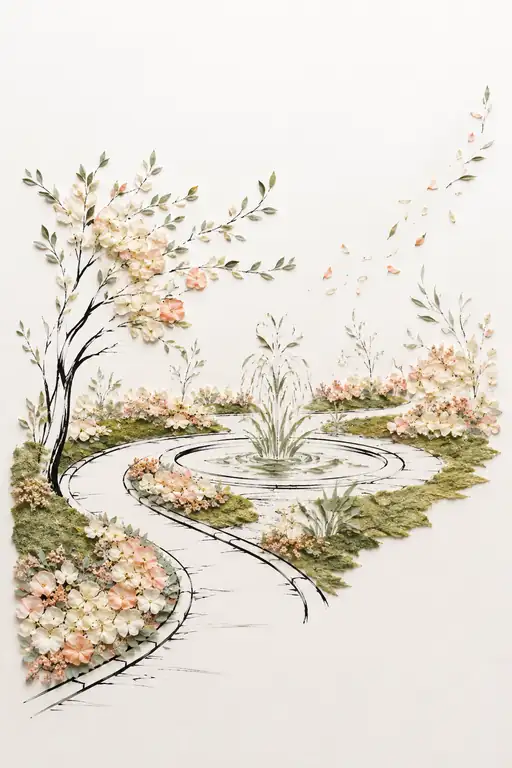 Garden Fountain and Whispering Petals in the Wind
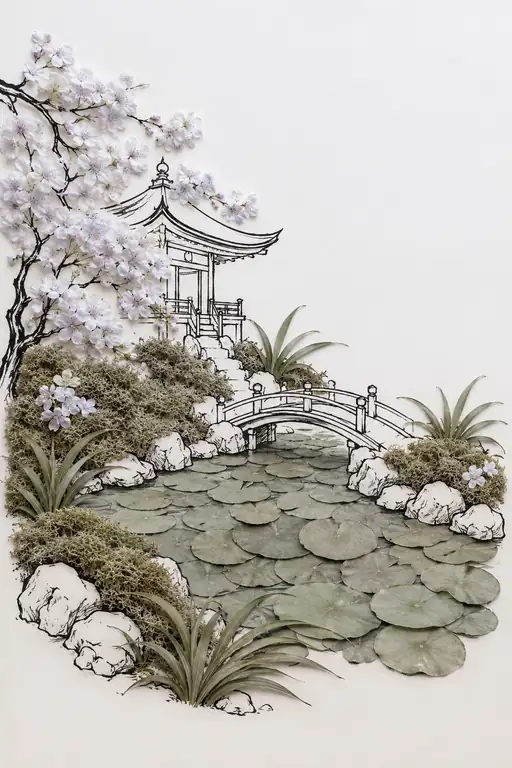 Spring Solitude at the Curved Bridge
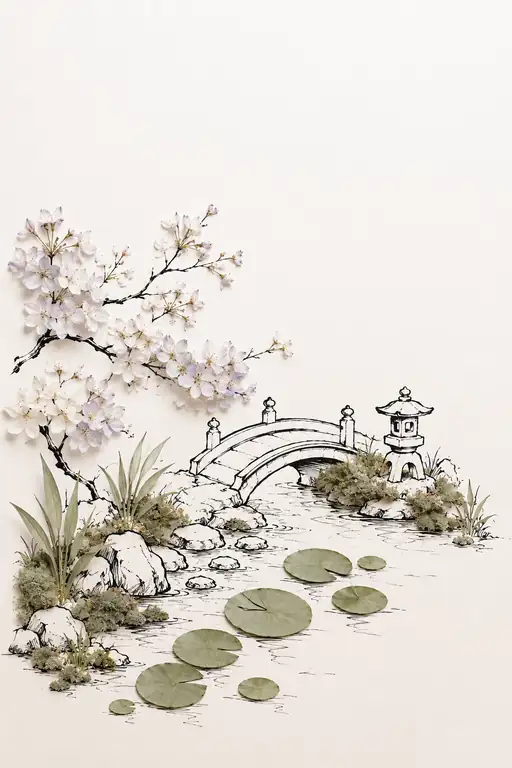 Arched Bridge by the Blossoming Cherry Tree
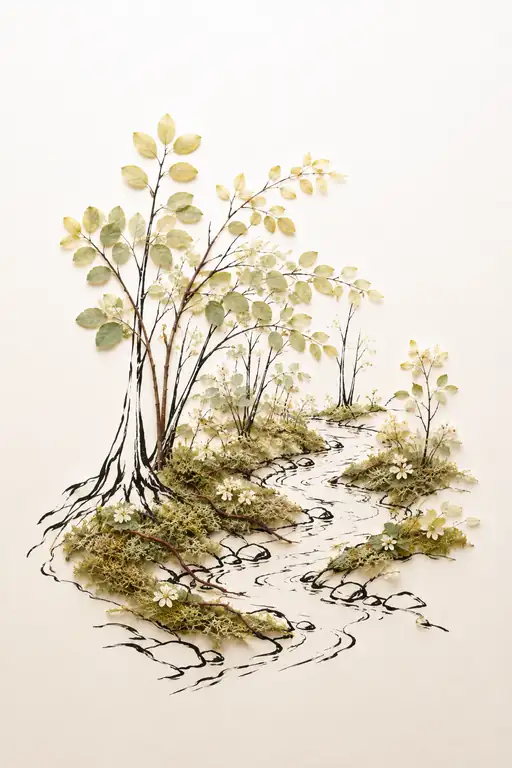 Serenade of the Winding Stream
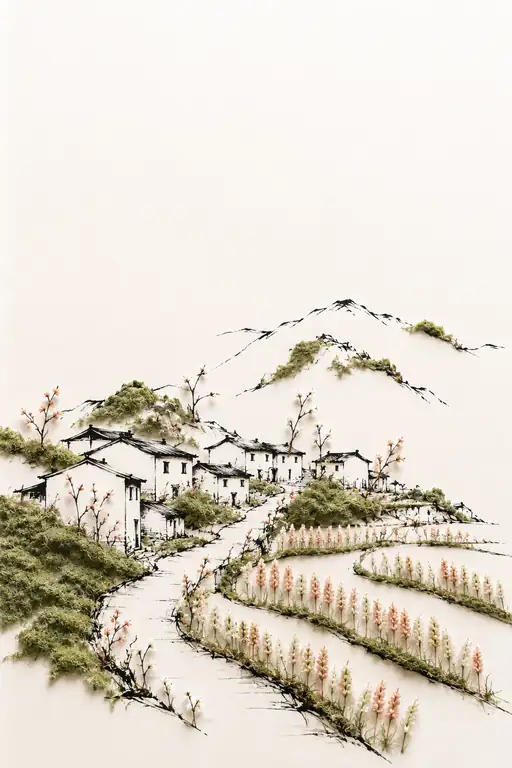 Terraced Haven Beneath the High Peak
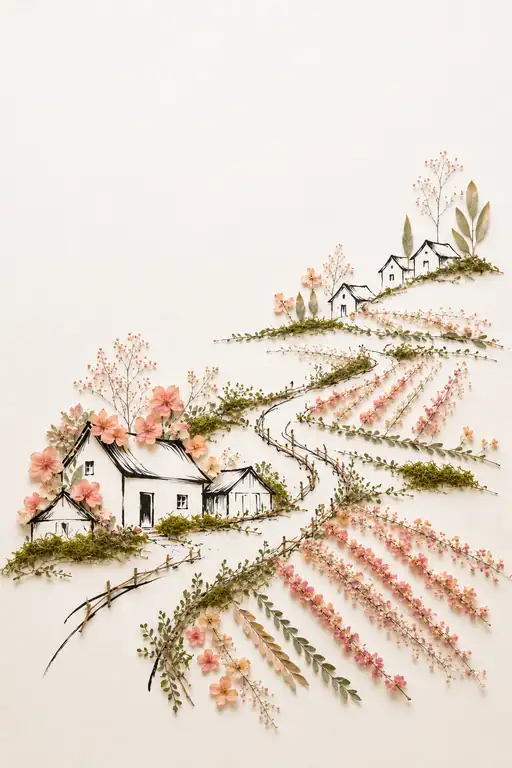 Spring Ascent to the Hilltop Cottages