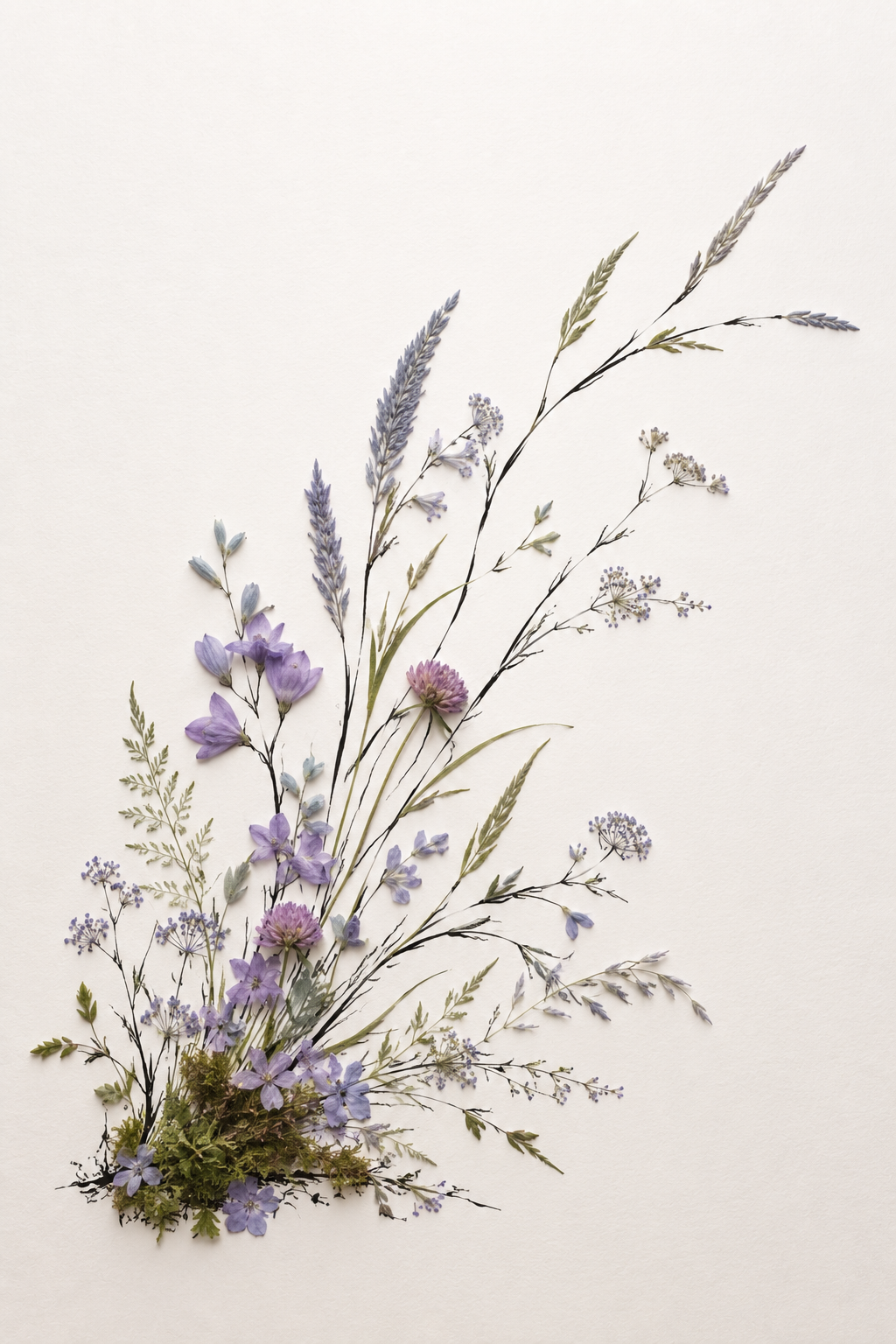
Meadow Winds in Lavender
Critique
Introduction This work gathers lavender wildflowers, purple clover heads, fine blue clusters, grasses, moss, and black stemlike drawing into a tall open spray. The arrangement rises from a compact lower-left base and disperses toward the upper right, making direction and spacing more prominent than floral abundance alone. Description Moss and low violet blossoms form the dense origin near the bottom left. From it, long stems carry bell-shaped purple flowers, two rounded clover heads, blue-gray buds, delicate umbels, and several wheatlike spikes. Some branches extend nearly horizontally to the right, while the tallest grass heads reach the upper edge. Fine black lines continue or cross the actual stems. Analysis Repeated diagonals generate a broad triangular ascent from the dark base. Larger purple flowers cluster in the lower and middle zones; finer umbels and grasses occupy the open upper field. Lavender and blue are balanced by fresh and olive greens. The moss's rough density contrasts with papery bells, compact clover, and dry spikes, while variable black strokes clarify rhythm across the white ground. Interpretation and Evaluation The image treats a meadow not as a bounded place but as an accumulated pattern of individual trajectories. Each species keeps its own posture, yet shared directions produce temporary order. The composition controls asymmetry and empty intervals with confidence, and the restricted palette unifies varied textures. Sensitive botanical description and the extension of growth through drawn lines demonstrate both technical skill and an inventive hybrid approach. Conclusion At first the work appears to be a loose bouquet, but sustained attention reveals a precise progression from density to air. Low blossoms establish weight, middle flowers supply pauses, and high grasses release the movement outward. The result makes fragility feel expansive rather than enclosed.
Same Subcategory
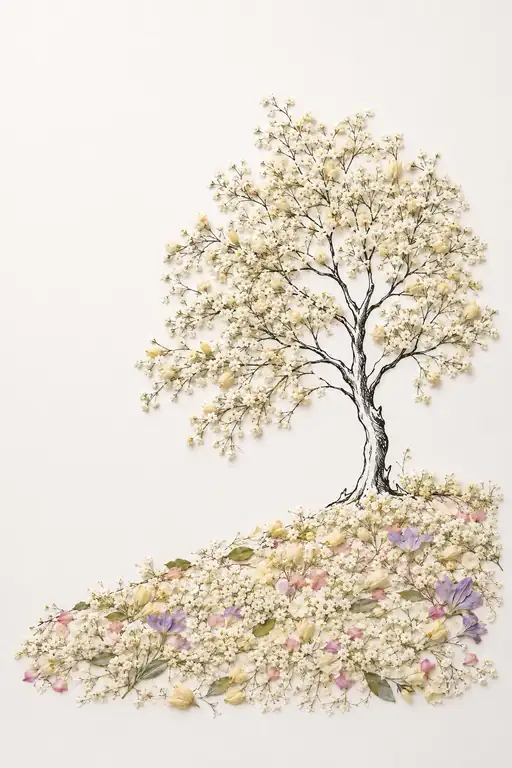 Solitary Flowering Tree on the Blossom Hill
Similar Artworks
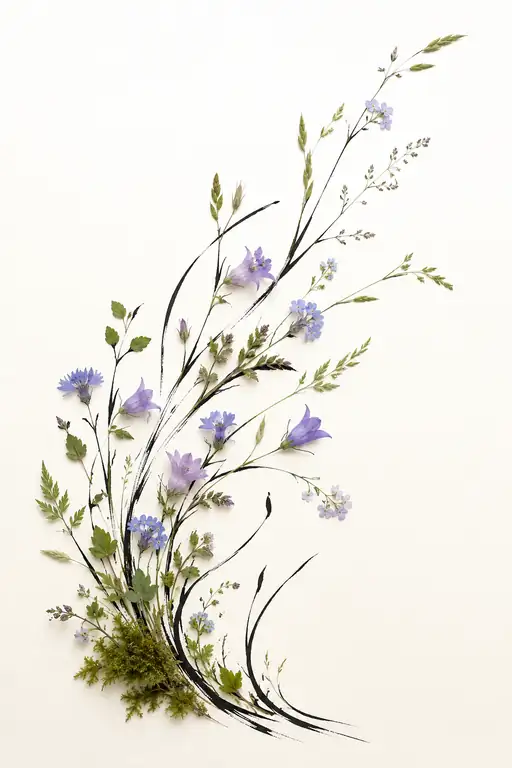 Bellflowers and Calligraphic Vines in Spring
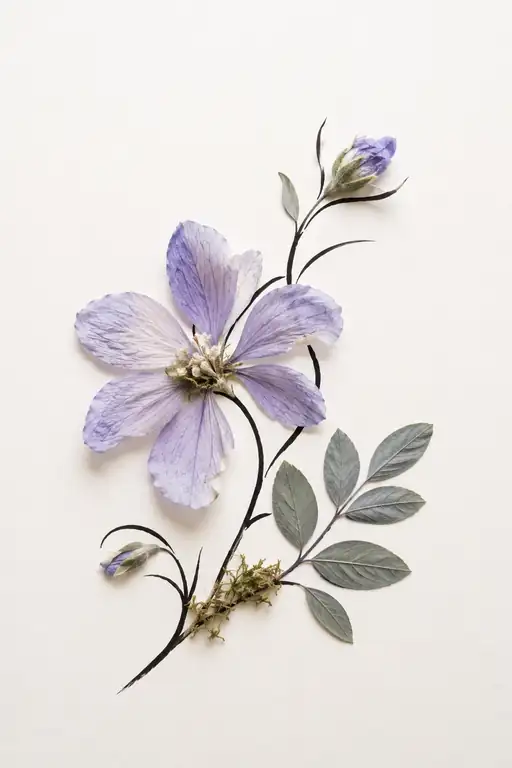 Grace in Solitary Bloom
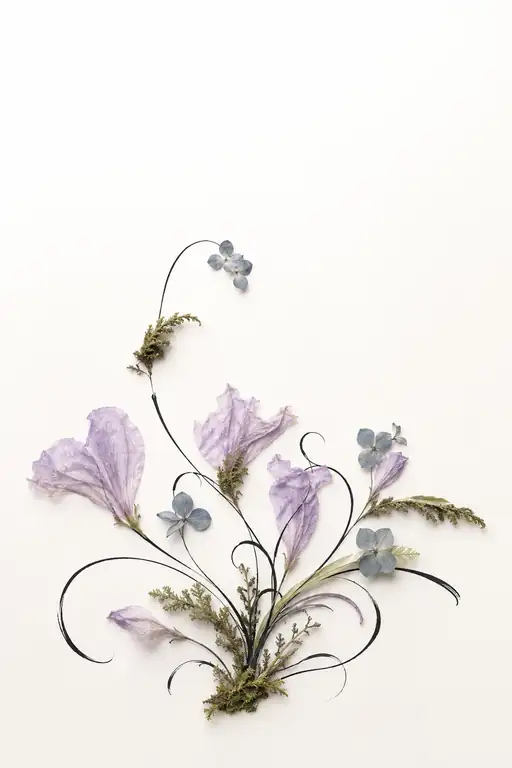 Violet Blossoms Swaying on Calligraphic Stems
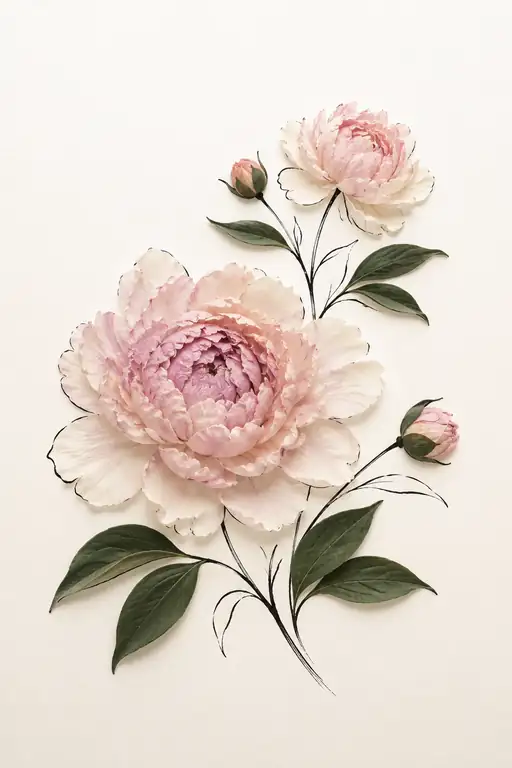 Bloom in Layered Rose
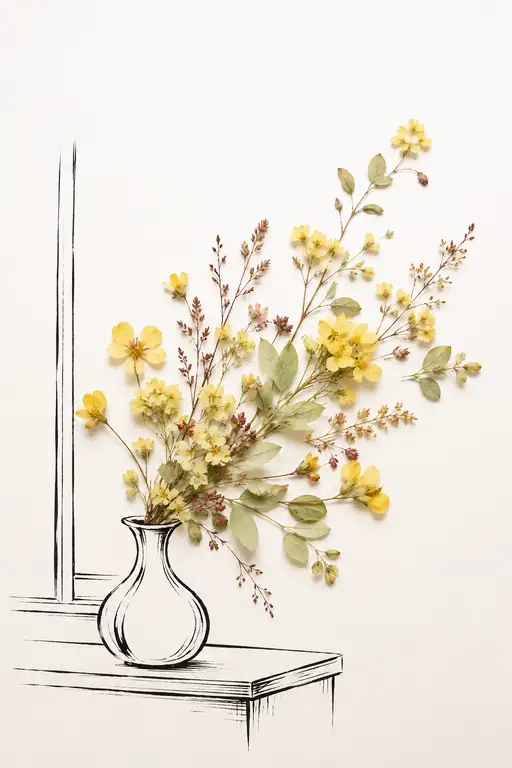 Wild Yellow Blossoms Reaching for the Breeze
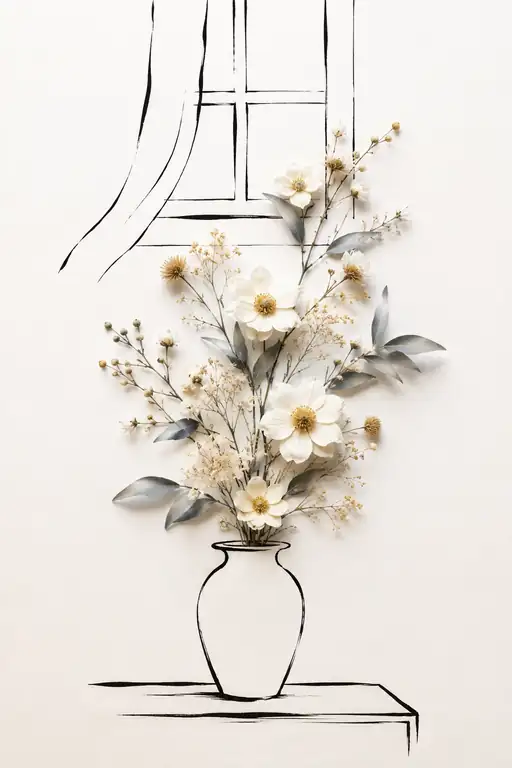 White Petals Whispering by the Curtain's Fold
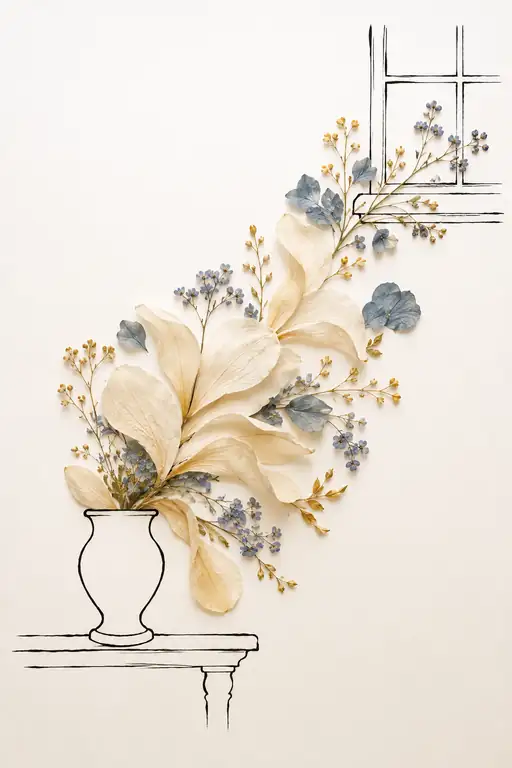 Ascent of Ivory Petals Toward the Light
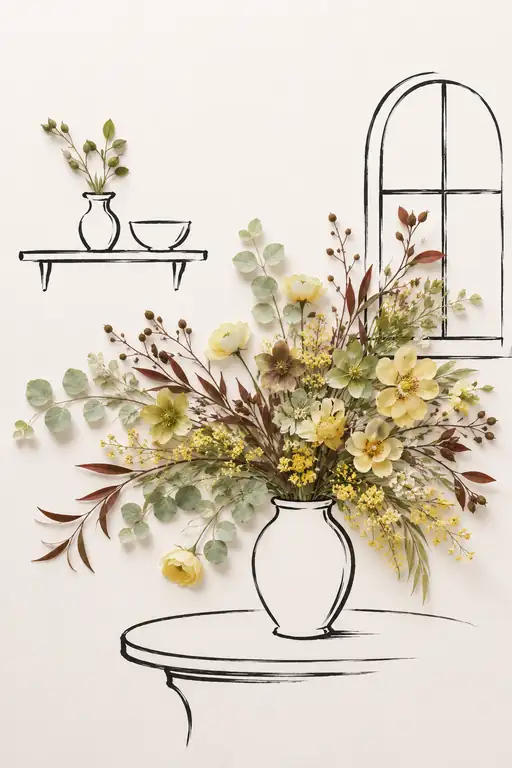 Autumn Flourish Beside the Arched Casement
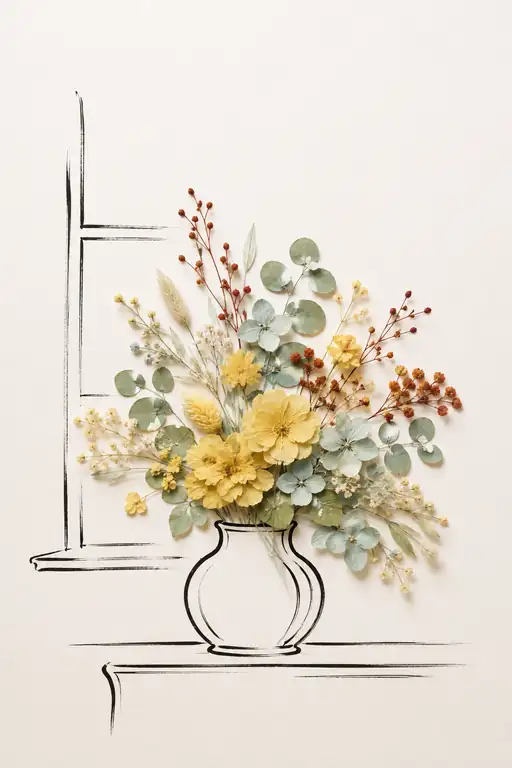 Sunlight Gathered in the Windowed Vase
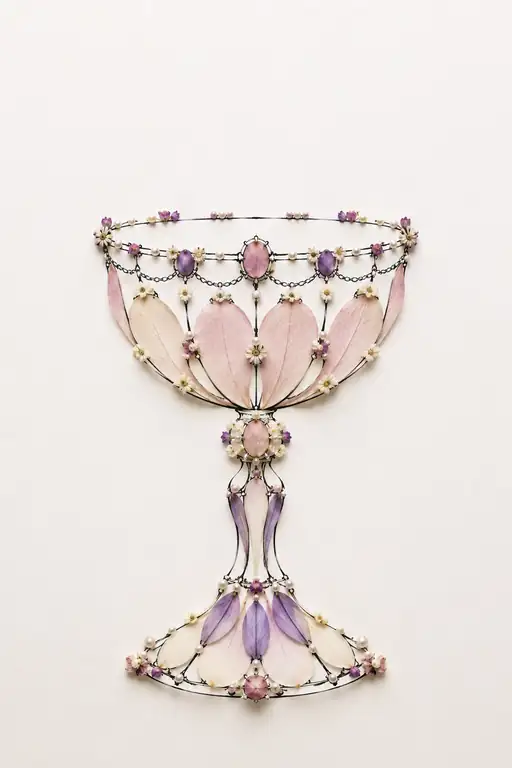 Vessel of Translucent Hours