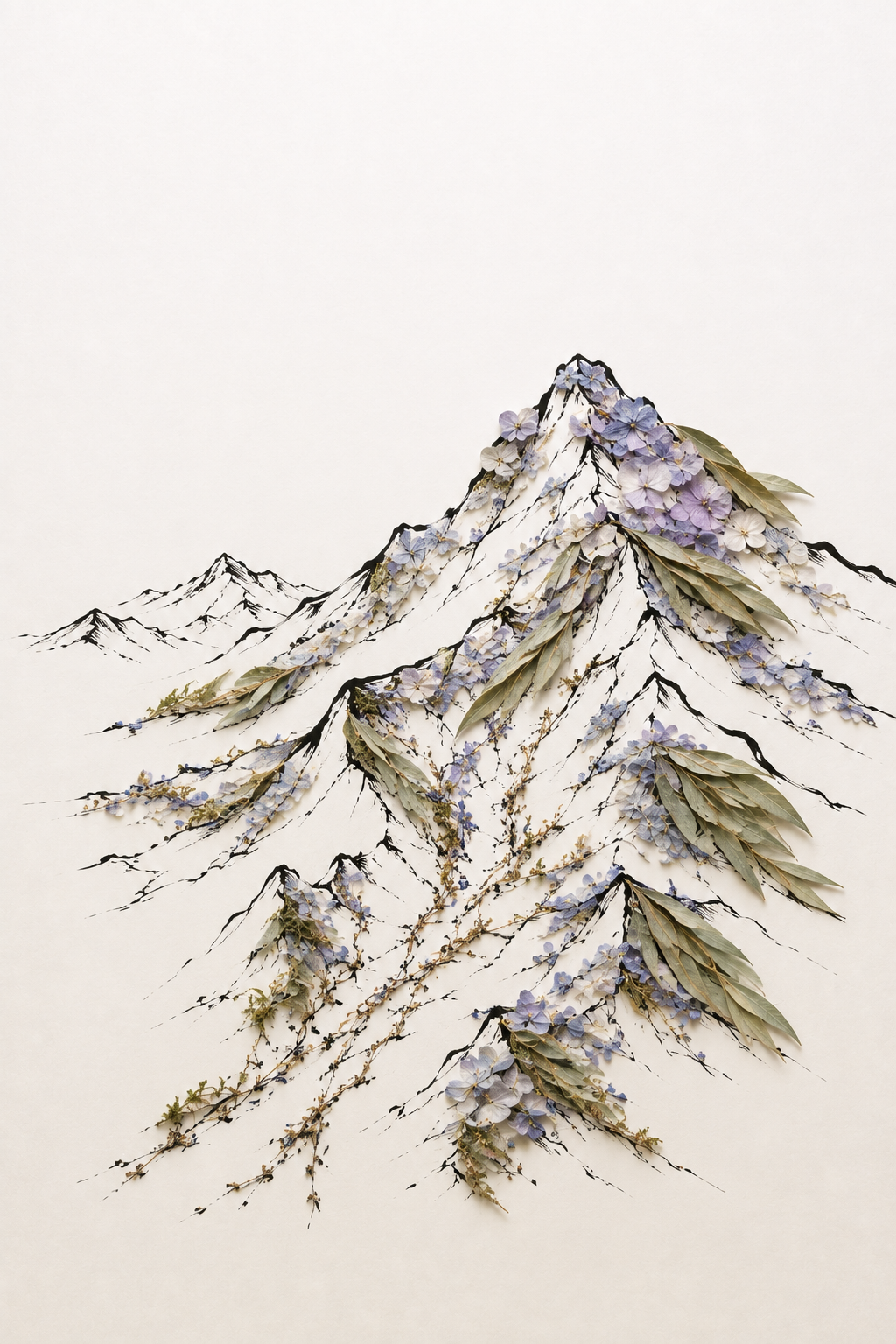
Solitude on the Azure Ridge
Critique
Introduction This work transforms a mountain range into a relief of lavender and cream blossoms, gray-green leaves, dry sprigs, moss, and ink. A central summit rises above smaller peaks whose sparse contours establish distance. Description The highest mountain stands slightly right of center, its summit crowned with clustered blue-violet flowers. Long lance-shaped leaves lie along several descending ridges like dark ledges or forests. Pale blossoms and tiny blue fragments trace gullies and snowlike bands. Lower slopes divide into multiple spurs, while thin brown stems climb the central valley and distant peaks remain almost entirely linear. Analysis The central peak creates a strong triangular hierarchy, with subsidiary summits stepping downward toward both edges. Repeated diagonal ridges lead the eye from the lower branches to the flowered crown. Cool lavender and gray-green dominate; cream petals and white ground suggest exposed snow or light. Raised leaves project as shelves, while broken ink contours preserve the scale and sharpness of rock. Interpretation and Evaluation The image treats mountains not as inert mass but as a terrain of growth. Flowers occupy exposed crests and leaves cling to steep faces, replacing geological weight with fragile persistence. The layered triangular composition, convincing scale changes, and restrained cool palette demonstrate formal control. Careful material placement and the fusion of botanical softness with incisive drawing give the landscape a distinctive technical and imaginative identity. Conclusion At first the work appears to be a decorative mountain study, but sustained viewing reveals a tension between monumentality and vulnerability. The summit remains commanding even though it is built from delicate remnants. By allowing distant ranges to dissolve into line, the image makes the tactile foreground feel both immediate and part of a much larger world.
Same Subcategory
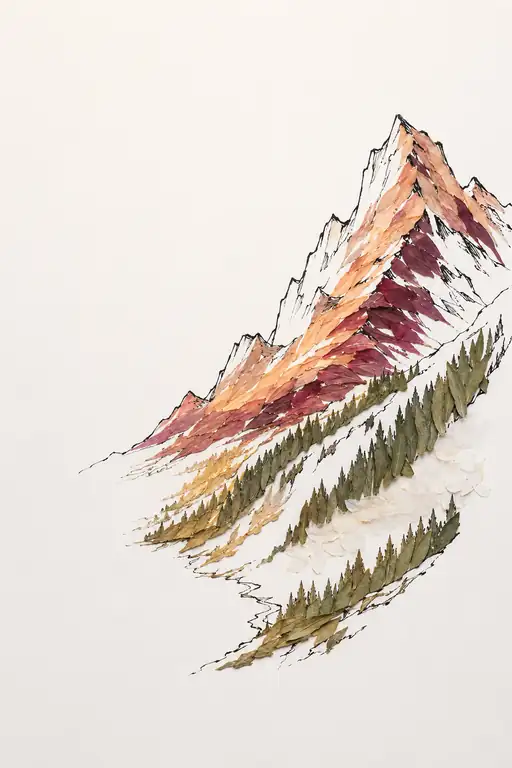 Ridge of Sunset and Evergreen Slopes
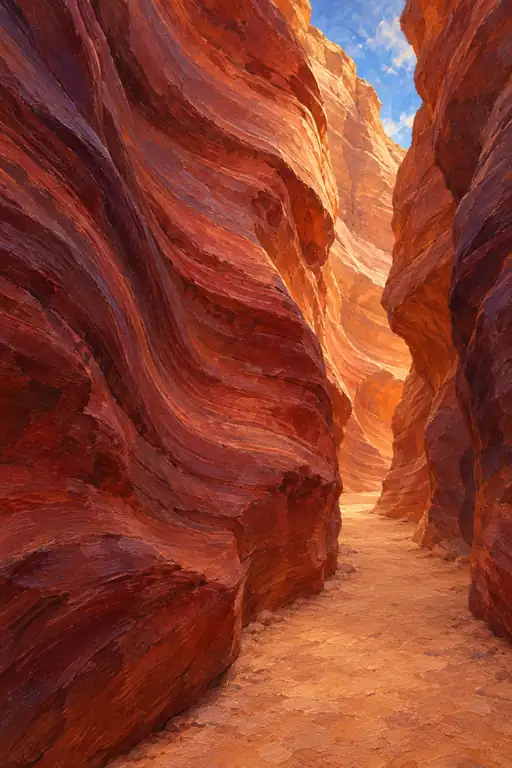 Hymn of the Sun within Crimson Waves of Stone
Similar Artworks
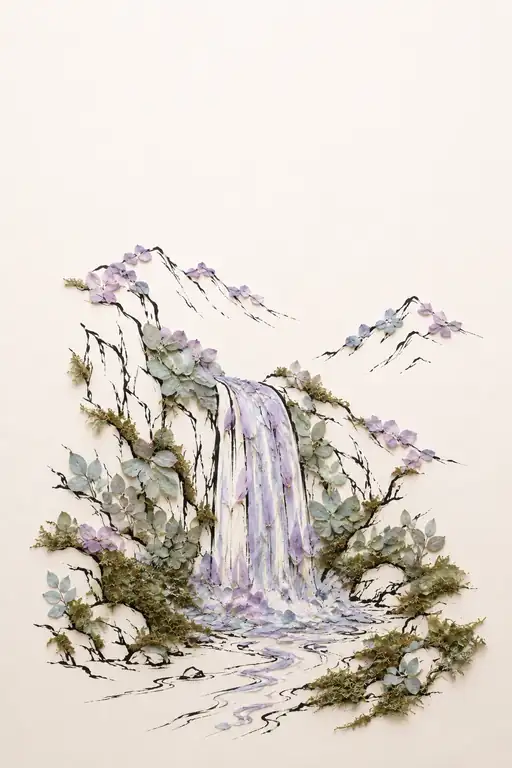 Violet Cascade in Misty Crags
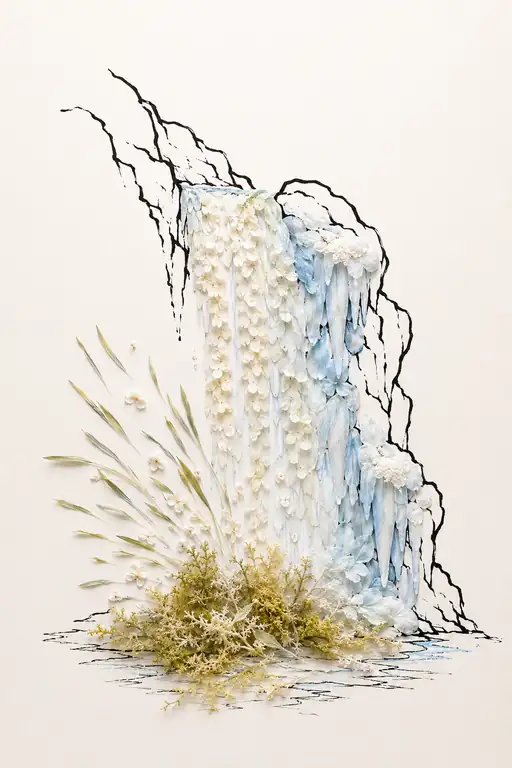 Petal Cascade on the Inky Crags
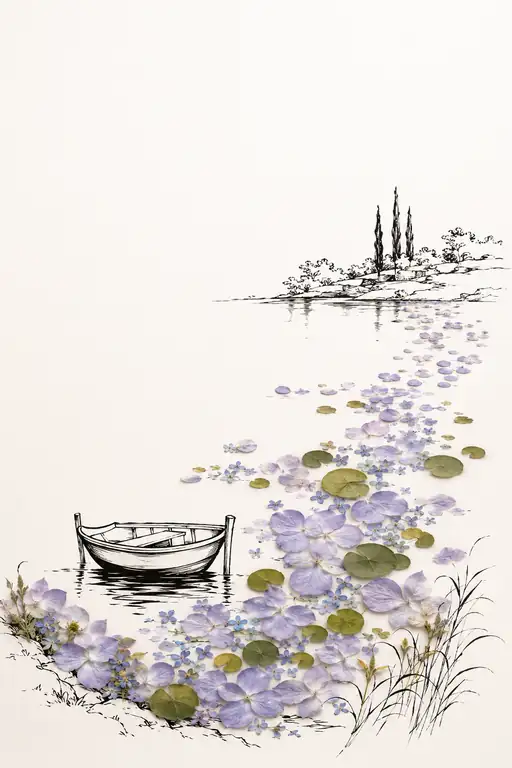 Drifting Stream Toward the Island of Cypresses
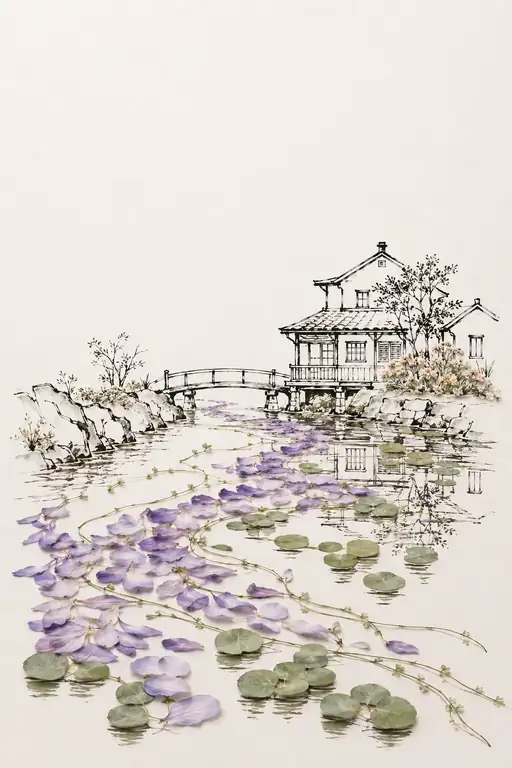 Ripple and Reflection at the Canal House
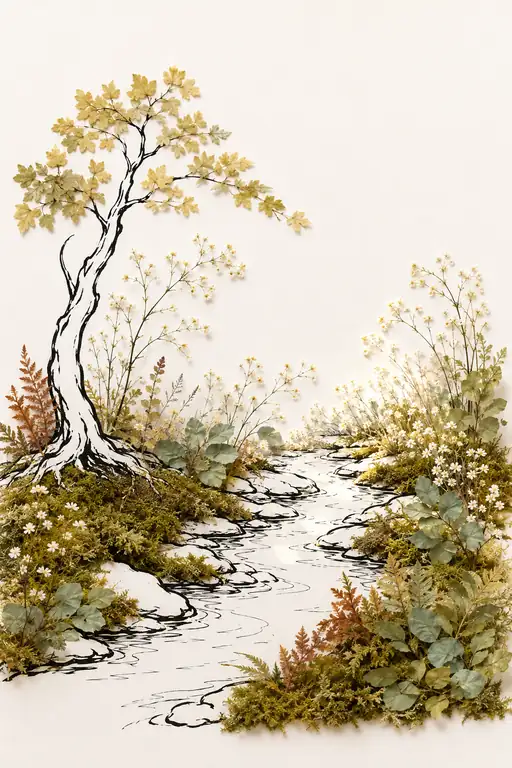 Whisper of the Autumn Stream
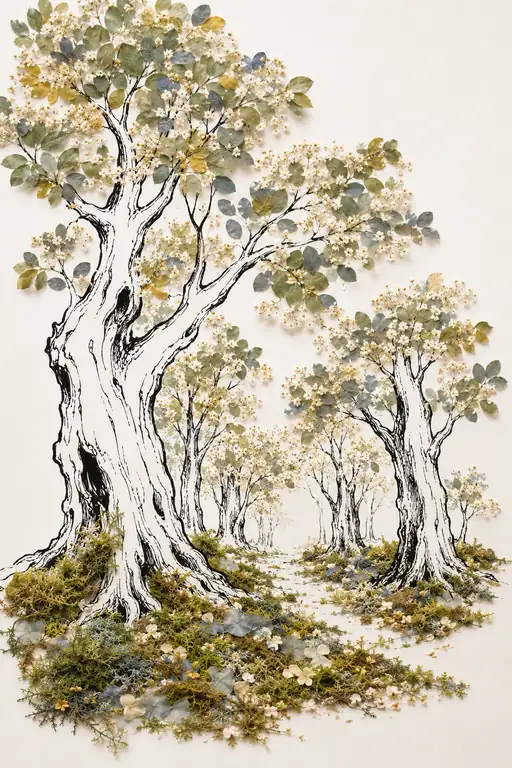 Gateway to the Ancient Grove
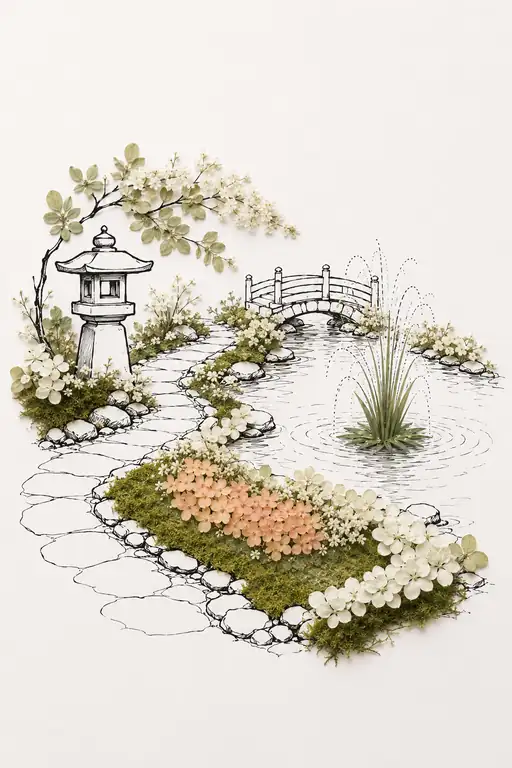 Pathway of the Lantern and Bridge
 Passage Beneath the Arch
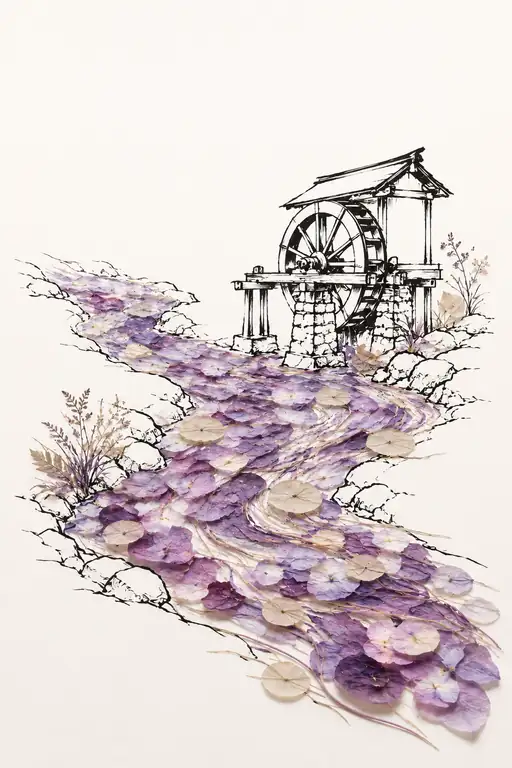 Wheel Turning by the Violet Stream
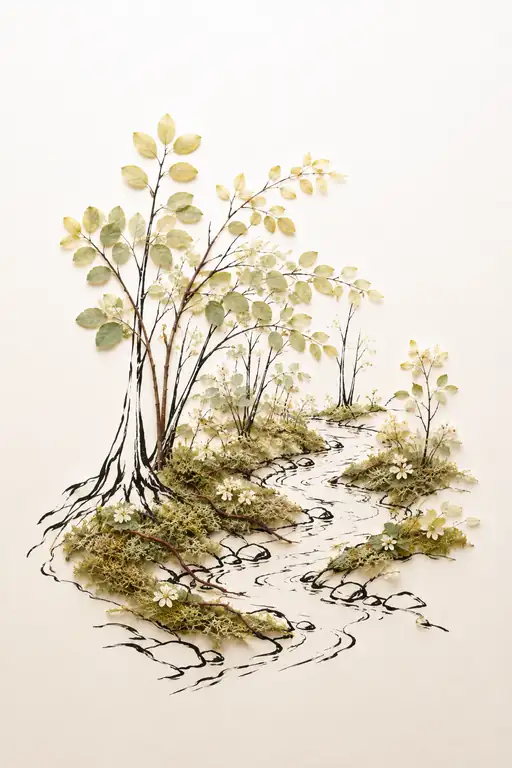 Serenade of the Winding Stream