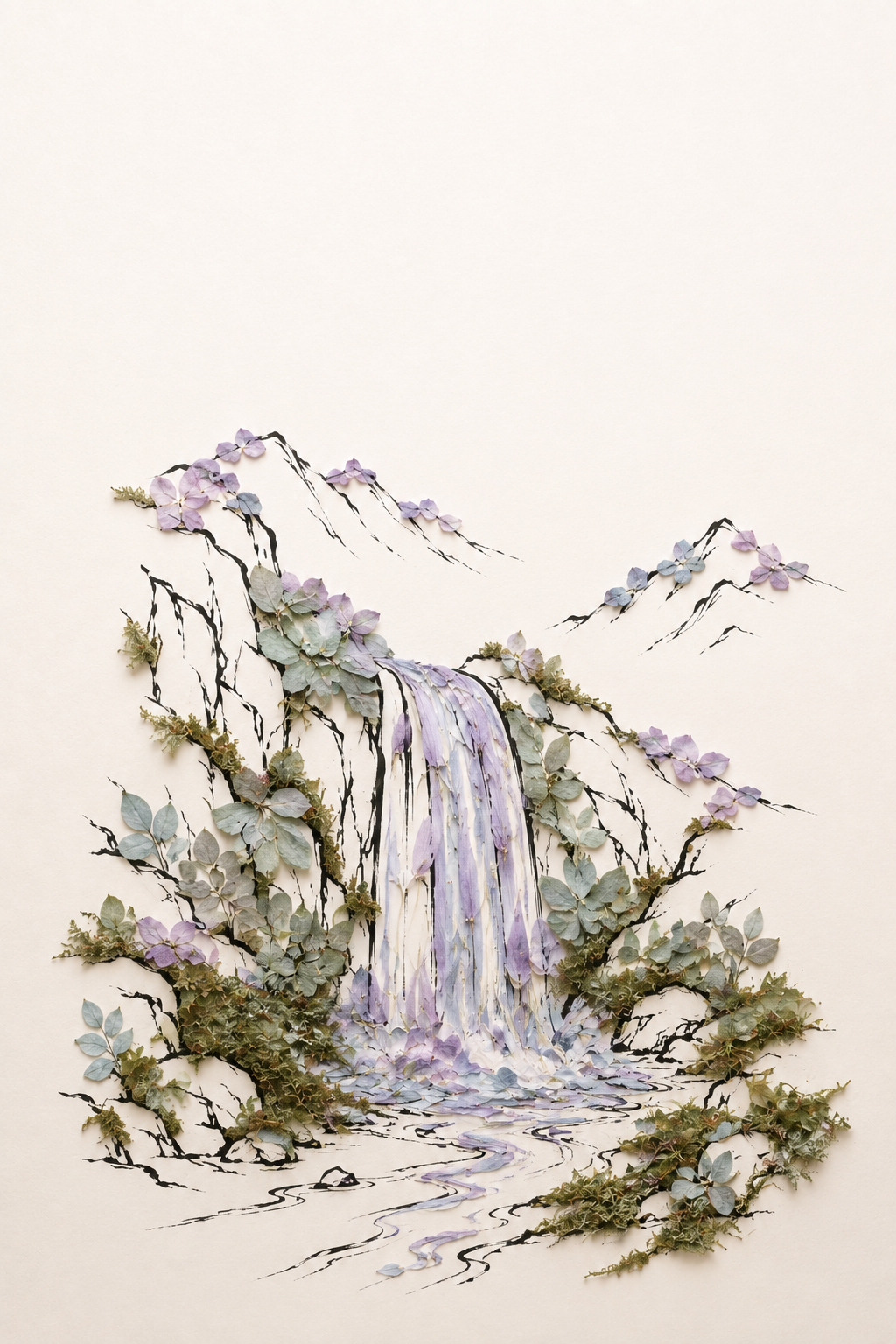
Violet Cascade in Misty Crags
Critique
Introduction This work imagines a waterfall descending through a mountain valley assembled from lavender petals, blue-gray leaves, moss, and expressive black drawing. The central cascade occupies the lower middle, while distant ridges stretch across the open upper field, giving the compact botanical relief a broad spatial setting. Description Long strips of pale violet and white petals fall from a rocky ledge into a pool of scattered fragments. A narrow stream then winds toward the foreground. Both banks carry dense moss and clusters of oval blue-gray leaves. Small lavender flowers appear along ridges and branches, including distant peaks whose contours are indicated by only a few tapering ink marks. Analysis The waterfall is the brightest and most vertically continuous form, establishing an immediate focus. Its downward movement meets the stream's serpentine recession, linking height and depth. Cool violet and gray-blue dominate, grounded by olive moss and sharp black fissures. Layered petals convey falling water through overlap and direction, while thin ink ripples extend the flow beyond the physical material. Interpretation and Evaluation The landscape presents water as a mediator between tangible and imagined space. The cascade is built from real fragments, yet it becomes increasingly drawn as it approaches the viewer, reversing ordinary expectations of depth. Clear focal hierarchy, asymmetrical banks, and controlled cool color demonstrate compositional skill. Precise leaf and moss textures, combined with economical mountain lines, make the hybrid method both legible and original. Conclusion At first the image reads as a serene waterfall scene, but close attention reveals a continuous transformation from petal to water and from relief to line. Distant flowering ridges broaden the setting without competing with the cascade. The work makes flow visible as a passage between material presence and pictorial suggestion.
Same Subcategory
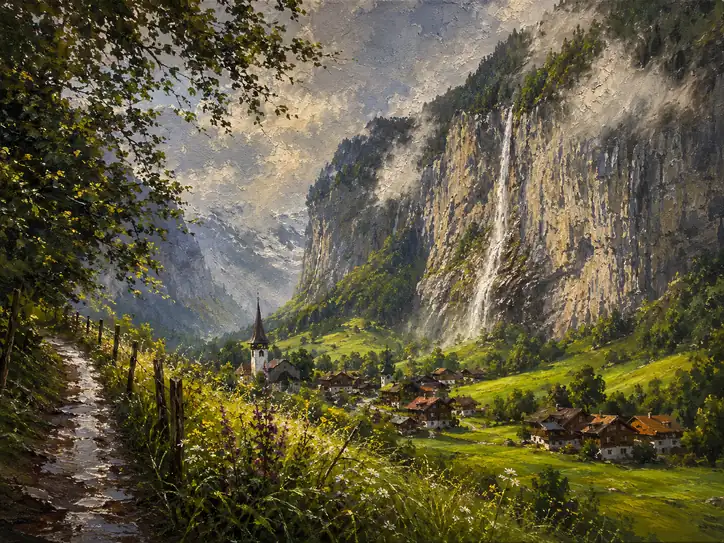 Majesty of the Splintered Valley
Similar Artworks
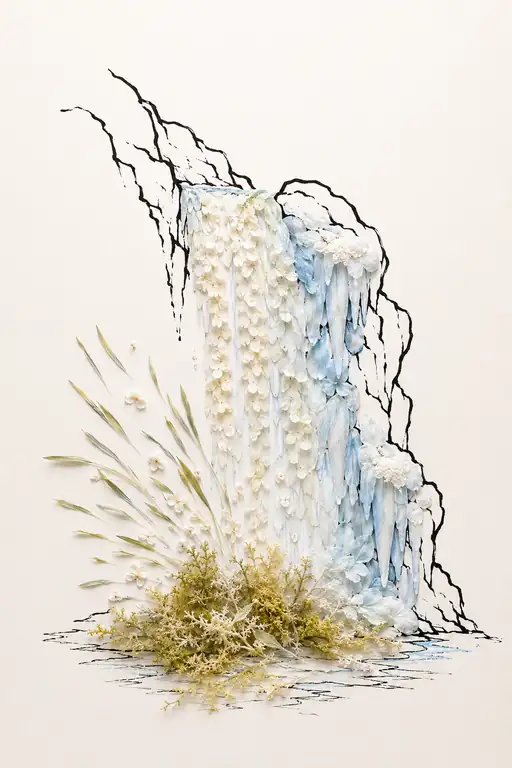 Petal Cascade on the Inky Crags
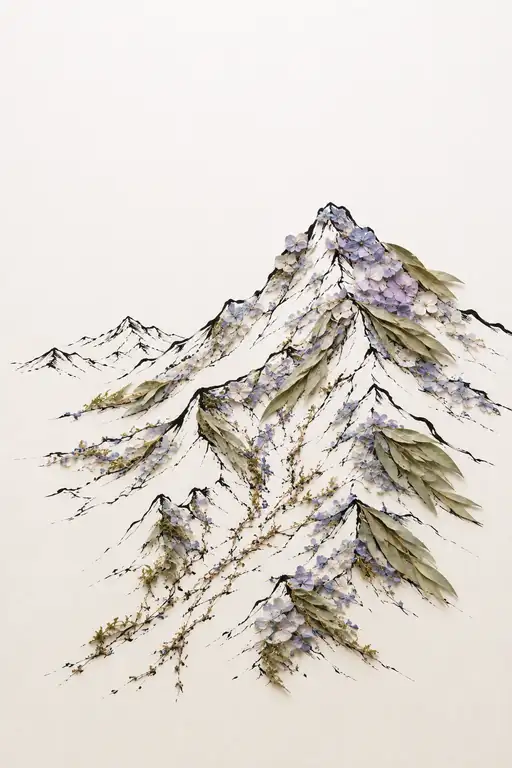 Solitude on the Azure Ridge
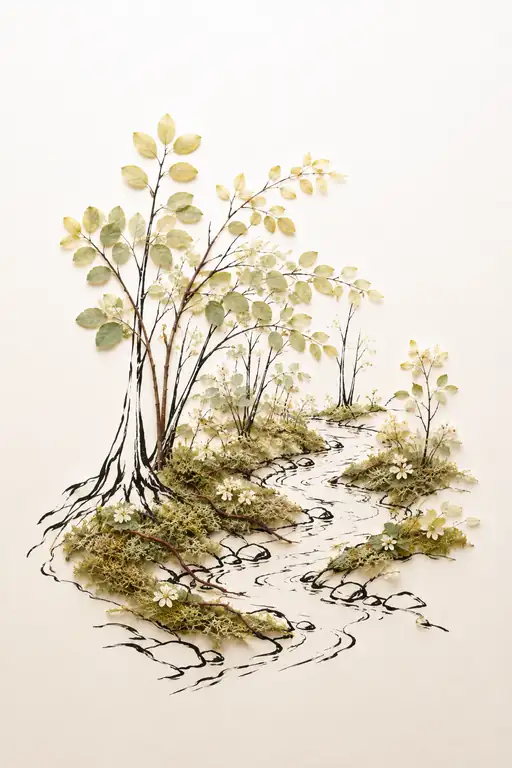 Serenade of the Winding Stream
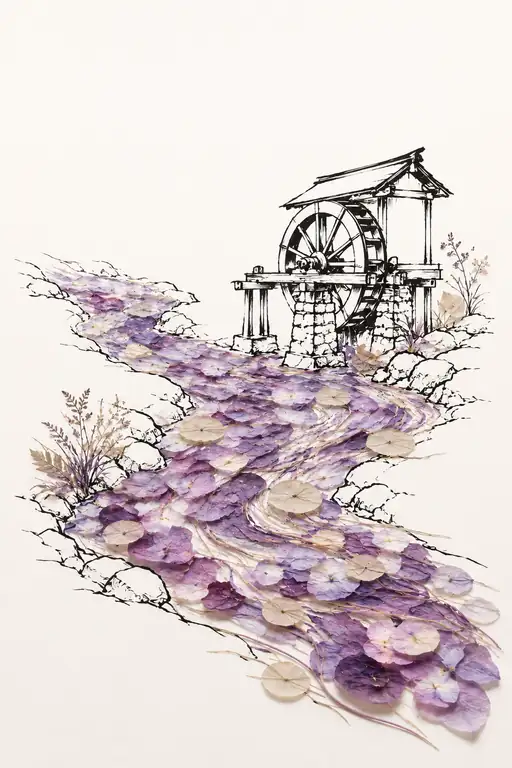 Wheel Turning by the Violet Stream
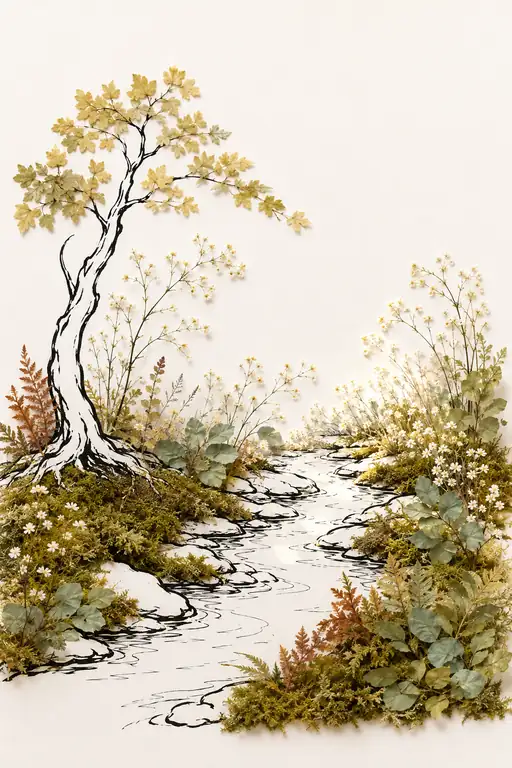 Whisper of the Autumn Stream
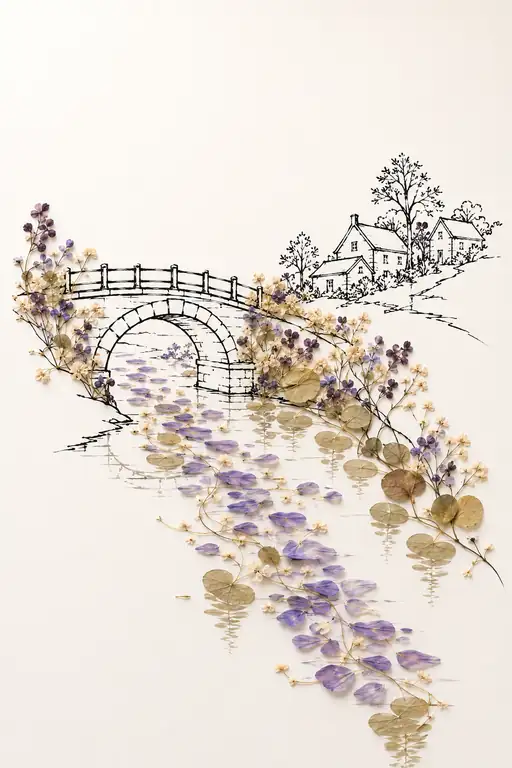 Passage Beneath the Arch
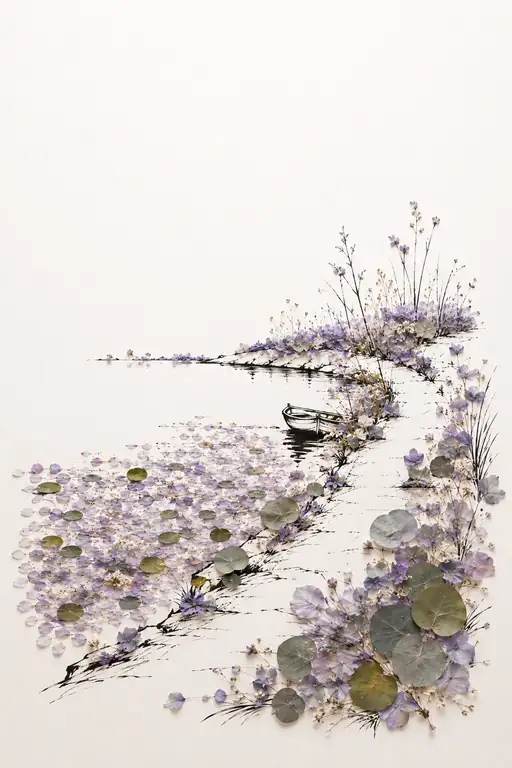 Lavender Inlet and the Moored Boat
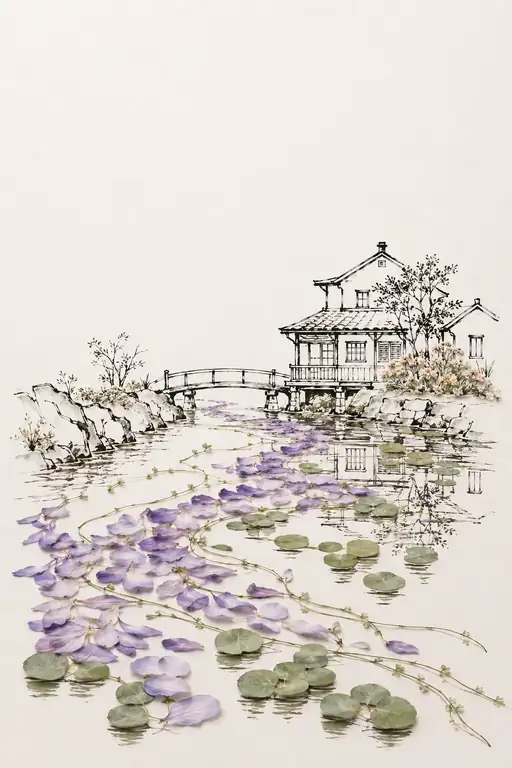 Ripple and Reflection at the Canal House
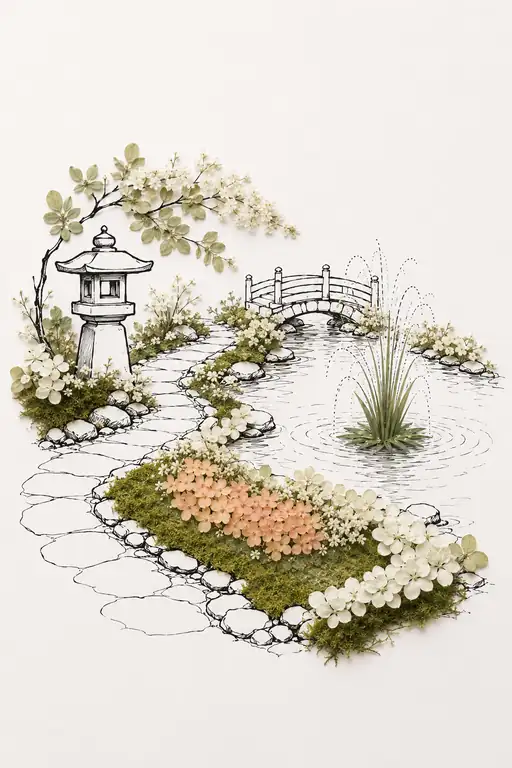 Pathway of the Lantern and Bridge
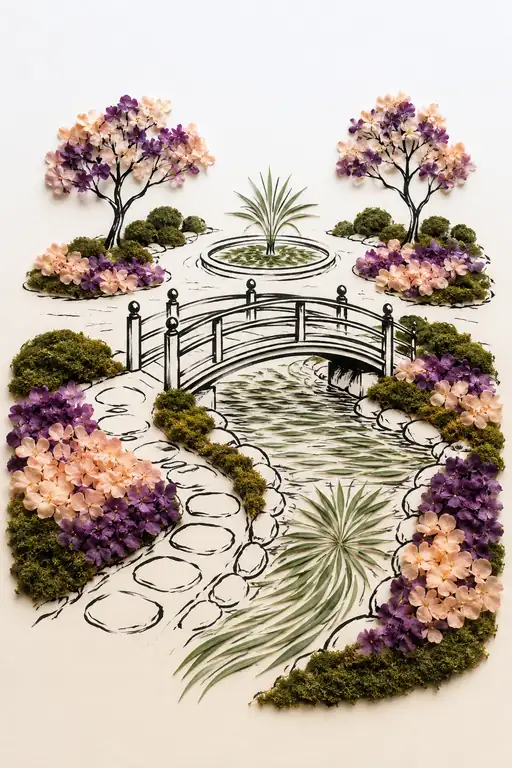 Arched Bridge Over the Stream of Flowing Petals