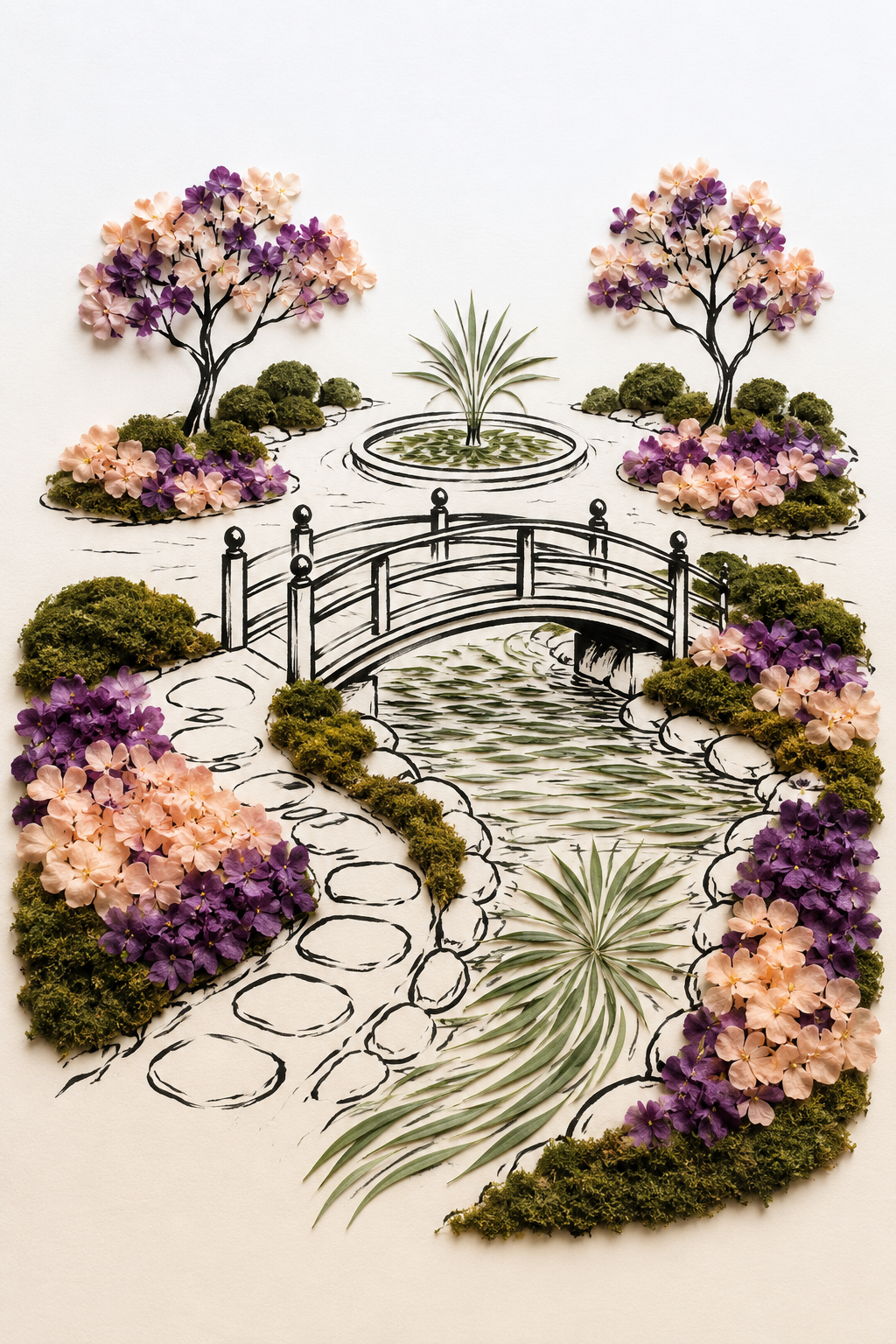
Arched Bridge Over the Stream of Flowing Petals
Critique
Introduction This imagined garden centers on an arched bridge, stream, flowering trees, pool, stones, moss, and radiating leaves. Plant materials enrich a deep drawn landscape whose symmetry is softened by organic variation. Description The bridge spans the middle foreground above a narrow stream filled with overlapping green leaves. Peach and purple flower beds line both banks among thick moss and outlined rocks. Two dark-trunked flowering trees stand near the upper corners, while a round pool with upright pointed foliage occupies the distant center. A large fan of long leaves opens near the lower right. Analysis The bridge forms the dominant horizontal threshold, and the stream establishes a central route from foreground to distance. Paired trees and flower masses create broad symmetry, but unequal moss contours and mixed color patches prevent rigidity. Deep purple anchors the warm peach blossoms; olive moss and gray-green leaves provide continuity. Tactile flowers rise above the flat stones, while converging banks and changing scale produce convincing recession. Interpretation and Evaluation The scene presents the garden as an ordered refuge in which crossing, water, and cultivated growth structure experience. Its near symmetry suggests design and care, while irregular botanical fragments preserve a sense of living change. Spatial composition, complementary color balance, and clear focal hierarchy are accomplished. The precise layering of moss, flowers, and leaves with freely drawn architecture demonstrates both descriptive control and an inventive hybrid method. Conclusion Initially the image resembles a decorative garden plan, but prolonged viewing turns the central watercourse into an invitation to move through the scene. The bridge marks transition, the distant pool provides rest, and the foreground leaves pull the landscape toward the viewer. Formal order remains persuasive because natural variation continually interrupts it.
Same Subcategory
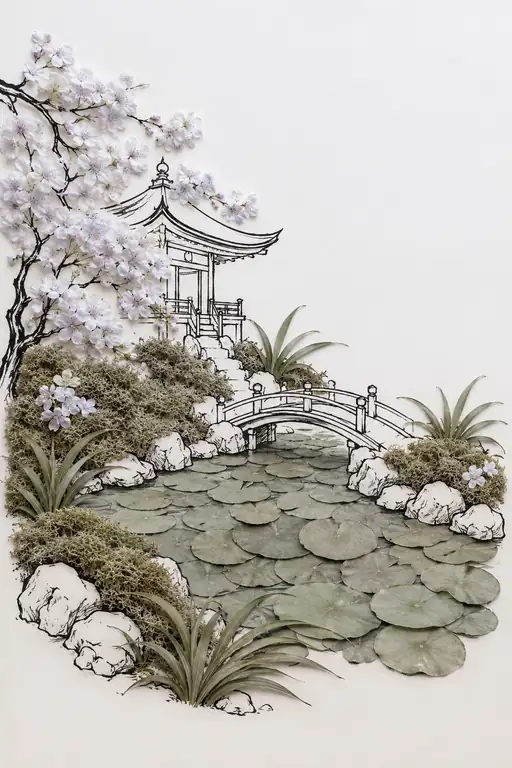 Spring Solitude at the Curved Bridge
Similar Artworks
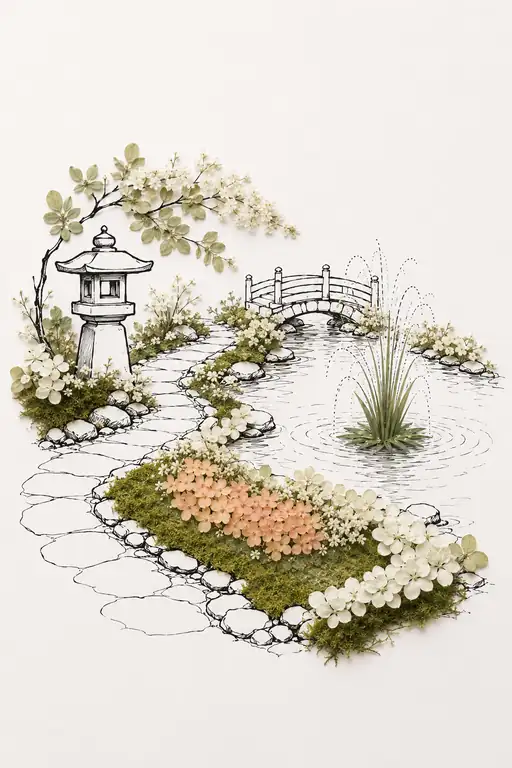 Pathway of the Lantern and Bridge
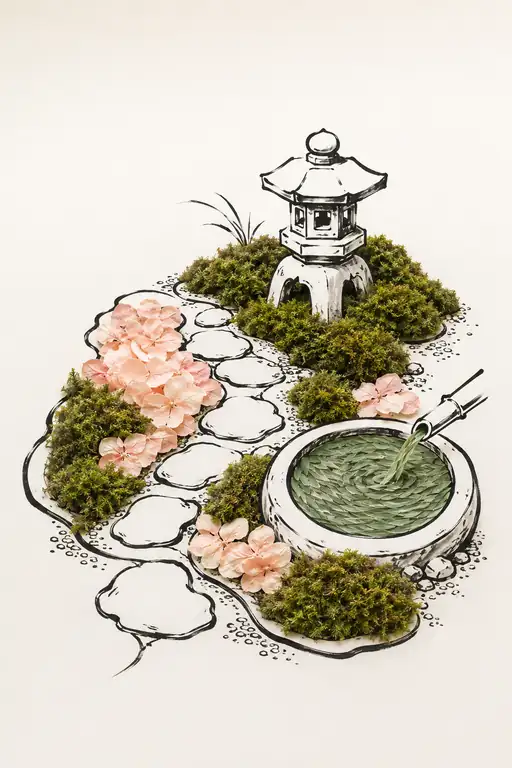 Stone Lantern and Flowing Water in the Moss Garden
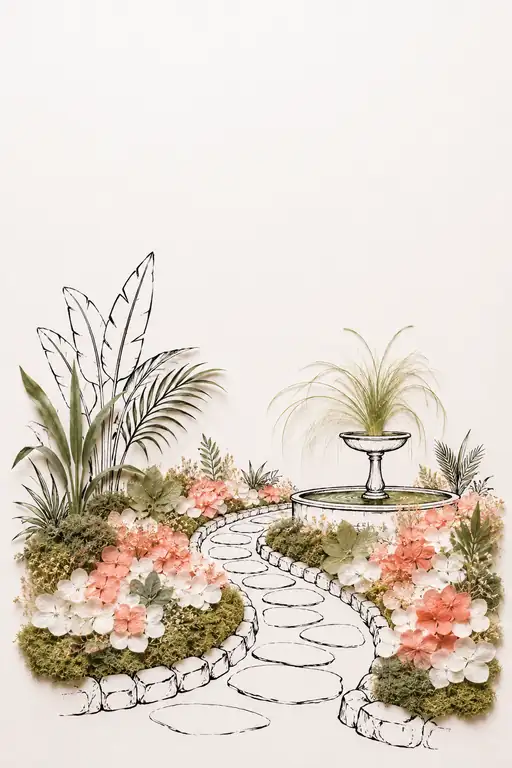 Fountain of the Coral Grove
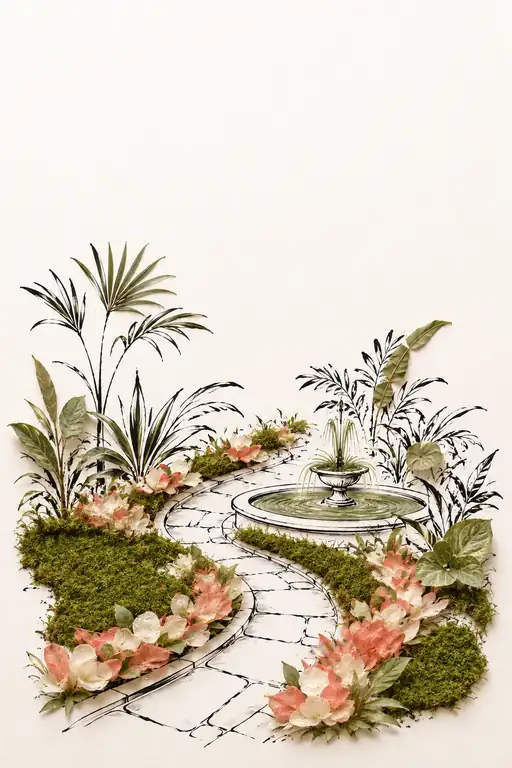 Where the Whispering Water Leads
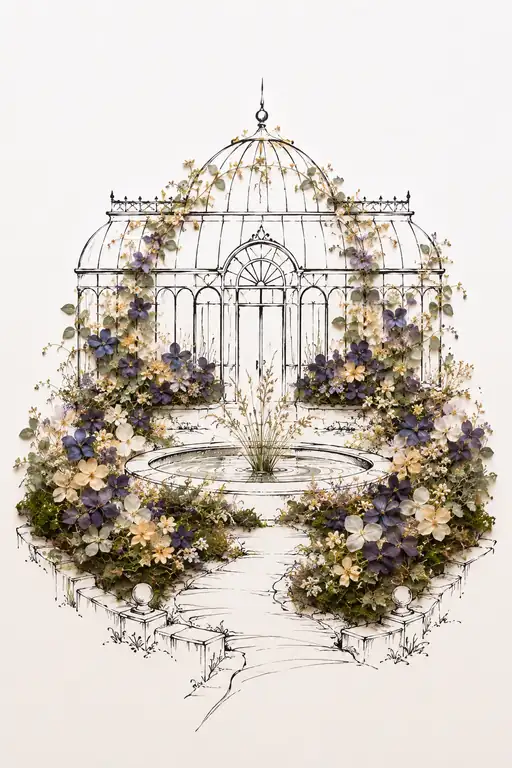 Glass Conservatory Gilded in Violet Blossoms
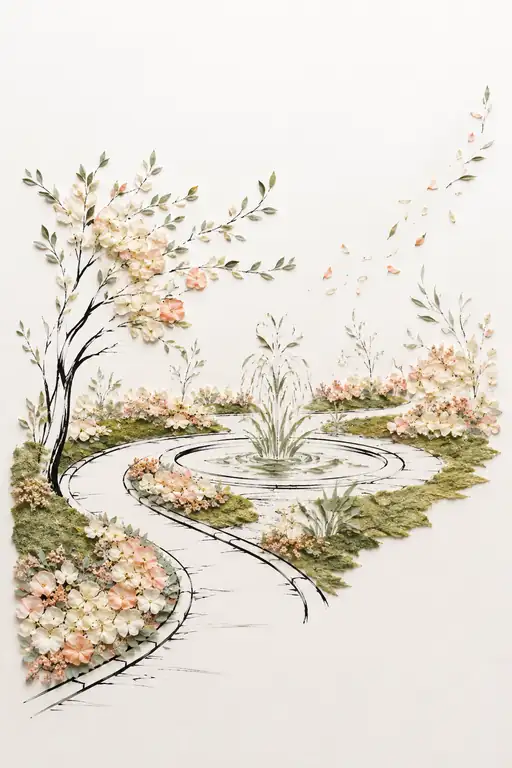 Garden Fountain and Whispering Petals in the Wind
 Violet Cascade in Misty Crags
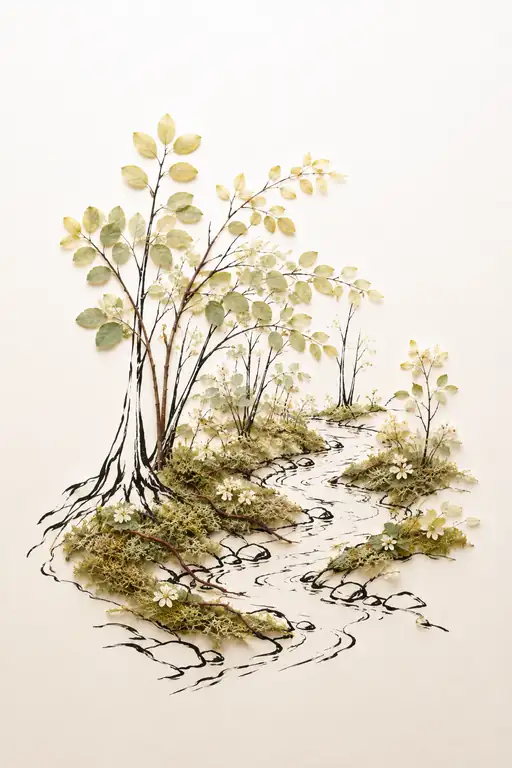 Serenade of the Winding Stream
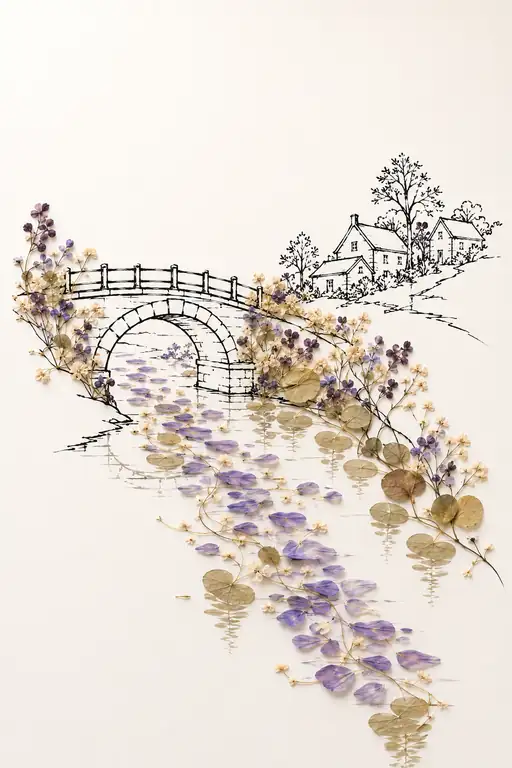 Passage Beneath the Arch
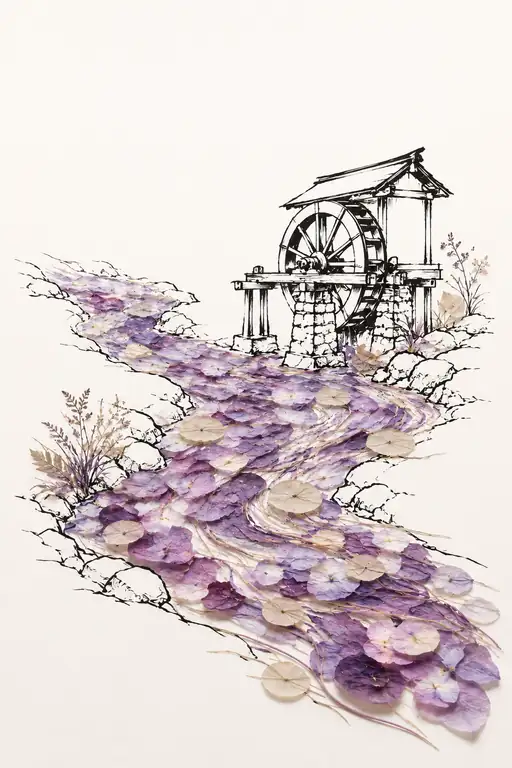 Wheel Turning by the Violet Stream